
There’s a reason the queue at a mohinga stall in Yangon starts forming before sunrise. This is Myanmar’s national dish — thin rice noodles swimming in a peppery catfish broth that eats like it’s halfway between a soup and a chowder, thanks to a double thickener of toasted rice powder and chickpea flour. Lemongrass, turmeric, and banana stem give it a bright golden depth, and then the fun starts: you finish your own bowl with boiled egg, crushed bean crackers, lime, cilantro, and chili oil, exactly the way you like it.
What Is Mohinga?
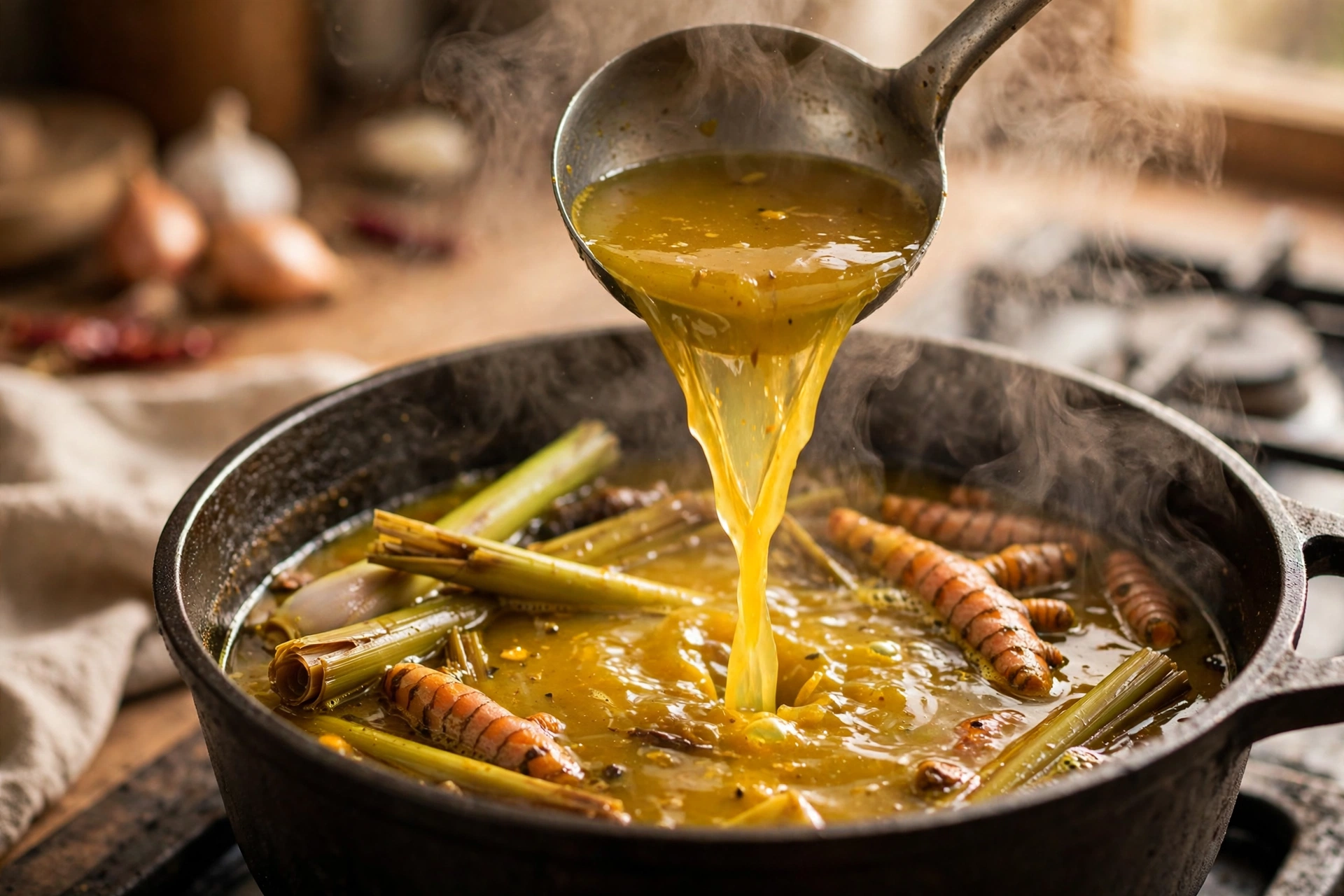
Mohinga (sometimes spelled mohingar) is widely considered the national dish of Myanmar. It’s a breakfast staple and street-food icon: whole catfish or snakehead fish are boiled with lemongrass, ginger, garlic, and turmeric to build a fragrant stock, which is then thickened — traditionally with toasted rice flour, often with chickpea flour too — until it turns silky and spoon-coating. Banana tree stem, where available, adds a fibrous, faintly crunchy texture that’s classic to the dish.
The broth itself is warm and gently spicy rather than fiery, with a fresh (never fishy) fish flavor — NPR described a good bowl as “simultaneously slightly sweet, salty and spicy.” What makes mohinga special is the customization: bowls arrive with noodles and hot broth, and each eater piles on hard-boiled egg, fried split-pea crackers, lime juice, fish sauce, chili oil, and herbs to taste. If you enjoyed the layered flavors of our Burmese Tea Leaf Salad (Lahpet Thoke), this is the soup that shares its spirit — bright, savory, and deeply satisfying.
Why This Recipe Works
The texture of mohinga lives or dies on the thickener ratio, and this is the part I got specific about: 3 tablespoons of toasted rice powder plus 3 tablespoons of chickpea flour for every 6 cups of strained broth. That lands the broth exactly where it should be — clinging to the noodles like a light chowder rather than pooling beneath them like a thin soup.
Two things I learned the hard way in Paul’s kitchen:
- Toast the rice until it turns deep golden, not just pale. The color of the toast is what gives mohinga its signature dark-yellow glow. Pale rice leaves a raw, starchy edge in the finished broth.
- The slurry must be made with cold water. Chickpea flour poured straight into a hot pot turns into lumps on contact; the same flour whisked into cold water first vanishes into the broth in seconds.
Banana stem is traditional but genuinely hard to find in the US — canned bamboo shoots are the practical stand-in, and the bowl doesn’t miss the original once the toppings go on.
Ingredients
For the broth
- 1 1/2 lb catfish fillets (tilapia or cod work too)
- 8 cups water
- 2 stalks lemongrass, bruised and cut into 3-inch pieces
- 1 (2-inch) piece fresh ginger, sliced
- 5 cloves garlic, smashed
- 1 yellow onion, quartered
- 1 teaspoon ground turmeric
- 2 tablespoons fish sauce, plus more to taste
For the thickener
- 3 tablespoons uncooked long-grain rice
- 3 tablespoons chickpea flour (besan)
- 1/2 cup cold water, for the slurry
For the aromatics
- 2 tablespoons peanut oil
- 1 cup thinly sliced shallots
- 1 teaspoon paprika or mild chili powder
- 1 cup sliced tender banana stem, or canned bamboo shoots, rinsed well (optional)
- 1 teaspoon dried shrimp paste (optional)
For the noodles and toppings
- 12 oz thin rice vermicelli
- 4 hard-boiled eggs, halved
- 1 cup crushed fried split-pea crackers or pappadam bits (pe kyaw)
- 1/2 cup chopped cilantro
- Lime wedges, for serving
- Chili oil or chili flakes, for serving
- Fish sauce, for the table
How to Make Mohinga
- Poach the fish. In a large pot, combine the fish, water, lemongrass, ginger, garlic, onion, turmeric, and fish sauce. Bring to a boil, then lower to a gentle simmer and cook 10–12 minutes, until the fish flakes easily. Lift out the fish, break it into bite-size chunks, and discard any bones. Strain the broth through a fine-mesh sieve and discard the spent aromatics.
- Toast and grind the rice. In a dry skillet over medium heat, toast the rice, shaking often, 4–5 minutes until deep golden and nutty-smelling. Cool, then grind to a fine powder in a spice grinder.
- Make the slurry. Whisk the chickpea flour into the 1/2 cup cold water until completely smooth — no dry pockets.
- Bloom the aromatics. In the same pot, heat the peanut oil over medium heat. Add the shallots and cook 4–5 minutes until soft and translucent. Stir in the paprika, then add the flaked fish and cook 2 minutes so it picks up the seasoned oil.
- Thicken the broth. Pour the strained broth back into the pot and bring to a bare simmer. Slowly drizzle in the chickpea slurry while whisking constantly, then whisk in the toasted rice powder. Keep whisking until the broth starts to thicken.
- Simmer and finish. Add the banana stem or bamboo shoots (and shrimp paste, if using). Simmer 20–25 minutes, stirring now and then, until the broth coats the back of a spoon. Season with more fish sauce to taste — it should taste savory first, then warm and bright.
- Prep the noodles. Cover the vermicelli with just-boiled water, soak 15 minutes until tender, then drain and rinse under cold running water. Shake the colander dry — the Burmese don’t like mushy or watery noodles, and neither will your broth.
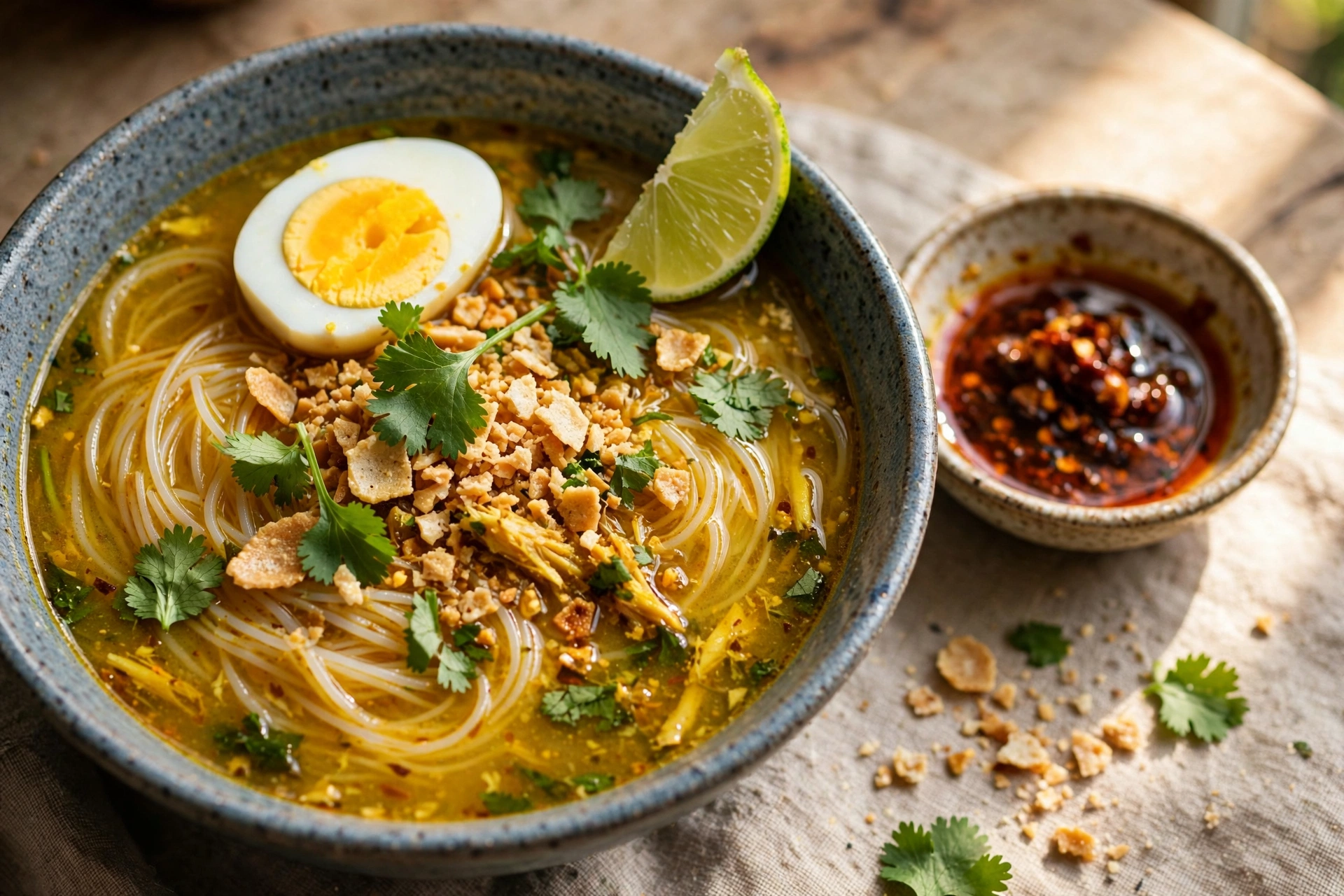
- Assemble. Divide a handful of noodles into each bowl and ladle the hot broth over (the heat revives the noodles). Top with egg halves, a handful of crushed crackers, and cilantro. Set out lime wedges, chili oil, and fish sauce so everyone finishes their own bowl.
Troubleshooting: Fix My Mohinga
Broth came out lumpy, too thin, or a little too fishy? Pick your problem below and get it sorted — these are the five most common mohinga mishaps and exactly how to fix each one.
HERB & LIME · KITCHEN HELP
Fix My Mohinga
Choose what went wrong to see a practical next step.
Possible cause
What to try next
For next time
From Paul's kitchen. Results vary with fish size, oil, and stove heat — adjust timing to your setup.
Quick reference (also works without JavaScript)
The broth turned lumpy
Cause: Dry chickpea flour or rice powder hitting hot broth gelatinizes on contact, sealing lumps before the flour can disperse.
Try: Pull the pot off the heat and whisk the lumps out, or pour the broth through a fine-mesh sieve to catch them.
Prevent: Always whisk the chickpea flour into cold water first to make a smooth slurry, then drizzle it into the simmering broth while whisking constantly — never add dry flour to a hot pot.
The broth tastes too fishy
Cause: Overcooking fish in the poaching liquid breaks it into fine particles and releases stronger fishy compounds into the broth.
Try: Fish the fish out as soon as it flakes, discard any overcooked bits, and add an extra splash of fish sauce plus lime at the table to freshen the bowl.
Prevent: Simmer just until the fish flakes (10-12 minutes for fillets), then lift it out and strain the broth; use firm mild white fish like catfish or tilapia.
The broth is too thin
Cause: Too little thickener, or adding it without enough simmer time, leaves the broth watery instead of spoon-coating.
Try: Whisk in 1 more tablespoon of chickpea flour slurry (or toasted rice powder) and simmer 10 minutes; if it still won't thicken, simmer longer uncovered to reduce.
Prevent: Measure the thickeners — 3 tablespoons each of toasted rice powder and chickpea flour per 6 cups of strained broth — and simmer 20-25 minutes after adding them.
The noodles went mushy
Cause: Boiling delicate rice vermicelli — or letting it sit in hot broth — overcooks it into mush, a common mohinga pitfall in home kitchens.
Try: For the next round, soak dried vermicelli in just-boiled water for 15 minutes, then rinse under cold water and drain well before adding the hot broth.
Prevent: Keep the noodles separate from the broth until serving; soak, don't boil, and rinse cold to stop carryover cooking.
I can't find banana stem
Cause: Fresh banana tree stem is a classic mohinga ingredient but rarely sold outside Southeast Asia; the sticky outer layers also need soaking in salted water before use.
Try: Substitute canned bamboo shoots, rinsed well under cold water to remove the can flavor, and slice them thin.
Prevent: Skip the banana stem rather than leaving the soup without its fibrous crunch — bamboo shoots are the standard home-kitchen substitute.
Mohinga (Burmese Fish Noodle Soup)
Ingredients
Method
- In a large pot, combine the fish, water, lemongrass, ginger, garlic, onion, turmeric, and fish sauce. Bring to a boil, then lower to a gentle simmer and cook 10-12 minutes, until the fish flakes easily.
- Lift out the fish, break it into bite-size chunks, and discard any bones. Strain the broth through a fine-mesh sieve and discard the spent aromatics.
- In a dry skillet over medium heat, toast the rice, shaking often, 4-5 minutes until deep golden and nutty-smelling. Cool, then grind to a fine powder in a spice grinder.
- Whisk the chickpea flour into the 1/2 cup cold water until completely smooth with no dry pockets.
- In the same pot, heat the peanut oil over medium heat. Add the shallots and cook 4-5 minutes until soft and translucent. Stir in the paprika, then add the flaked fish and cook 2 minutes so it picks up the seasoned oil.
- Pour the strained broth back into the pot and bring to a bare simmer. Slowly drizzle in the chickpea slurry while whisking constantly, then whisk in the toasted rice powder. Keep whisking until the broth starts to thicken.
- Add the banana stem or bamboo shoots (and shrimp paste, if using). Simmer 20-25 minutes, stirring now and then, until the broth coats the back of a spoon. Season with more fish sauce to taste.
- Cover the vermicelli with just-boiled water, soak 15 minutes until tender, then drain and rinse under cold running water. Shake the colander dry.
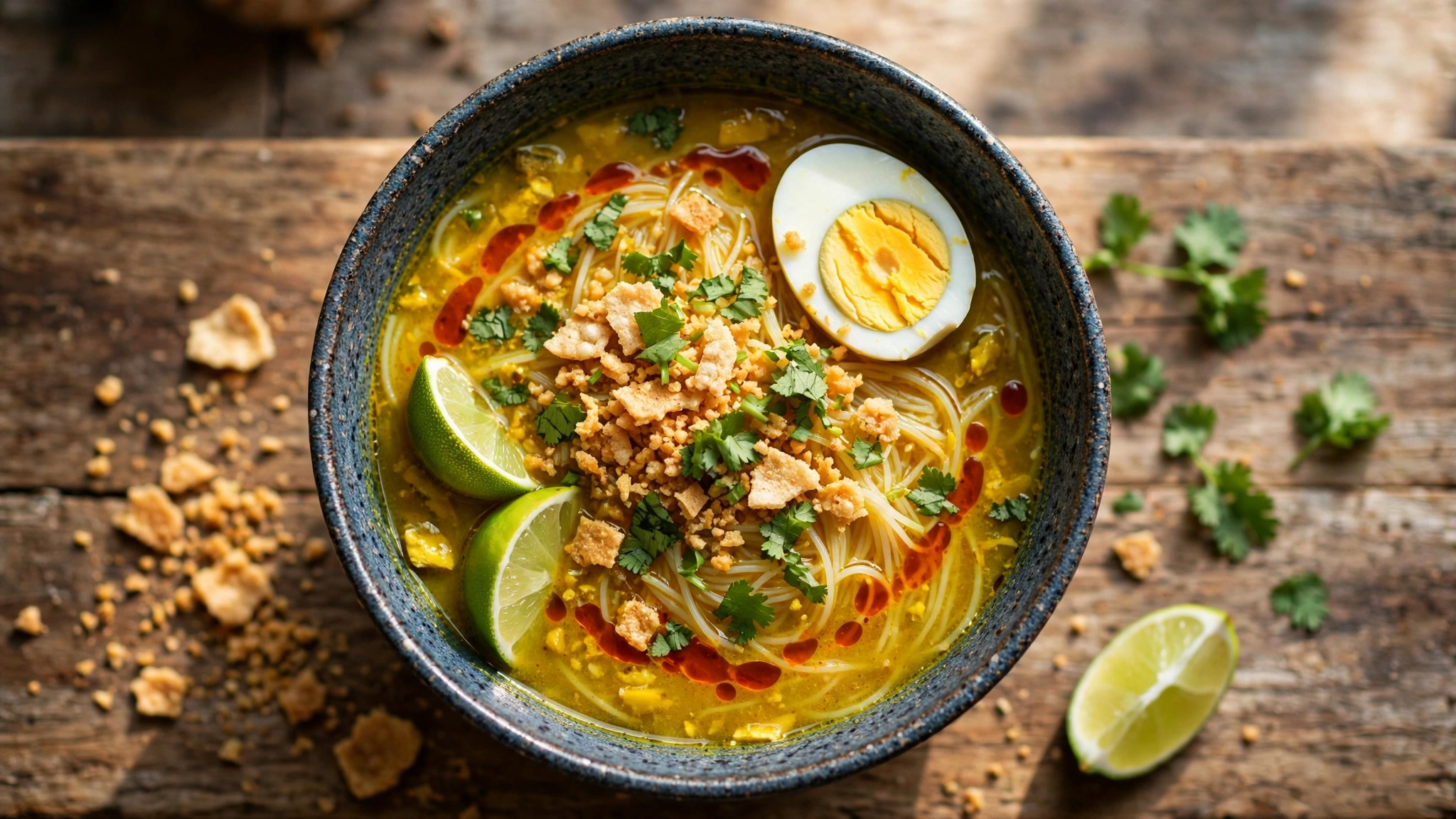
- Divide a handful of noodles into each bowl and ladle the hot broth over. Top with egg halves, a handful of crushed crackers, and cilantro. Serve with lime wedges, chili oil, and fish sauce so everyone finishes their own bowl.
Notes
More Burmese Recipes
- Burmese Tea Leaf Salad (Lahpet Thoke) — crunchy, tangy, and the other Myanmar icon worth knowing.
More Noodle Soup Recipes
- Khao Soi: Thai Coconut Curry Noodles — rich coconut curry broth with crispy noodle topping.
- Laksa: Coconut Curry Noodle Soup — Malaysia’s fiery, fragrant answer to noodle soup.
- Soto Ayam: Indonesian Chicken Soup — turmeric-gold chicken soup with rice cakes and bean sprouts.
1 thought on “Mohinga: Burmese Fish Noodle Soup Recipe”