Walk into an Asian grocery and the herb wall can feel like a test you didn’t study for. Bunches of green leaves, half of them labeled only in Vietnamese, and no obvious way to tell which one goes in the spring rolls and which one would ruin them.
This guide is meant to fix that. For each herb: what it looks like, what it tastes like, where it shows up in Vietnamese cooking, and how to avoid mixing it up with something else. No hands-on ratings, no invented taste tests — just identification and practical guidance.
Vietnamese Coriander — Rau Răm
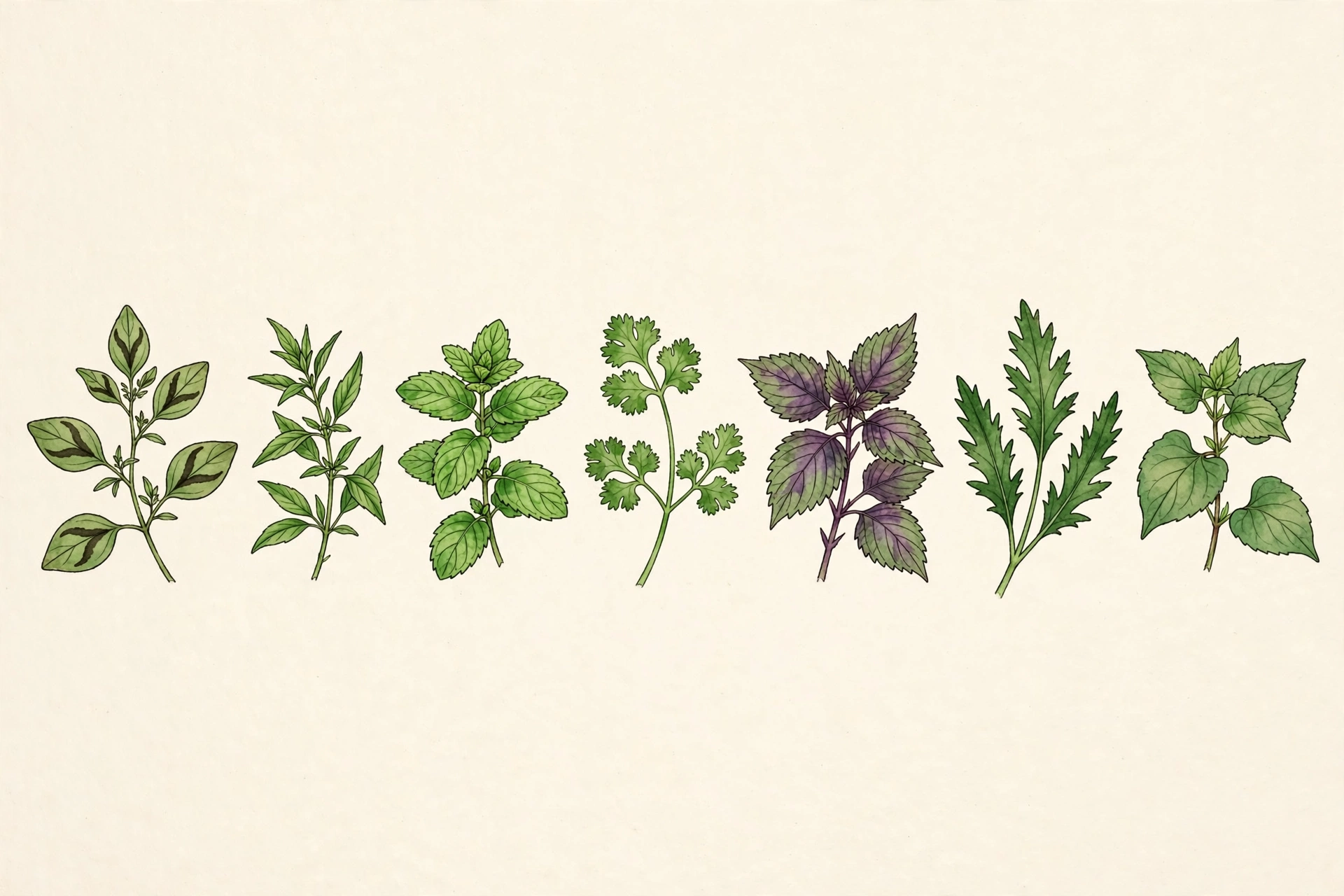
What it looks like: Lance-shaped, pointed leaves on reddish jointed stems. Each leaf has a dark brownish-purple V or chevron mark near the center. That mark is a strong clue — but check the full set of traits (leaf shape, jointed reddish stems, aroma), since other plants in the Persicaria family can show similar markings.
What it tastes like: Peppery and citrusy with a coriander-like aroma. Bolder than cilantro, with a warm bite.
Used in: Spring rolls, pho, noodle salads, rice paper rolls — usually served raw alongside the dish, or tossed in at the last minute.
Don’t confuse it with: Cilantro. Same English name family, totally different plant. Rau ram is in the knotweed family (Persicaria odorata); cilantro is in the parsley family. Rau ram handles heat better and has that peppery edge.
Grow it yourself: See our guide to growing Vietnamese coriander.
Thai Basil — Húng Quế
What it looks like: Narrow, pointed leaves with slightly serrated edges, often on purple-tinged stems. The leaves are smaller and sharper than Italian basil, and the plant has a distinctive anise-licorice scent when you crush a leaf.
What it tastes like: Sweet with a clear anise/licorice note. Much spicier and more aromatic than Italian basil.
Used in: Pho (served raw on the side), stir-fries, soups, curries.
Don’t confuse it with: Italian (sweet) basil — the leaves are rounder, the flavor is milder, and it lacks the anise note. Also don’t confuse it with holy basil (húng cây / tulsi), which has hairier leaves and a more clove-like, peppery flavor used mainly in Thai cooking.
Mint — Rau Húng Lủi / Rau Thơm
What it looks like: Bright green, wrinkled, serrated leaves on square stems — the square stem is the classic mint-family tell. The Vietnamese variety is usually spearmint.
What it tastes like: Cool and fresh, classic spearmint flavor, milder than peppermint.
Used in: Spring rolls, salads, noodle bowls, as a fresh garnish herb.
Don’t confuse it with: Fish mint (rau diếp cá, below) — the names sound similar in translation but the plants and flavors are completely different. Also, “rau thơm” is a generic word for fragrant herbs in Vietnamese, so a label that just says “rau thơm” is ambiguous — check the leaf shape.
Cilantro — Ngò Rí / Rau Mùi
What it looks like: Round, lobed, almost lacy leaves on thin green stems. You probably know this one already — it’s the same cilantro sold everywhere.
What it tastes like: Fresh, citrusy, slightly soapy to some people (that’s genetic, not your imagination).
Used in: Garnish on nearly everything — soups, noodle bowls, banh mi. Often chopped and scattered over finished dishes.
Don’t confuse it with: Culantro (ngò gai, below). Different leaf, different intensity, not interchangeable one-for-one.
Perilla — Tía Tô
What it looks like: Large, broad, serrated leaves, often purple on the underside (sometimes fully purple-green). The leaf edges are jagged and the surface looks slightly crinkled.
What it tastes like: Hard to pin down — a mix of mint, basil, and something slightly medicinal or citrusy. Very distinctive once you’ve had it.
Used in: Served raw with grilled meats, in salads, and with certain soups. Big leaves make a good wrapper for grilled bites.
Don’t confuse it with: Japanese shiso — same species (Perilla frutescens), different variety, and they taste noticeably different. Vietnamese tía tô is its own thing; don’t substitute Korean kkaennip blindly and expect the same flavor.
Culantro — Ngò Gai
What it looks like: Long, strap-like leaves with saw-toothed edges — the serrations are sharp and obvious. Looks nothing like cilantro despite the name. Leaves can be 4–8 inches long.
What it tastes like: Like cilantro turned up to eleven — stronger, more pungent, and it holds up to heat better than cilantro does.
Used in: Pho broth (added during cooking), soups, stews — anywhere you want cilantro flavor that survives simmering.
Don’t confuse it with: Cilantro (ngò rí). Culantro is the long sawtooth leaf; cilantro is the round lacy one. In cooking, culantro can go in early; cilantro should go in last.
Fish Mint — Rau Diếp Cá
What it looks like: Heart-shaped leaves on jointed stems, with a slightly glossy surface. When crushed, the smell is unmistakable — fishy and pungent in a way no other herb is.
What it tastes like: Fishy, peppery, and assertive. It’s a love-it-or-hate-it herb; Vietnamese diners who grew up with it reach for it automatically.
Used in: Served raw alongside grilled meats, spring rolls, and in herb plates for wrapping.
Don’t confuse it with: Regular mint — despite “mint” in the English name, fish mint (Houttuynia cordata) isn’t a mint at all and tastes nothing like one. Don’t buy it thinking it’ll freshen a salad the way spearmint does.
Vietnamese Balm — Kinh Giới
What it looks like: Slender, narrow leaves on upright stems, somewhat similar to a small-leafed basil but with a different scent — lemony and slightly sharp.
What it tastes like: Lemon-mint with a peppery edge. Lighter than Thai basil, brighter than mint.
Used in: Herb plates for banh xeo and grilled meats, salads, fresh rolls.
Don’t confuse it with: Thai basil or mint — kinh giới (Elsholtzia ciliata) sits somewhere between them in flavor but is its own herb. If a recipe calls for it specifically, Thai basil is the closest common substitute, though the flavor won’t match exactly.
The Confusion Cheat Sheet
| If you’re choosing between… | Remember this |
|---|---|
| Rau ram vs. cilantro | Different plants entirely. Look for the dark V-mark on rau ram leaves. |
| Thai basil vs. Italian basil | Thai basil: narrow leaves, purple stems, anise scent. |
| Culantro vs. cilantro | Culantro: long sawtooth leaves, goes in early. Cilantro: round lacy leaves, goes in last. |
| Fish mint vs. regular mint | Fish mint smells fishy and isn’t a true mint. |
| Perilla vs. shiso | Same species, different flavor — not one-for-one substitutes. |
| Kinh giới vs. Thai basil | Kinh giới is lemony-sharp; Thai basil is anise-sweet. |
Buying and Storing
- Buy: Look for perky, unbruised leaves. Herbs sold with roots attached last longer. Avoid bunches with slimy or blackened leaves.
- Store: Wrap loosely in a damp paper towel, slip into a bag, and refrigerate. Most of these herbs last 4–7 days this way; basil hates the cold the most and may blacken in the fridge — keep it at room temperature in a jar of water like cut flowers if your kitchen is cool.
- Freeze: Delicate fresh herbs don’t freeze well raw. If you have a surplus, culantro and Thai basil can be blended into a paste with a little oil and frozen in portions.
Sources
- A Seed to Life, “Grow Rau Ram organically | Vietnamese Coriander” — botanical identity of Persicaria odorata (Polygonaceae, not related to cilantro). https://www.aseedtolife.com/blogs/gardening/grow-rau-ram-organically-vietnamese-coriander
- RxHarun plant profile, “Persicaria odorata, Vietnamese coriander” — leaf description including the dark central markings, flavor notes. https://rxharun.com/resources/rx-vegetables-herbs-and-spices-a-z/persicaria-odorata-vietnamese-coriander-cambodian-mint-praew-leaf/
Editorial note: Herb identities in this guide — rau ram (Persicaria odorata), tia to (Perilla frutescens), rau diep ca (Houttuynia cordata), ngo gai (Eryngium foetidum), kinh gioi (Elsholtzia ciliata) — follow standard botanical references, including the published rau ram sources above and the Wikipedia plant profiles for each species. No first-hand taste tests or growing trials were conducted.