
There is a pan of pajeon for every kind of rainy day in Korea. When the weather turns gray, the batter comes out, scallions get chopped into long green ribbons, and a skillet starts to hiss. The finished pancake is crisp at the edges, tender and chewy in the middle, and packed with sweet, mellow scallions. A small bowl of tangy soy dipping sauce sits alongside, and the pancake disappears wedge by wedge while it is still hot.
Pajeon belongs to the wider jeon family — savory ingredients coated in a light batter and pan-fried. Haemul pajeon adds seafood, kimchi jeon folds in chopped kimchi, and plain pajeon keeps the focus on scallions. That simplicity is the point. With a short ingredient list and about half an hour start to finish, this is one of the most forgiving Korean dishes you can make at home.
What Pajeon Is
Jeon are often described as Korean pancakes, but that can set the wrong expectation. A breakfast pancake is thick, fluffy, and sweet. A pajeon is thin, lacy, and savory, closer to a crisp fritter. The batter is a thin coat, not a cushion: it holds the scallions together and delivers a golden, crunchy rim while the center stays moist and chewy.
In Korea, pajeon is classic anju — food served with drinks — and it shows up at markets, street stalls, and home tables alike. It is also the food many Koreans reach for on rainy days: the sizzle of batter in hot oil sounds like rain on a roof, and makgeolli, the milky rice wine, is the traditional pairing. You do not need either to enjoy it, though a hot skillet and a hungry table help.
The Batter Matters More Than You Think
Pajeon batter has just a few parts: flour, cold water, an egg, salt, and sometimes starch or baking powder. Korean cooks often use buchim garu, a seasoned pancake mix. All-purpose flour works well at home, and the details below keep the texture right.
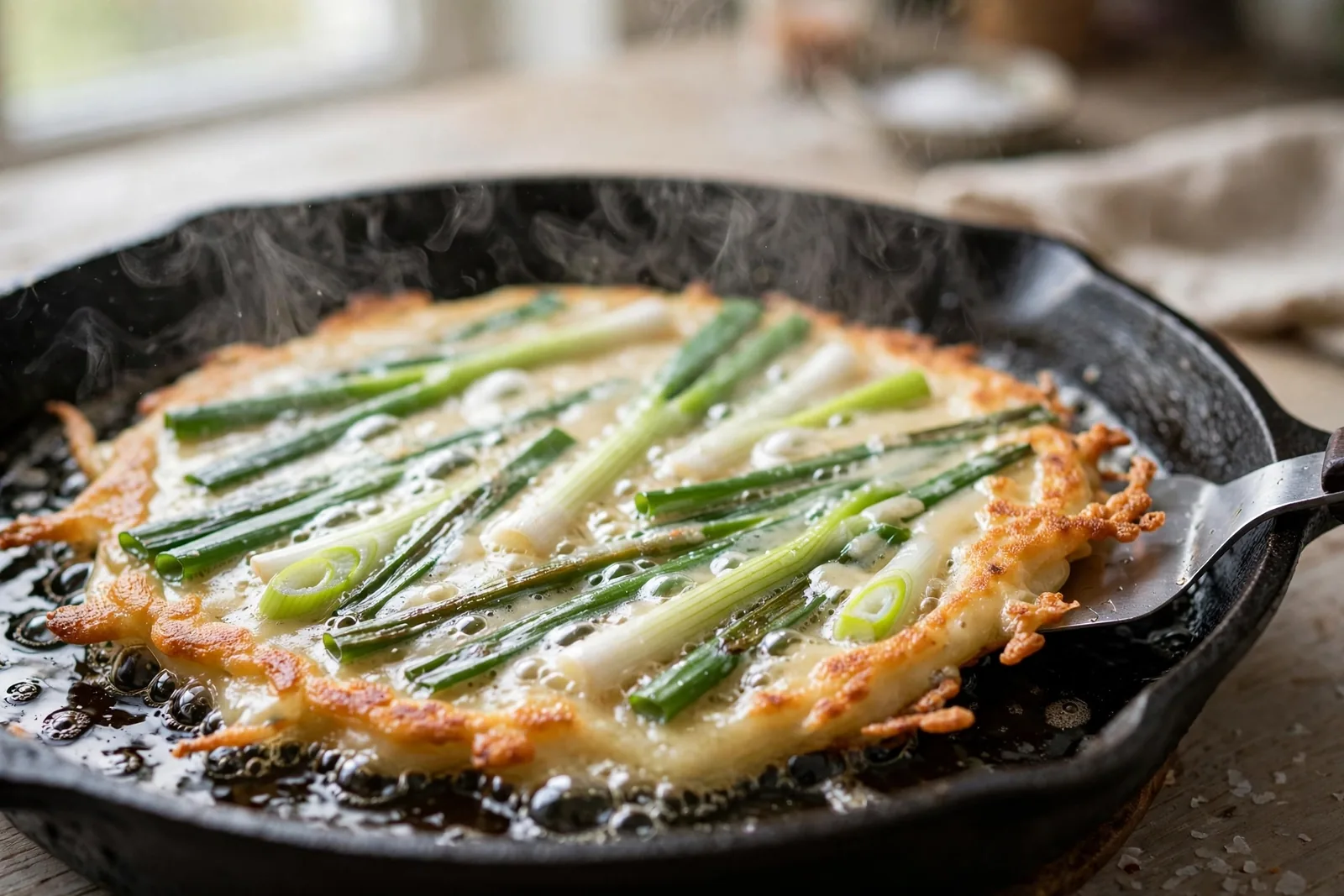
Use ice-cold water. Cold batter hitting hot oil sets up a crisper edge, and mixing only until the flour disappears keeps the pancake tender instead of tough. A few small lumps are fine. The batter should pour like heavy cream — much thinner than American pancake batter. If it coats the scallions in a thick blanket, the center steams instead of frying and you lose the lacy crispness that makes pajeon so good.
Pajeon
Crisp-edged Korean scallion pancakes with a tender center, served with a tangy soy dipping sauce.
Prep time: 15 minutes
Cook time: 15 minutes
Total time: 30 minutes
Servings: 4 (makes 2 large pancakes)
Ingredients
For the pancakes:
- 1 large bunch scallions (about 10 to 12), roots trimmed
- 1 cup (125 g) all-purpose flour
- 2 tablespoons cornstarch or potato starch
- 1/2 teaspoon baking powder
- 3/4 teaspoon fine sea salt
- 1 large egg, lightly beaten
- 1 cup (240 ml) ice-cold water, plus 1 to 2 tablespoons more as needed
- 3 to 4 tablespoons neutral oil (grapeseed, avocado, or vegetable), divided
For the dipping sauce (chojang-style):
- 3 tablespoons soy sauce
- 1 tablespoon rice vinegar
- 1 teaspoon sugar
- 1 teaspoon toasted sesame oil
- 1 teaspoon toasted sesame seeds
- 1/2 teaspoon gochugaru (Korean chili flakes), optional
- 1 tablespoon finely sliced scallion greens
Instructions
- Cut the scallions into 3-inch lengths. Halve any thick white parts lengthwise so everything cooks at the same rate. Pat the scallions dry with a clean towel. Dry scallions fry crisper than wet ones.
- Stir the flour, cornstarch, baking powder, and salt together in a large bowl. Add the beaten egg and ice-cold water and whisk just until a thin, pourable batter forms. Do not overmix. Fold the scallions into the batter so every piece is lightly coated.
- Stir all of the dipping sauce ingredients together in a small bowl and set aside. The sugar should dissolve fully.
- Heat a 10- to 12-inch skillet, ideally cast iron or heavy nonstick, over medium-high heat. Add 1 1/2 tablespoons of the oil and swirl to coat the bottom.
- When the oil shimmers, add half of the scallion batter to the pan. Use tongs or a spatula to spread the scallions into an even single layer, then ladle any loose batter over the top to fill bare spots. Cook for 3 to 4 minutes, until the bottom is deep golden and the edges look dry and crisp.
- Flip the pancake in one confident motion, or slide it onto a plate and invert it back into the pan. Add a drizzle of oil around the edge. Cook 2 to 3 minutes more, pressing down gently with a spatula, until the second side is golden and crisp.
- Slide the pancake onto a board and repeat with the remaining batter and oil. Cut each pancake into wedges or squares and serve at once with the dipping sauce.
Notes
- Keep the pan hot. If the heat is too low, the batter absorbs oil and goes soft instead of crisping. The batter should sizzle the moment it touches the pan.
- Do not crowd the pan with a thick layer of scallions. A single, even layer gives you crisp edges and a center that cooks through.
- Pajeon is best straight from the skillet. The edges soften as it sits, so time the rest of the meal around the pancakes, not the other way around.
Why the Flip Is Easier Than It Looks
A wide, flat spatula and a little confidence handle most flips. If the pancake feels fragile, the plate method never fails: slide it onto a large plate, cooked side down, place the skillet over the plate, and flip them together so the uncooked side lands in the hot pan. Add fresh oil around the rim after the flip — that extra oil crisps the second side and gives you the lacy, frilled edge all the way around.
Smaller pancakes, about 5 inches across, are easier to flip and give you more crisp edge per bite.
Variations Worth Trying
Once plain pajeon clicks, the batter becomes a base you can build on without changing the method.
- Haemul pajeon (seafood): Scatter 1 cup of small shrimp, squid pieces, or a mix of both over the batter right after it hits the pan. Press gently so the seafood sets into the pancake as it cooks.
- Kimchi pajeon: Replace half the scallions with 1 cup of well-drained, chopped ripe kimchi and swap 1/4 cup of the water for kimchi juice. The color turns sunset orange and the flavor gets tangy and bold.
- Cheese pajeon: Sprinkle a small handful of shredded mozzarella over the pancake just before flipping. The cheese melts into the center and adds a mild, stretchy pull.
- Chili heat: Slice a fresh red or green chili thin and scatter it over the top for color and a gentle burn. A spoonful of gochugaru in the dipping sauce does the same job.
Serve a seafood version next to tteokbokki and you have the full street-food spread at home. For a lighter table, pair plain pajeon with a cool, crunchy side like Oi Muchim: Korean Cucumber Salad — the bright vinegar cuts right through the rich, fried edges.
What to Serve With Pajeon
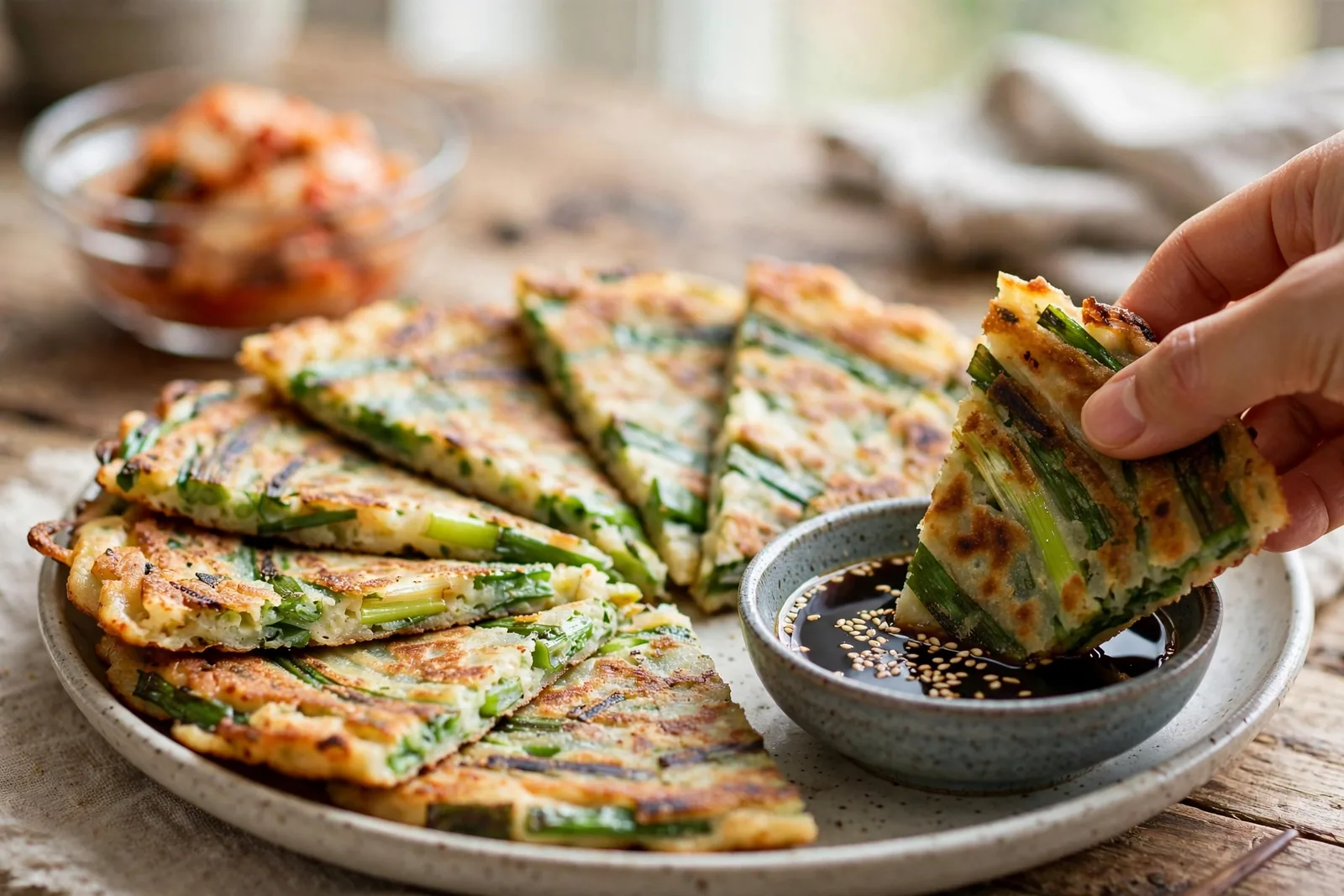
Pajeon rarely travels alone. At a Korean table it lands alongside kimchi, a soup or stew, and a few small banchan. At home, keep it simple: pajeon, dipping sauce, and one or two easy sides make a complete light meal or a generous starter for four.
For a fuller Korean dinner, serve pajeon as the opener before Kimchi Fried Rice — the pancakes start crisp and savory, and the fried rice brings the heat right after. Both share a pantry, so if you have scallions, soy sauce, and sesame oil, you are most of the way to both.
Storing and Reheating
Leftover pajeon keeps in an airtight container in the fridge for up to 2 days. Reheating matters: skip the microwave, which steams it soft. Warm a dry skillet with a few drops of oil over medium heat and fry the wedges for 1 to 2 minutes per side until the edges crisp again. An air fryer at 375°F for 3 to 4 minutes works well too.
You can freeze cooked pancakes between sheets of parchment for up to 1 month. Reheat from frozen in a hot skillet with a little oil. The texture will not match a fresh pancake, but it comes close for a quick snack.
Final Thoughts
Pajeon rewards a hot pan, cold batter, and scallions left in long pieces. Mix lightly, spread thin, and let the bottom go properly golden before you turn it. Pull it from the skillet, cut into wedges, and get it to the table while the edges still crackle. The dipping sauce does the rest.
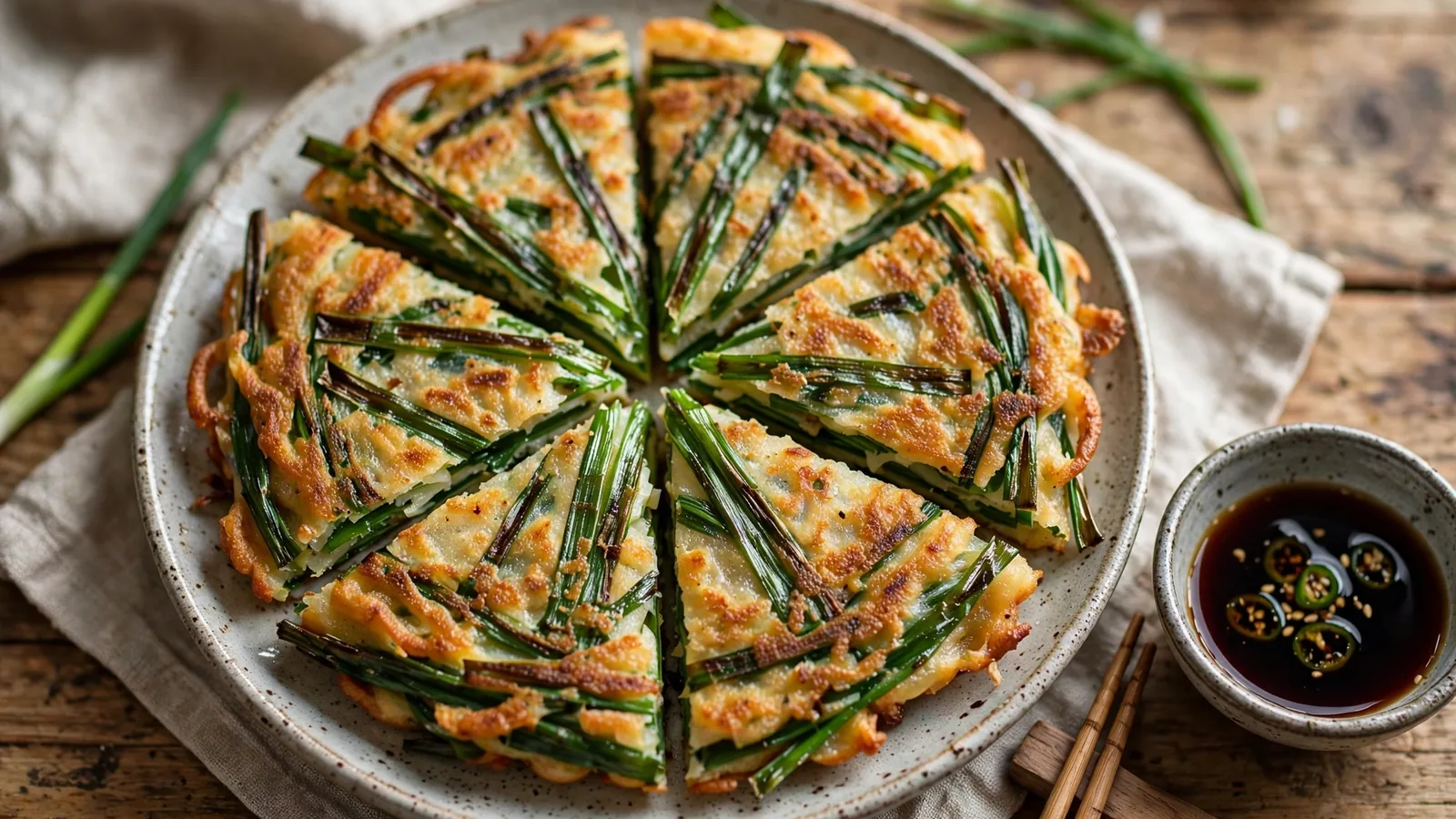
Pajeon: Korean Scallion Pancakes
Ingredients
Method
- Cut the scallions into 3-inch lengths. Halve any thick white parts lengthwise so everything cooks at the same rate. Pat the scallions dry with a clean towel.
- Stir the flour, cornstarch, baking powder, and salt together in a large bowl. Add the beaten egg and ice-cold water and whisk just until a thin, pourable batter forms. Do not overmix. Fold the scallions into the batter so every piece is lightly coated.
- Stir all of the dipping sauce ingredients together in a small bowl and set aside until the sugar dissolves fully.
- Heat a 10- to 12-inch skillet over medium-high heat. Add 1 1/2 tablespoons of the oil and swirl to coat the bottom.
- When the oil shimmers, add half of the scallion batter to the pan. Spread the scallions into an even single layer and ladle loose batter over bare spots. Cook 3 to 4 minutes, until the bottom is deep golden and the edges look dry and crisp.
- Flip the pancake, add a drizzle of oil around the edge, and cook 2 to 3 minutes more, pressing down gently, until the second side is golden and crisp.
- Slide the pancake onto a board and repeat with the remaining batter and oil. Cut each pancake into wedges or squares and serve at once with the dipping sauce.