
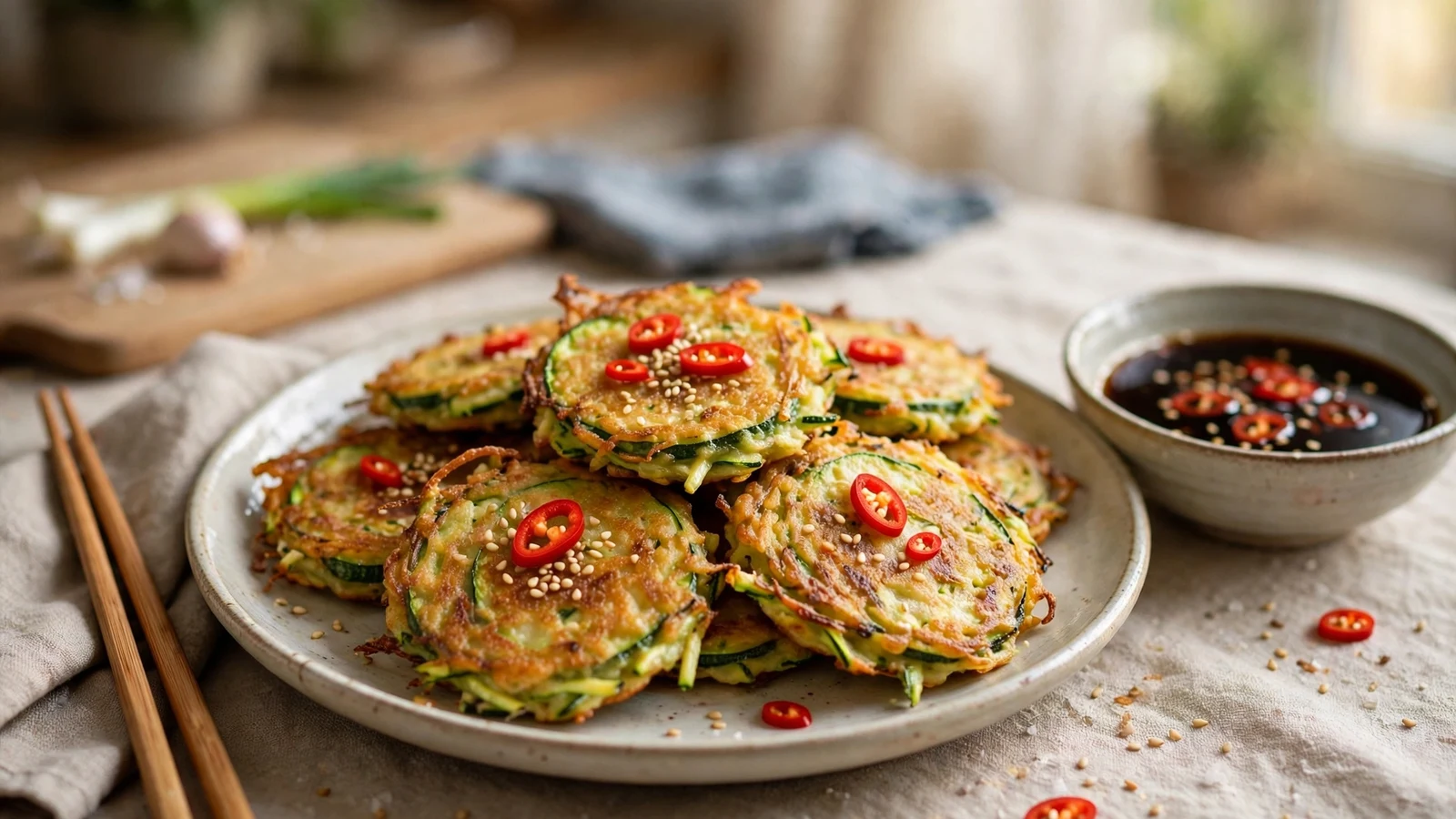
Small Rounds, One Simple Rule
Hobak jeon are pan-fried zucchini rounds, each one salted, dusted with flour, dipped in beaten egg, and fried until the edges turn lacy and gold. They show up on Korean tables as a banchan (side dish), as a lunchbox extra, and as a quiet first plate before a bigger meal. The ingredient list is short, and the cooking is quick. The one rule that decides whether the fritters come out crisp or soggy is the salt: it pulls water out of the zucchini before the coating ever touches the pan.
If you have made Pajeon: Korean Scallion Pancakes before, you already know the wider jeon family. Pajeon spreads scallions through a thin batter and fries them as one big pancake to cut into wedges. Hobak jeon works piece by piece instead: no batter bowl, just a light flour-and-egg coat on every round, so the zucchini stays in front and the crust stays thin.
Slice Thickness Changes the Whole Bite
Cut the rounds evenly and they finish at the same moment. How thick you cut them sets the texture more than any other choice:
| Slice thickness | Texture | Fry time per side | Best for |
|---|---|---|---|
| About 1/8 inch (3 mm) | Crisp edges, zucchini just tender, almost chip-like | 1 to 1 1/2 minutes | Snacking straight off the plate |
| About 1/4 inch (6 mm) | Golden coat, soft and juicy center | 2 to 2 1/2 minutes | The standard banchan serving |
| About 3/8 inch (10 mm) | Thick, meaty center, coat can brown before the middle softens | 3 minutes, then a brief rest in the pan | A heartier side next to rice and soup |
The middle row is the place to start. Thinner slices are forgiving on timing but go limp fast; thicker slices need the full rest so the center loses its raw crunch.
Ingredients
For the fritters
- 2 medium zucchini (about 1 lb / 450 g total), ends trimmed
- 3/4 teaspoon fine salt, for salting the rounds, plus a small pinch for the eggs
- 1/2 cup (65 g) all-purpose flour
- 2 large eggs
- 2 to 3 tablespoons neutral oil (grapeseed, avocado, or vegetable), for frying
- 1 small red chili, thinly sliced, for garnish (optional)
- 1 teaspoon toasted sesame seeds, for garnish (optional)
For the dipping sauce
- 2 tablespoons soy sauce
- 1 tablespoon rice vinegar
- 1 teaspoon sugar
- 1 teaspoon toasted sesame oil
- 1 teaspoon toasted sesame seeds
- 1/2 teaspoon gochugaru (Korean chili flakes), optional
Prep: 20 minutes (including 10 minutes of salting). Cook: 12 minutes. Total: 32 minutes. Serves 4 as a side dish; makes about 20 rounds.
How to Make It, Step by Step
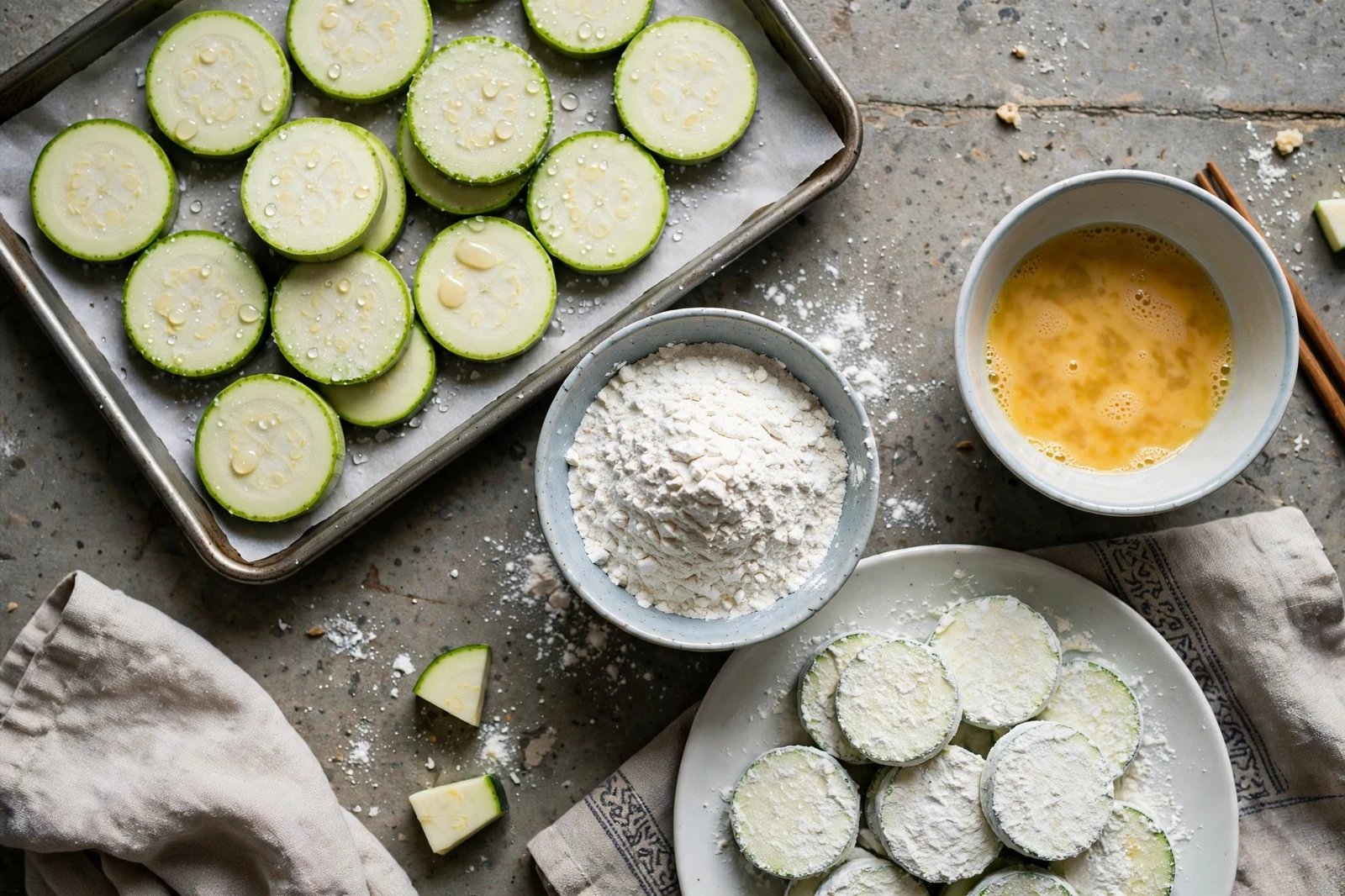
1. Slice and salt. Cut the zucchini into rounds about 1/4 inch (6 mm) thick and lay them in a single layer on a tray or large plate. Sprinkle the 3/4 teaspoon salt over both sides and leave them for 10 minutes. The surfaces will bead with water; that is the salting doing its job.
2. Pat every round dry. Blot both sides with a clean towel or paper towels until the surfaces look matte, not shiny. A dry surface is what lets the flour cling in a thin, even film instead of sliding off in the pan.
3. Set up the two stations. Spread the flour on a small plate. Beat the eggs with the small pinch of salt in a shallow bowl until the yolks and whites are one even color. Work one round at a time: coat both sides lightly in flour, shake off the excess, then dip in the egg and let the extra drip back into the bowl.
4. Fry the first side. Heat a large skillet over medium heat and add enough oil to coat the bottom in a thin film, about 1 tablespoon. Lay the coated rounds in a single layer with a little space between them. Fry 2 to 2 1/2 minutes, until the undersides are set and golden at the edges. If you are using the chili, press one thin slice onto the top of a few rounds before you flip them.
5. Flip once and finish. Turn each round and fry 1 1/2 to 2 minutes more, until the second side is pale gold and the zucchini gives slightly when pressed with the spatula. Move the finished rounds to a rack or a paper-towel-lined plate. Fry the rest in batches, adding a drizzle of oil between batches and letting the pan come back to heat for 30 seconds each time.
6. Mix the sauce and serve hot. Stir the soy sauce, rice vinegar, sugar, sesame oil, sesame seeds, and gochugaru (if using) together until the sugar dissolves. Scatter sesame seeds over the fritters if you like, and serve right away with the sauce in a small bowl for dipping.
Hobak jeon hold their crisp edge for only a few minutes, so they are at their best shared family-style. A plate of these next to Oi Muchim: Korean Cucumber Salad gives you hot and crisp against cold and spicy, which is a very Korean way to balance a table.
Why the Salt Step Matters
Zucchini is mostly water, and that water has nowhere to go in a hot pan except out through the coating. Un-salted rounds steam inside their egg coat, the coat turns pale and soft, and the finished fritters weep onto the plate. Ten minutes of salt pulls a surprising amount of liquid to the surface where you can blot it away. The flour then grips, the egg sets fast on contact with the oil, and the edges fry instead of steaming. If your first batch ever comes out limp, the fix is almost never more flour; it is a longer salt and a drier round going in.
Tips for Crisp Edges
- Shake off the flour. The coat should look like a dusting, not a shell. Thick flour turns gummy where it meets the egg. A quick tap against the plate edge before the egg dip keeps it thin.
- Let the egg drip. Hold each dipped round over the bowl for two seconds. Puddled egg cooks into a flat skirt around the fritter instead of a neat coat.
- Medium heat, patient batches. Too cool and the rounds absorb oil; too hot and the egg browns before the center softens. The oil should shimmer and a test round should sizzle steadily, not spit.
- Do not crowd the pan. Crowded rounds drop the pan temperature and steam each other. Leave a fingertip of space between pieces and cook in two batches if your skillet is small.
- Serve within minutes. Hobak jeon are a cook-and-carry dish. If the table is not ready, hold the finished rounds on a rack in a low oven (200°F / 95°C) for up to 15 minutes.
Variations and Swaps
- With potato starch. Swap half the flour for potato starch for a slightly crisper, more delicate crust that stays lacy at the rim.
- With garlic in the egg. Whisk 1 small clove of garlic, grated to a paste, into the beaten eggs for a rounder, savory coat.
- Ae-hobak if you can find it. Korean ae-hobak is rounder, thinner-skinned, and a little sweeter than common zucchini. Use it exactly the same way, with the same salt and timing.
- Yellow squash. Summer squash of any color works with the same method. Seeds in large squash can be watery, so give big rounds the full 10-minute salt and blot twice.
- A fuller plate. Turn the side into a light meal with a bowl of rice and a spoonful of kimchi, or set the fritters alongside Japchae: Korean Glass Noodle Stir-Fry for a table built for sharing.
Storage and Leftovers
Hobak jeon are best within minutes of frying, and no storage method fully brings back the first crisp bite. If you have leftovers, cool them completely, then refrigerate in a sealed container with a paper towel between layers for up to 2 days. Reheat in a dry skillet over medium heat for about 2 minutes per side, or in an air fryer at 375°F (190°C) for 3 to 4 minutes, until the edges crisp again. Avoid the microwave here; it softens the coat. Cooked leftovers do not freeze well, but raw salted and blotted rounds also should not wait: coat and fry them the same day you slice them.

What to Serve Alongside
As part of a Korean meal, hobak jeon sit comfortably next to rice, a soup or stew, and two or three other banchan with contrasting temperatures and textures. They are mild by design, so the dishes around them can carry the heat and acidity. On their own with the dipping sauce and a bowl of rice, they also make a quiet, quick lunch.
Hobak Jeon: Korean Zucchini Fritters
Ingredients
Method
- Slice and salt. Cut the zucchini into rounds about 1/4 inch (6 mm) thick, lay them in a single layer, sprinkle with the 3/4 teaspoon salt on both sides, and leave for 10 minutes until the surfaces bead with water.
- Pat every round dry with a clean towel or paper towels until the surfaces look matte, so the flour clings in a thin, even film.
- Set up two stations: flour spread on a small plate, and eggs beaten with a small pinch of salt in a shallow bowl. Coat each round lightly in flour, shake off the excess, then dip in egg and let the extra drip back.
- Fry the first side in a thin film of oil over medium heat for 2 to 2 1/2 minutes, until set and golden at the edges. Press a thin chili slice onto a few rounds before flipping, if using.
- Flip once and fry 1 1/2 to 2 minutes more, until pale gold and tender. Drain on a rack or paper towels and fry the rest in batches, adding oil and letting the pan reheat between batches.
- Stir the soy sauce, rice vinegar, sugar, sesame oil, sesame seeds, and gochugaru together until the sugar dissolves. Serve the fritters hot with the sauce for dipping.