
Fresh herbs can go from bright and fragrant to black and slimy in two days if they land in the refrigerator the wrong way. A bunch of cilantro stuffed into a produce bag, still wet from the store misters, is almost guaranteed to disappoint by the weekend. Most herbs fail for the same few reasons: too much water on the leaves, too little water at the stems, crushed leaves, or a refrigerator spot that is far too cold.
This guide sorts herbs into two simple camps — tender herbs and sturdy herbs — and gives each camp the storage method it actually likes. With about five minutes of prep when you get home, cilantro, Thai basil, mint, perilla, and scallions can stay usable for a week or more, ready for dishes like pho ga, som tum, and Vietnamese green papaya salad.
Start Here: Sort, Trim, and Dry
No matter which herbs you bought, the first minutes decide the rest of the week.
Sort the bunch. Open each bunch and pull out any leaf that is already black, yellow, or slimy. One rotting leaf spreads moisture and off smells to everything next to it. This single step does more for storage life than any container you can buy.
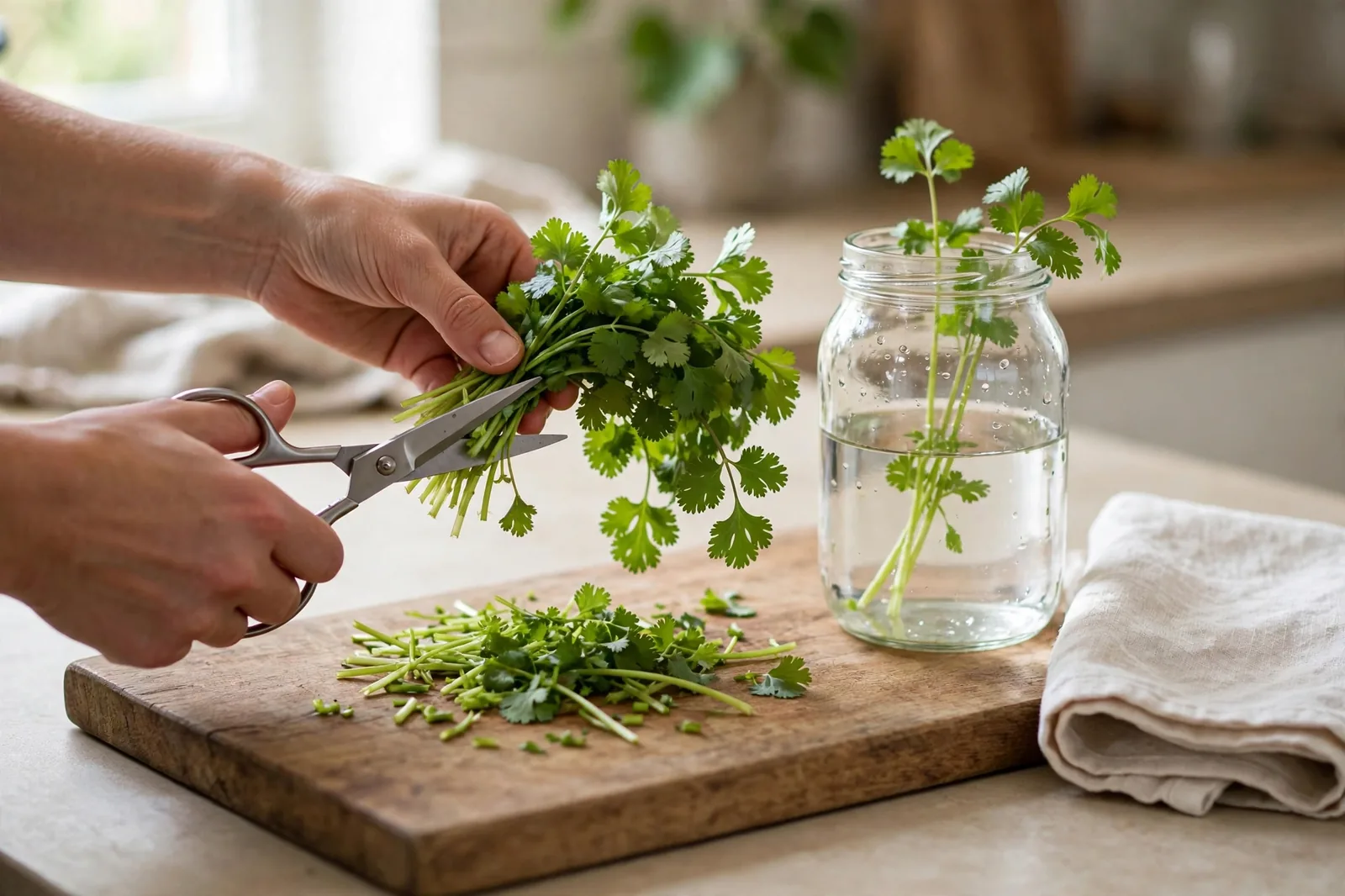
Trim the stems. Cut about half an inch off the stem ends with a clean knife or scissors. Freshly cut stems drink water again, much like cut flowers. If the stems look brown and dry, trim a little more until you see pale, fresh tissue.
Wash, then dry well. A quick rinse removes grit, but herbs should never go into storage dripping wet. Water sitting on tender leaves is what turns edges brown and creates that slick texture. After rinsing, spin the herbs in a salad spinner or lay them on a clean towel and pat them gently. For the jar method below, slightly damp is fine. For the towel-wrap method, the leaves should feel mostly dry to the touch.
Keep bunches loose. Do not tie herbs tightly or press them under heavier vegetables. Bruised leaves darken fast.
Method 1: The Jar of Water for Tender Herbs
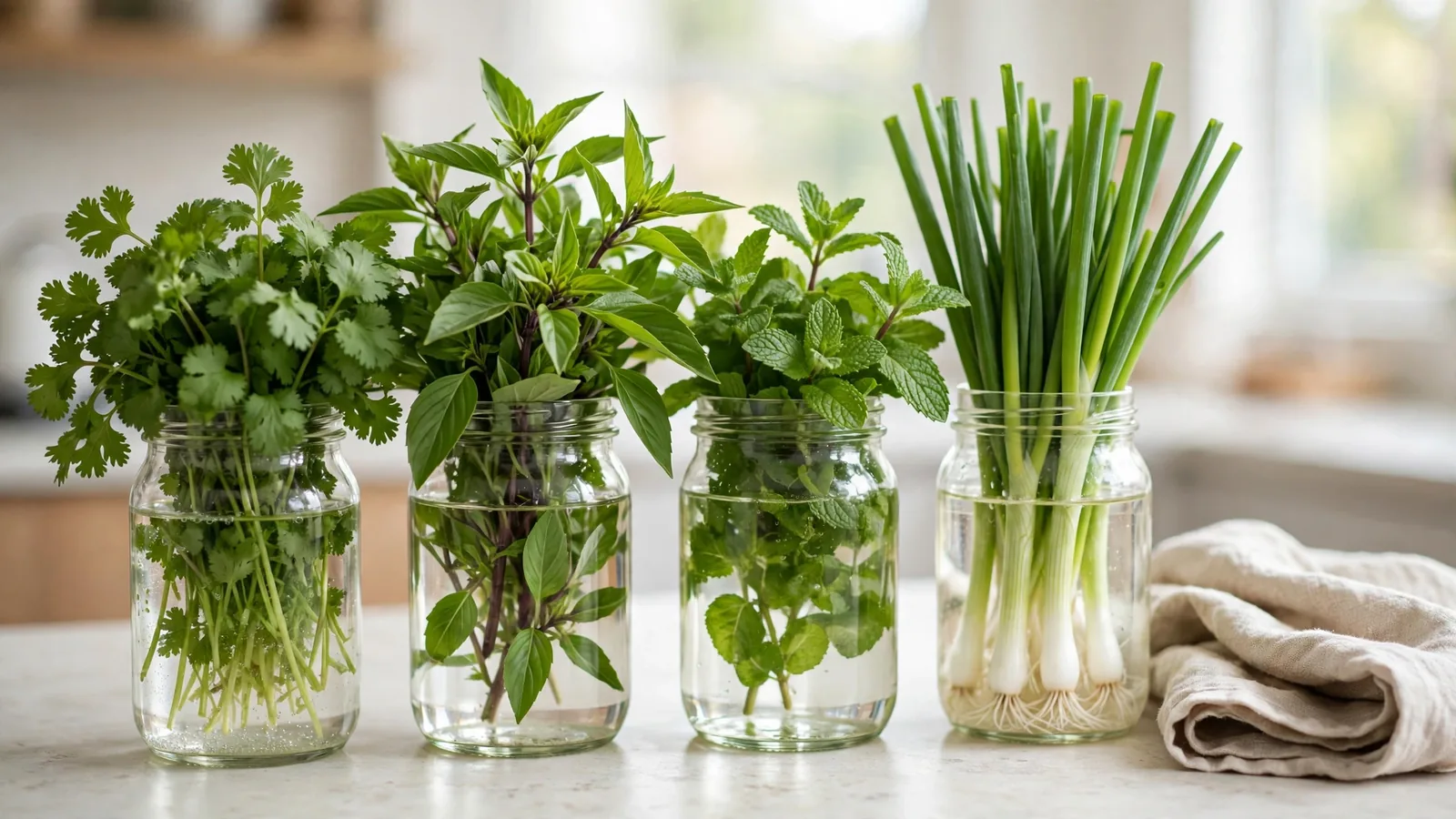
Tender herbs have soft stems and thin leaves. This group includes cilantro, parsley, mint, dill, perilla, and Vietnamese coriander. They wilt quickly in dry refrigerator air, so they do best standing in water with a loose cover.
Here’s how to set it up:
- Fill a clean jar or sturdy glass with about an inch of cool water.
- Stand the trimmed bunch in the jar, stems down, leaves up. The water should cover the stem ends only, not the leaves.
- Cover the leaves loosely with a clean produce bag or a slightly damp paper towel. The cover traps humidity around the leaves without sealing in standing water.
- Refrigerate the jar on a shelf, not jammed against the back wall. The back of many refrigerators runs cold enough to freeze tender leaves.
- Change the water every two days. If the water looks cloudy, rinse the stem ends when you swap it.
Stored this way, cilantro and parsley commonly stay bright for 7 to 10 days, and mint often lasts even longer. Perilla is more delicate, so check it at day four or five and use the best leaves first.
Method 2: The Towel Wrap for Sturdy Herbs
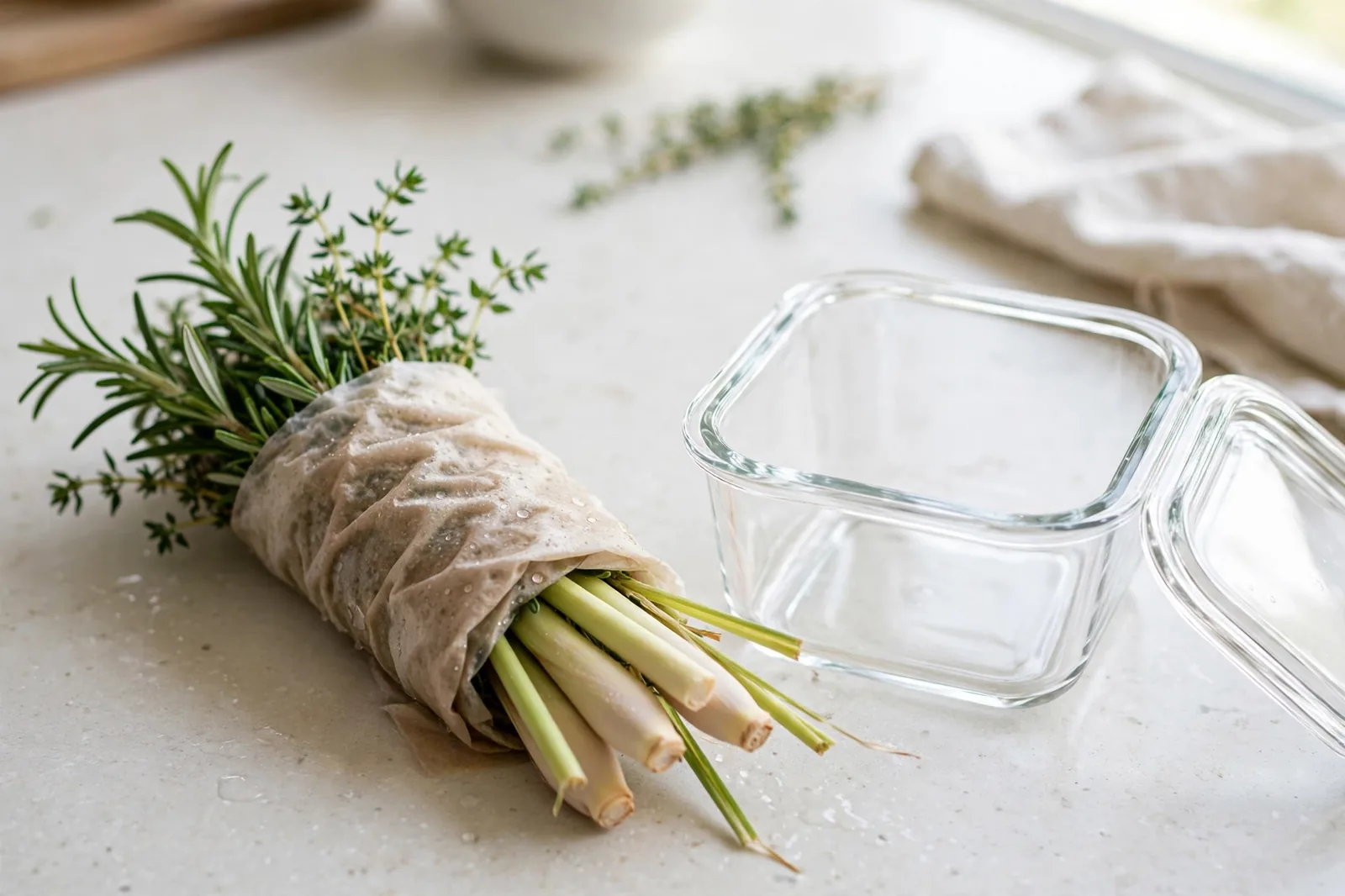
Sturdy herbs have firmer or woodier stems. Think rosemary, thyme, sage, oregano, and lemongrass stalks. They hold less water in their leaves and rot faster when they sit in a jar, so a dry wrap suits them better.
- Lay a barely damp paper towel or thin cotton cloth on the counter.
- Arrange the herb sprigs in a single layer. Do not stack them thick.
- Roll the towel up loosely, then slide the roll into a zip-top bag or an airtight container. Leave the bag slightly open, or crack the lid, so stale moist air can escape.
- Refrigerate in the crisper drawer, where the temperature is steadier than on an open shelf.
Rosemary and thyme keep well for 10 to 14 days this way. Lemongrass stalks wrapped the same way stay firm for about two weeks. For a longer hold, lemongrass also freezes very well, covered in the next section.
The Basil Exception, and Thai Basil Too
Basil is the herb that breaks the refrigerator rules. Cold air below about 50°F damages basil leaves, turning them black at the edges and then all over. Thai basil is a little tougher than Italian sweet basil, but it dislikes a cold refrigerator just the same.
Treat basil like cut flowers on the counter instead:
- Trim the stems and stand the bunch in a jar of cool water at room temperature, out of direct sun.
- Skip the bag cover on the counter. A cover in a warm kitchen can trap heat.
- Change the water every day or two, and pinch off any flower heads as they form, since flowering pulls flavor and energy away from the leaves.
- Use the bunch within 4 to 5 days. If the stems start to grow small white roots, that is normal and harmless.
If you must refrigerate Thai basil for a day or two, wrap it in a dry towel, seal it in a bag, and put it in the warmest part of the refrigerator, usually the door or the front of a shelf. Expect some dark spots and plan to cook with it soon, torn into a hot dish like Thai green curry where a small blemish will not show.
Scallions: Two Good Options
Scallions (green onions) are forgiving, which makes them a great herb to keep on hand at all times.
In a jar: Stand trimmed scallions in an inch of water, cover loosely, and refrigerate. They stay crisp for about a week, and you can snip what you need from the tops as you cook.
In a towel: For crisper whites, dry the scallions, wrap them in a slightly damp towel, and store them in a bag in the crisper. This works well when jar space is tight.
Scallion roots also regrow: keep the white root ends in water on a windowsill, change the water often, and mild new green tops will sprout in a few days for scattering over fried rice or noodle soup.
Herbs That Need a Drier Touch
A few common Asian market herbs prefer less humidity than the jar method gives them.
Garlic chives bruise and turn slimy when stored wet. Wrap dry, unwashed garlic chives in a paper towel, bag them loosely, and wash them only right before cooking. Use within about five days.
Culantro (ngo gai) has thick, saw-toothed leaves and a strong flavor. It stores best wrapped dry in a towel inside a bag, with the towel swapped if it gets damp. Expect about a week of good leaves.
Curry leaves and makrut lime leaves keep well in a sealed bag in the refrigerator for a week or more. Both freeze beautifully with almost no loss of aroma, so buy extra when you find them fresh and freeze the surplus in a flat bag.
Fresh turmeric and galangal are roots, not leafy herbs, but they ride home in the same bag. Wrap them unpeeled in a dry towel and refrigerate for two to three weeks; both freeze well, too.
Freezing Herbs for Later
When a bunch is bigger than the week ahead, freezing beats watching it fade. Freezing changes texture, so frozen herbs belong in cooked dishes rather than fresh garnishes.
Freeze whole leaves for soups and curries. Makrut lime leaves, curry leaves, and Thai basil leaves can go straight into a zip-top bag. Press out the air, freeze flat, and drop leaves into hot dishes as needed.
Freeze chopped herbs in oil. Finely chop herbs or tender stems, pack them into an ice cube tray, and cover with a neutral oil. Once frozen, pop the cubes into a bag. A cube dropped into a hot pan is a fast start for stir-fries and fried rice, and a smart way to save cilantro stems, which carry plenty of flavor.
Freeze lemongrass ready to use. Trim the tough outer layers, cut the tender lower stalk into thin rounds or smash it into short lengths, then freeze in a bag. Frozen lemongrass goes straight into soup pots and curry pastes without thawing.
Skip freezing delicate garnish herbs like perilla or shiso if you want them fresh and whole later. Their thin leaves darken and go limp. Use those fresh instead.
How to Revive Wilting Herbs
A limp bunch is not always a lost bunch. If the leaves are wilted but not black or slimy, try a cold-water soak.
Fill a large bowl with cold water and a handful of ice. Submerge the herbs for 15 to 30 minutes. Tender herbs pull water back into their leaves and often stand up again, crisp enough for cooking and, many times, for garnish too. Shake off the water, spin or pat dry, then store the revived bunch using the jar method.
If the stems are slimy, the leaves smell sour, or black spots cover most of the bunch, let it go. Reviving works on thirst, not on rot.
Storage Times at a Glance
These are realistic home ranges for herbs that were fresh when you bought them.
- Cilantro, parsley: 7 to 10 days in a jar of water, covered
- Mint: 7 to 14 days in a jar of water, covered
- Perilla, Vietnamese coriander: 4 to 7 days in a jar, checked often
- Thai basil, sweet basil: 4 to 5 days in water on the counter
- Scallions: about 7 days in a jar or towel wrap
- Rosemary, thyme, sage: 10 to 14 days in a damp towel wrap
- Garlic chives, culantro: about 5 to 7 days wrapped dry
- Makrut lime leaves, curry leaves: 7 to 10 days refrigerated, months frozen
A Simple Routine That Sticks
The cooks who always seem to have fresh herbs are not doing anything fancy. They spend five minutes at the door: sort out the bad leaves, trim the stems, dry the leaves, and give each bunch the home it likes — a jar of water for tender herbs, a towel wrap for sturdy ones, the counter for basil. They change the jar water when they notice it, and freeze the surplus before it fades.
Pick the two or three herbs you reach for most, store those well first, and the rest becomes habit fast. Your next bunch of cilantro will thank you by still being green and ready when the essential pantry staples come out for dinner.