
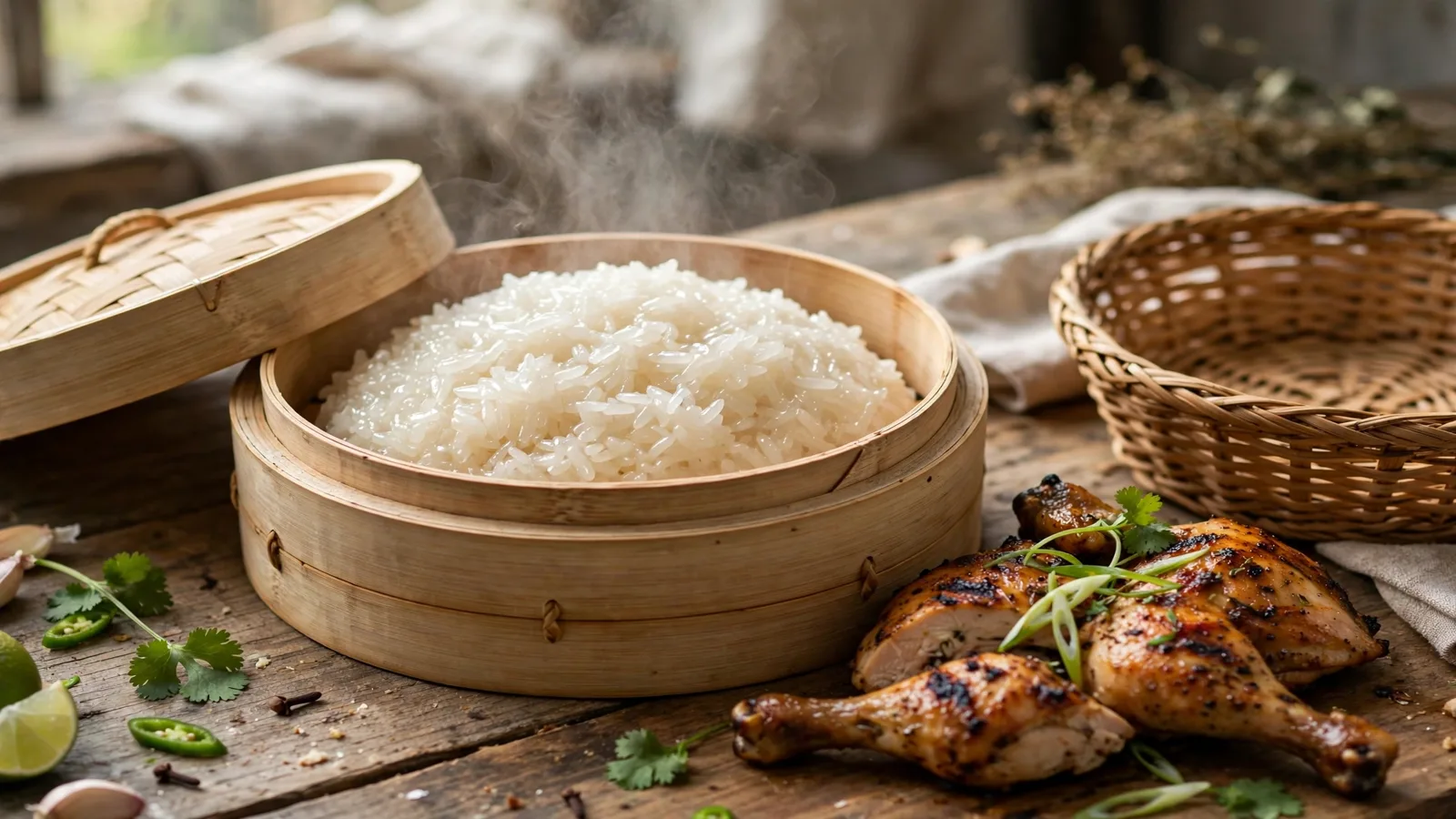
Cooked well, sticky rice is chewy, glossy, and faintly sweet, with grains that hold together in soft clumps you can pick up with your fingers. Cooked wrong, it turns into a dense, porridge-like mass, or it stays hard in the center no matter how long it sits over heat. The gap between those two results is almost never talent. It is soaking and steam.
This guide walks through the rice to buy, how long to soak it, two reliable ways to steam it, and how to serve and store the leftovers. Once you have the method down, sticky rice becomes the base for mango sticky rice, a side for Thai green curry, and a simple breakfast with a fried egg and grilled sausage.
What Sticky Rice Actually Is
Sticky rice is also sold as glutinous rice or sweet rice. The name glutinous has nothing to do with gluten. It describes the glue-like texture that comes from the starch itself. Nearly all of the starch in sticky rice is amylopectin, the starch that turns tender and sticky when heated. Regular long-grain rice like jasmine rice has more amylose, which is why those grains stay separate after cooking.
Raw sticky rice grains look different, too. They are opaque, chalky white, and a little rounder. If the bag says jasmine, basmati, or sushi rice, it is the wrong grain. Look for glutinous rice, sweet rice, or Thai sticky rice. Long-grain Thai sticky rice is the most common choice for savory meals, while short-grain sweet rice shows up often in desserts.
Sticky rice is almost always sold polished and white. Brown sticky rice needs a longer soak and gives a much chewier result. Start with the white long-grain version.
The Two Rules That Matter Most
Everything in this method follows from two facts about how sticky rice absorbs water.
First, sticky rice must soak before it cooks. Dry sticky rice grains are dense. If you put them straight over steam, the outside turns soft while the center stays hard and white, even after a long cook. A soak lets water move evenly into the grain, so it steams through at the same pace. For room-temperature water, give long-grain sticky rice 4 to 6 hours, or overnight in the refrigerator if your kitchen is warm. Short-grain sweet rice needs at least 3 to 4 hours. In a pinch, a 1-hour soak in warm water helps, but the texture will be a little firmer and less even.
Second, sticky rice steams. It does not boil. If you cook sticky rice like regular rice, measured water in a closed pot, the grains burst and turn to paste. Steam cooks them gently from the outside in while the soaked grains hold their shape. That is why a bamboo steamer, a cloth-lined steamer basket, or a fine mesh strainer over a pot all work better than a standard rice cooker cycle. Some cookers have a sweet rice setting that can work with well-soaked rice and very little added water, but steaming is more forgiving and easier to check as you go.
What You Need
- Sticky rice: 2 cups long-grain glutinous rice makes about 4 cups cooked, enough for 4 side servings
- Water: plenty for soaking, plus a few inches for the steamer pot
- A steamer setup: a bamboo steamer lined with cheesecloth or a thin cotton cloth, a metal steamer basket lined with cloth, or a heatproof fine-mesh strainer set over a pot
- A pot with a lid deep enough to hold simmering water without touching the rice
- A wide bowl or tray for cooling and serving, lightly moistened so the rice does not stick
Cheesecloth is the classic liner because steam passes through it and the cooked rice lifts out cleanly.
Step by Step: Soak and Steam
Here is the base method for 2 cups of long-grain sticky rice.
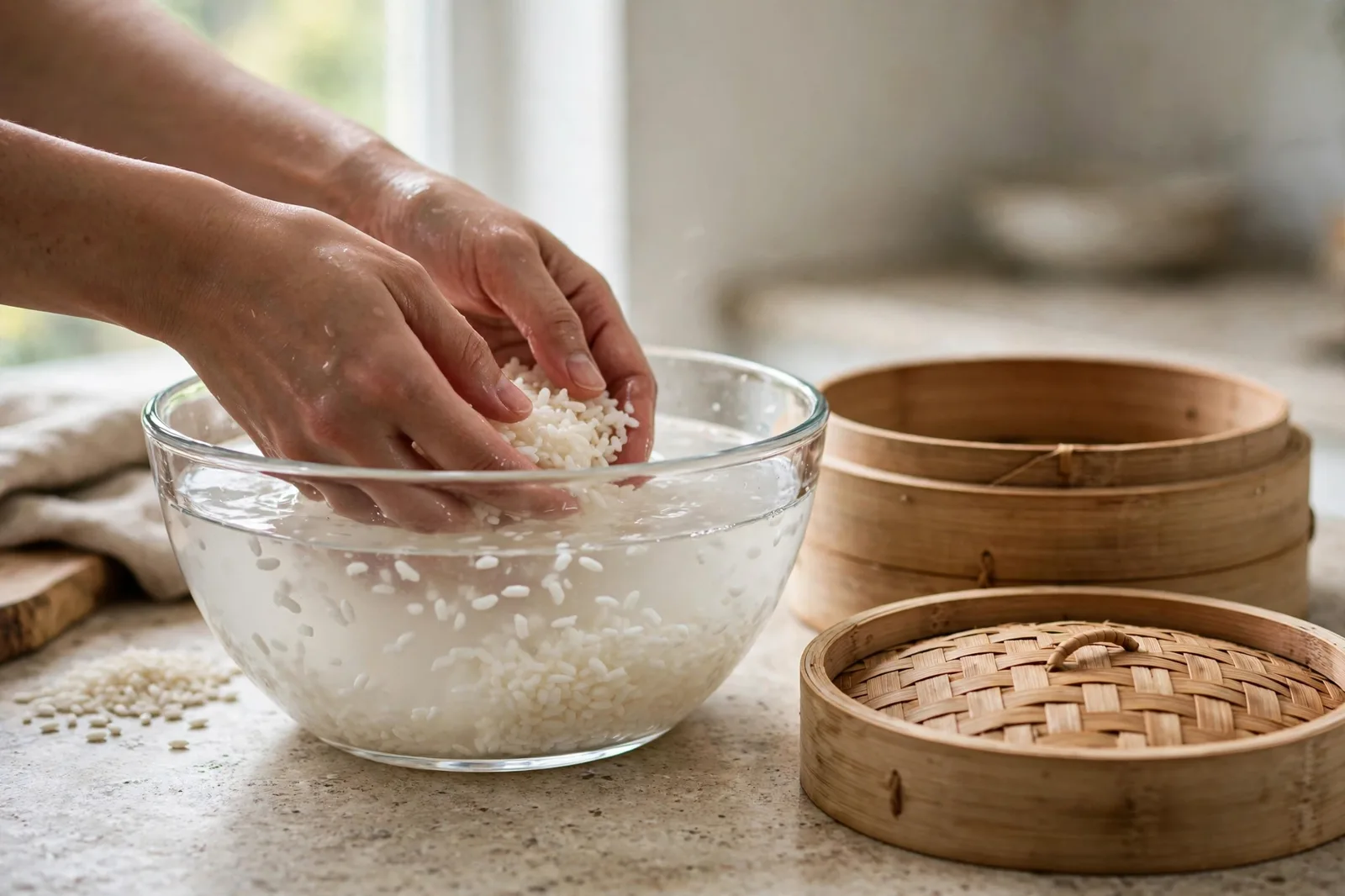
- Rinse. Put the rice in a large bowl, cover with cool water, swirl gently, and pour off the cloudy water. Repeat 2 or 3 times until the water is mostly clear. This removes loose surface starch that would make the finished rice gummy.
- Soak. Cover the rinsed rice with fresh cool water by at least 2 inches. Soak 4 to 6 hours at room temperature, or overnight. The grains will swell and look brighter white. A properly soaked grain snaps cleanly when you press it between your fingernails instead of bending.
- Drain well. Pour the rice into a colander and let it drain for a few minutes. Shake off the excess water. Do not add cooking water at this stage — the grains should go into the steamer damp, not wet and dripping.
- Set up the steamer. Fill your pot with 2 to 3 inches of water and bring it to a steady simmer. Line your steamer basket with damp cheesecloth. Spread the drained rice in an even layer, about 1 inch thick. If you have a thick pile, poke a few shallow wells in the surface with your fingers or a chopstick so steam can move through the middle.
- Steam, covered, for 15 minutes. Keep the water at a gentle boil so steam rises steadily. Halfway through, you will see the top grains turn translucent at the edges while the centers still look a little opaque.
- Flip or stir once. Lift the cloth corners and turn the rice over in sections, or use a paddle to flip the mass so the top layer moves to the bottom. This one turn is the difference between an even batch and a layer of overcooked rice under a layer of firm rice.
- Steam 10 to 15 minutes more. The rice is done when the grains look glossy and translucent all the way through, feel tender and chewy, and no hard white center remains when you taste a few grains. Total steaming time usually lands between 25 and 30 minutes for 2 cups.
- Rest briefly. Take the steamer off the heat and let the rice sit, covered, for 5 minutes. This settles the moisture and makes the rice easier to handle.
If you are cooking a larger batch, keep the layer thin and steam in two rounds rather than piling 4 cups into one deep layer. A thick pile steams unevenly no matter how long you leave it.
The Microwave Shortcut for Small Batches
For a single serving, use 1 cup soaked, drained rice in a large microwave-safe bowl with a lid or plate cover. Microwave on high for 3 minutes, flip the rice, then microwave 2 to 3 minutes more. Rest, covered, for 5 minutes. The texture is a touch softer than steamed, but it works well under saucy dishes. This shortcut still needs the full soak first.
How to Serve It
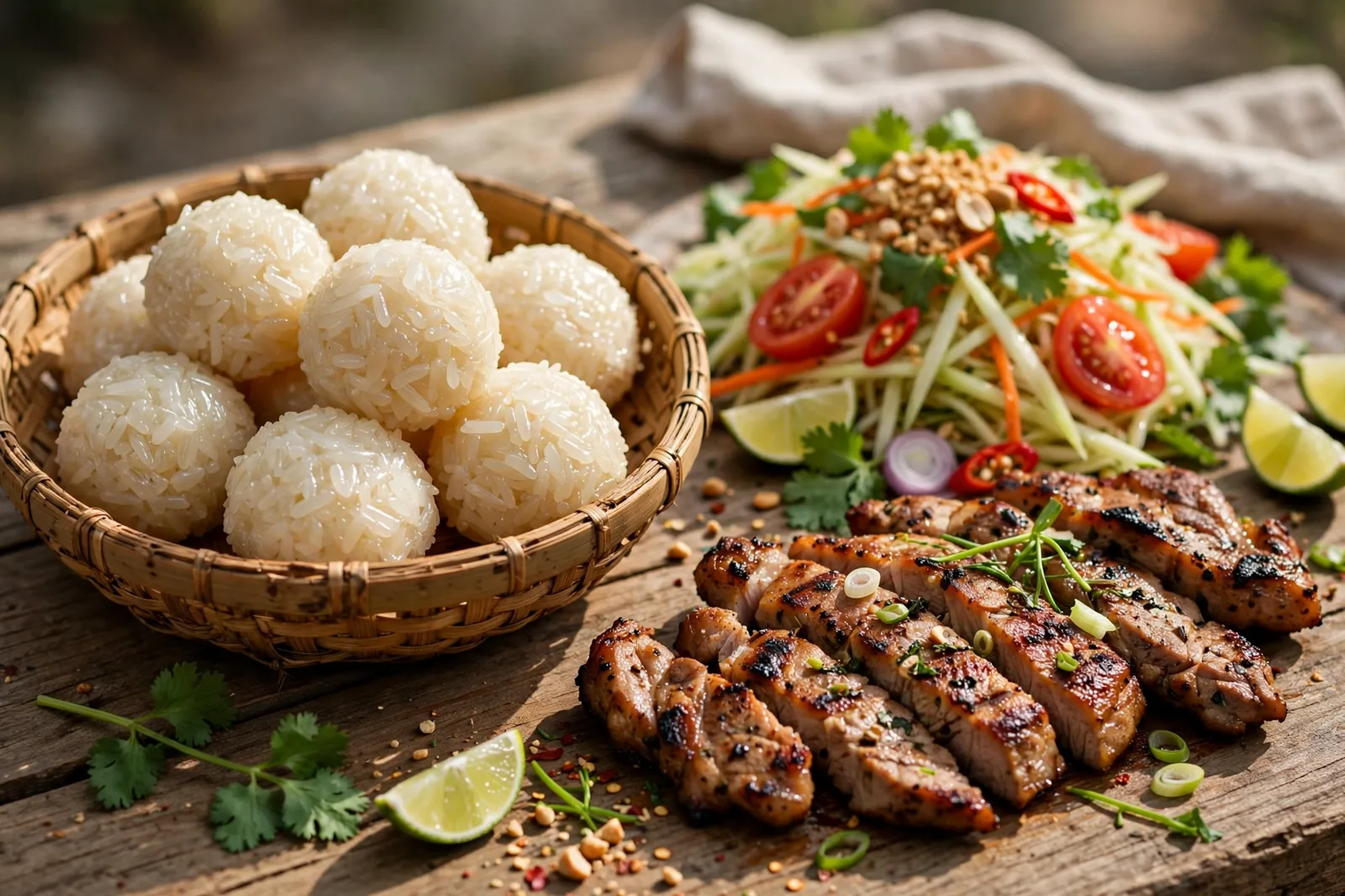
Sticky rice is often served warm, not piping hot. In Thai and Lao meals, it is commonly shaped into small balls with clean, slightly damp hands and eaten alongside grilled meats, salads, and dips. A few serving habits help:
- Keep it covered. Sticky rice dries out fast in open air. Keep it in the steamer, a lidded bowl, or a clean cloth-lined basket until you sit down.
- Moisten your hands. Wet hands keep the rice from coating your palms when you shape it. A small bowl of water on the table makes this easy.
- Serve it plain with savory meals. Salted sticky rice belongs in a few specific dishes, but plain steamed sticky rice is the usual partner for highly seasoned food like som tum and grilled chicken.
- For dessert, season after steaming. For mango sticky rice, warm coconut milk with a pinch of salt and a little sugar, then fold it through the hot rice and let it absorb for 15 to 20 minutes before serving.
Troubleshooting Common Results
Sticky rice tells you exactly what went wrong. Read the batch and adjust the next one.
Hard, white centers after 30 minutes: The soak was too short, or the rice layer was too thick for steam to reach the middle. Next time, soak the full 4 to 6 hours and steam in a thinner layer. For the current batch, sprinkle a tablespoon of hot water over the surface, cover, and steam 5 to 10 minutes more.
Mushy, porridge-like texture: Too much water reached the grains. The usual causes are rice that went into the steamer still dripping wet, a pot boiling so hard that water splashed into the basket, or over-steaming far past the point of tenderness. Drain well before steaming and keep the pot at a steady simmer, not a rolling boil that jumps into the basket.
Sticky in a bad way — a single solid mass: The rice sat too long before serving, or it was stirred repeatedly while hot. Flip once during steaming, rest briefly, then move it to a moistened serving bowl and cover it. If a batch has already set into a block, steam it for 3 to 4 minutes to loosen it again.
Dry edges, tender center: The steamer liner was missing or the basket edges were exposed to direct dry heat. Line the basket with cloth every time and make sure the lid fits snugly so steam circulates instead of escaping out the sides.
How to Store and Reheat Leftovers
Sticky rice firms up hard in the refrigerator, which is normal. The starch sets as it cools. Reheating with steam brings the chew back.
- Refrigerator: Store in an airtight container for up to 3 days. It will feel stiff and dry to the touch.
- Freezer: Portion into small flat packs in zip-top bags and freeze for up to 1 month. Small portions reheat more evenly than one large block.
- Reheating: Sprinkle the rice with a teaspoon or two of water, cover, and steam for 5 to 8 minutes, or microwave covered in short bursts with a splash of water. The goal is gentle steam, not more boiling water.
Sweet leftovers from mango sticky rice are best eaten the same day, since the coconut milk shortens the storage window.
Sticky Rice vs. Jasmine Rice, in the Pot
These two rices ask for opposite handling. Jasmine rice rinses quickly, cooks in measured water, and rests off the heat. Sticky rice soaks for hours, cooks over steam with no measured cooking water, and needs one flip midway. Swap the methods and both fail.
Reach for jasmine when you want separate, fluffy grains under a sauce. Reach for sticky rice when you want a chewy, hand-held side or a dessert base that drinks up sweet coconut milk. Keep a bag of each, and the method becomes a habit: rinse, soak, drain, steam, flip, rest, serve.
1 thought on “Sticky Rice 101: Soak, Steam, Serve”