
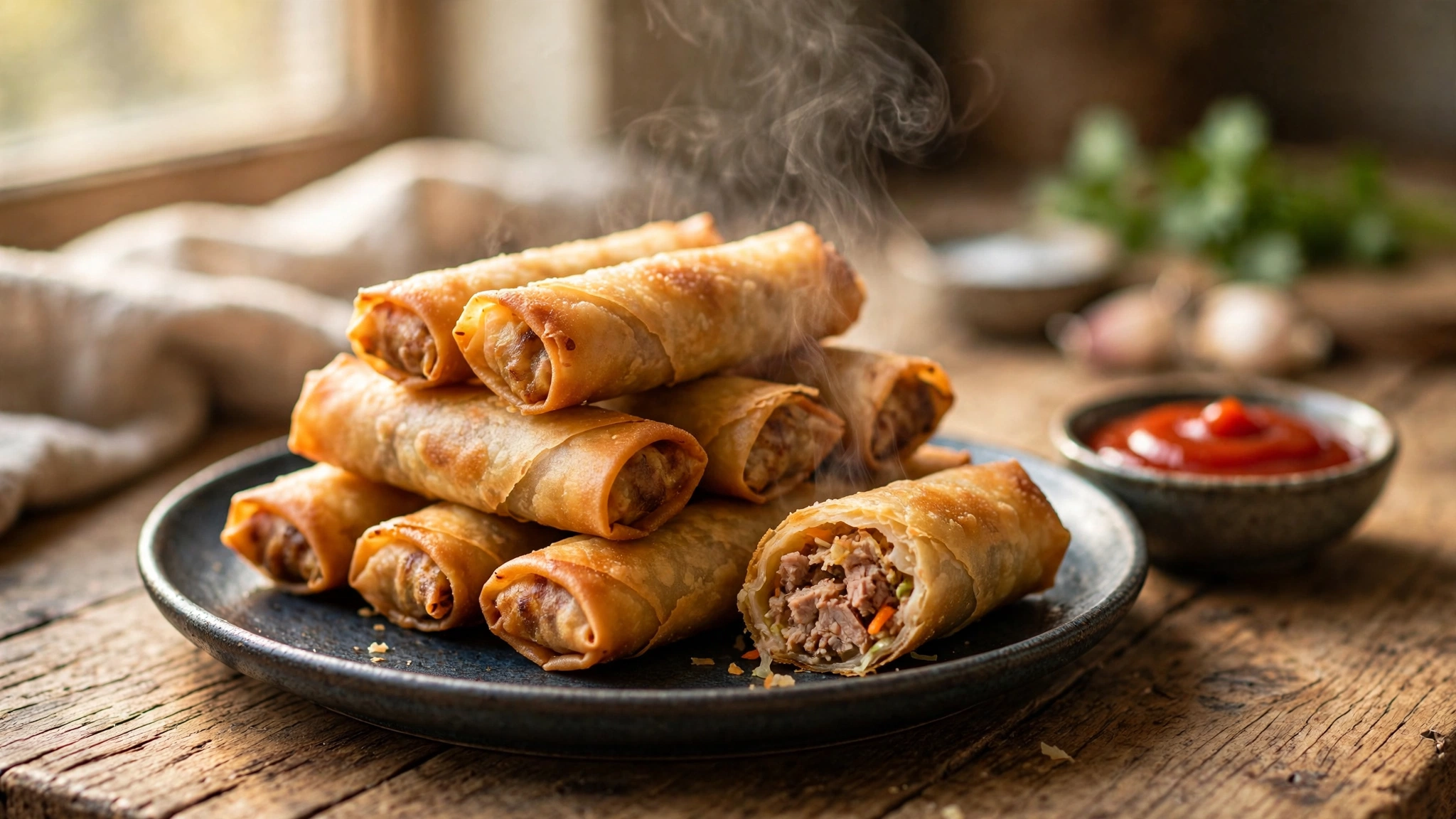
Lumpia are the Filipino spring rolls that show up at every celebration table, lined up on a platter still crackling from the fryer. The classic version, lumpia Shanghai, wraps a savory mix of ground pork, cabbage, carrots, and garlic in a paper-thin wheat wrapper, then fries it until the shell turns deep golden and shatters at the bite. They are small, snackable, and almost impossible to stop eating, especially with a sweet-tart dip alongside.
What makes lumpia distinct from other spring rolls is the wrapper and the ratio: a thin wheat-based skin (never rice paper), a filling that is mostly meat and finely shredded vegetables, and a roll about the width of your thumb. Because the filling is seasoned well before frying, every bite tastes complete on its own — the sauce is a bonus, not a fix.
What You Need
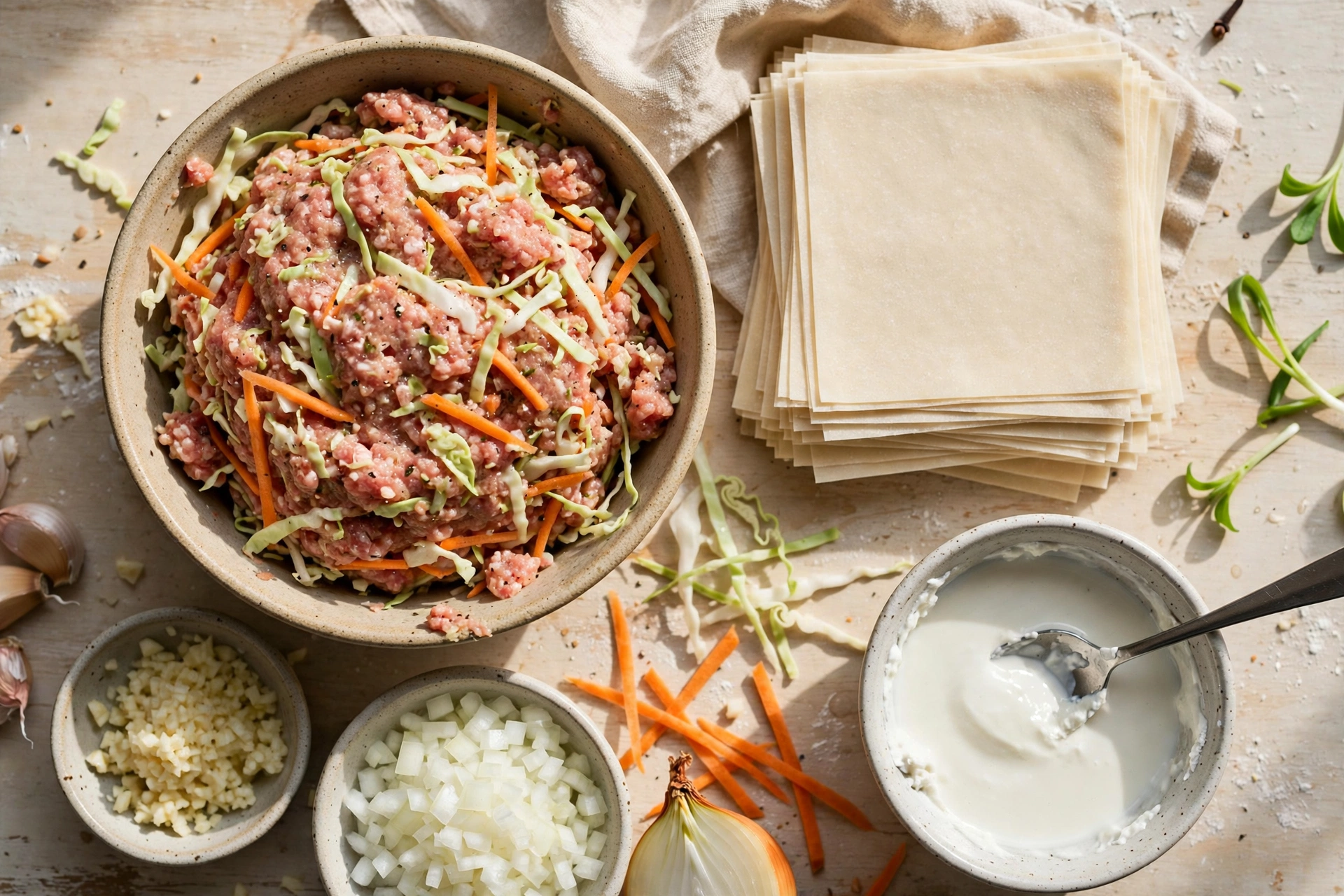
The filling comes together with pantry basics. Ground pork gives the rolls their richness; leaner pork still works, but a little fat keeps the filling juicy after frying. Finely shredding the vegetables matters more than the exact mix — thick chunks push against the wrapper and cause tears.
For the filling:
- 1 pound (450 g) ground pork
- 2 cups (about 180 g) finely shredded green cabbage
- 1 cup (about 110 g) finely julienned carrots
- 1 small yellow onion, finely diced (about 3/4 cup)
- 4 cloves garlic, minced
- 2 tablespoons soy sauce
- 1 teaspoon fine salt
- 1/2 teaspoon ground black pepper
- 1 large egg, lightly beaten (binder)
For assembling and frying:
- 25 thin lumpia or Filipino spring roll wrappers (wheat-based, about 8-inch squares)
- 1 tablespoon cornstarch mixed with 2 tablespoons water (sealing paste)
- 3 to 4 cups neutral oil with a high smoke point (canola or peanut), for frying
For serving:
- Banana ketchup, sweet chili sauce, or a simple vinegar dip with minced garlic and a pinch of sugar
How to Make Lumpia, Step by Step
1. Mix the filling. Combine the pork, cabbage, carrots, onion, garlic, soy sauce, salt, pepper, and beaten egg in a large bowl. Mix with clean hands just until everything is evenly distributed, about 1 minute. Overmixing makes the filling dense, so stop as soon as you no longer see streaks of plain pork.
2. Chill for easy rolling. Cover and refrigerate the filling for 20 to 30 minutes. Cold filling is firmer, portions neatly, and is less likely to weep moisture into the wrapper while you work.
3. Set up your rolling station. Peel the wrappers apart and keep them under a barely damp towel so they stay pliable. Place one wrapper on a clean surface in a diamond shape, one corner pointing at you. Keep the bowl of filling, a tablespoon, and the cornstarch paste within reach.
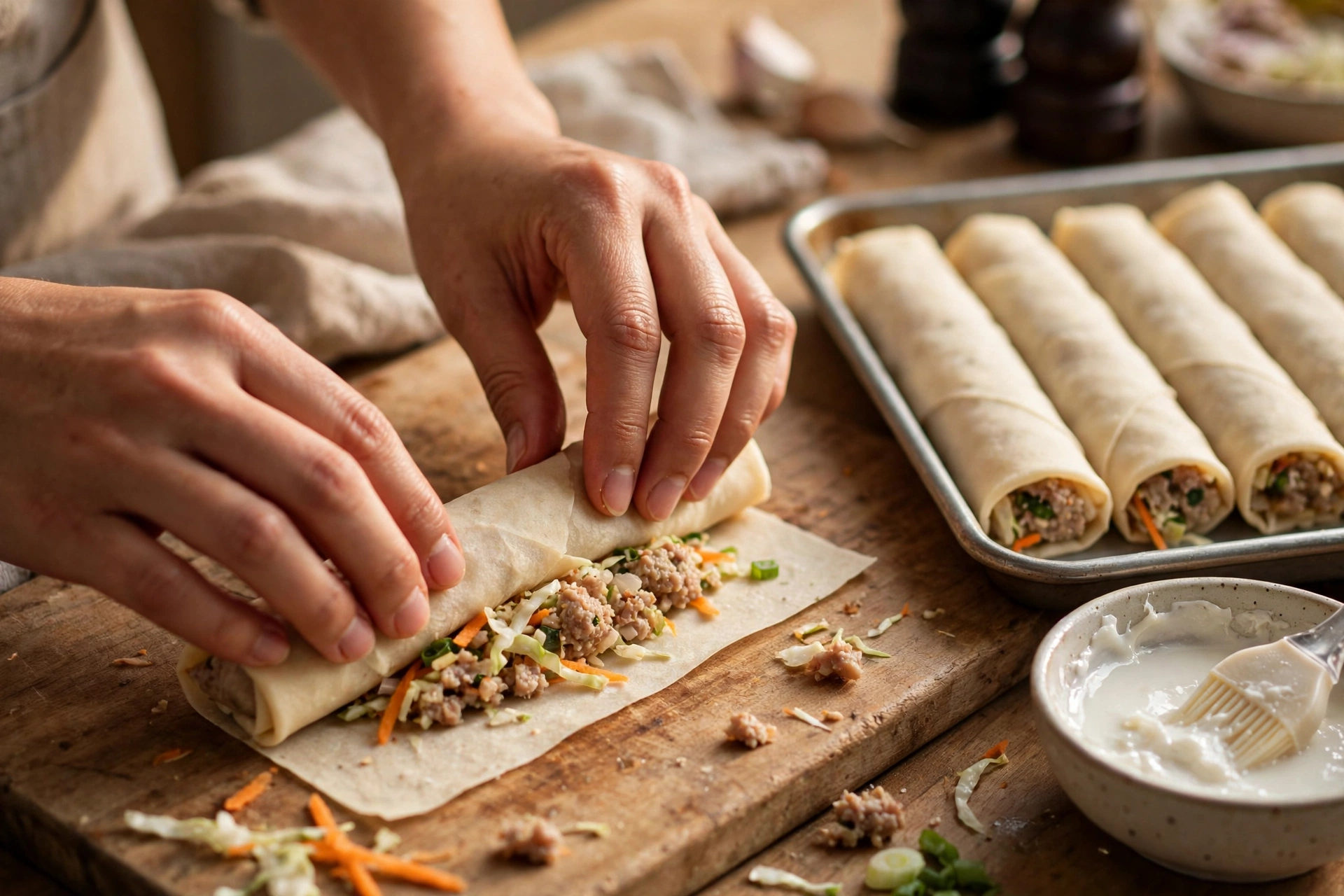
4. Fill and fold. Spoon about 1 1/2 tablespoons of filling in a horizontal line across the lower third of the wrapper, leaving about 1 inch at each side. Fold the bottom corner up over the filling, fold both side corners in toward the center, then roll upward snugly — snug, not tight. The roll should feel firm with no air pockets, but the wrapper should not be stretched.
5. Seal the edge. Brush the top corner with a thin line of cornstarch paste and finish the roll, seam side down. Completed rolls go on a tray seam side down under a damp towel while you work through the batch.
6. Heat the oil. Pour oil into a heavy pot or deep skillet to a depth of about 1 1/2 inches and heat to 350°F (175°C). A small scrap of wrapper should sizzle on contact and turn golden in about 30 seconds. Too cool and the rolls drink up oil; too hot and the wrapper browns before the pork cooks through.
7. Fry in batches. Add 6 to 8 rolls at a time, seam side down first, without crowding. Fry 3 to 4 minutes, turning occasionally, until deeply golden on all sides. Because the wrappers are thin, watch the color rather than the clock for the last minute.
8. Drain upright. Move finished lumpia to a wire rack set over a tray — standing them on end for the first minute helps oil escape from the seam. Skip paper towels, which trap steam and soften the crust.
9. Serve right away. Lumpia are at their best within minutes of frying. Offer banana ketchup for the traditional sweet pairing, sweet chili sauce for gentle heat, or garlic vinegar for a sharper bite.
Tips for Rolls That Stay Crisp
- Keep the filling dry. If your cabbage releases a lot of liquid, salt it lightly, rest 10 minutes, and squeeze it dry before mixing. Wet filling steams inside the wrapper and softens the shell from within.
- Roll snugly, seal well. Air pockets expand in hot oil and can split the wrapper. A smooth, even roll fries into an even, unbroken shell.
- Freeze before frying for parties. Arrange raw, sealed rolls on a parchment-lined tray, freeze solid, then bag them with parchment between layers. Fry straight from frozen, adding about 1 minute to the cooking time. This is how many Filipino home cooks keep a celebration stash ready.
- Reheat in the oven, not the microwave. Leftover lumpia crisp back up in a 375°F (190°C) oven for 8 to 10 minutes. The microwave will make the wrapper leathery.
Variations to Try
- Shrimp and pork: Replace half the pork with finely chopped raw shrimp for a surf-and-turf filling.
- All-vegetable: Swap the pork for finely chopped mushrooms, green beans, and extra cabbage, seasoned the same way. Keep the egg or use a little mashed tofu to bind.
- Cheese lumpia: Add a thin strip of quick-melting cheese alongside the filling — a party favorite known as lumpiang keso.
- Baked instead of fried: Brush rolls generously with oil and bake at 425°F (220°C) for 18 to 22 minutes, turning once. The crust will be crisp and blistered, though a shade paler than fried.
What to Serve with Lumpia
Lumpia rarely arrive alone. For a full Filipino spread, pair them with Chicken Adobo, where the soy-vinegar braise balances the richness of the fried rolls. A mound of Sinangag — garlicky, golden, and built for soaking up sauces — rounds out the plate. Add a simple cucumber and tomato salad with vinegar for something raw and bright between bites.
Lumpia: Crispy Filipino Spring Rolls
Ingredients
Method
- Mix the filling. Combine the pork, cabbage, carrots, onion, garlic, soy sauce, salt, pepper, and beaten egg in a large bowl. Mix with clean hands just until evenly distributed, about 1 minute; stop as soon as you no longer see streaks of plain pork.
- Chill for easy rolling. Cover and refrigerate the filling 20 to 30 minutes so it firms up and portions neatly without weeping moisture into the wrappers.
- Set up your rolling station. Peel the wrappers apart and keep them under a barely damp towel. Lay one wrapper in a diamond shape, one corner pointing at you, with the filling, a tablespoon, and the cornstarch paste within reach.
- Fill and fold. Spoon about 1 1/2 tablespoons of filling in a horizontal line across the lower third of the wrapper, leaving about 1 inch at each side. Fold the bottom corner up over the filling, fold both side corners in, then roll upward snugly with no air pockets.
- Seal the edge. Brush the top corner with a thin line of cornstarch paste and finish the roll. Rest completed rolls seam side down on a tray under a damp towel.
- Heat the oil to 350°F (175°C), about 1 1/2 inches deep in a heavy pot or deep skillet. A scrap of wrapper should sizzle on contact and turn golden in about 30 seconds.
- Fry in batches of 6 to 8, seam side down first, without crowding. Fry 3 to 4 minutes, turning occasionally, until deeply golden on all sides; judge the last minute by color.
- Drain upright on a wire rack over a tray for the first minute so oil escapes from the seam. Do not use paper towels, which trap steam and soften the crust.
- Serve right away with banana ketchup, sweet chili sauce, or garlic vinegar for dipping.
2 thoughts on “Lumpia: Crispy Filipino Spring Rolls”