
Chicken adobo is the dish most Filipino home cooks learn early. A handful of pantry staples — soy sauce, vinegar, garlic, bay leaves, and black peppercorns — turn a pot of chicken into something savory, tangy, and deeply comforting, with a sauce you will want over rice. There is no long shopping list and no fussy technique. The chicken braises in its own marinade until the sauce reduces to a glossy glaze.
Adobo in the Philippines is less one fixed recipe than a family of them. The word comes from the Spanish adobar, to marinate, but the method is older: vinegar and salt preserved food in a tropical climate long before refrigeration. Today every household has its own ratio, its own add-ins, and strong opinions about sugar. This version lands in the middle of the road — balanced, garlicky, and weeknight-friendly.
What Makes Adobo Adobo
Three things define the dish. First, vinegar does real work: it tenderizes, preserves, and gives the sauce its bright edge. Second, garlic is not shy — a whole head, roughly crushed, is normal. Third, the braise is cooked uncovered at the end so the sauce concentrates and coats the chicken instead of staying thin and soupy.
Beyond that, cooks adjust freely. Some add a spoon of sugar or a splash of coconut milk. Some brown the chicken hard before braising, others skip browning entirely. Pork adobo, made with belly or shoulder, follows the same logic. What stays constant is the soy-vinegar braise and the bay-and-pepper backbone.
Before You Cook: A Few Practical Notes
Use bone-in, skin-on chicken thighs for the most forgiving result. They stay juicy through a 40-minute braise and give the sauce body. Boneless thighs work too and cook a little faster. Chicken breast is the risky choice — it dries out before the sauce reduces, though it can work if you cut the braise short.
For the vinegar, Filipino cane vinegar is traditional, but plain white vinegar or apple cider vinegar both work. Rice vinegar is softer and slightly sweet; if you use it, the sauce will taste gentler. For soy sauce, a regular all-purpose soy sauce is right here. Dark soy sauce will make the dish very dark and a bit heavy, so save it for noodles.
One rule worth keeping: once the vinegar goes in, let the pot simmer a few minutes before stirring. Filipino cooks swear this cooks off the harsh, raw edge of the vinegar and keeps the sauce smooth rather than sharp.
Chicken Adobo
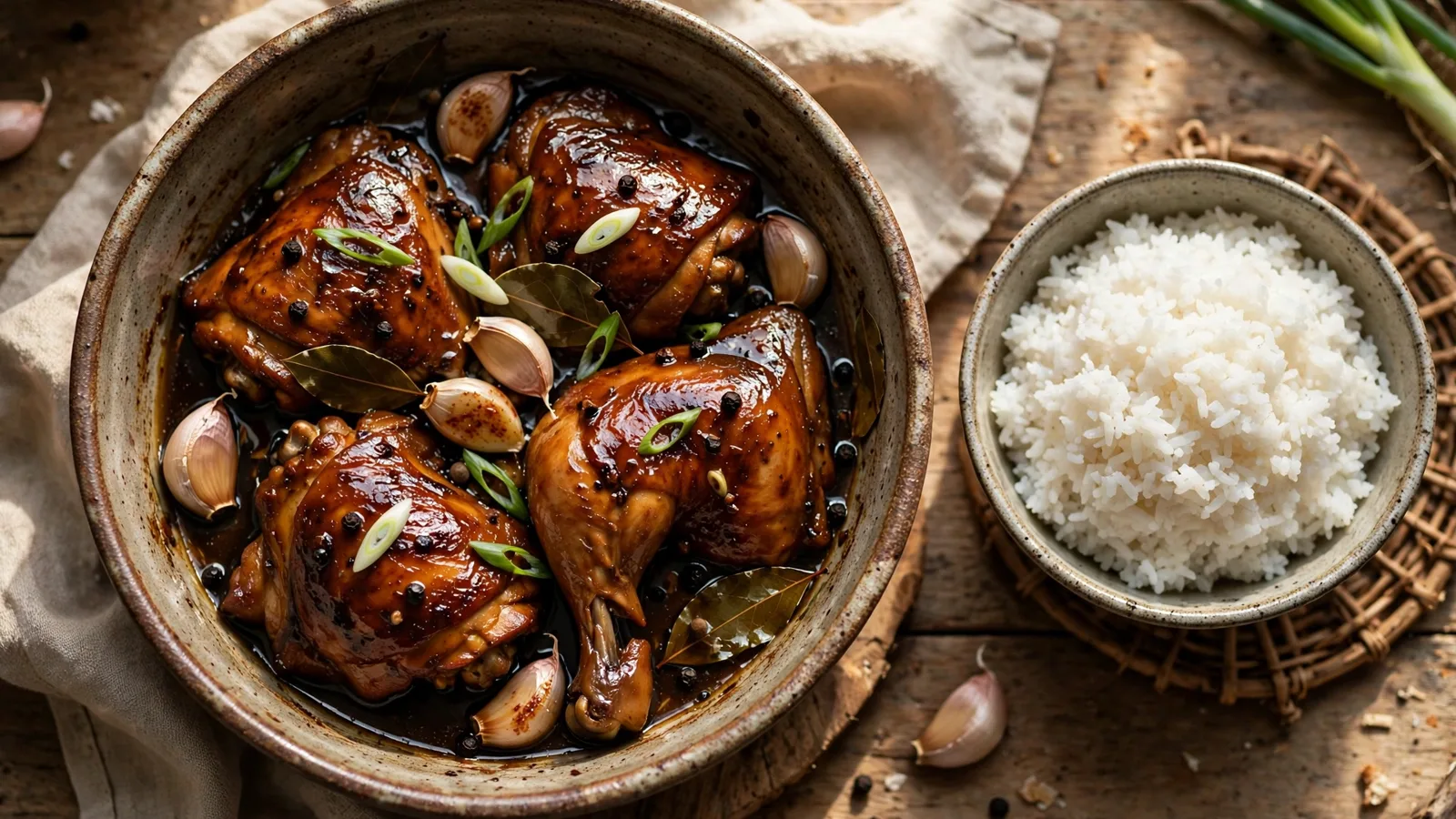
Bone-in chicken braised in soy sauce, vinegar, garlic, and bay until the sauce turns glossy and concentrated, served over steamed rice.
Prep time: 15 minutes, plus marinating
Cook time: 40 minutes
Total time: About 1 hour, plus marinating
Servings: 4
Ingredients
- 2 1/2 pounds (about 1.1 kg) bone-in, skin-on chicken thighs (6 to 8 pieces)
- 1/2 cup (120 ml) soy sauce
- 1/2 cup (120 ml) cane vinegar or white vinegar
- 1 head garlic (10 to 12 cloves), peeled and lightly crushed
- 3 dried bay leaves
- 1 teaspoon whole black peppercorns, lightly cracked
- 1 tablespoon brown sugar, optional
- 1/2 cup (120 ml) water, plus more as needed
- 1 tablespoon neutral oil
- Steamed white rice, for serving
- 2 scallions, thinly sliced, for serving
Instructions
- Marinate the chicken. In a large bowl or directly in the pot you will cook in, combine the chicken, soy sauce, half the garlic, bay leaves, and peppercorns. Toss to coat, cover, and refrigerate for at least 30 minutes or up to overnight. If you are short on time, even 15 minutes at room temperature helps.
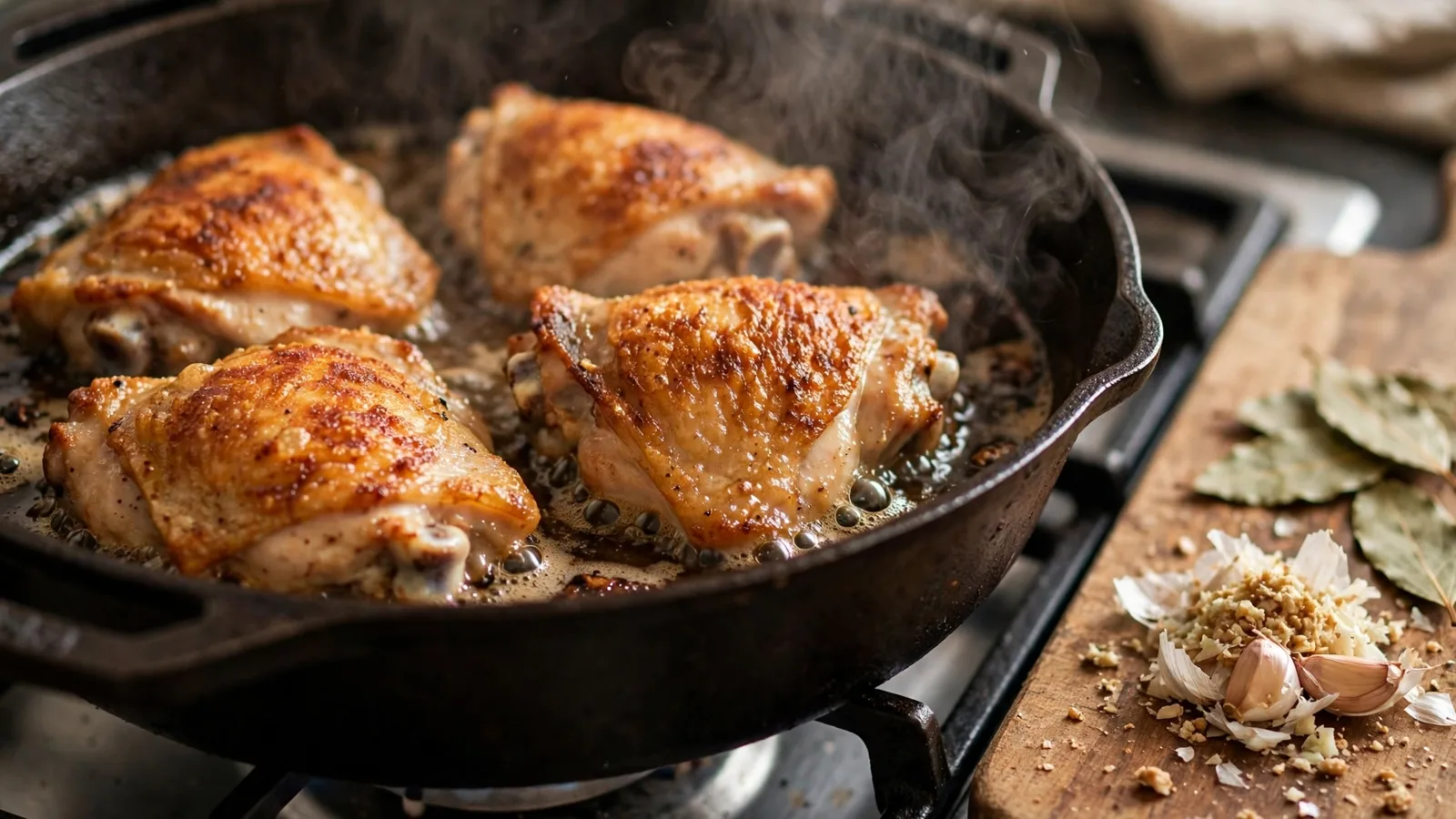
- Brown the chicken. Lift the chicken pieces out of the marinade and pat them dry; reserve the marinade. Heat the oil in a wide, heavy pot over medium-high heat. Brown the chicken skin-side down for 4 to 5 minutes until well colored, then turn and brown the second side for 2 to 3 minutes. Work in batches if the pot is crowded. Set the chicken aside.
- Build the braise. Pour off all but about a tablespoon of fat. Add the remaining garlic and cook 30 seconds, just until fragrant. Pour in the reserved marinade and the water, scraping up the browned bits from the bottom of the pot.
- Add the vinegar. Pour in the vinegar and bring everything to a simmer. Let it bubble gently, unstirred, for 3 to 4 minutes so the sharpest vinegar edge cooks off.
- Braise. Return the chicken and any juices to the pot, skin-side up. Cover, lower the heat, and simmer gently for 25 to 30 minutes, until the chicken is tender and cooked through.
- Reduce the sauce. Uncover the pot, add the sugar if using, and simmer 8 to 10 minutes more, until the sauce thickens enough to coat the back of a spoon and turns glossy. If it reduces too far, splash in a little water. Taste: it should be salty first, then tangy, with garlic and bay underneath.
- Serve. Spoon the chicken and plenty of sauce over steamed rice and scatter scallions on top.
Notes
- Drying the chicken before browning matters. Wet skin steams instead of browning, and those browned bits are flavor in the final sauce.
- If the sauce tastes flat, it usually needs more vinegar, not more soy. Add a teaspoon at a time at the end.
- Adobo famously tastes better the next day. The chicken sits in the sauce overnight and comes out deeper and rounder.
The Sugar Question
Families divide on sugar, so here is an honest way to decide. Without sugar, the sauce is sharper and more austere — vinegar and soy in equal contest. A tablespoon of brown sugar does not make the dish sweet; it rounds the vinegar’s edge and helps the sauce gloss. Coconut sugar works the same way and is common in the Philippines. Try the base version once, then adjust. There is no wrong answer, only the one your table prefers.
Variations Worth Trying
Once the basic braise clicks, adobo bends in a lot of directions without losing itself.
- Adobo with coconut milk (adobo sa gata): Stir 1/2 cup coconut milk into the sauce for the final 10 minutes. The result is richer and mellower, especially good with pork.
- Dry adobo: Reduce the sauce almost completely and let the chicken fry gently in its own rendered fat at the end. The pieces come out sticky, burnished, and intense.
- White adobo (adobong puti): Skip the soy sauce and season with salt or fish sauce instead. The sauce stays pale and the vinegar flavor stands alone — older, and closer to the pre-soy-sauce version of the dish.
- Spicy adobo: Add 2 to 3 whole Thai chilies or a sliced finger chili with the garlic. Heat sits well against the sour sauce.
- Pork and chicken adobo: Combine 1 pound pork shoulder chunks with 1 1/2 pounds chicken thighs. Brown both, braise the pork 15 minutes before adding the chicken so everything finishes together.
For a full spread, a cool, crunchy side cuts the richness nicely. Our Chinese Smashed Cucumber Salad with Garlic takes 15 minutes and plays the same garlic notes in a different key.
What to Serve With It
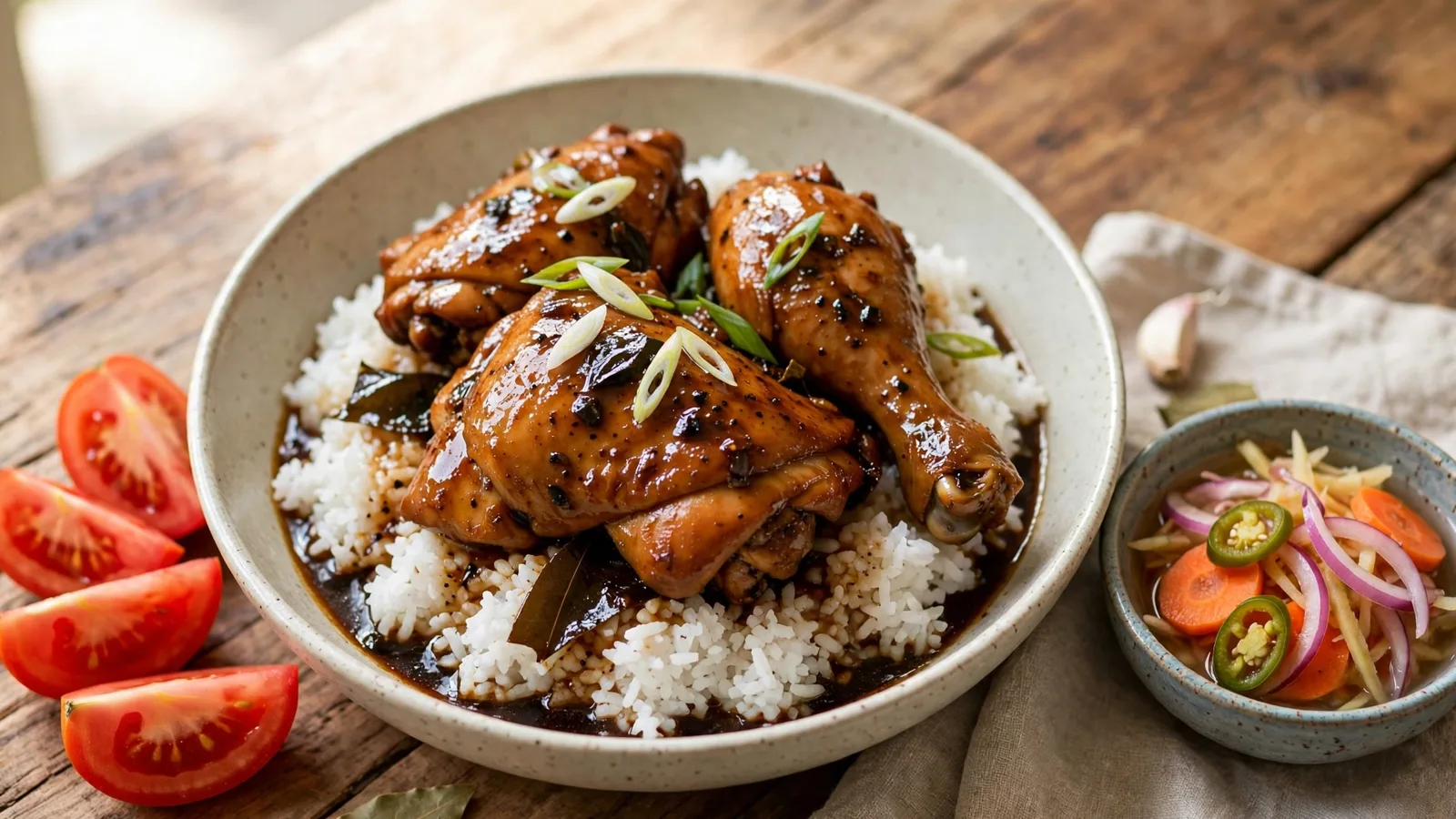
Rice is the non-negotiable part; the sauce is built for it. Plain steamed jasmine rice is classic. On weekends, garlic fried rice made from day-old rice is the traditional partner and uses the same head-of-garlic logic as the adobo itself.
Beyond rice, keep sides simple and fresh: sliced tomatoes with a pinch of salt, a quick pickled papaya or cucumber, or a plate of sliced mango for dessert. If you are building a bigger pan-Asian table, the savory-sweet noodles in our Japchae sit comfortably next to adobo without competing with it.
Storing and Reheating
Adobo is one of the great make-ahead dishes. Refrigerated in its sauce, it keeps well for up to 4 days, and the flavor genuinely improves over the first day or two. Reheat it gently in a covered pan over low heat until the chicken is warmed through, adding a spoonful of water if the sauce has tightened up.
It also freezes well for up to 3 months. Freeze the chicken in its sauce in a sealed container, thaw overnight in the fridge, and reheat the same gentle way. Some cooks like to crisp the thawed pieces in a hot pan after reheating, which gives you tender meat, reduced sauce, and browned edges all at once.
Final Thoughts
Chicken adobo asks for patience in exactly one place: letting the sauce reduce, uncovered, until it turns glossy and clings to the chicken. Get the vinegar a few quiet minutes before you stir, keep the heat gentle, and taste at the end rather than seasoning by habit. A pot of rice, a spoonful of sauce over everything, and dinner is done.
Chicken Adobo
Ingredients
Method
- Marinate the chicken: combine the chicken, soy sauce, half the garlic, the bay leaves, and peppercorns in a large bowl or the cooking pot. Toss to coat, cover, and refrigerate at least 30 minutes or up to overnight (15 minutes at room temperature helps if you are short on time).
- Lift the chicken from the marinade and pat dry; reserve the marinade. Heat the oil in a wide, heavy pot over medium-high heat. Brown the chicken skin-side down 4 to 5 minutes, then turn and brown 2 to 3 minutes more, working in batches if needed. Set aside.
- Pour off all but about a tablespoon of fat. Add the remaining garlic and cook 30 seconds, until fragrant. Pour in the reserved marinade and the water, scraping up the browned bits from the bottom of the pot.
- Pour in the vinegar and bring to a simmer. Let it bubble gently, unstirred, 3 to 4 minutes so the sharpest vinegar edge cooks off.
- Return the chicken and any juices to the pot, skin-side up. Cover, lower the heat, and simmer gently 25 to 30 minutes, until tender and cooked through.
- Uncover, add the sugar if using, and simmer 8 to 10 minutes more, until the sauce thickens enough to coat the back of a spoon and turns glossy. Splash in a little water if it reduces too far.
- Spoon the chicken and plenty of sauce over steamed rice and scatter the scallions on top.
1 thought on “Chicken Adobo: The Filipino Soy-Vinegar Classic”