
Sinangag is what happens to last night’s rice in a Filipino kitchen the next morning. A whole head of garlic gets fried until golden, day-old rice goes into the same oil, and a few minutes of patient tossing turns plain leftovers into something crisp at the edges, deeply savory, and hard to stop eating straight from the pan. It is breakfast, most famously, but it shows up next to grilled meats, fried fish, and saucy braises at any hour.
The dish is simple on purpose. Rice, garlic, oil, salt. That short list is the point: sinangag was a way to waste nothing, and cold rice in hot garlic oil turned out to be a genuinely good combination. The garlic is not a background note here. It is the flavor.
Why Day-Old Rice Matters
Freshly cooked rice is wet and soft, and it steams in the pan instead of frying. Rice that has chilled overnight in the fridge dries out on the surface, so the grains stay separate, pick up the garlic oil, and develop those little toasted edges. If you only have fresh rice, spread it on a sheet pan and refrigerate it uncovered for at least an hour, or fan it until it feels dry to the touch. It will not be quite as good as overnight rice, but it gets close.
Break up any clumps with your hands before the rice hits the pan. Lightly wet your fingers so grains do not stick, and crumble until loose. Breaking clumps with a spatula in hot oil usually means half the rice is still cold while the rest overcooks.
The Garlic Question
Use a full head of garlic for four cups of rice. That can sound like a lot, and it is meant to. Mince it fairly fine, but not to a paste; tiny pieces brown evenly and give you crisp bits throughout the rice. Garlic paste from a jar turns bitter faster and lacks the texture.
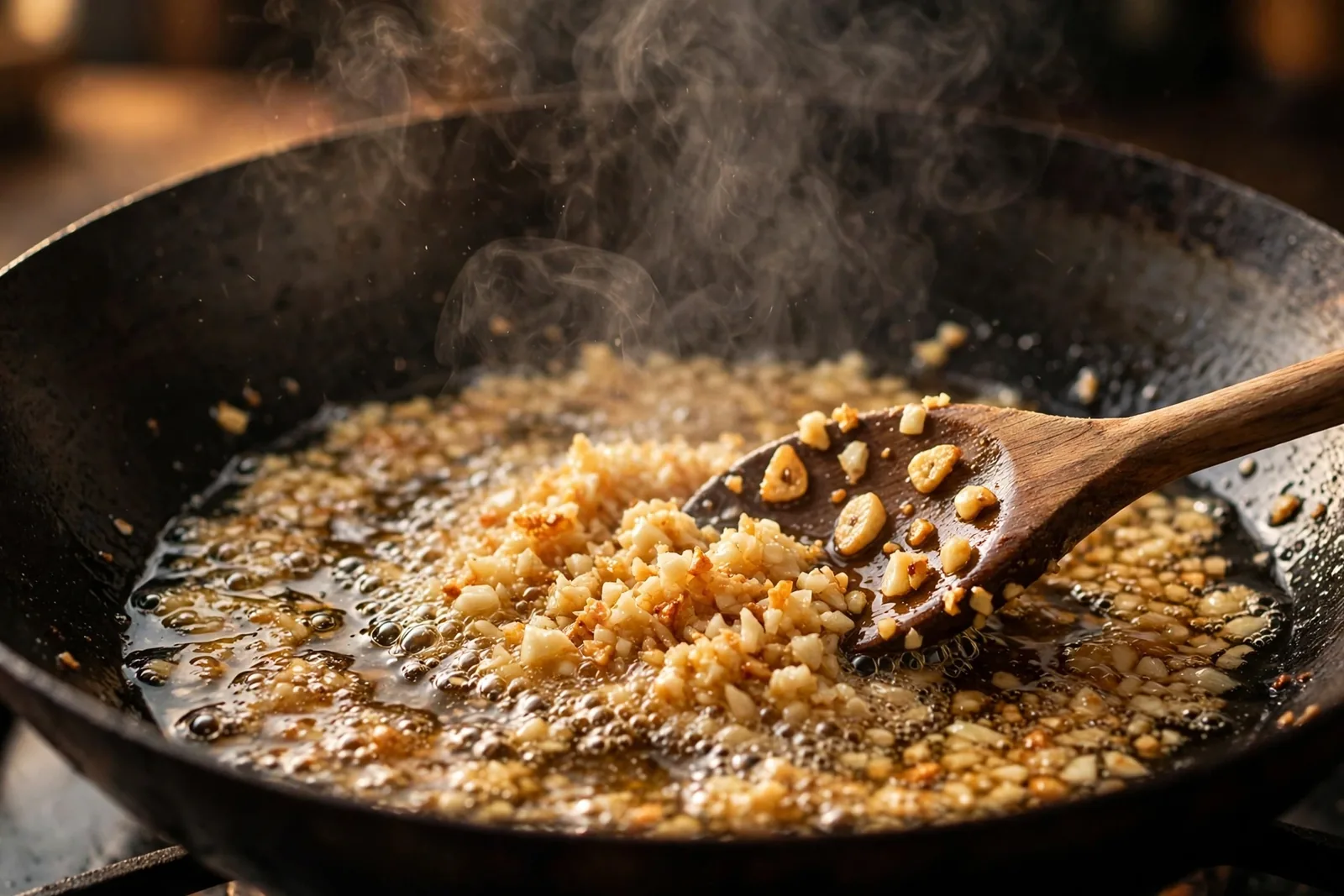
The one technique worth slowing down for is the garlic oil itself. Start the garlic in room-temperature oil and bring the heat up together. Garlic dropped into already-hot oil can go from pale to burnt in seconds, and burnt garlic flavors the whole batch with a harsh edge. Starting cold gives you a wider window and more even color. Pull the garlic at a light golden shade, because it keeps cooking for a few seconds after it leaves the heat.
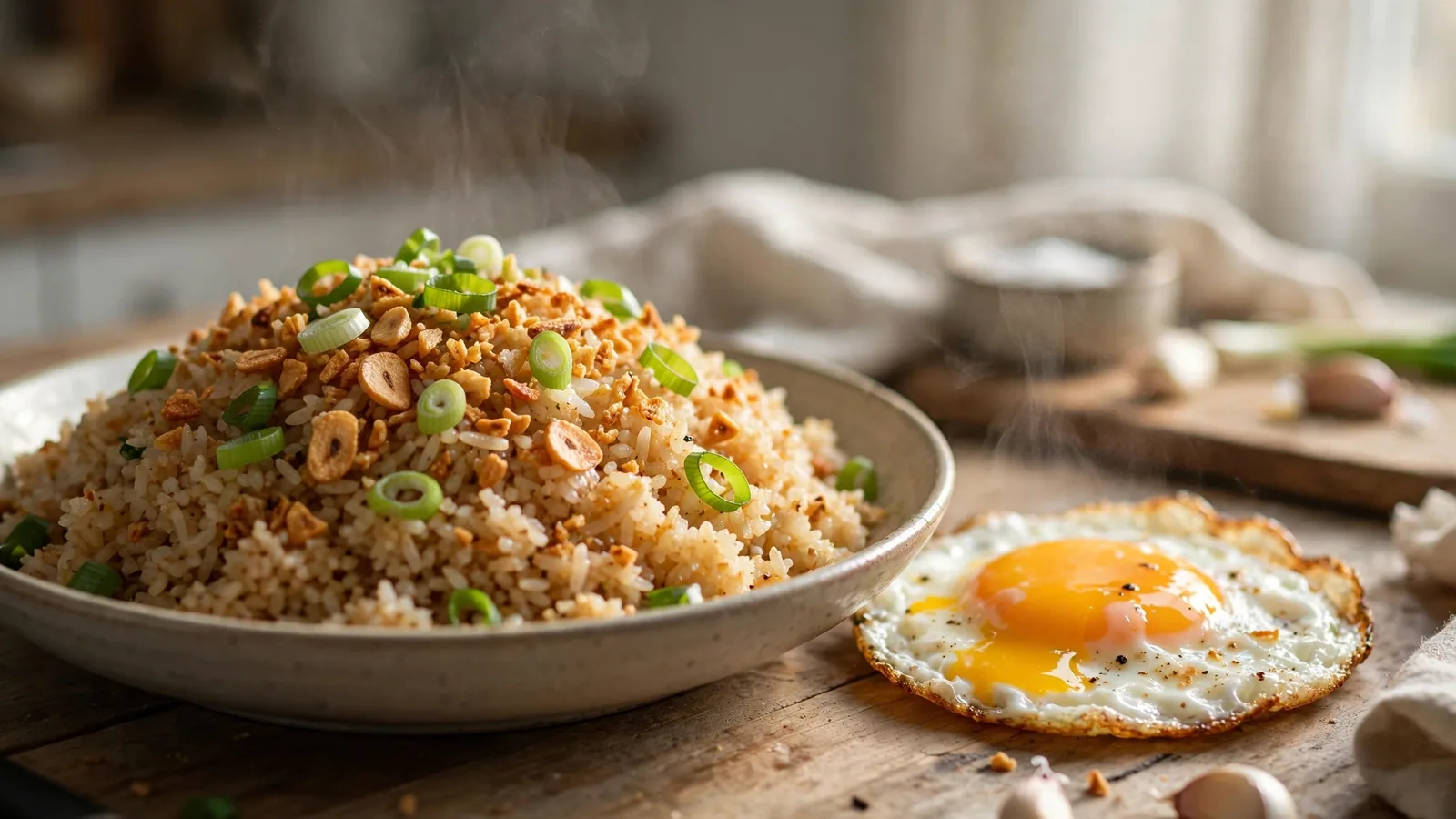
Sinangag
Filipino garlic fried rice made with day-old rice, a whole head of garlic fried golden, and a pinch of salt, finished with scallions and best eaten with a fried egg.
Prep time: 10 minutes
Cook time: 10 minutes
Total time: 20 minutes
Servings: 4
Ingredients
- 4 cups (about 600 g) cooked jasmine rice, chilled overnight and crumbled
- 1 head garlic (10 to 12 cloves), peeled and minced
- 3 tablespoons neutral oil
- 3/4 teaspoon fine salt, plus more to taste
- 1/4 teaspoon ground black pepper, optional
- 2 scallions, thinly sliced, for serving
- 4 fried eggs, for serving, optional
Instructions
- Crumble the chilled rice with lightly wet hands until no large clumps remain. Set it near the stove; the cooking moves fast once the garlic is golden.
- Add the oil and minced garlic to a cold wok or large skillet. Set the heat to medium and cook, stirring often, for 3 to 4 minutes, until the garlic is light golden and smells sweet. Scoop out about a third of the garlic onto a paper towel and set it aside for topping.
- Raise the heat to medium-high. Add the crumbled rice to the garlic oil left in the pan and toss well so every grain gets a light coating.
- Spread the rice across the pan and let it sit undisturbed for 30 to 45 seconds, then toss. Repeat this press-and-toss pattern for 5 to 6 minutes, until the rice is hot through, the grains are separate, and some edges have turned faintly crisp.
- Season with the salt and black pepper if using. Toss again, taste, and add a pinch more salt if the rice tastes flat. Garlic fried rice should be savory first; the salt is what wakes the garlic up.
- Serve hot, topped with the reserved crisp garlic and sliced scallions. Add a fried egg per person if you like.
Notes
- Keep the heat honest. Medium-high gives you toasted edges; low heat just warms the rice and leaves it soft.
- If the rice feels dry partway through, drizzle a teaspoon of water around the edge of the pan rather than adding more oil. The steam loosens the grains without making the dish greasy.
- Salt at the end, not the beginning. Garlic browns more evenly in plain oil, and seasoning late keeps the flavor balanced once you taste the finished rice.
The Classic Filipino Breakfast Plate
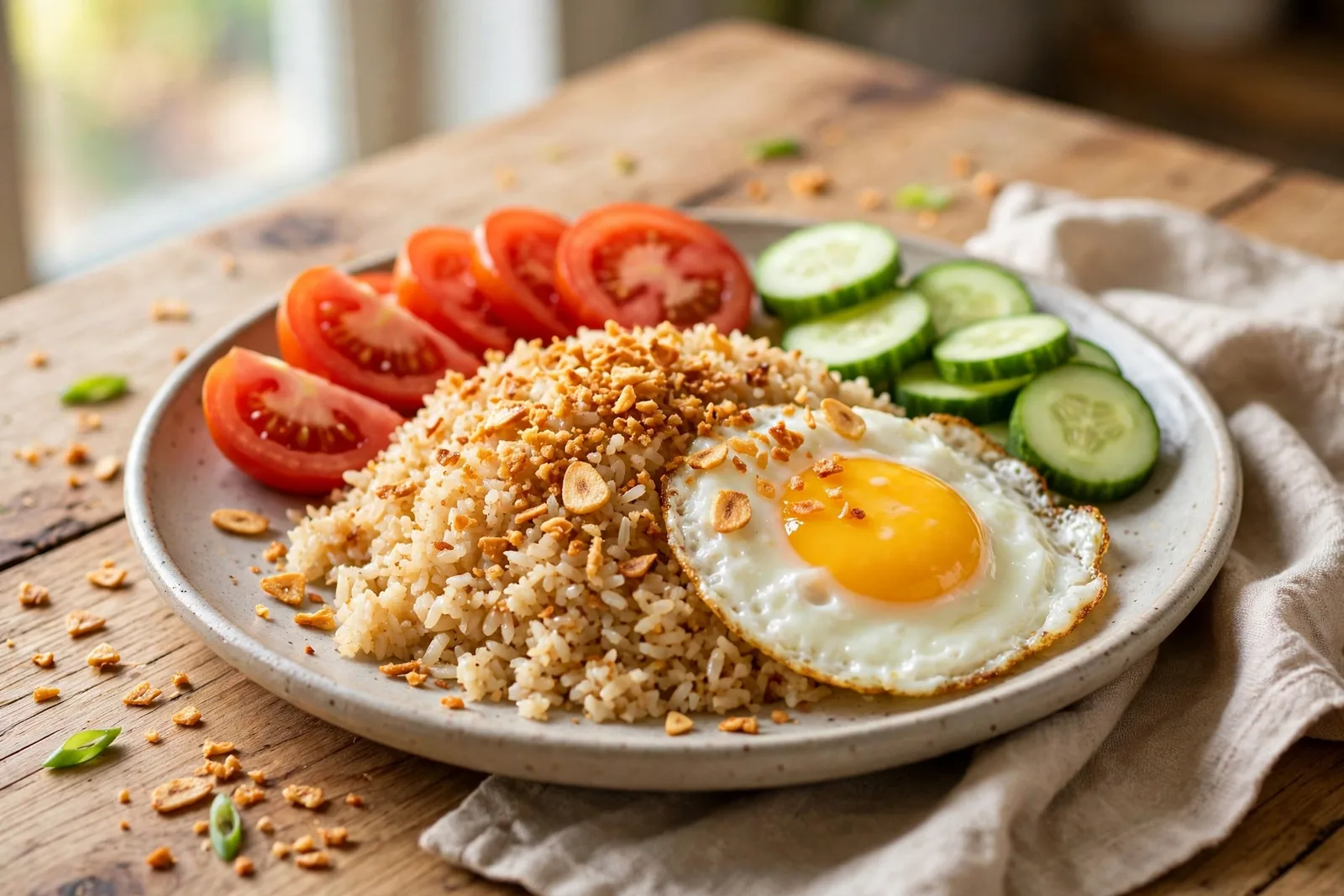
Sinangag anchors the silog breakfast plates named for their parts: sinangag plus itlog, the Tagalog word for egg. Pair the rice and a fried egg with a protein and you get the name. Tapsilog adds tapa, thin slices of marinated beef. Tocilog adds tocino, sweet cured pork. Longsilog adds longganisa, garlicky Filipino sausage. The formula is flexible; the rice and egg stay constant.
You do not need a special sausage to make a good version at home. A fried egg with a lacy, crisp edge and a runny yolk is enough, especially with reserved crisp garlic over the top. Sliced tomatoes or a quick cucumber salad cut the richness. Our Chicken Adobo is another classic partner: its soy-vinegar sauce pooling into garlic rice is exactly what this rice was made for, even outside breakfast.
Variations Worth Trying
The base recipe is a template, and Filipino cooks adjust it constantly depending on what else is in the fridge.
- With egg folded in: Push the rice to one side of the pan, scramble two beaten eggs in the empty space, then fold them through at the end for soft ribbons throughout.
- Adobo fried rice: Chop leftover adobo chicken or pork and fry it with the rice, adding a spoonful of the adobo sauce for color and tang. This is one of the better uses for leftovers anywhere in this style of cooking.
- With dried fish: Flake fried tuyo (dried herring) over the finished rice. Salty, crisp, and intense, a little goes a long way.
- Spicy garlic rice: Stir a sliced Thai chili or a pinch of chili flakes into the garlic for the last 30 seconds of browning. Keep the heat brief so the garlic does not scorch around it.
- Anchovy and tomato: Add a chopped ripe tomato once the rice is hot and cook just until it softens. It gives the rice a gentle sweetness against the salt.
If you like fried rice as a broader category, our Kimchi Fried Rice takes the same day-old-rice logic and runs it in a tangy, spicy Korean direction. The technique transfers directly: cold rice, hot pan, do not crowd it.
Getting the Texture Right
Three small things decide whether sinangag tastes like a pile of warm rice or like a dish people ask you to make again. First, the rice must start cold and dry. Second, the pan must be big enough that the rice sits in a loose layer rather than a deep mound; a 12-inch skillet or a wok is right for four cups. Third, let the rice sit between tosses. Constant stirring keeps the grains moving before any surface can toast. Those short pauses against the hot pan are where the crisp edges come from.
If you are doubling the recipe, fry it in two batches and combine them at the end. Crowding is the most common reason homemade fried rice disappoints, and a double batch in one pan steams no matter how hot you run it.
Storing and Reheating
Leftover sinangag keeps in the fridge for up to 3 days. Reheat it in a skillet over medium heat with a teaspoon of water sprinkled over the top, tossing until hot and loose. The microwave works too, covered with a damp paper towel, but the stovetop brings back more texture. Keep extra fried garlic in a separate small container so it stays crisp.
You can also freeze cooked sinangag for up to a month. Thaw overnight in the fridge and reheat as above; a fresh sprinkle of crisp garlic at serving helps, since the flavor softens in the freezer.
Final Thoughts
Sinangag asks for almost nothing: leftover rice, garlic, oil, salt, and a hot pan. Start the garlic in cold oil, keep the grains moving in loose layers, and season at the end once you can taste what you have. Pile it next to a fried egg or a spoonful of something saucy, and yesterday’s rice becomes the best part of the plate.
Sinangag: Filipino Garlic Fried Rice
Ingredients
Method
- Crumble the chilled rice with lightly wet hands until no large clumps remain.
- Add oil and minced garlic to a cold wok or large skillet. Cook over medium heat, stirring often, 3 to 4 minutes until light golden. Scoop out about a third of the garlic and set aside for topping.
- Raise heat to medium-high. Add crumbled rice to the garlic oil and toss so every grain gets a light coating.
- Spread rice across the pan and let it sit undisturbed 30 to 45 seconds, then toss. Repeat for 5 to 6 minutes until hot through, grains separate, and some edges are faintly crisp.
- Season with salt and black pepper if using. Toss again, taste, and adjust salt.
- Serve hot topped with reserved crisp garlic and sliced scallions, with a fried egg per person if you like.