
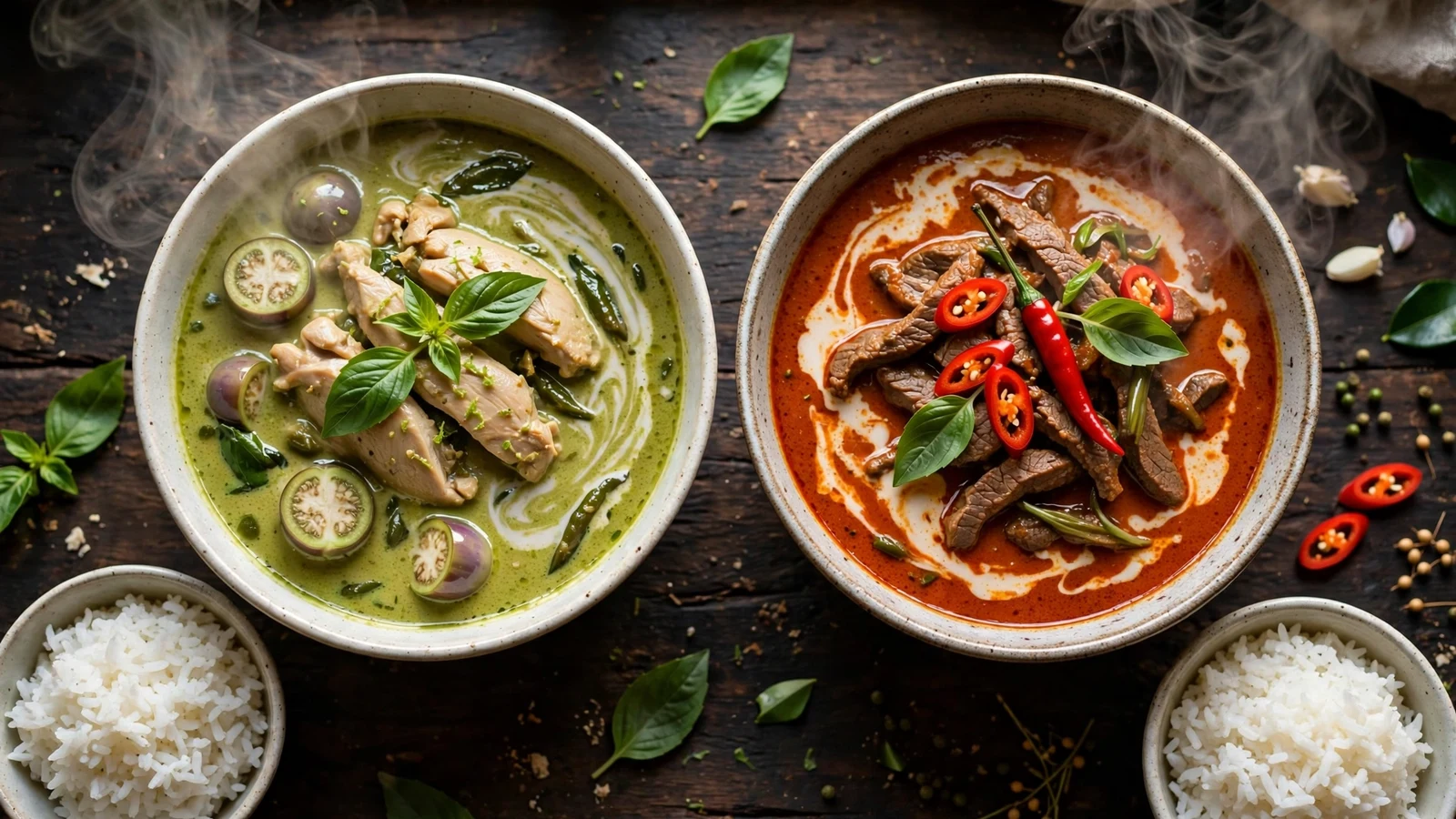
Stand in front of the curry paste shelf and the two tubs look like a color choice: green on one side, red on the other. The color is the clue, not the whole story. Green curry paste is built on fresh green chilies, so it tastes bright and herbal. Red curry paste is built on dried red chilies, so it tastes deeper and warmer. Both simmer in coconut milk, both get seasoned with fish sauce and a little sugar, and both can absolutely run too hot for the table if the cook isn't paying attention. The difference that matters is which kind of heat and which kind of aroma you want in the bowl.
This guide lays the two pastes side by side: what's in them, how the heat actually behaves, which proteins and vegetables each one flatters, and how to swap one for the other without ending up with a curry that tastes like a compromise.
The Quick Verdict
- Reach for green curry when you want the brightest, most herbal bowl: fresh chili bite, a sweet edge, and flavors that suit chicken, seafood, zucchini, Thai eggplant, and bamboo shoots.
- Reach for red curry when you want a rounder, deeper bowl that stands up to beef, duck, winter squash, and roasted vegetables, or when you need one paste that can also fry rice and season a soup base.
- If you only stock one, stock red for range. Red paste slides into more dishes without announcing itself. Stock green if Thai chicken curry with basil is a regular weeknight move at your house, because no swap fully replaces that fresh, green aroma.
If coconut milk is the part you're still sorting out, our comparison of coconut milk vs coconut cream covers which can to buy for curries and how the fat level changes the finished sauce.
Green Curry vs Red Curry at a Glance
| Detail | Green curry paste | Red curry paste |
|---|---|---|
| Chili base | Fresh green chilies | Dried red chilies, soaked and pounded |
| First flavor | Bright, herbal, a little sweet | Warm, deep, earthy |
| Heat character | Sharp and fresh up front, usually the hottest of the two | Rounder and slower, warm rather than biting |
| Aromatics up front | Lemongrass, galangal, makrut lime, green chili skin | Lemongrass and galangal too, with the dried chili's toasted depth in front |
| Color in the bowl | Pale green once coconut milk goes in | Brick red to orange-red, depending on the milk |
| Classic partners | Chicken, shrimp, fish balls, Thai eggplant, bamboo shoots, zucchini, Thai basil | Beef, duck, chicken, pork, pumpkin and squash, bell peppers, bamboo shoots |
| Sweetness in the finished curry | Usually seasoned a touch sweeter | Balanced more toward salt and warmth |
| Kitchen range | Mostly curries and curry-based soups | Curries, fried rice, noodle soup bases, marinades, stir-fry seasoning |
The one-line version: green tastes like the garden, red tastes like the pantry. Fresh chilies keep their green, grassy edge even after a simmer. Dried chilies give that up in exchange for depth.
What Makes Green Curry Green
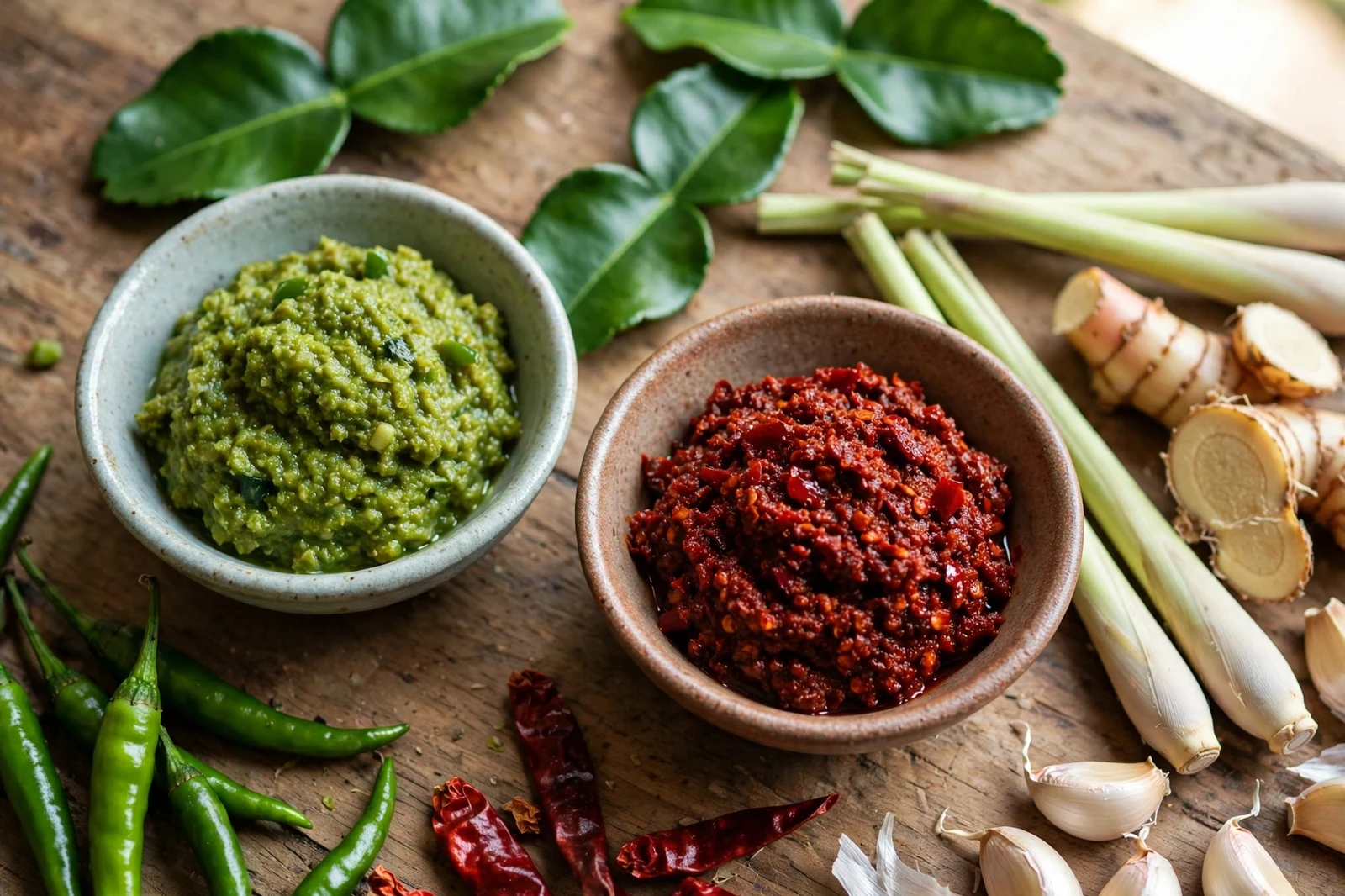
Green curry paste starts with fresh green chilies — often a mix of large green chilies for body and small bird's eye chilies for heat — pounded with lemongrass, galangal, garlic, shallots, makrut lime zest, coriander root or seed, cumin, white pepper, and shrimp paste. Because the chilies never dry, the paste keeps a raw, bright aroma that reads almost like an herb sauce before it hits the pan.
In the pot, that brightness is the point. A green curry is usually a little thinner than a red one, generously seasoned, and finished with Thai basil and makrut lime leaves so the fresh notes survive the coconut milk. Our Thai green curry with chicken follows that classic shape: chicken, Thai eggplant, bamboo shoots, and basil in a sauce that stays vivid green under the milk.
Green curry also carries a reputation for sweetness, and that part is seasoning, not paste. Many Thai cooks season a green curry a touch sweeter than a red one to balance the fresh chili bite. If your green curry tastes flat, the fix is usually a pinch more sugar and a squeeze of lime at the end, not more paste.
What Makes Red Curry Red
Red curry paste starts with dried red chilies, soaked until pliable and then pounded with much the same aromatic crew: lemongrass, galangal, garlic, shallots, shrimp paste, and warm spices. Drying changes the chili's character completely. The fresh, green edge disappears, and in its place you get a toasted, almost smoky warmth that melds into coconut milk instead of sitting on top of it.
That melding quality is why red paste is the workhorse. It disappears into a curry with beef or duck, seasons a pot of noodle soup without turning it green, and can be fried with rice for a quick red curry fried rice. The curry paste base in khao soi, the northern Thai coconut curry noodle soup, is a close relative of red paste, built on dried chilies for exactly that deep, brick-red broth.
Red curry in the bowl runs orange-red rather than fire-engine red once coconut milk goes in. If a restaurant bowl looks scarlet, there's usually extra chili oil or fresh red chili floated on top. Color is a garnish decision, not a heat report.
Heat: Which One Is Actually Hotter?
As a general rule, green curry is the hotter of the two. Fresh bird's eye chilies in the paste keep their bite, and green curry is often served with that heat right up front. Red curry's heat is real but rounder — it builds as you eat rather than announcing itself in the first spoonful.
Treat that rule as a starting point, not a promise, because paste brands vary a lot. A mild canned green paste can be gentler than a fiery small-batch red one, and restaurant versions run hotter than most home cooks season for weeknights. Three habits keep the heat where you want it:
- Start with less paste than the recipe lists — 2 tablespoons per can of coconut milk is a sane baseline — then add more in the last few minutes if the bowl needs it. You can add heat at the end. You can't take it back out.
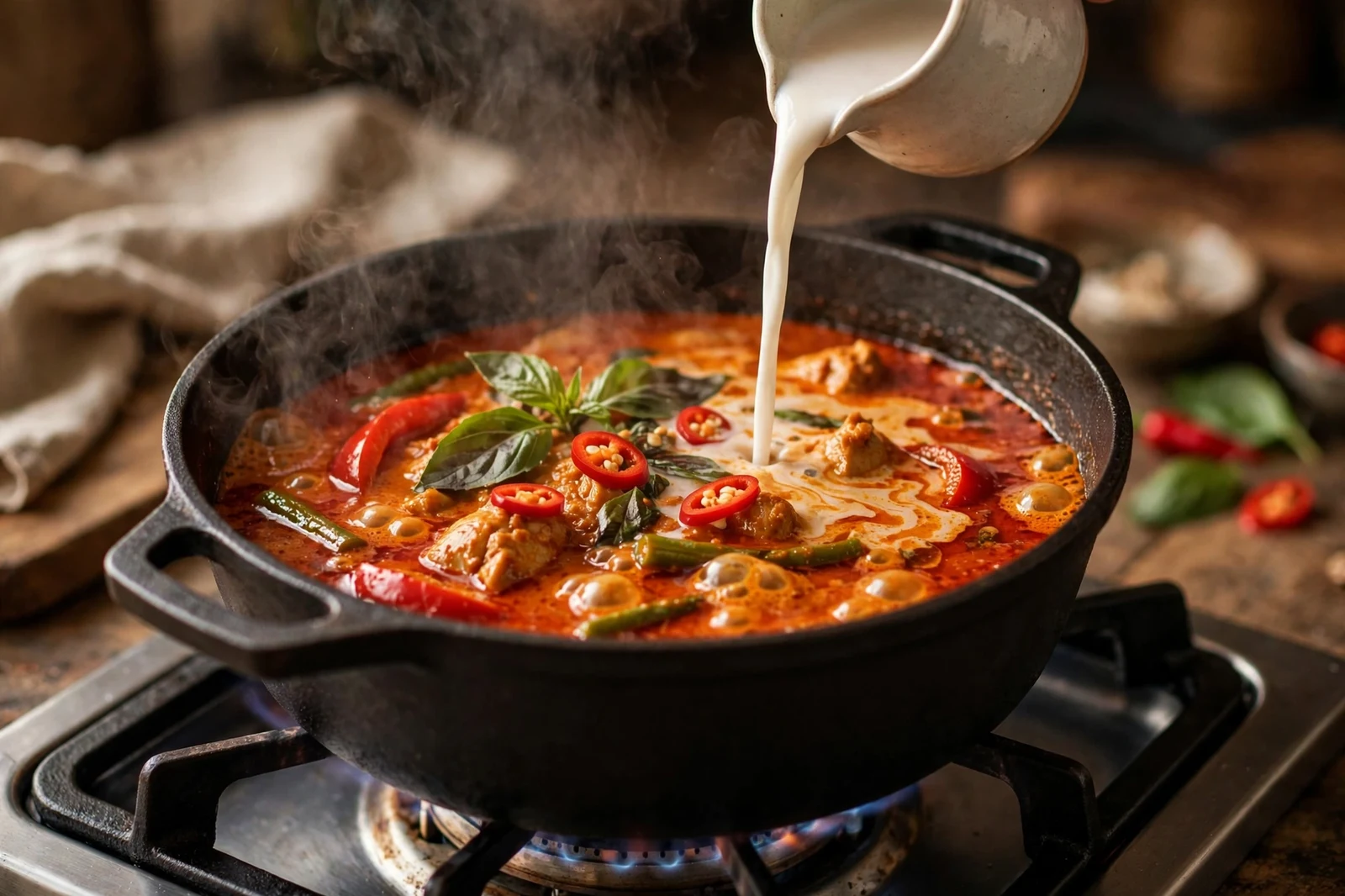
- Use the coconut milk as your brake. A splash more milk, or a spoonful of coconut cream on top, softens heat without thinning the curry the way water does.
- Balance with sugar and fish sauce before adding more paste. A curry that tastes harsh is often under-seasoned rather than under-spiced. A half teaspoon of sugar and a few drops of fish sauce round the heat out so the aromatics show up again.
One more heat note: leftover curry tastes hotter the next day. The chilies keep infusing the milk as it sits, so a bowl that was perfectly judged on Tuesday can bite back on Wednesday. Season leftovers gently and warm them over low heat rather than boiling them hard.
Which Curry for Which Dish?
Tradition gives strong hints here, and they're worth following the first time you make a dish. After that, cook to the protein in your fridge.
| Dish or main ingredient | Better first pick | Why |
|---|---|---|
| Chicken with Thai eggplant and basil | Green | The classic pairing; the herbal paste and basil reinforce each other |
| Shrimp or white fish | Green | Fresh heat flatters sweet seafood without burying it |
| Beef, especially braised cuts | Red | Dried-chili depth stands up to beef's richness over a longer simmer |
| Duck | Red | Warm spice and a touch more salt balance duck fat |
| Pumpkin or winter squash | Red | The squash's sweetness meets the paste's earthiness halfway |
| Zucchini and summer vegetables | Green | Bright paste keeps a light, quick-cooking curry tasting fresh |
| Bamboo shoots | Either | Green for the traditional chicken curry, red for a beef version |
| Fried rice or noodle soup base | Red | Melds into the dish as seasoning instead of tinting everything green |
| A curry for kids or heat-shy eaters | Red, lightly measured | Rounder heat is easier to soften with extra coconut milk |
The pattern underneath the table: green curry wants partners that cook fast and taste fresh. Red curry wants partners that bring their own richness and can simmer a while. When a dish could go either way — chicken thighs, say, or a mixed vegetable curry — the choice is really about mood. Green for a bright, basil-heavy bowl. Red for a deeper, cozier one.
Can You Swap One for the Other?
Yes, spoon for spoon, with two adjustments. Both pastes fry in the coconut cream the same way, simmer for the same time, and season with the same fish sauce and sugar. A swap changes the flavor's direction, not the method.
Green standing in for red: expect a brighter, more herbal curry with a sharper bite. Cut the paste by about a quarter the first time, since green usually runs hotter, and keep the sugar where the recipe has it — the sweetness is part of how green curry balances. Beef and duck still work, but the finished bowl will taste fresher and less deep. Add the basil at the very end so it stays vivid.
Red standing in for green: expect a warmer, rounder curry that looks orange-red. The dish loses the fresh green aroma, so compensate at the finish: a bigger handful of Thai basil, an extra makrut lime leaf torn in at the end, and a squeeze of lime juice to fake the brightness the fresh chilies would have brought. Seafood and zucchini still work fine; just simmer them gently so the deeper paste doesn't steamroll them.
What a swap can't do is change a dish's identity back. A red-paste version of green curry chicken is a good red curry chicken. It just isn't green curry. Swap freely on weeknights with whatever tub is open. Buy the right paste when you're making the dish to learn it, or when the color and aroma are the whole point of the meal.
Buying and Storing Both Pastes
- Read the chili first. On a good paste, chili is the first ingredient, and shrimp paste appears somewhere on the list. Pastes that lead with soybean oil or sugar taste padded and season a curry unevenly.
- Heat grades exist for green. Some brands grade green paste by chili heat. If your household is mixed-heat, buy the middle grade and let heat lovers add fresh chili at the table.
- Fridge life is generous. Opened tubs of either paste keep for months in the fridge with a clean spoon each time. The surface darkens a little; the flavor underneath is fine. Both freeze well in ice cube trays, one cube being roughly a tablespoon — handy for the fried-rice and soup jobs red paste does in small amounts.
- Paste is concentrated. A curry that tastes bland usually needs more paste, not more salt. Fry an extra spoonful in a little oil and stir it in rather than adding raw paste at the end, which tastes harsh and grassy.
The Bottom Line
Green curry vs red curry is fresh against dried, bright against deep, sharp against round. Neither is the stronger paste in any absolute sense — they're two answers to two different cravings. Stock red if you want one tub that can season a curry, a soup, and a pan of fried rice. Add green the next time chicken, basil, and Thai eggplant are on the list, and you'll taste in one bowl why Thai kitchens keep both.