

A Custard That Sets Like Warm Jelly
Chawanmushi is a savory Japanese egg custard steamed in a small cup. Eggs are whisked gently into seasoned dashi, strained, poured over a few small fillings — a shrimp, a piece of chicken, a slice of shiitake — and steamed just until the surface holds a soft wobble. It is eaten hot with a small spoon, usually as one quiet course in a larger meal, and the texture is the whole point: smooth, warm, and barely set.
The name means "steamed in a tea cup," and that cup size is part of the method. A small portion steams evenly, so the center sets before the edges can overcook. Everything below scales to four small cups; double it in more cups rather than in one deep bowl.
The custard is only as good as its stock. If you make your own, the ratios in How to Make Dashi from Scratch include a light version marked for custards like this one. A good instant dashi also works, as long as it is mixed to a mild strength and cooled before it meets the eggs.
The Ratio That Decides the Texture
Chawanmushi lives or dies on the egg-to-dashi ratio, measured by volume. Three large eggs give about 3/4 cup (180 ml) of beaten egg. How much dashi you add to that amount sets the final bite:
| Beaten egg | Dashi | Texture | Best for |
|---|---|---|---|
| 3/4 cup (180 ml) | 1 1/4 cups (300 ml) | Firm, sliceable, holds a clean spoon edge | Make-ahead cups for a lunch box |
| 3/4 cup (180 ml) | 1 2/3 cups (400 ml) | Soft set, smooth, gentle wobble in the center | The classic serving in this recipe |
| 3/4 cup (180 ml) | 2 cups (475 ml) | Very delicate, almost soup-like, breaks at a touch | Small first-course cups with few fillings |
The middle row is the place to start. Firmer is forgiving on timing but tastes more like plain egg. Weaker is silky when it works and watery when the steam runs hot, so it leaves less room for error.
Ingredients
For the custard
- 3 large eggs (about 3/4 cup / 180 ml beaten)
- 1 2/3 cups (400 ml) dashi, cooled to lukewarm or room temperature
- 1 teaspoon soy sauce, preferably light in color
- 1 teaspoon mirin
- 1/2 teaspoon fine salt
Fillings and finish, for 4 cups
- 4 medium shrimp, peeled and deveined
- 2 ounces (60 g) boneless, skinless chicken thigh, cut into 1/2-inch pieces
- 2 small fresh shiitake mushrooms, stems removed, caps sliced thick
- 8 to 12 small spinach leaves, or a few mitsuba leaves if you can find them
- 4 thin slices kamaboko (Japanese fish cake), optional
- Fine strips of lemon or yuzu zest, for the top (optional)
Prep: 15 minutes. Cook: 15 minutes. Total: 30 minutes. Serves 4 as a small course; makes 4 cups of about 2/3 cup each.
How to Make It, Step by Step
1. Set up the steamer first. Fill a wide pot with 1 to 1 1/2 inches of water and bring it to a boil, then lower the heat to the gentlest simmer you can hold. Line four heatproof cups or small ramekins (about 3/4 cup / 180 ml each) on the counter. A pot with a lid that can sit slightly ajar is ideal; you will need to vent steam later.
2. Season the fillings lightly. Toss the chicken pieces with a tiny pinch of salt and a few drops of the soy sauce from the custard measure. Leave the shrimp plain. The custard will season everything gently as it steams, so the fillings need only a head start.
3. Whisk the eggs without making foam. Crack the eggs into a measuring jug and beat them with chopsticks or a fork using a cutting, back-and-forth motion rather than a whipping one. The yolks and whites should become one even, pale mixture with no big bubbles on top. Foam now becomes holes in the finished custard.
4. Add the dashi and seasonings. Stir the cooled dashi, soy sauce, mirin, and salt into the eggs until just combined. Hot dashi would start to cook the egg on contact, so it must feel no warmer than lukewarm.
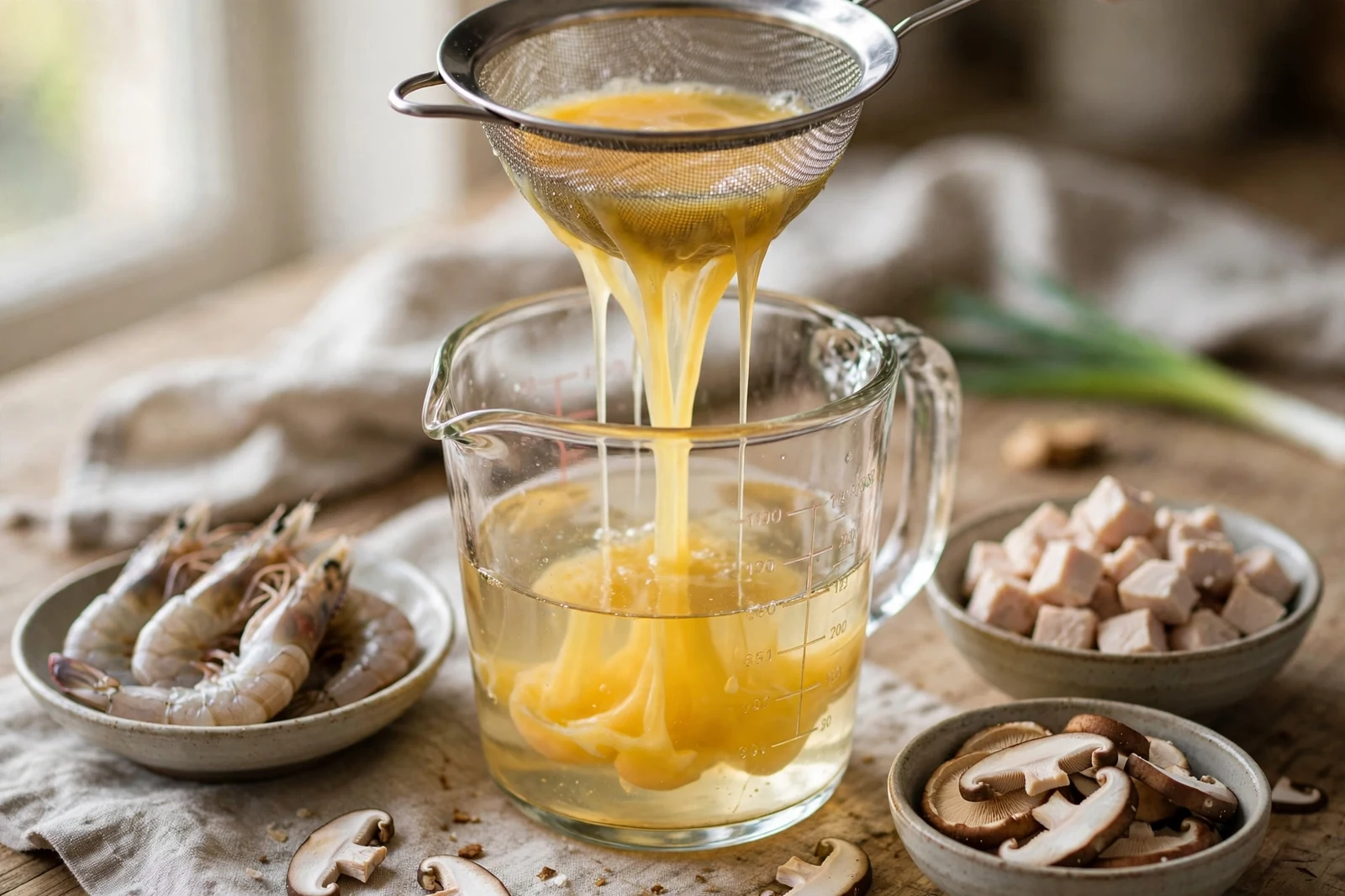
5. Strain the mixture. Pour the egg mixture through a fine-mesh strainer into a clean jug. This catches chalazae (the white cords in egg white), stray bits of shell, and any foam. It is a 20-second step that is directly responsible for the smooth surface chawanmushi is known for.
6. Fill the cups. Divide the chicken, shrimp, shiitake, and kamaboko (if using) among the four cups. Pour the strained egg mixture over the fillings, filling each cup to about 3/4 full. Lay the spinach or mitsuba leaves on top. Skim off any bubbles with the edge of a spoon, and cover each cup with its lid, foil, or plastic wrap.
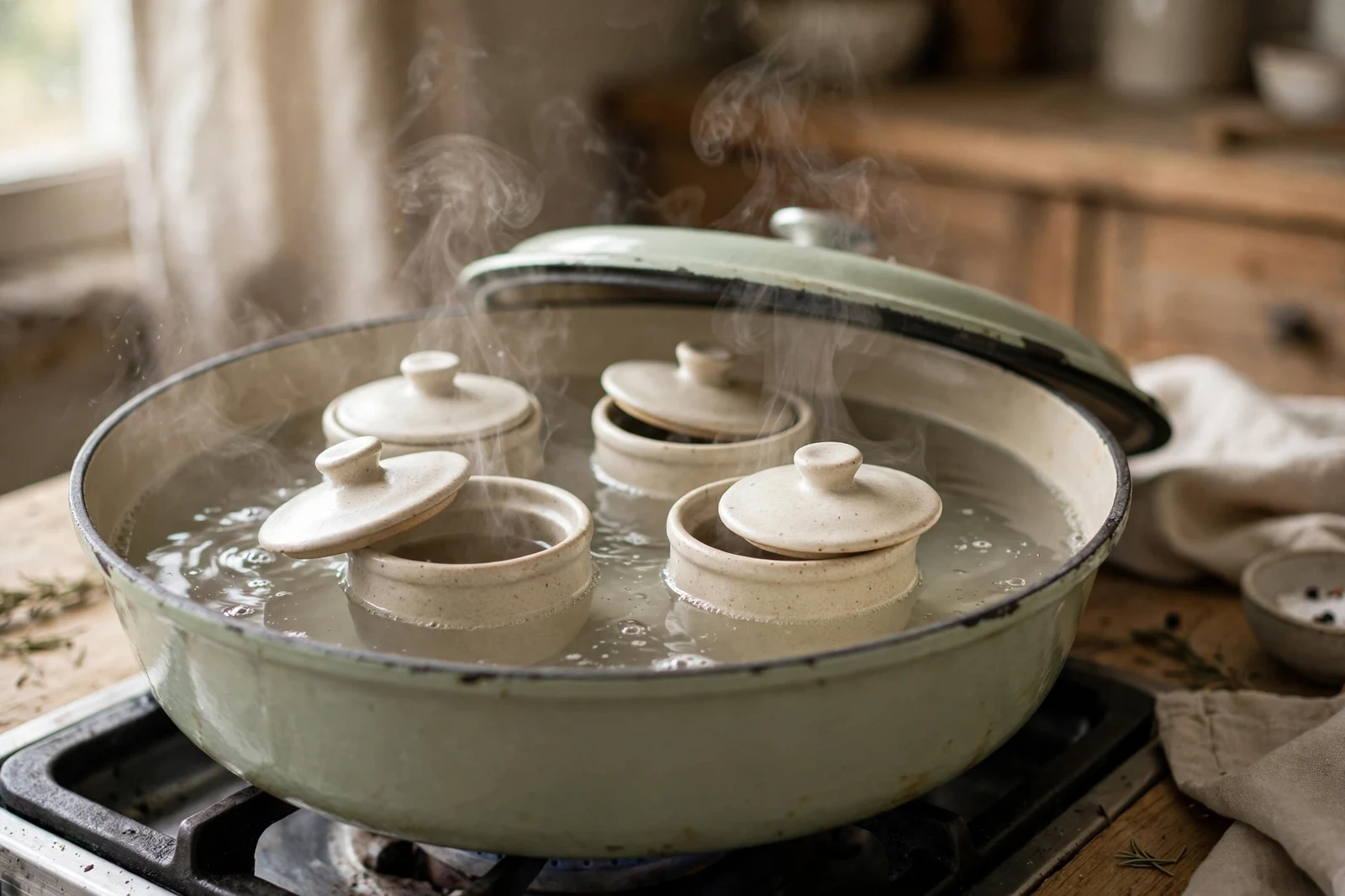
7. Steam low and slow. Set the cups in the simmering water — the water should come about halfway up the sides. Cover the pot, leaving the lid slightly ajar so steam can escape, and steam over the lowest steady heat for 12 to 15 minutes. The water should move lazily, never boil hard.
8. Check for the wobble. The custard is done when the surface looks set and glossy, a clear drop of broth may bead in the center, and the cup trembles gently when tapped. A skewer pushed in off-center should come out with clear liquid, not milky egg. Carry the cups straight to the table, topped with a strip of zest if you like, and eat them hot with small spoons.
Chawanmushi often opens a Japanese meal rather than closing it. A cup followed by Classic Miso Soup and rice makes a calm, complete lunch built on the same pot of dashi.
Why Low Steam Matters More Than Time
The small holes that sometimes pit a steamed custard, called "su" in Japanese, come from heat, not from the recipe. When the water boils hard, steam builds pressure in the pot, the egg at the cup's edge shoots past its setting point, and bubbles form inside the custard as it firms. Cracking the lid and holding the water at a bare simmer keeps the temperature inside the cups gentle and even, so the egg sets as one smooth gel. If your first batch comes out pitted, the fix is almost never a new ratio; it is lower heat and a vented lid next time.
A Short Troubleshooting Table
| What you see | Likely cause | Fix next time |
|---|---|---|
| Small holes across the surface | Steam too strong, lid sealed tight | Lower the heat, leave the lid ajar, cover each cup |
| Custard watery in the middle | Ratio too weak for the cup size, or under-steamed | Use the middle ratio, steam 2 to 3 minutes longer |
| Firm and rubbery | Over-steamed or water at a rolling boil | Pull the cups at the first wobble, keep water barely moving |
| Fillings all sunk and hidden | Fillings added after pouring, cups overfilled | Set fillings in first, pour custard over them |
| Skin on top, bubbles underneath | Egg whisked to a foam, mixture not strained | Whisk gently, always strain, skim bubbles before steaming |
Tips for a Smooth Set
- Room-temperature eggs strain easier. Cold eggs right from the fridge work, but the whites pass through the strainer more cleanly after 15 minutes on the counter.
- Match the cup to the portion. Custard deeper than about 2 inches sets unevenly. If you only have larger ramekins, fill them shallower and shorten the steam by 2 minutes.
- No steamer basket needed. The cups sit directly in the simmering water. A folded kitchen towel under the cups keeps them from rattling and steadies the heat.
- Season the dashi, not the finished cup. Once steamed, the custard cannot be adjusted. Taste the raw mixture before straining; it should taste like a well-seasoned light soup.
Variations and Swaps
- Mushroom and gingko, no seafood. Skip the shrimp and chicken, add extra shiitake and a few gingko nuts or edamame. Keep the same ratio and timing; this version leans on the dashi, so a shiitake dashi fits it well.
- Udon in the cup. A small nest of cooked udon noodles in the bottom of each cup turns the custard into a heartier course sometimes called odamakimushi. Add the noodles with the fillings and pour the custard over.
- Salmon and ikura. A small cube of salmon in place of chicken, with a spoonful of salmon roe added after steaming, makes a richer cup for a special meal.
- Cheese, carefully. A few small cubes of mozzarella melt into soft pockets in the hot custard. It is not traditional, but it works because the base stays mild. Add it with the fillings, not on top.
- Chilled in summer. A firmer-ratio cup, steamed, cooled, and chilled, slices cleanly and eats like a cold savory jelly. Serve it with a drop of soy-based dipping sauce rather than eating it plain.
- Next to fried dishes. The soft, warm custard is a natural partner for crisp food. A cup alongside Agedashi Tofu gives you two very different textures built on the same dashi base.
Storage and Make-Ahead Notes
Chawanmushi is best within minutes of steaming, while the center still trembles. Leftovers keep, covered, in the fridge for up to 1 day; the texture firms and a little clear liquid may pool, which is normal. Reheat gently by steaming again for 4 to 5 minutes over low heat — a microwave toughens the edges before the middle warms. The custard does not freeze well.
For a head start, you can strain the seasoned egg mixture and portion the raw fillings into cups a few hours early, keep everything refrigerated, then pour and steam just before serving. Bring the filled cups back to near room temperature for 10 minutes so the timing above still holds. Steaming to order is what keeps the surface glossy, so this last-minute step is worth planning the meal around.
Chawanmushi: Japanese Steamed Egg Custard
Ingredients
Method
- Set up the steamer: fill a wide pot with 1 to 1 1/2 inches of water, bring to a boil, then lower to the gentlest simmer. Set out four heatproof cups of about 3/4 cup (180 ml) each.
- Lightly season the chicken pieces with a tiny pinch of salt and a few drops of the soy sauce from the custard measure. Leave the shrimp plain.
- Whisk the eggs gently with chopsticks or a fork using a cutting, back-and-forth motion, with no foam on top.
- Stir the cooled dashi, soy sauce, mirin, and salt into the eggs until just combined. The dashi must feel no warmer than lukewarm.
- Strain the mixture through a fine-mesh strainer into a clean jug to remove chalazae, shell bits, and foam.
- Divide the chicken, shrimp, shiitake, and kamaboko among the cups. Pour the strained egg mixture over, filling each cup about 3/4 full, lay spinach or mitsuba leaves on top, skim any bubbles, and cover each cup with a lid, foil, or plastic wrap.
- Steam the cups in the simmering water (about halfway up their sides) with the pot lid slightly ajar for 12 to 15 minutes, keeping the water barely moving, never at a hard boil.
- The custard is done when the surface looks set and glossy and the cup trembles gently when tapped, and a skewer comes out with clear liquid. Serve hot with small spoons, topped with zest if using.