
The Broth Behind Half the Japanese Pantry
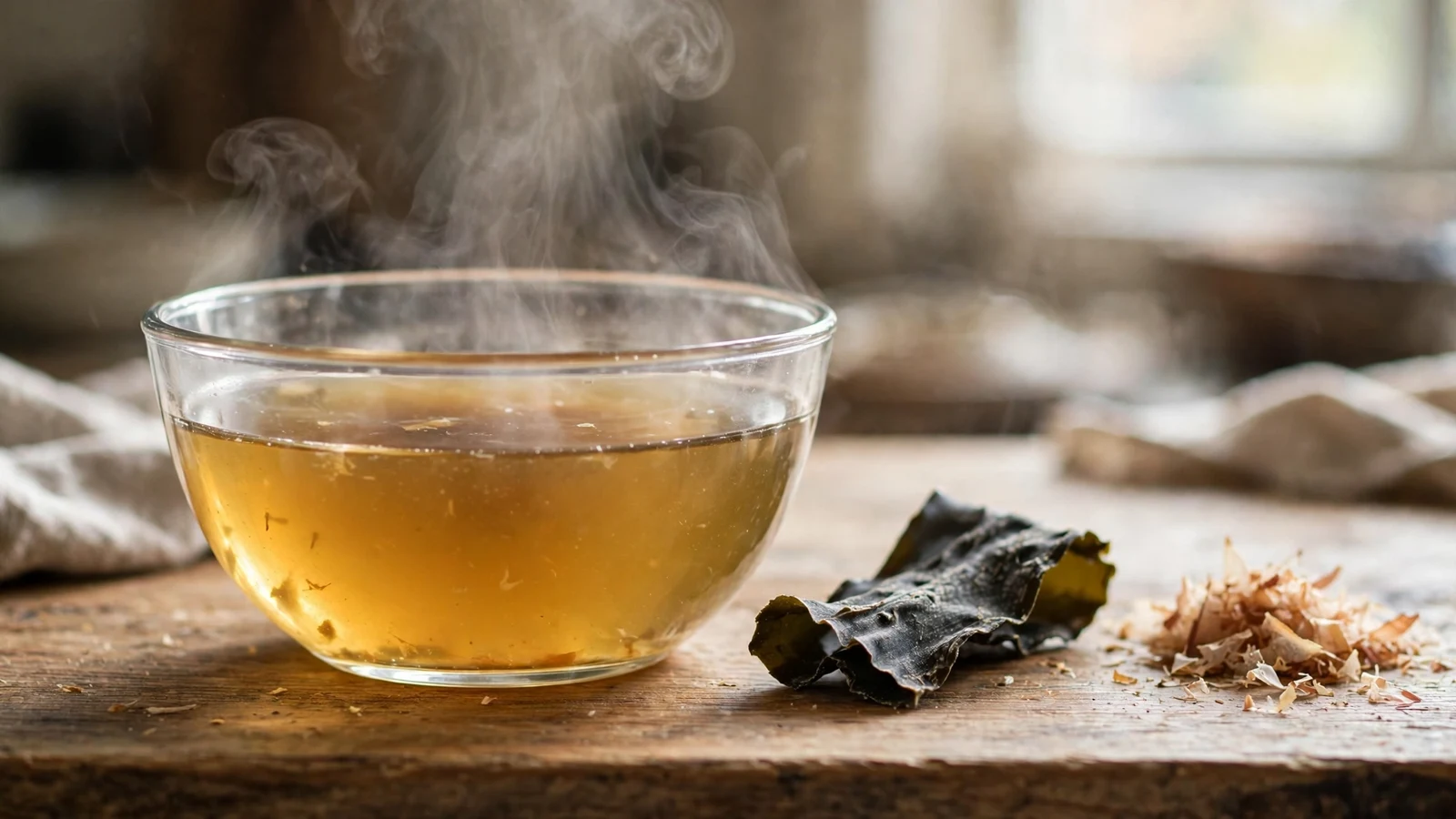
Dashi is a clear stock built from a short steep, not a long simmer. Water pulls flavor from kombu (dried kelp), katsuobushi (bonito flakes), dried shiitake, or small dried sardines called niboshi, and that flavor becomes the base for miso soup, noodle broths, simmered vegetables, and dipping sauces. A pot takes about 30 minutes, most of it hands-off, and the result tastes clean and savory in a way powdered stock rarely matches.
The classic version is awase dashi, a mix of kombu and bonito. Kombu brings glutamates; bonito brings inosinates. Together they taste far more savory than either one alone. That pairing is why awase dashi carries a bowl of Classic Miso Soup with so little else in it.
Five Kinds of Dashi, One Short Table
Each dashi has a job. Pick by what you are cooking, not by habit:
| Dashi | Main ingredient | Flavor | Best for |
|---|---|---|---|
| Kombu dashi | Kombu only | Gentle, rounded, faintly sweet | Vegetarian soups, simmered vegetables, delicate dishes |
| Katsuo dashi | Bonito flakes only | Smoky, direct, savory | Clear soups, dipping sauces, dishes that want a bolder base |
| Awase dashi | Kombu + bonito | Layered, full, balanced | The all-purpose default: miso soup, noodle broth, nimono |
| Shiitake dashi | Dried shiitake | Earthy, deep, a little sweet | Vegetarian noodle soups, rice dishes, simmered tofu |
| Niboshi dashi | Dried baby sardines | Strong, fish-forward | Hearty miso soup, rustic noodle broths, bold simmered dishes |
Most home cooks only need two: awase for everyday cooking and kombu or shiitake for meat-free days.
Ingredients for Basic Awase Dashi
- 4 cups (950 ml) cold water, plus a splash more to top up
- 1 piece kombu, about 4 x 4 inches (10 g)
- 1 cup (20 g) loosely packed katsuobushi (bonito flakes)
Makes about 3 1/2 to 4 cups. Prep: 5 minutes. Steep and finish: about 25 minutes. Total: about 30 minutes. Kombu is sold in stiff dried sheets; a 4-inch square piece is a good single-pot amount. Bonito flakes should smell smoky and clean, not stale or fishy-sharp.
Step by Step: Awase Dashi
1. Wipe, do not wash, the kombu. Run a barely damp cloth over the surface to remove grit. Leave the white powdery coating alone; it carries flavor. Rinsing under the tap washes that away.
2. Start the kombu in cold water. Put the kombu and the cold water in a pot and let it sit for 20 to 30 minutes if you have time. A cold start draws out flavor slowly and keeps the stock sweet. Short on time? Skip the soak and heat very gently instead; the stock will still be good.
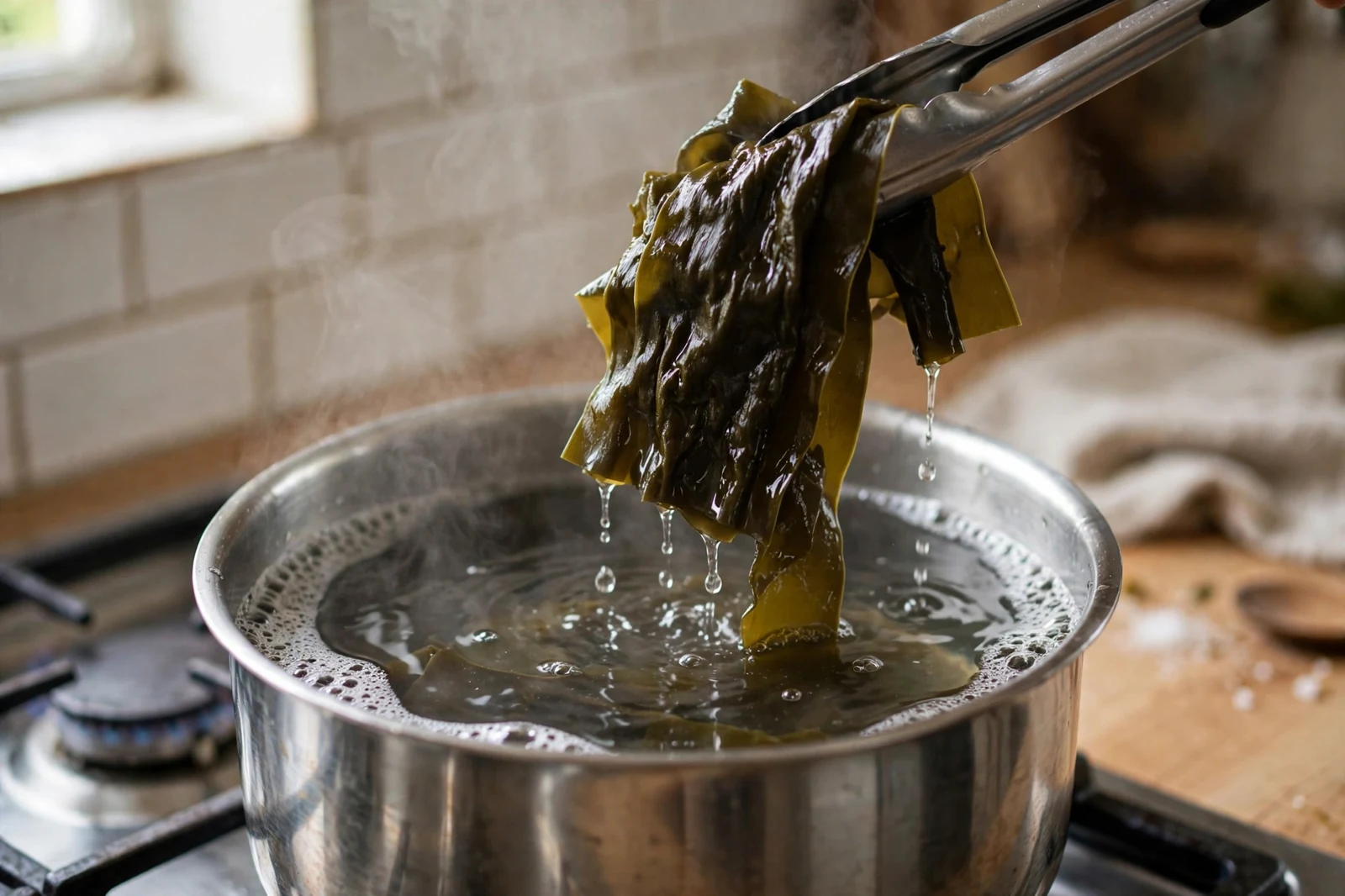
3. Heat slowly to just below a simmer. Set the pot over medium-low heat and watch it. You want small bubbles gathering at the edges at about 140 to 150°F (60 to 65°C). This part takes 10 to 15 minutes. Slow is the point.
4. Pull the kombu before the water boils. Take the kombu out as soon as the edges bubble steadily. Kombu left in boiling water turns bitter and a little slimy, and no straining fixes that. Save the spent piece for a second, weaker stock (niban dashi) or slice it into simmered dishes.
5. Bring the water to a bare boil, then cut the heat. Raise the heat just until the surface moves, then turn the burner off. Add the bonito flakes all at once and push them under the surface with a spoon. Do not stir after that.
6. Steep 30 seconds to 2 minutes. Bonito gives up its flavor fast. Thirty seconds gives a light stock; closer to 2 minutes gives a stronger one for noodle broth. Longer steeping adds harshness, not depth.
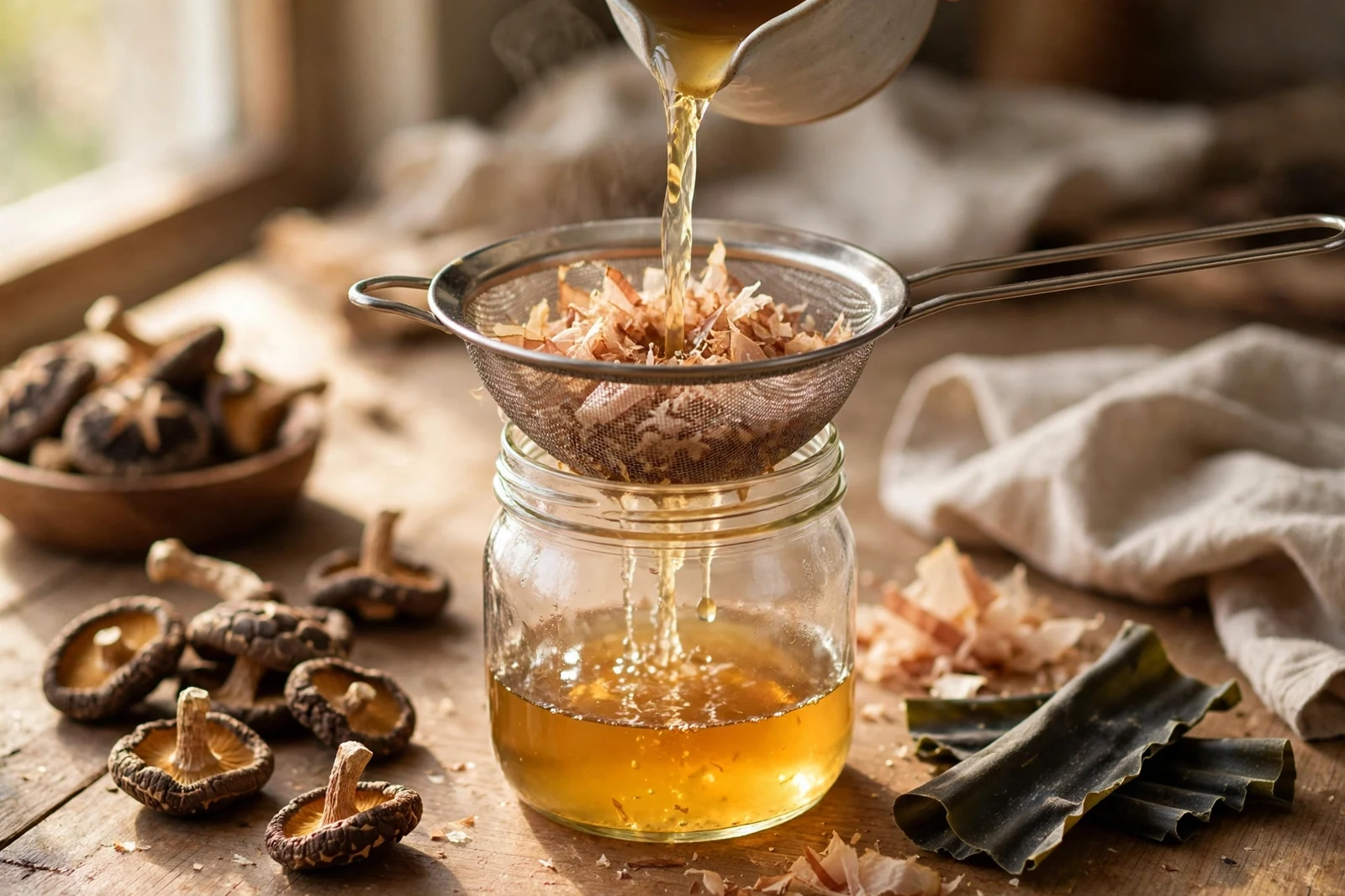
7. Strain without pressing. Pour the stock through a fine-mesh strainer or a cloth-lined colander into a clean pot or jar. Let the flakes drain on their own. Pressing or squeezing pushes bitter, cloudy bits through.
8. Use it or cool it. Fresh dashi is at its best the day it is made. Let leftovers cool, then refrigerate right away.
Ratios Worth Memorizing
Once you know the base ratio, scaling is easy. For every 4 cups (950 ml) of water:
- Light dashi (clear soups, chawanmushi-style custards): 8 g kombu + 15 g bonito
- Standard dashi (miso soup, everyday simmering): 10 g kombu + 20 g bonito
- Strong dashi (noodle broth, dipping sauce before dilution): 12 g kombu + 30 g bonito
Too weak is easy to fix by reducing the pot for a few minutes or seasoning the finished dish. Too strong and bitter usually traces back to boiled kombu or pressed flakes, which is harder to rescue. Aim light the first time; you can always build up.
Kombu-Only and Shiitake Versions
For a meat-free stock, use kombu alone with the same cold start and slow heat, then pull it before a boil. The result is gentle and works anywhere a dish should taste clean rather than smoky.
Shiitake dashi goes a different route. Soak 4 to 5 dried shiitake in 4 cups of cold water for at least 4 hours, or overnight in the fridge. The soaking water is the stock; strain it and keep the mushrooms for cooking. If you rehydrate shiitake often, the guide to Dried Shiitake Mushrooms covers grades, soaking times, and what to do with the caps afterward. Kombu and shiitake together make the richest vegetarian option: steep the kombu gently in the strained shiitake soaking water.
Where This Stock Goes Next
One batch of awase dashi covers a lot of ground:
- Miso soup: whisk in miso off the heat, about 1 tablespoon per cup of dashi, adjusted to your miso.
- Simmered tofu: a gentle dashi bath is the whole point of Yudofu: Japanese Simmered Tofu Hot Pot.
- Fried tofu in broth: Agedashi Tofu sits in a hot dashi-based sauce that should taste clean, not heavy.
- Noodle soups and nimono: use the strong ratio, then season with soy sauce, mirin, and salt at the dish level, not in the stock pot.
Keep the stock itself plain. Salt and soy belong to the dish you build on it, and plain dashi stores and freezes far better.
Mistakes That Make Dashi Taste Off
- Boiling the kombu. The single most common problem. Bitter, slightly slimy stock almost always means the kombu stayed in past a simmer.
- Squeezing the bonito. You gain a spoonful of liquid and a pot of cloudy, harsh flavor. Let gravity do the work.
- Old flakes. Bonito loses its smoke fast once the bag is open. Buy small bags, seal them tight, and use them within a few weeks.
- Hard, chlorinated water. Very hard water dulls dashi. If your tap water tastes strongly of chlorine, filtered water gives a noticeably cleaner pot.
- Reheating on a rolling boil. Warm dashi gently when it goes into a dish. A hard boil flattens the aroma you worked to keep.
Storage, Freezing, and Second Stock
Fresh dashi keeps 2 to 3 days in the fridge in a sealed jar, and freezes well for up to a month. Freeze it in ice cube trays or 1-cup portions so you can thaw only what a recipe needs. The flavor fades a little in the freezer, so frozen dashi suits miso soup and simmered dishes better than a clear soup where the stock is the whole show.
For niban dashi (second stock), return the spent kombu and bonito to a pot with 4 cups of fresh water, heat gently without boiling the kombu, strain, and use it the same day for simmered vegetables or everyday miso soup. It is weaker by design, and that is fine: not every dish needs the first, clearest run.
Make one pot of awase dashi this week and a pot of miso soup stops being a packet decision. The method is short, the ingredients keep for months in the pantry, and the flavor difference shows up in the first spoonful.
2 thoughts on “How to Make Dashi from Scratch”