
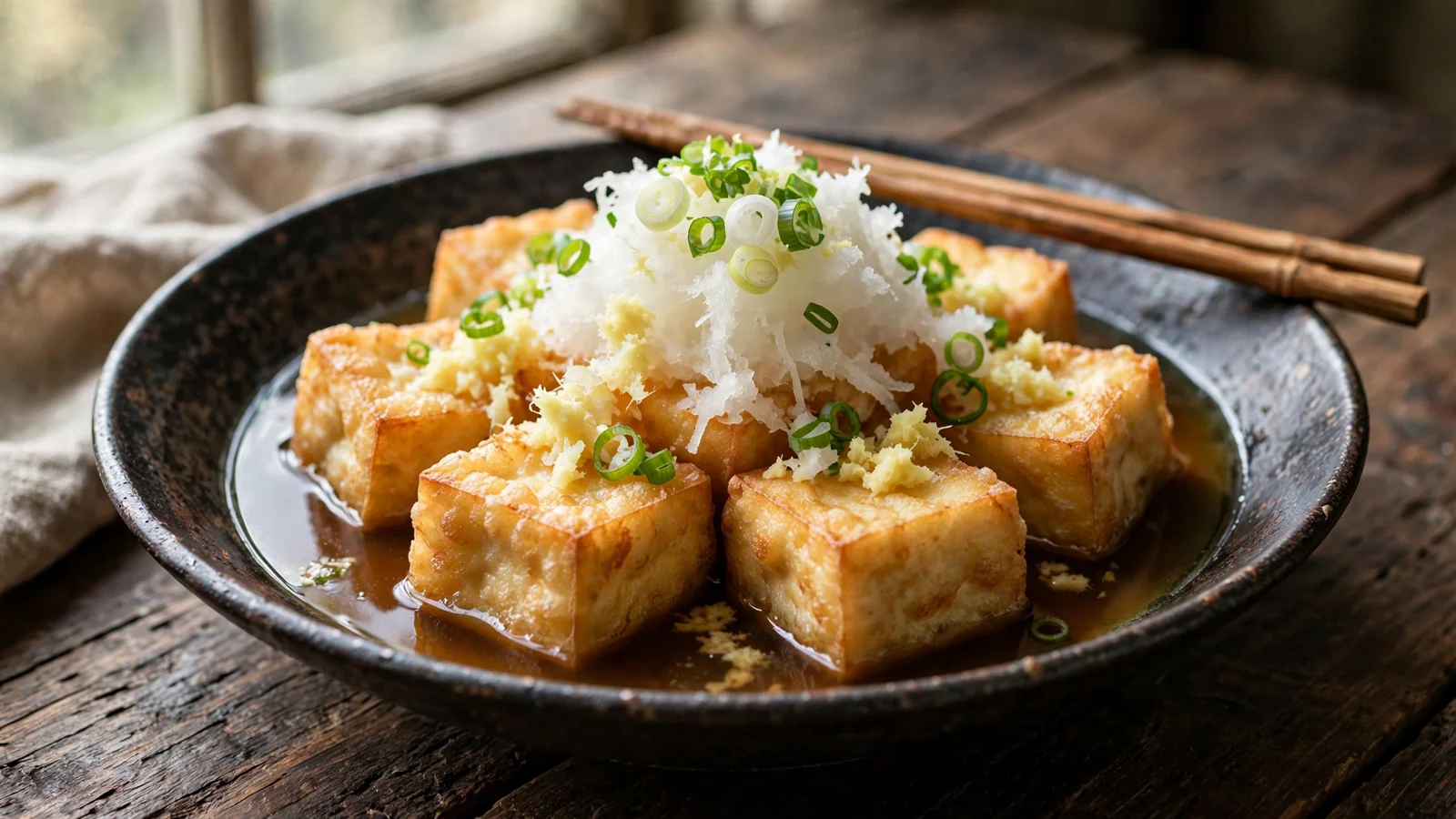
Agedashi tofu is one of those dishes that makes you rethink what tofu can do. A cube of silken tofu goes into hot oil wearing a whisper-thin coat of potato starch, and it comes out shatteringly crisp on the outside while the inside stays custardy and molten. The moment it lands in the bowl, warm dashi broth — seasoned with soy sauce and a touch of mirin — is poured over the top, along with grated daikon, sliced scallions, and a dab of fresh ginger. Crisp, creamy, savory, and refreshing all at once: it is a small masterclass in contrast.
In Japan, agedashi tofu shows up everywhere from izakaya snack menus to the opening act of a multi-course meal. The name literally describes the technique — *age* (to deep-fry) and *dashi* (to serve in broth). The whole thing takes about 30 minutes, most of it spent draining the tofu and heating the oil. Once you learn the two habits that make the crust stay crisp, it is the kind of recipe you will reach for whenever you want something impressive from very little.
The Two Secrets of Crisp Agedashi Tofu
Secret one: drain the tofu thoroughly. Tofu is mostly water, and water is the enemy of a crisp crust. Press the block under a light weight for 15 to 20 minutes, or at the very least blot it dry in layers of paper towels. Surface moisture makes the starch coating gummy instead of glassy — and a gummy coating slides right off in the oil.
Secret two: keep the broth warm, not boiling. The tentsuyu broth should be hot when it meets the tofu, but never at a rolling boil. Boiling broth cooks the fried tofu's surface soft on contact and turns the dish mushy. Warm it to just below a simmer, pour it over the tofu right before serving, and the crust stays audibly crisp even under the broth.
There is a third point worth knowing: potato starch (katakuriko) gives the signature result — a delicate, almost lacy crust that shatters rather than crunches. Cornstarch works in a pinch and still tastes good, but the crust will be a little thicker and less glass-like. Use potato starch if you can find it; most Asian grocery stores carry it.
About the Tentsuyu Broth
The broth is simple on purpose. Dashi brings the savor, soy sauce brings depth and salt, and mirin rounds everything out with a gentle sweetness. The standard ratio is easy to remember: 4 parts dashi, 1 part soy sauce, 1 part mirin, simmered just long enough to meld. That is it.
For the dashi itself, you have two good options. Instant dashi granules dissolved in hot water are fast and genuinely tasty — this is what most weeknight cooks in Japan reach for. Homemade kombu-and-bonito dashi takes about 10 extra minutes and tastes cleaner. Either works; what matters is that the broth tastes balanced and savory on its own before it ever touches the tofu. Taste it and adjust: it should be savory first, then lightly sweet, never aggressively salty.
Ingredients
For the tofu:
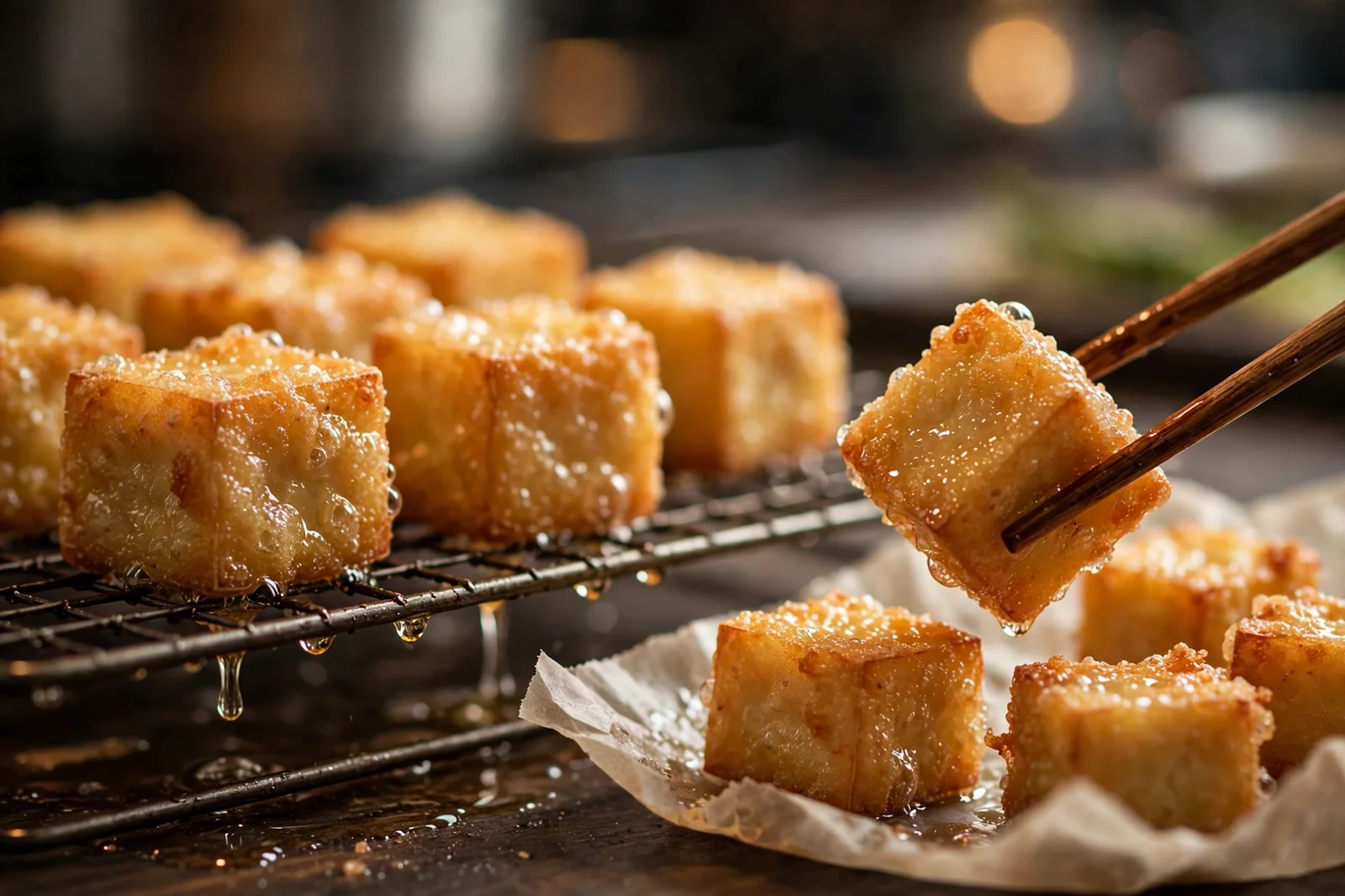
- 1 block (14 to 16 ounces) firm or medium-firm tofu
- 1/4 cup potato starch (katakuriko), plus more as needed
- Neutral oil for deep-frying, about 2 cups (canola or vegetable)
For the tentsuyu broth:
- 2 cups dashi (from 2 cups water + 2 teaspoons instant dashi granules, or homemade)
- 1/2 cup soy sauce
- 1/2 cup mirin
For serving:
- 4 tablespoons grated daikon radish (daikon oroshi), squeezed lightly of excess liquid
- 2 scallions, thinly sliced
- 1 tablespoon freshly grated ginger
- Katsuobushi (bonito flakes), optional
Instructions
1. Drain the tofu. Cut the tofu into 8 to 12 even cubes. Lay them on a folded kitchen towel or several layers of paper towels, cover with more towels, and set a light weight on top — a plate with a can of beans works well. Let it drain for 15 to 20 minutes, changing the towels once if they become soaked. The tofu should feel dry to the touch.
2. Make the tentsuyu broth. Combine the dashi, soy sauce, and mirin in a small saucepan. Bring to a gentle simmer over medium heat, stirring once, then lower the heat to keep it warm. Taste: it should be savory with a soft sweetness. Keep the pot covered and off the boil.
3. Prep the garnishes. Grate the daikon on a fine grater, then squeeze out the excess liquid with your hands — you want it moist, not watery. Slice the scallions and grate the ginger. Set everything aside within reach of the stove.
4. Heat the oil. Pour the oil into a heavy pot or deep skillet to a depth of about 2 inches. Heat over medium-high until it reaches 340 to 350°F (170 to 175°C). If you do not have a thermometer, drop in a tiny pinch of starch — it should sizzle immediately and rise to the surface. Too cool and the coating absorbs grease; too hot and it browns before the tofu warms through.
5. Coat the tofu. Spread the potato starch in a shallow dish. Working with a few cubes at a time, roll each cube through the starch and tap off every bit of excess — the coating should be a thin, even dusting, not a thick shell. Fry immediately after coating so the starch does not absorb moisture and turn gummy.
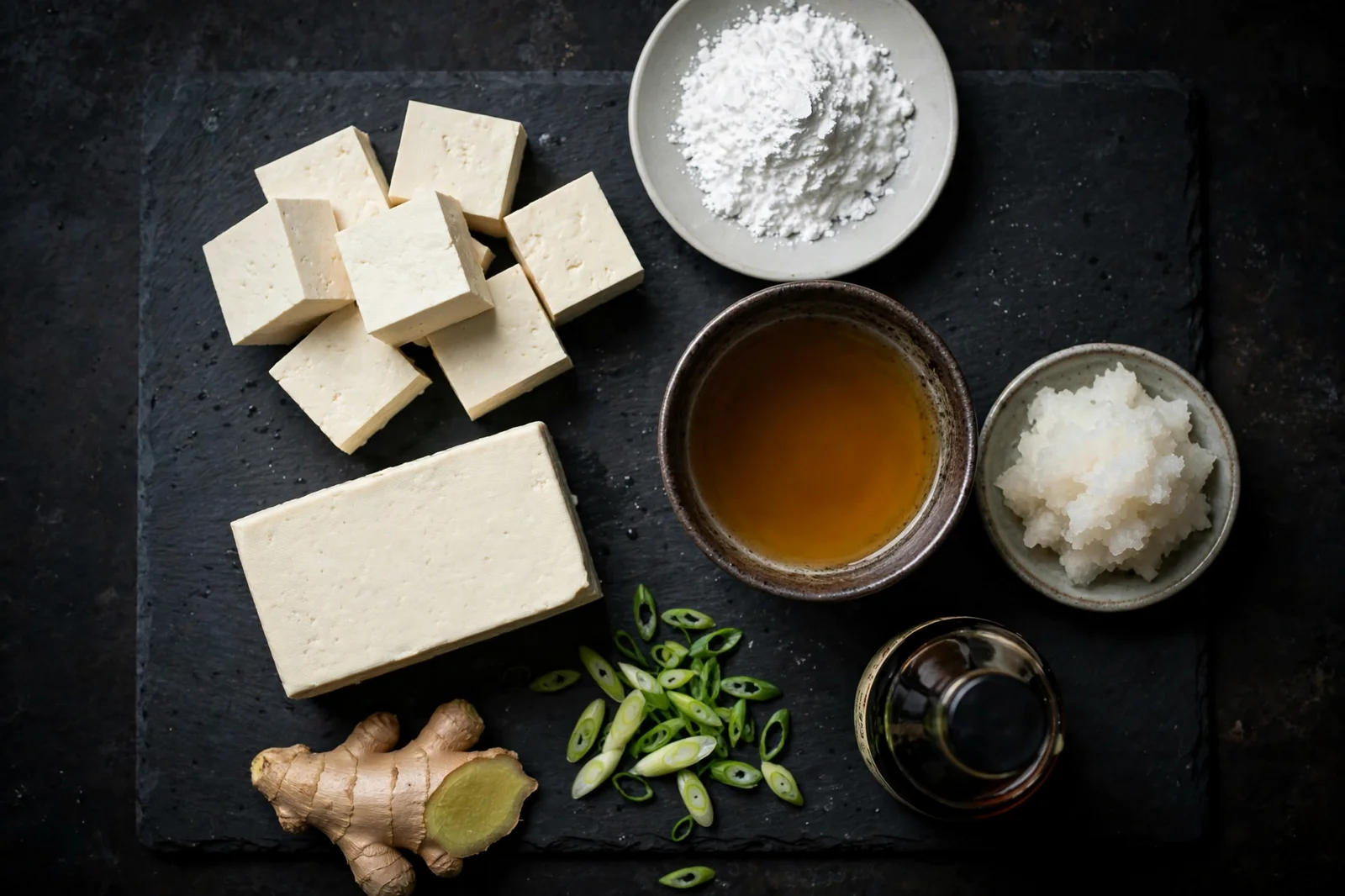
6. Fry in batches. Lower the cubes into the hot oil gently with chopsticks or tongs, a few at a time — crowding drops the oil temperature. Fry for 2 to 3 minutes, turning once, until the crust is golden and crisp all over. Lift out with a slotted spoon and drain on a wire rack or paper towels. Let the oil come back to temperature between batches.
7. Assemble and serve. Divide the hot tofu among four shallow bowls. Pour the warm tentsuyu over and around the cubes — use enough to come about halfway up their sides, roughly 1/3 to 1/2 cup per bowl. Top each serving with a small mound of grated daikon, sliced scallions, a dab of ginger, and bonito flakes if using. Serve immediately, while the crust is still crisp.
Tips and Variations
- Tofu texture matters. Firm or medium-firm tofu is the sweet spot. Silken tofu makes a lovely, custardy interior but shatters easily in the oil — save it for when you are comfortable with the technique. Extra-firm works but gives a less creamy center.
- Do not skip the drain. This is the step most people rush, and it is the one that decides whether the coating clings. If your cubes feel wet after 15 minutes, give them another 10. Patience here is the whole trick.
- Keep the oil at temperature. Between batches, let the oil climb back to 340°F. A quick check with a pinch of starch before each batch keeps the crust light instead of greasy.
- Make it gluten-free. Substitute tamari for the soy sauce in the broth. The rest of the recipe is naturally gluten-free — just check your dashi granules' label if sensitivity is severe.
- Broth ahead, tofu at the last minute. The tentsuyu keeps well and can be made a day ahead — refrigerate, then warm gently before serving. The tofu itself, though, should be fried and served right away; it does not hold.
- Vegetarian dashi option. Use a kombu-and-shiitake dashi (no bonito) for the broth to keep the dish fully vegetarian. The shiitake soaking liquid adds a deep savor that works beautifully here.
- Extra garnishes. A drizzle of yuzu kosho stirred into the broth, a few shiso leaves, or some grated carrot alongside the daikon are all common in Japan. Keep additions light so the tofu stays the star.
What to Serve with Agedashi Tofu
Agedashi tofu is usually an appetizer or a side, so it pairs naturally with the rest of a Japanese-style meal. Open with it alongside a steaming bowl of classic miso soup — the crisp-creamy tofu against the silky soup is a lovely start. For a heartier spread, it balances the bold, spicy sauce of mapo tofu nicely: one dish gentle and crisp, the other rich and fiery, with plain rice tying them together. On its own with rice and pickles, it also makes a perfectly respectable light dinner.
2 thoughts on “Agedashi Tofu”