
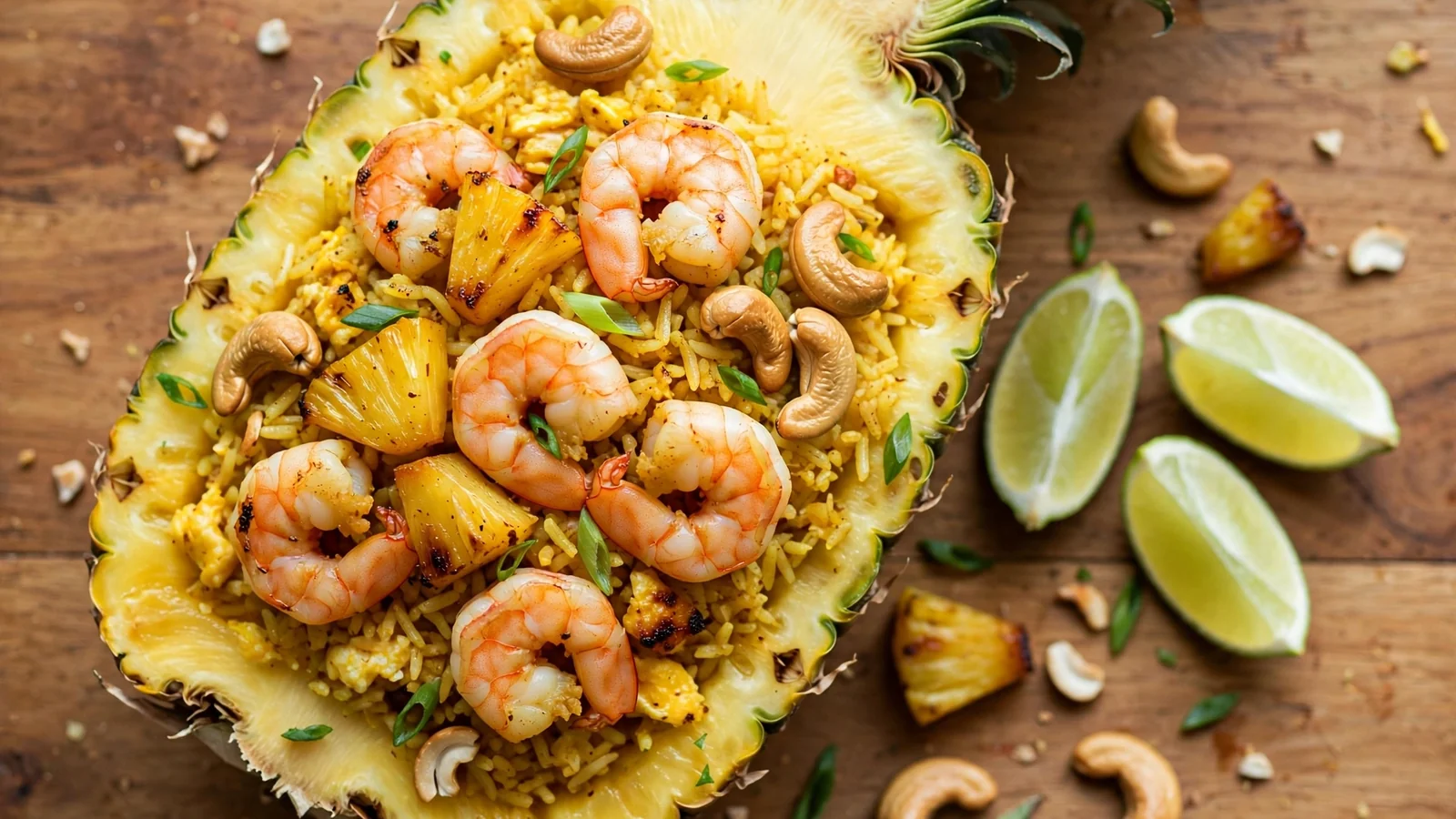
Sweet Fruit in a Savory Wok — and Why It Works
Pineapple fried rice sounds like a novelty until you taste the balance at work. Pineapple is sweet, but it is also sharply acidic. In a hot wok that acid softens, the edges of the fruit catch a little caramel, and the sweetness turns into something that can stand up to fish sauce, garlic, and curry powder instead of fighting them. The rice itself goes golden from turmeric, the shrimp stay plump and sweet, and cashews add the crunch that keeps each bite from going soft.
The dish fails in two predictable ways. Wet pineapple steams the rice into clumps, and underseasoned rice tastes flat under the fruit. Both problems are solved before the rice hits the pan: dry the pineapple, let it sear on its own for a minute, and season the rice in layers so the grains fry dry and separate. If dry, separate grains are usually where fried rice slips away from you, the cold-rice method in How to Cook Perfect Jasmine Rice Every Time is the starting point this recipe assumes.
This is a close cousin of Tom Yum Fried Rice, but the two plates land in different places. Tom yum is sour and hot first. Pineapple fried rice is sweet and savory first, with warmth from curry powder underneath and just enough white pepper to keep the finish clean.
The Order That Keeps the Rice Dry
| Step | What happens | Why it matters |
|---|---|---|
| 1. Shrimp first, out fast | Sear 60–90 seconds per side, then hold on a plate | Shrimp overcook in the time rice needs to fry; cooking them separately protects the texture |
| 2. Pineapple alone | Chunks sear undisturbed until the edges color | Surface moisture cooks off before the rice arrives, so the wok stays hot and dry |
| 3. Eggs in the center | Pushed aromatics aside, eggs set into soft curds | Eggs coat the rice lightly if they are small and tender, not large and rubbery |
| 4. Rice with spices | Cold rice, curry powder, and turmeric go in together | The grains pick up color and warm spice as they fry, instead of turning yellow only at the end |
| 5. Sauce at the edges | Fish sauce, soy sauce, and sugar drizzle around the wok rim | The hot metal flashes off excess liquid and the seasoning lands evenly |
That second step is the one most home versions skip. Pineapple straight from the cutting board weeps juice for the first minute in a hot pan. Give it that minute alone and the juice reduces into the fruit instead of soaking the rice.
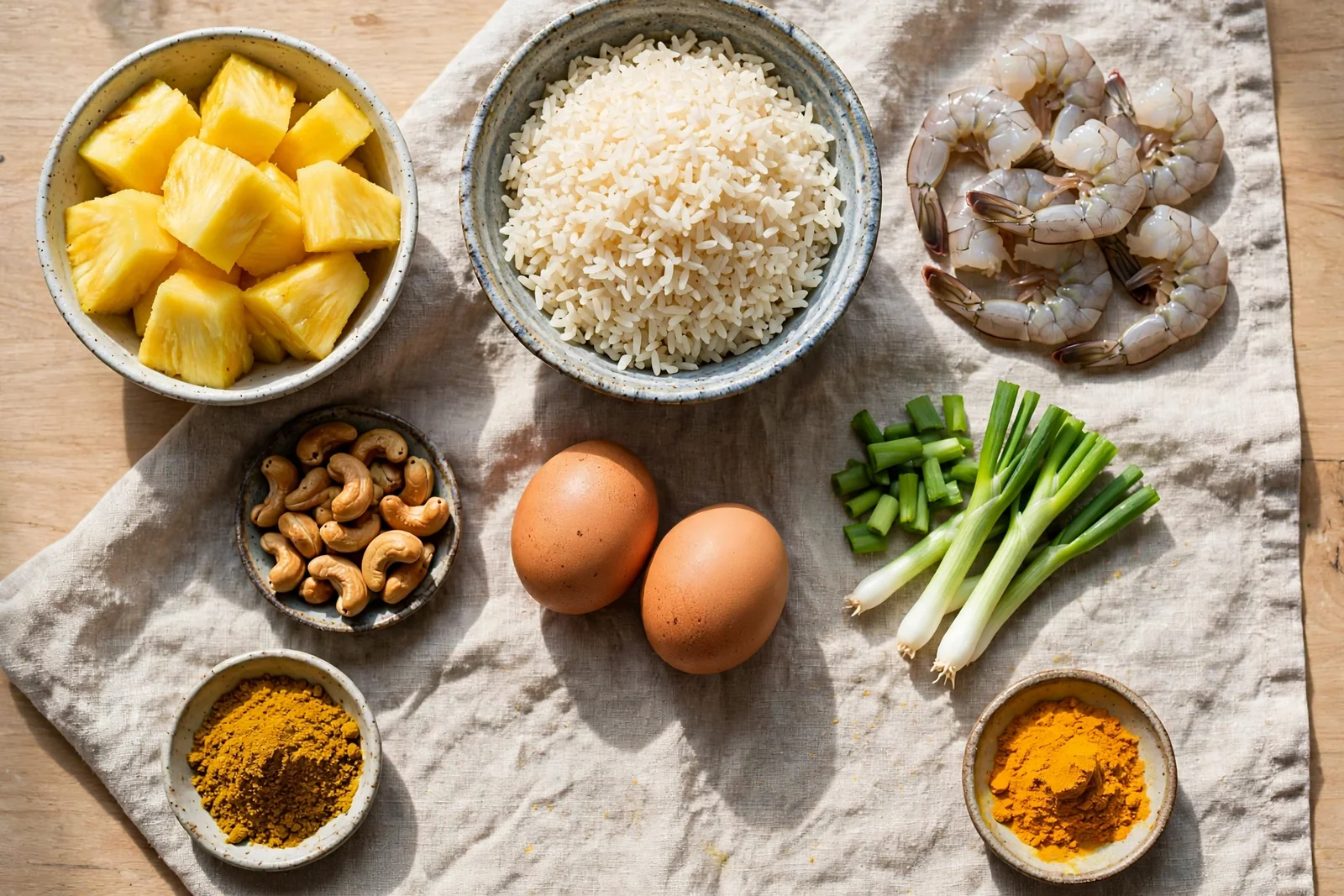
Ingredients
- 4 cups day-old cooked jasmine rice (about 1 1/2 cups uncooked), refrigerated overnight and loosened with your fingers
- 12 ounces (340 g) large shrimp, peeled and deveined, patted dry
- 1 1/2 cups fresh pineapple chunks, cut about 3/4-inch and patted dry (about half a small pineapple)
- 2 tablespoons neutral oil, divided
- 2 large eggs, lightly beaten
- 1 small yellow onion, diced (about 1 cup)
- 3 garlic cloves, minced
- 1 tablespoon curry powder
- 1/2 teaspoon ground turmeric
- 2 tablespoons fish sauce
- 1 tablespoon light soy sauce
- 1 teaspoon sugar
- 1/4 teaspoon ground white pepper
- 1/2 cup frozen peas, thawed, or 1/2 cup small-diced red bell pepper
- 1/3 cup roasted cashews, roughly chopped if large
- 1/4 cup golden raisins (optional)
- 4 scallions, thinly sliced, whites and greens separated
- Fresh cilantro leaves and lime wedges, for serving
Prep: 15 minutes. Cook: 12 minutes. Total: 27 minutes. Serves 4 as a main dish.
How to Make It, Step by Step
1. Dry and ready everything. Fried rice moves fast once the wok is hot. Pat the shrimp dry with paper towels and season with a pinch of salt. Pat the pineapple chunks dry as well — this matters more than almost anything else in the recipe. Break up the cold rice so no large clumps remain.
2. Sear the shrimp and set aside. Heat a large wok or 12-inch skillet over high heat until it just begins to smoke. Add 1 tablespoon of the oil, swirl, then add the shrimp in a single layer. Cook 60 to 90 seconds per side until pink at the edges and just curled. Move to a plate; they will finish in the rice at the end.
3. Sear the pineapple. Return the wok to high heat. Add the pineapple in a single layer and leave it alone for 60 to 90 seconds, until the undersides pick up golden edges. Toss once and cook 30 seconds more. Slide the pineapple onto the plate with the shrimp. Wipe out any pooled juice with a quick pass of a paper towel held in tongs if the pan looks wet.
4. Build the aromatic base. Lower the heat to medium-high and add the remaining 1 tablespoon oil. Add the onion and scallion whites and stir-fry 1 to 2 minutes until the onion softens at the edges. Add the garlic and stir 20 seconds, until fragrant.
5. Add the eggs. Push the aromatics to the sides, pour the beaten eggs into the center, and let them set for 15 seconds. Scramble into small, soft curds, then fold them into the onions.
6. Fry the rice with the spices. Add the cold rice, curry powder, and turmeric. Toss and press the rice against the wok, letting it sit for 20 to 30 seconds at a time so the grains make real contact with the heat. Keep tossing and pressing for 3 to 4 minutes, until the rice is hot, evenly golden, and the grains move separately. That brief, patient contact is a small home version of the sear What Is Wok Hei and How to Get It at Home describes for higher-heat cooking.
7. Season around the rim. Drizzle the fish sauce and soy sauce around the edges of the wok rather than straight onto the rice, then sprinkle in the sugar and white pepper. Toss for 30 seconds. The sauce should smell savory and warm, not raw. If you want a quick refresher on how the two salty sauces differ in a dish like this, Fish Sauce vs Soy Sauce: When to Reach for Which lays out the split clearly.
8. Bring everything back. Return the shrimp and pineapple with any juices on the plate. Add the peas or bell pepper, cashews, raisins if using, and scallion greens. Toss 1 to 2 minutes, until the shrimp are cooked through, the peas are bright, and the pineapple is hot. Taste: you want sweet first, then savory, then a gentle curry warmth. Add a pinch more sugar if the pineapple was tart, or a squeeze of lime if the plate tastes heavy.
9. Serve right away. Spoon into bowls or, for a festive table, into a hollowed pineapple half. Scatter cilantro over the top and serve with lime wedges.
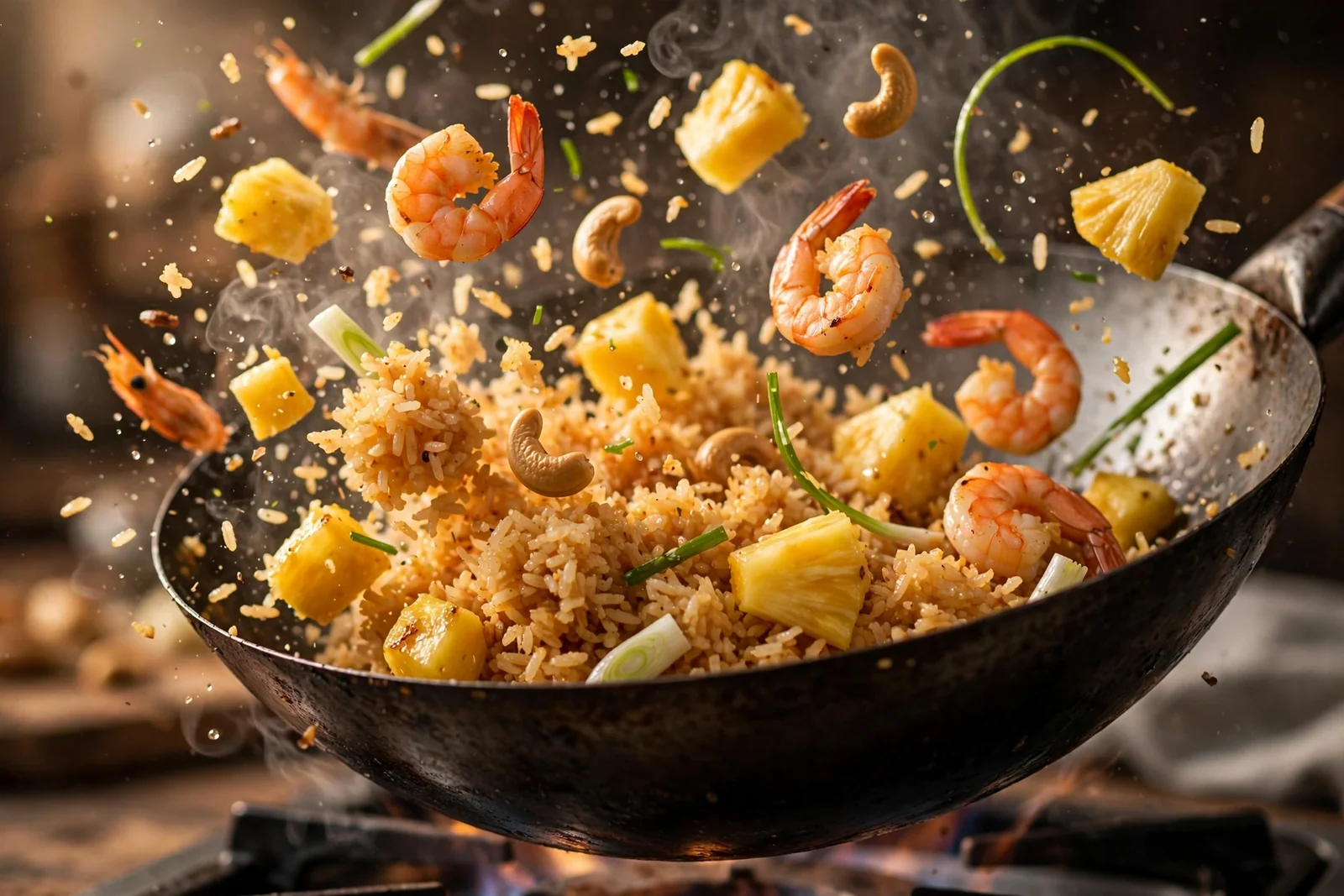
Getting the Pineapple Right
Fresh over canned, most days. Fresh pineapple holds its shape in the wok and its acid stays bright. Canned pineapple packed in juice works in a pinch, but drain it well and pat it very dry; syrup-packed fruit is too sweet here and throws the seasoning off.
Cut size is texture. Chunks around 3/4-inch stay juicy inside while the outside colors. Tiny dice vanish into the rice and release more juice; big wedges brown unevenly and eat like a side dish instead of part of the fried rice.
Do not stir it early. Pineapple needs still contact with the hot metal to color. If you keep it moving, it steams in its own juice and the rice that follows pays for it.
Taste your fruit before you season. A very ripe, sweet pineapple may need the full teaspoon of sugar nowhere near the pan; a tart one may want every bit of it. Season the rice, taste, then decide.
Variations
- Chicken pineapple fried rice: Swap the shrimp for 12 ounces (340 g) of boneless chicken thigh cut into bite-size pieces. Sear a minute longer per side so the edges brown, and check that the thickest piece is cooked through before serving.
- Vegetarian version: Skip the shrimp and fish sauce. Use cubed extra-firm tofu, seared until golden before the pineapple step, and season with 2 tablespoons light soy sauce plus 1 tablespoon soy sauce in place of the fish sauce. Keep the eggs or leave them out as you prefer.
- Extra heat: Add 1 to 2 sliced Thai chilies with the garlic, or finish individual bowls with chili flakes. The base recipe is warm from curry powder, not hot.
- Cashew-free crunch: Toasted peanuts work in place of cashews at the same quantity. Add them at the very end so they stay crisp.
Serving and Leftovers
Serve the fried rice hot, straight from the wok, with lime wedges at the table. A crisp cucumber side or a simple green salad keeps the plate from feeling rich, and the rice is filling enough to stand as the main dish without much beside it.
Leftovers keep in an airtight container in the refrigerator for up to 2 days. Reheat in a hot skillet with a teaspoon of oil, tossing until the grains loosen and the pineapple warms through; the microwave softens the rice and dulls the cashews. Add the cashews fresh at serving time if you know you are making the full batch ahead — they hold their crunch far better that way. Freezing is not a good fit; thawed pineapple turns watery and the rice goes hard at the edges.
Recipe Card Summary
Thai pineapple fried rice: golden curry- and turmeric-spiced jasmine rice fried dry and separate, with seared shrimp, caramel-edged pineapple, soft egg, cashews, and scallions. Shrimp and pineapple are seared separately first so the wok stays hot and the rice never steams. Prep 15 minutes, cook 12 minutes, total 27 minutes. Serves 4.
Thai Pineapple Fried Rice
Ingredients
Method
- Pat the shrimp and pineapple dry. Break up the cold rice so no large clumps remain and have all ingredients ready before the wok gets hot.
- Heat a large wok or 12-inch skillet over high heat, add 1 tablespoon oil, and sear the shrimp in a single layer 60 to 90 seconds per side until pink and just curled. Move to a plate.
- Return the wok to high heat, sear the pineapple in a single layer 60 to 90 seconds until the undersides pick up golden edges, toss once, cook 30 seconds more, then add to the shrimp plate. Wipe out pooled juice if the pan looks wet.
- Lower to medium-high, add the remaining 1 tablespoon oil, and stir-fry the onion and scallion whites 1 to 2 minutes until softened at the edges. Add garlic and stir 20 seconds.
- Push the aromatics aside, pour the beaten eggs into the center, let set 15 seconds, then scramble into small soft curds and fold into the onions.
- Add the cold rice, curry powder, and turmeric. Toss and press the rice against the wok, letting it sit 20 to 30 seconds at a time, for 3 to 4 minutes until hot, evenly golden, and the grains move separately.
- Drizzle fish sauce and soy sauce around the wok rim, sprinkle in sugar and white pepper, and toss 30 seconds.
- Return shrimp and pineapple with any juices, add peas or bell pepper, cashews, raisins if using, and scallion greens. Toss 1 to 2 minutes until the shrimp are cooked through and the pineapple is hot. Taste and adjust with a pinch of sugar or a squeeze of lime.
- Serve right away in bowls or a hollowed pineapple half, scattered with cilantro and with lime wedges at the table.