
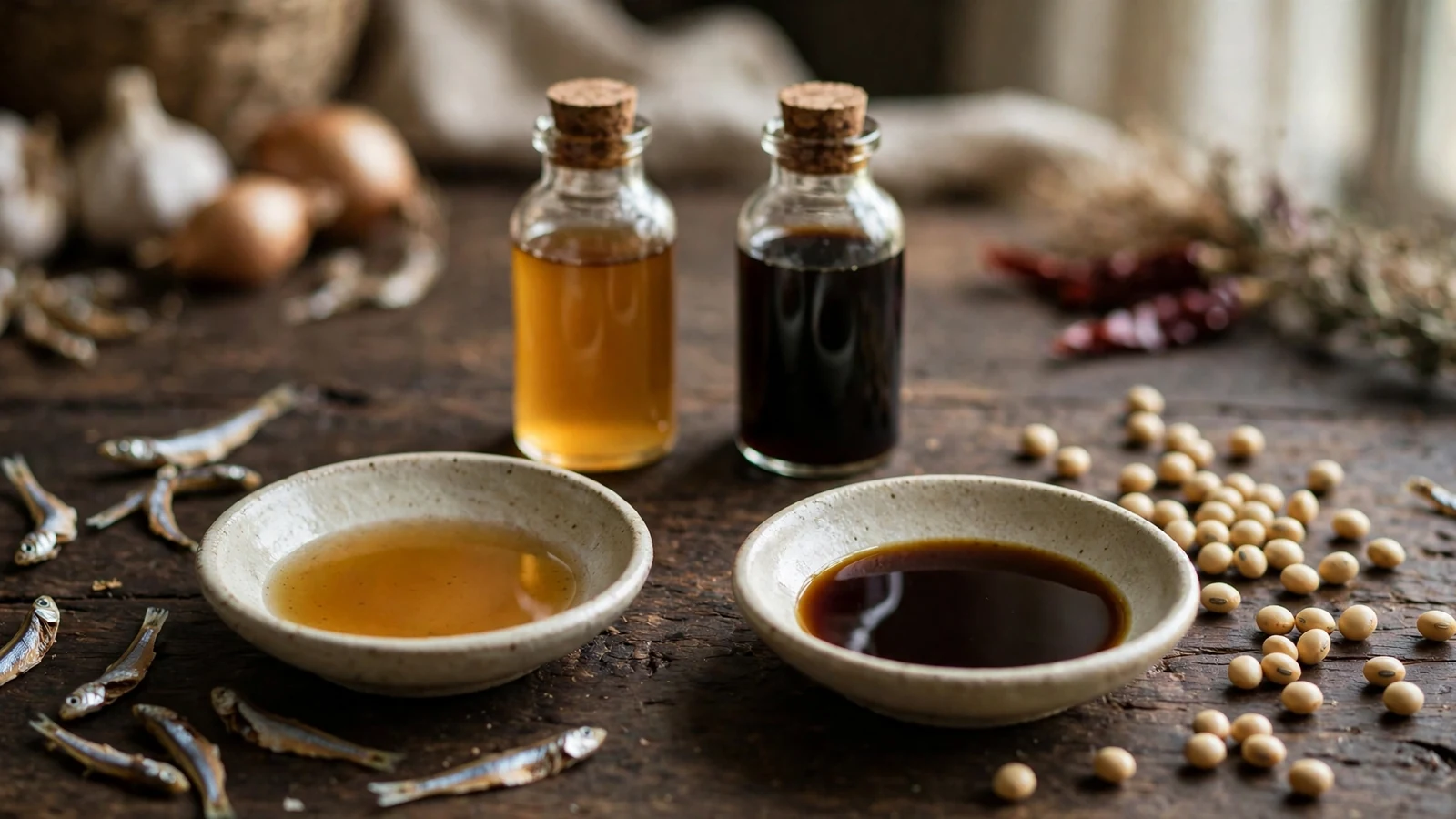
Both bottles live in the same pantry door, both pour dark and salty, and both can make a plain bowl of rice taste like dinner. That is where the resemblance stops. Fish sauce is thin, amber, and intensely savory with a funky edge that mellows as it cooks. Soy sauce is rounder and sweeter, with a roasted depth that can also darken a dish. Knowing which one a recipe wants saves you from a stir-fry that tastes flat or a soup that tastes oddly sweet.
At a Glance
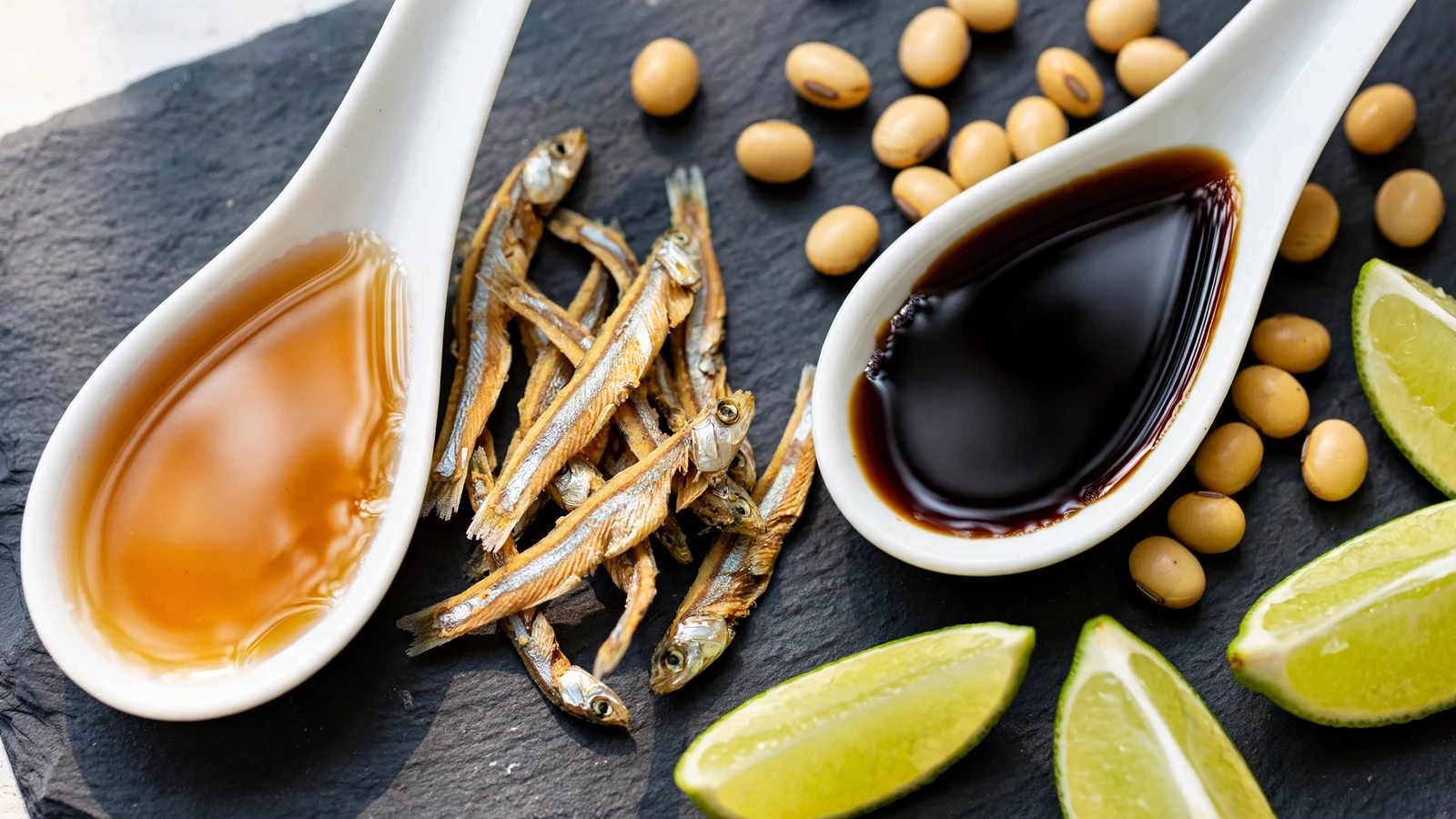
Fish sauce is made by fermenting small fish, usually anchovies, with salt. The liquid is pressed off, sometimes aged longer, and bottled. It tastes salty first, then deeply savory, with a pungent aroma straight from the bottle that softens a lot in hot food, dressings, and marinades. It adds salt and umami without adding much color.
Soy sauce is made by fermenting soybeans, often with wheat, salt, and water. It tastes salty and savory too, but with a sweeter, more rounded finish and a darker color that tints sauces, fried rice, and glazes. It comes in light and dark styles, and low-sodium versions are common. Our Soy Sauce Guide breaks down the main types and how each one behaves in the pan.
A quick way to remember: fish sauce seasons from the background. Soy sauce seasons and colors at the same time.
How Each One Is Made
Fish sauce starts simple: fish and salt, left to ferment for months. Enzymes break the fish down into a clear, amber liquid rich in amino acids, which is why a small splash can make a broth or sauce taste fuller. Better bottles list only fish and salt. Some add a little sugar. The aroma is strong on its own, but heat and acid tame it fast.
Soy sauce takes a different path. Cooked soybeans and roasted wheat are cultured, then fermented in a salty brine. The result is a dark brown liquid with hundreds of flavor compounds, which is why soy sauce can taste sweet, smoky, and savory all at once. Naturally brewed bottles take longer to make and usually taste cleaner than quick hydrolyzed versions.
Both are fermented, shelf-stable, and potent. A tablespoon goes a long way, and both keep well in a cool pantry after opening.
Flavor, Color, and Salt
Fish sauce is all about lift. In a finished dish it rarely tastes fishy. Instead it sharpens other flavors, the way a pinch of salt makes tomatoes taste more like tomatoes. It keeps sauces pale, which is why it is the default in clear soups, light curries, and Vietnamese and Thai dressings where you want brightness without a dark tint. Think of the balance in Tom Yum vs Tom Kha: lime and fish sauce do the heavy lifting, and the broth stays clear or creamy rather than brown.
Soy sauce is about depth and shade. It brings a roasted, slightly sweet savoriness and it browns food. A stir-fry seasoned only with soy sauce will look and taste different from one seasoned only with fish sauce, even at the same salt level. Soy sauce also caramelizes more readily because of its sugars, which helps with fried noodles and glazes.
Salt levels overlap more than people expect. Both are salty, but they register differently. Fish sauce tastes sharper and more direct. Soy sauce tastes broader because the salt sits inside a larger mix of sweet and roasted notes. That is why swapping one for the other by volume can leave a dish tasting harsh or muted, even before you consider color.
Where Each One Shines
Reach for fish sauce when:
- You are making Southeast Asian soups, curries, stir-fries, or salads and want savory depth without darkening the dish.
- A dressing or dipping sauce needs salt, umami, and a clean finish, like nuoc cham with lime, water, sugar, garlic, and chili.
- A marinade for grilled pork, chicken, or beef needs to taste seasoned all the way through rather than just coated.
- A dish tastes flat at the end and needs a small, bright correction rather than more sweetness.
Reach for soy sauce when:
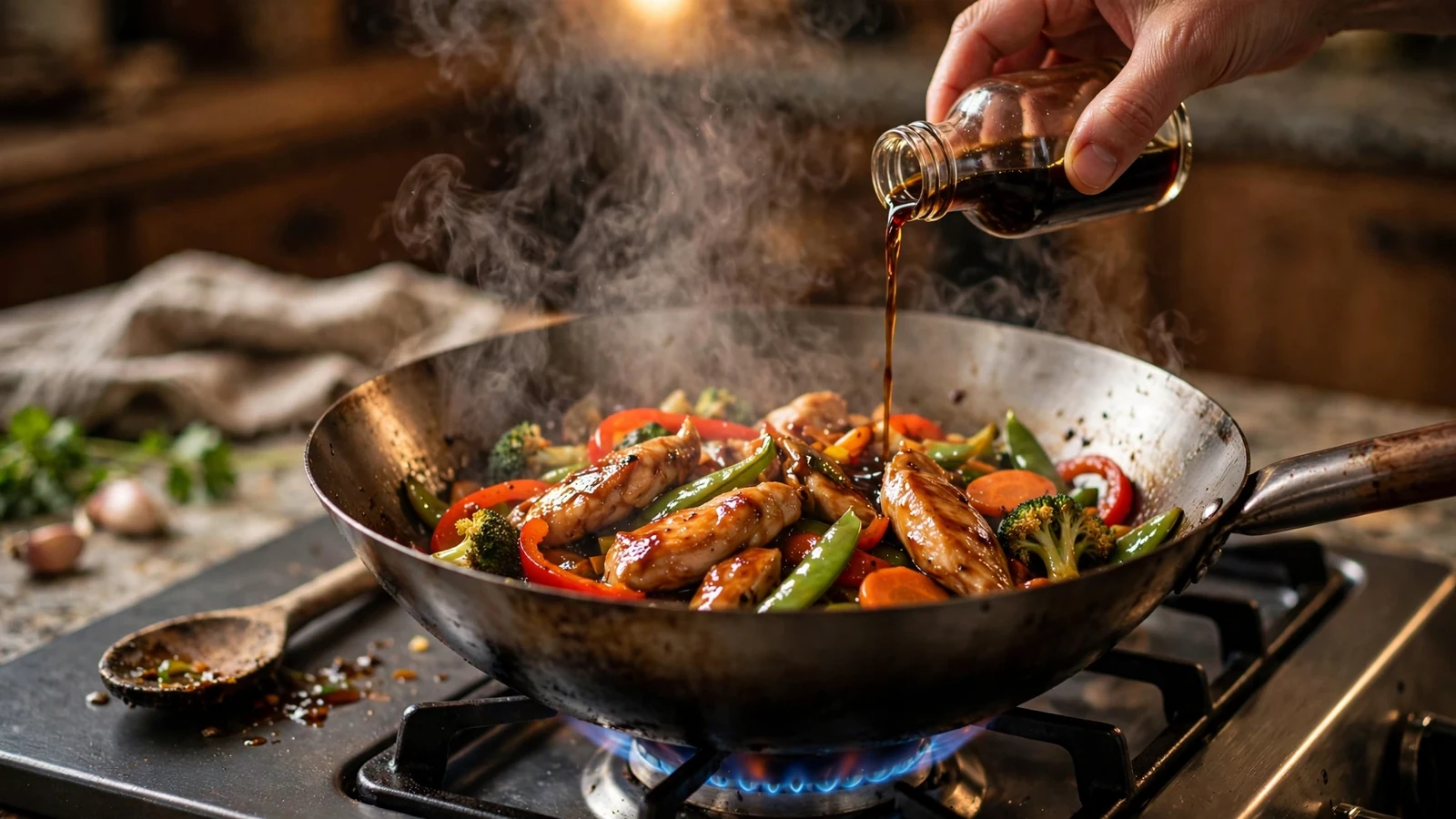
- You are making Chinese, Japanese, or Korean stir-fries, fried rice, or noodle dishes where a little color is welcome.
- A glaze, braise, or dipping sauce should look glossy and deep, like the coating on char siu or a soy-based noodle sauce.
- You need a vegetarian-friendly base note, since standard soy sauce is plant-based while fish sauce is not.
- You want the mellow, rounded savoriness that works in everything from Pad Thai variations to simple weeknight fried rice.
Many home cooks end up using both in the same week, just not always in the same dish. Our Essential Asian Pantry list stocks both for exactly that reason.
Can You Swap One for the Other?
In a pinch, yes, with a few adjustments.
If a recipe calls for fish sauce and you only have soy sauce, use a little less soy sauce than the amount listed, then add a squeeze of lime and a pinch of sugar if the dish tastes dull. The color will be darker and the flavor rounder. It works best in stir-fries and marinades. It is less convincing in a clear soup or a pale dressing, where soy sauce can tint everything gray-brown.
If a recipe calls for soy sauce and you only have fish sauce, use about three-quarters of the amount, then taste before adding more. Leave out any extra dark soy sauce in the recipe, since fish sauce will not give you that color anyway. This swap suits soups and braises better than fried rice, where you will miss the roasted note and the browning.
For a vegetarian swap for fish sauce, soy sauce plus a little lime and a pinch of sugar gets you closest in cooked dishes. Mushroom-based vegetarian fish sauces also exist and keep the color light, which helps in dressings.
Start small either way. Both liquids are hard to take back once they are in the pot.
Buying and Storing
For fish sauce, check the ingredient list first. Fish and salt is the cleanest sign. A deep amber color and a strong but clean aroma are good signs too. Avoid bottles with long additive lists if you have a choice. Store it in a cool, dark spot. It does not need the fridge, though refrigeration slows aroma loss in warm kitchens.
For soy sauce, look for the words naturally brewed if you can. Light soy sauce is thinner and saltier. Dark soy sauce is thicker, sweeter, and mostly for color. Tamari is a wheat-free style with a smooth finish. Our soy sauce guide covers how to choose between them without buying three bottles you will not use. Store soy sauce the same way, away from heat and light.
Both last a long time after opening, but flavor fades slowly. If a bottle has sat open for a year or more and tastes flat, replace it. You use so little per dish that a fresh bottle is a cheap fix.
The Bottom Line
Fish sauce gives you salty, bright umami with almost no color, and it is the backbone of Thai and Vietnamese seasoning. Soy sauce gives you salty, rounded umami with real color, and it anchors Chinese, Japanese, and Korean cooking. Neither replaces the other perfectly, which is why most pan-Asian pantries keep both. If you cook across cuisines, buy a good bottle of each, use fish sauce when you want lift and clarity, and reach for soy sauce when you want depth and shade.