
The first time I walked into an Asian grocery store, I turned down the first aisle and stood there for a solid five minutes. Twenty kinds of noodles. Bottles I couldn’t read. Produce I couldn’t name. I left with a bag of chips and nothing I actually needed.
That doesn’t have to be your story. An Asian grocery store has a logic to it. Once you learn the layout, you can get in and out in twenty minutes with exactly what your recipes need. Here’s the floor plan, aisle by aisle.

Start with the produce wall
Most stores put fresh produce right by the entrance, and this is where you should start too. Everything here is cheaper than a regular supermarket (often half the price for herbs, limes, and greens), and the turnover is fast because the store’s regulars buy here weekly.
The greens are the best deal in the building. You’ll see bok choy priced in loose bunches, napa cabbage, water spinach, and leafy bunches that don’t have English labels. Buy what the store labels, and when there’s no label, ask. The staff in these stores are used to it.
Pick up herbs while you’re here: Thai basil, cilantro, mint, green onions, lemongrass stalks. Bunches are big and cost a dollar or two. Our guide to how to store fresh herbs covers keeping them alive after you get home, because a wilting bunch of Thai basil is a real waste.
What to check: flip the bunch over and look at the stems. Mushy or slimy stems mean the bunch is a day past its prime. Firm, green stems with perky leaves mean it was cut recently.
Walk the meat and seafood counters
The butcher counter sells cuts regular supermarkets don’t: thin-sliced pork belly, pork neck bones, whole fish. If your recipe needs paper-thin slices for a stir fry, this guide to slicing meat thin pairs well with asking the butcher to slice it for you; many counters will do it for free.
Seafood is usually the centerpiece: live tanks with crabs and fish, plus trays of shrimp and squid on ice. Live fish costs more but tastes completely different in a simple steamed preparation. For frozen fish, check the date (more on reading labels below).
Skip the pre-marinated meats on your first trip. They’re seasoned for the store’s core customers, and you don’t know what went in.

The noodle aisle, decoded
This is the aisle that scared me off the first time. Here’s the simple version: noodles are grouped by type, and you only need to learn five families.
Rice noodles come in every width, from hair-thin vermicelli for Vietnamese noodle bowls to wide flat sheets. Wheat noodles cover egg noodles, ramen bricks, and udon. Then there’s soba and somen (buckwheat and thin wheat, often Japanese-branded), cellophane or glass noodles (mung bean, for stir-fries and soups), and fresh noodles in the refrigerated case, wider and chewier, better for dishes like pad see ew.
Read the ingredients list, not the picture. A package that says “rice flour, water, salt” is what you want for rice noodles. If you see wheat flour in there, it’s a wheat noodle wearing a rice-noodle costume, and it cooks differently.
Dried rice noodles keep for a year in the pantry. Fresh noodles last about a week in the fridge.
The sauce wall: buy in order of use
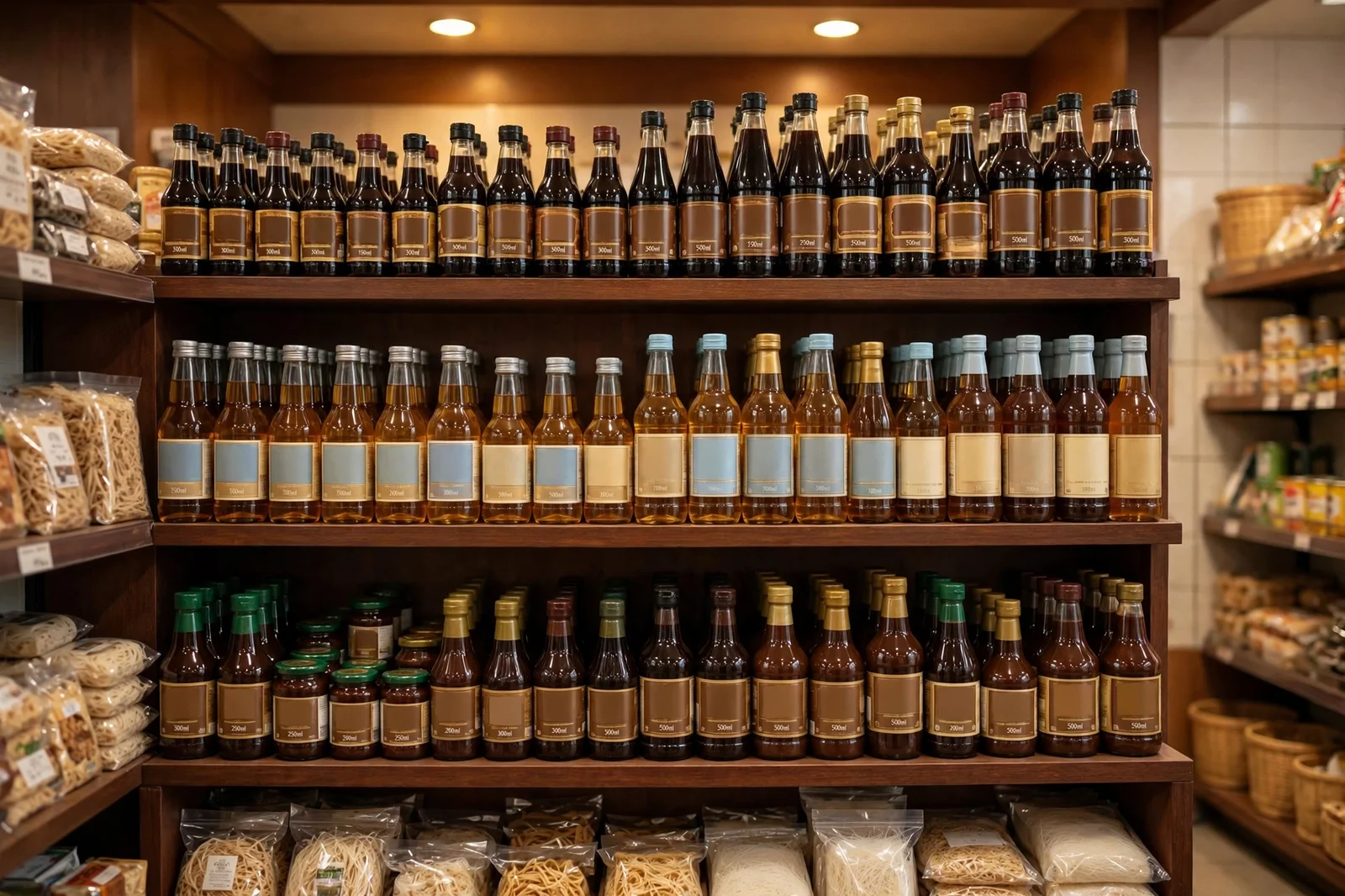
The sauce aisle is where first-timers overspend. You do not need twelve bottles. Buy in this order and stop when your recipes stop needing them:
- Soy sauce (light, for seasoning)
- Fish sauce (for Vietnamese and Thai cooking)
- Oyster sauce
- Sesame oil
- A chili product you actually like (chili oil, sambal, or sriracha)
That’s it for the first trip. Our essential Asian pantry list builds from there, and the soy sauce guide explains which bottle does what so you don’t buy dark soy when you needed light.
One bottle to splurge on: fish sauce. The cheap gallon jugs and the small premium bottles taste like different products. The premium ones list anchovies and salt, nothing else, and they smell like the ocean instead of a barn. I buy the small bottle and use less.
How to read import labels
A lot of products carry two labels: the original, and an English sticker. Read the sticker for allergens and the import date format. Japanese and Korean imports print dates as year.month.day, so 26.05.10 means May 10, 2026, not October 5. I’ve seen people throw out perfectly good miso over this.
“Best by” dates on fermented products (miso, soy sauce, doubanjiang) are about flavor peak, not safety. A miso paste two months past its date is fine; a tofu block a day past its date is not.
If there’s no English sticker at all, use your phone camera to translate. It takes ten seconds and saves you from buying pickled radish when you wanted sweet rice cake.
Don’t skip the freezer aisle
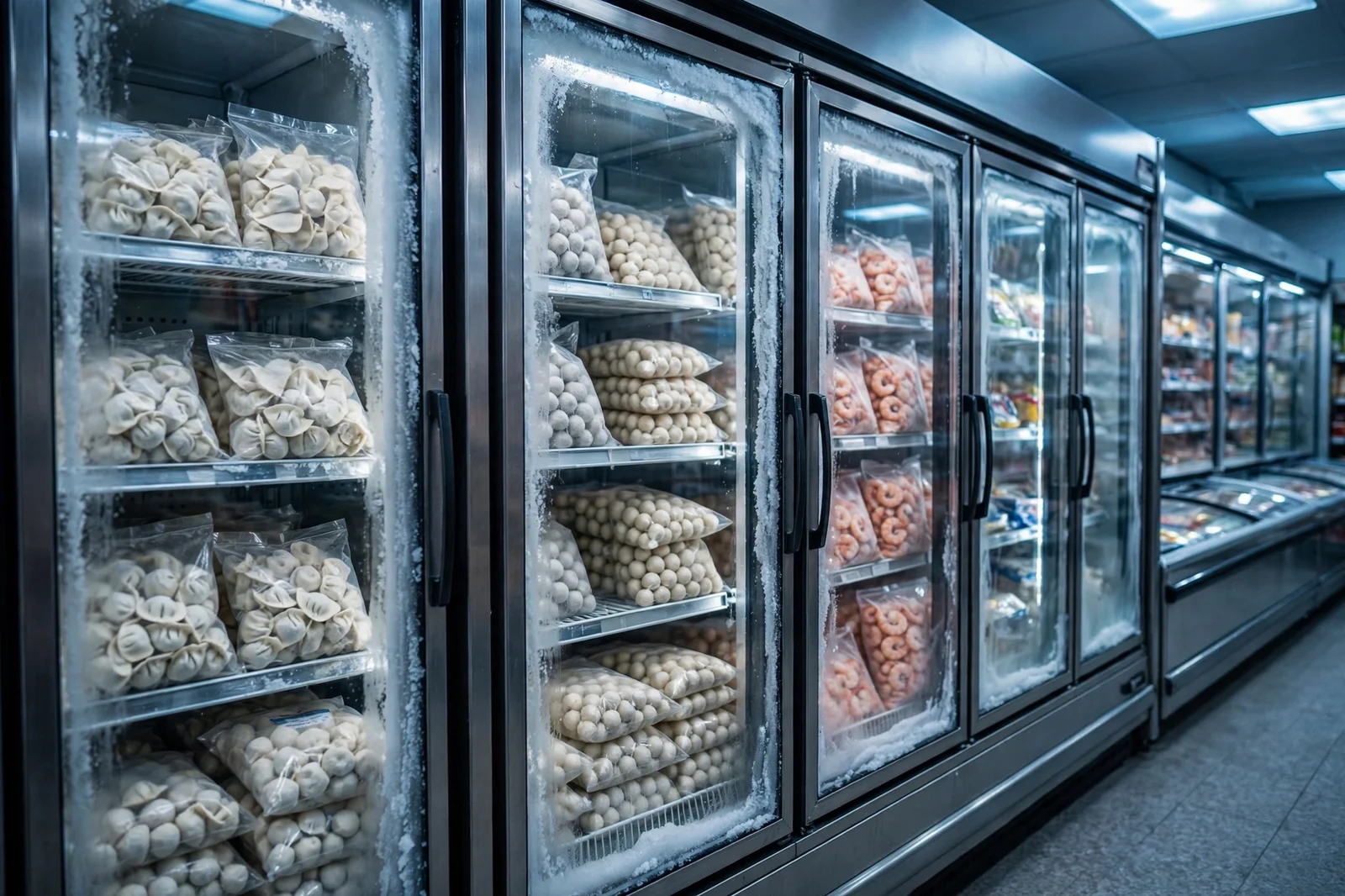
This is the section first-timers walk past, and it’s a mistake. The freezer aisle holds frozen dumplings, fish balls, shrimp paste, grated coconut, banana leaves, and edamame, all things that are either better frozen or impossible to find fresh elsewhere. A bag of frozen dumplings plus a bottle of soy sauce is a weeknight dinner in fifteen minutes.
Frozen seafood here is often better than the “fresh” fish at a regular supermarket that was frozen and thawed anyway. Look for whole shrimp with the shell on and squid tubes, both of which thaw fast under cold water.
What to skip on the first trip
Snacks and candy fill entire aisles. They’re fun, but they’re also how a twenty-dollar trip becomes an eighty-dollar trip. Give yourself a snack budget (ten dollars, say) and stick to it.
Skip the “Asian cooking” kits with pre-measured sauces. They cost four times the individual bottles and teach you nothing about the flavors.
Skip any produce you can’t identify and can’t ask about. It’ll be there next week, and next week you’ll have asked.
Checkout and getting home
Bring your own bags. Some stores charge for them, and the bottles are heavy. A reusable bag with structure handles soy sauce bottles better than a thin plastic one.
Check your receipt against the shelf prices for items on sale. Sale tags in these stores sometimes lag, and the register honors the tag, not the shelf. It takes thirty seconds and I’ve caught a wrong price more than once.
Get the cold stuff home first. Frozen dumplings and fresh tofu don’t forgive a long car ride, so pack them in one bag on top and unpack them before anything else.
More kitchen guides worth your bookmark
- The Essential Asian Pantry: 20 Staples to Start With — the master list for stocking your shelves, in buy order.
- Soy Sauce Guide: Light vs Dark vs Tamari, which bottle does what so the sauce wall stops being scary.
- How to Store Fresh Herbs So They Last Longer — how to keep those two-dollar bunches alive for weeks.
- A Home Cook’s Guide to Asian Vinegars, with rice vinegar, black vinegar, and where each one belongs.
From the Garden
Market Thai basil bunches are big and cheap, but they wilt fast. Mine used to be sad by day three. Now I grow a pot on the balcony and buy the market bunch only when I need a large amount at once, like for a big batch of Thai basil eggplant. A small pot of basil costs less than two market bunches and keeps giving all summer.