
Both arrive at the table as a steaming bowl of noodles in broth, and both are eaten with chopsticks and a spoon. After that, pho and ramen have almost nothing in common. The short version: pho is a clear, aromatic Vietnamese beef or chicken broth with flat rice noodles, seasoned at the table with herbs and lime. Ramen is a Japanese wheat-noodle soup built on a seasoned base called tare, with a broth that ranges from clear to milky-white and toppings arranged in the bowl. Here is the full breakdown, so you order, shop, and cook with confidence.
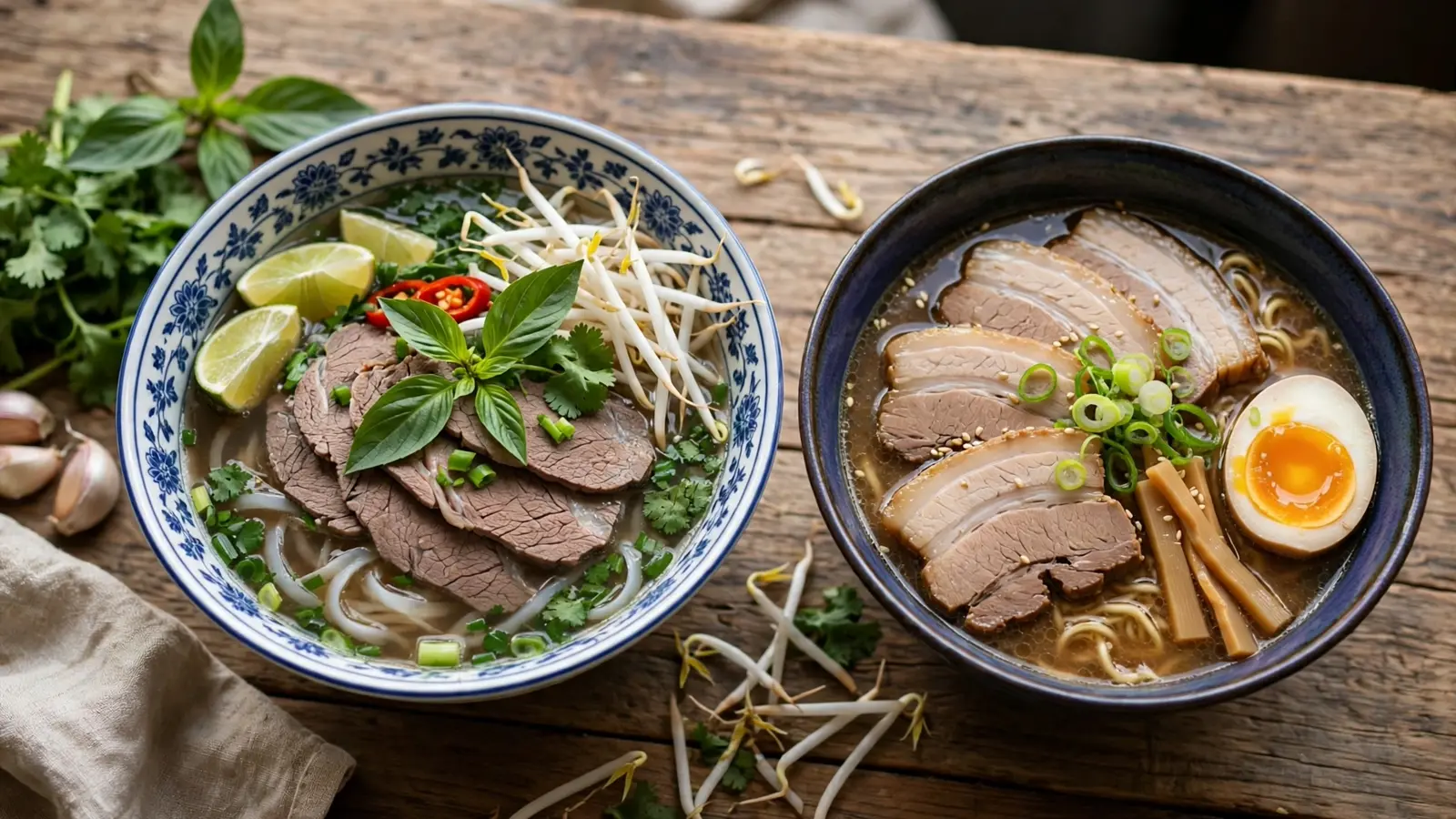
What is pho?
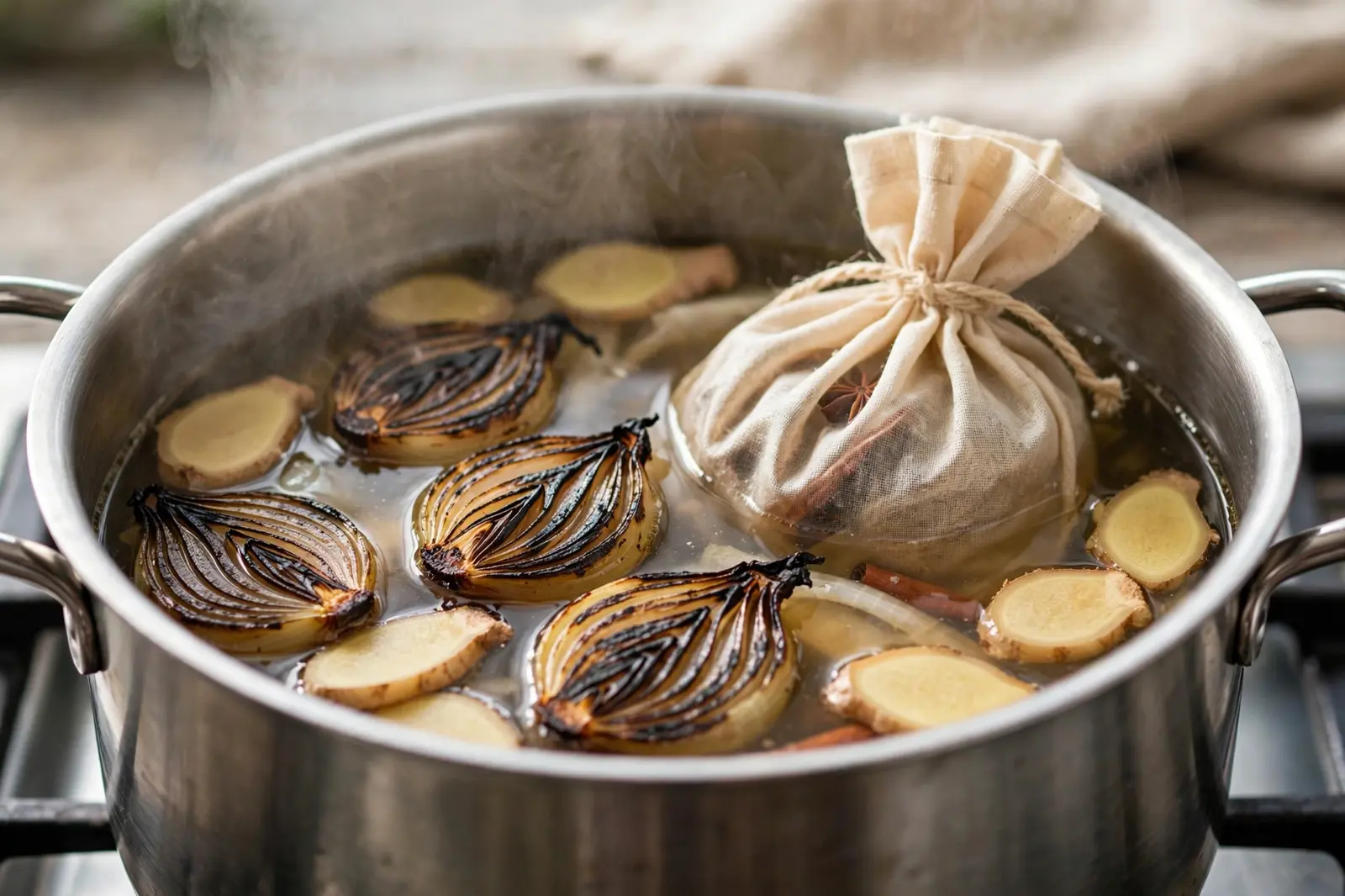
Pho (pronounced "fuh") is Vietnam's most famous noodle soup, and it lives or dies on clarity. The broth simmers from beef bones or a whole chicken, but before anything hits the pot, the aromatics get charred: onion and ginger go straight over a gas flame or under the broiler until the skins blacken in spots. That charring is not for looks. It deepens the broth and keeps it clean-tasting.
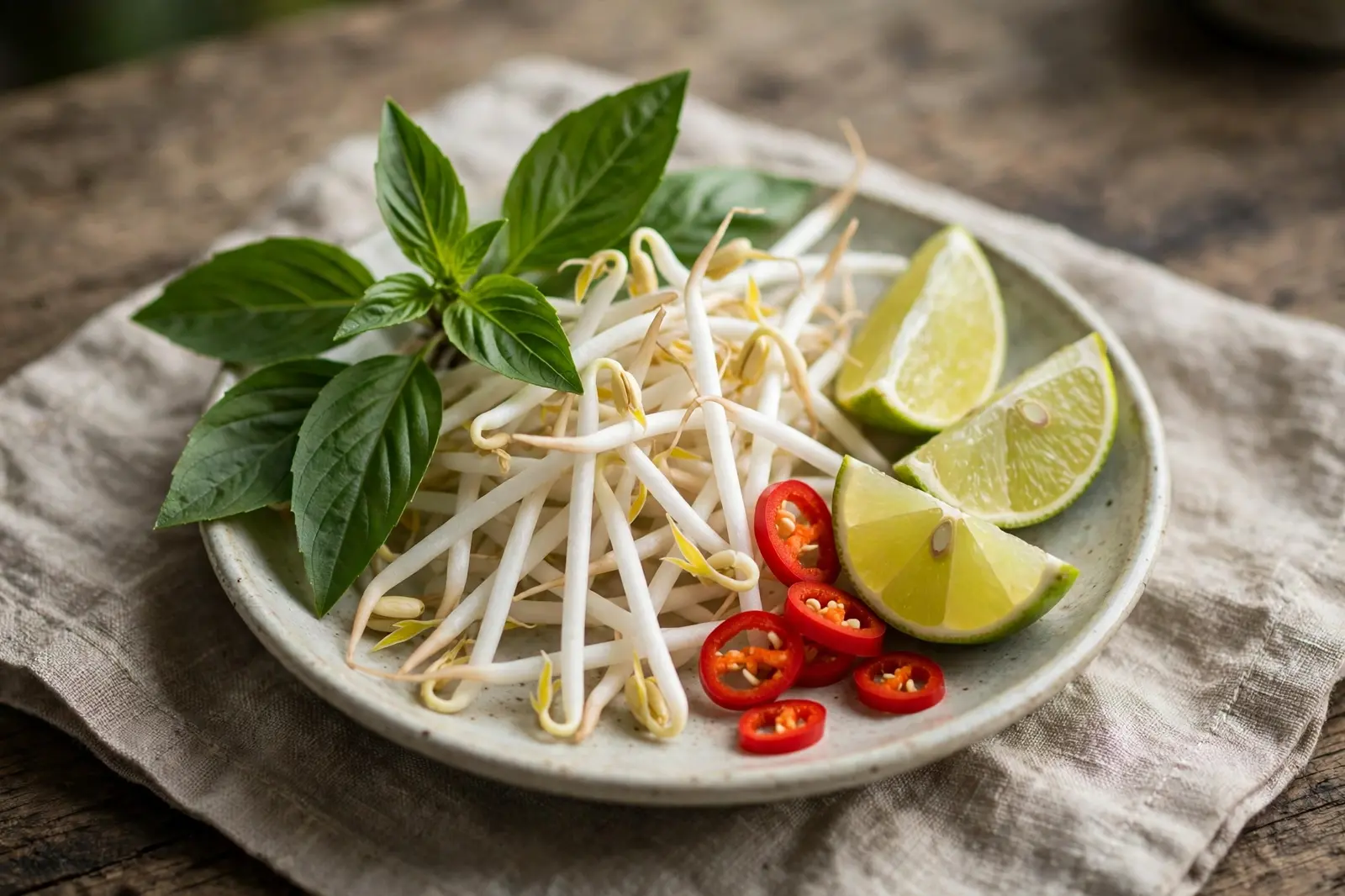
Toasted spices join next, always a short list: star anise, cinnamon, cloves, black cardamom, coriander seed. Beef pho needs 4 to 8 hours of gentle simmering; chicken pho is done in 2 to 3. The seasoning that matters most happens at the table, not in the pot. Fish sauce, lime juice, bean sprouts, Thai basil, and sliced chili sit on the side so every diner finishes their own bowl. Paul's pho ga recipe follows this method, and the one detail that changes everything is skimming: check the pot every 20 minutes during the first hour, and the broth stays glassy.
What is ramen?
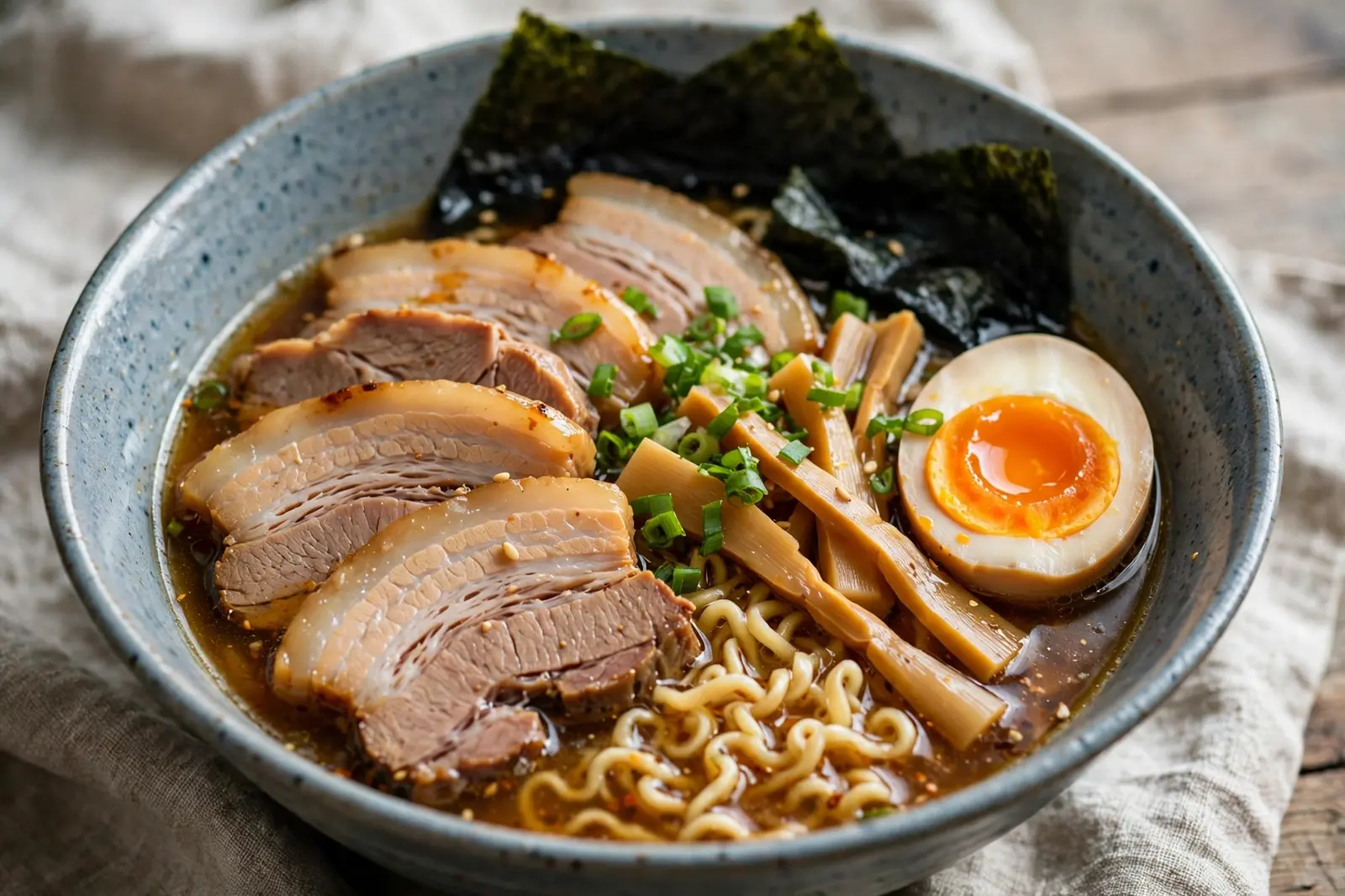
Ramen is Japan's wheat-noodle soup, and its architecture is the opposite of pho's. Where pho builds flavor in the pot and finishes at the table, ramen builds its flavor in the bowl. The broth is just a base, clear or milky depending on the style. The real seasoning comes from tare, a concentrated sauce made from soy sauce, miso, or salt, added to the bottom of each bowl before the hot broth goes in.
Broth styles run a wide range. Shio and shoyu ramen use clear, relatively light chicken or dashi broths, about 3 to 5 hours of work. Miso ramen sits in the middle with a hearty, opaque soup. Tonkotsu is the heavyweight: pork bones boiled hard at a rolling boil for 12 to 18 hours until the collagen emulsifies into a broth that coats the spoon white. The noodles are always wheat, made with kansui, an alkaline salt that gives ramen its springy chew and faint yellow color.
The broth is the real difference
If you take one thing from this comparison, make it the broth rule. Pho broth is a clear simmer: low heat, long time, aromatics charred before they go in, and the pot never boils hard. Ramen broth is either a clear simmer like pho's, or a violent rolling boil that purposely breaks down bones into a milky emulsion. Tonkotsu only works if the boil never drops. Let it slip to a simmer and you get a thin, gray soup instead of the creamy white one you wanted.
The seasoning philosophy splits here too. Pho seasons from the table: the cook provides the herbs, lime, and chili, and you decide how sour, spicy, and bright your bowl is. Ramen seasons from the bowl: the cook's tare decides the salt and depth, and toppings like ajitama eggs, chashu pork, nori, menma, and scallions are arranged, not offered. Two bowls of pho at the same table taste different; two bowls of the same ramen taste the same.
The noodles
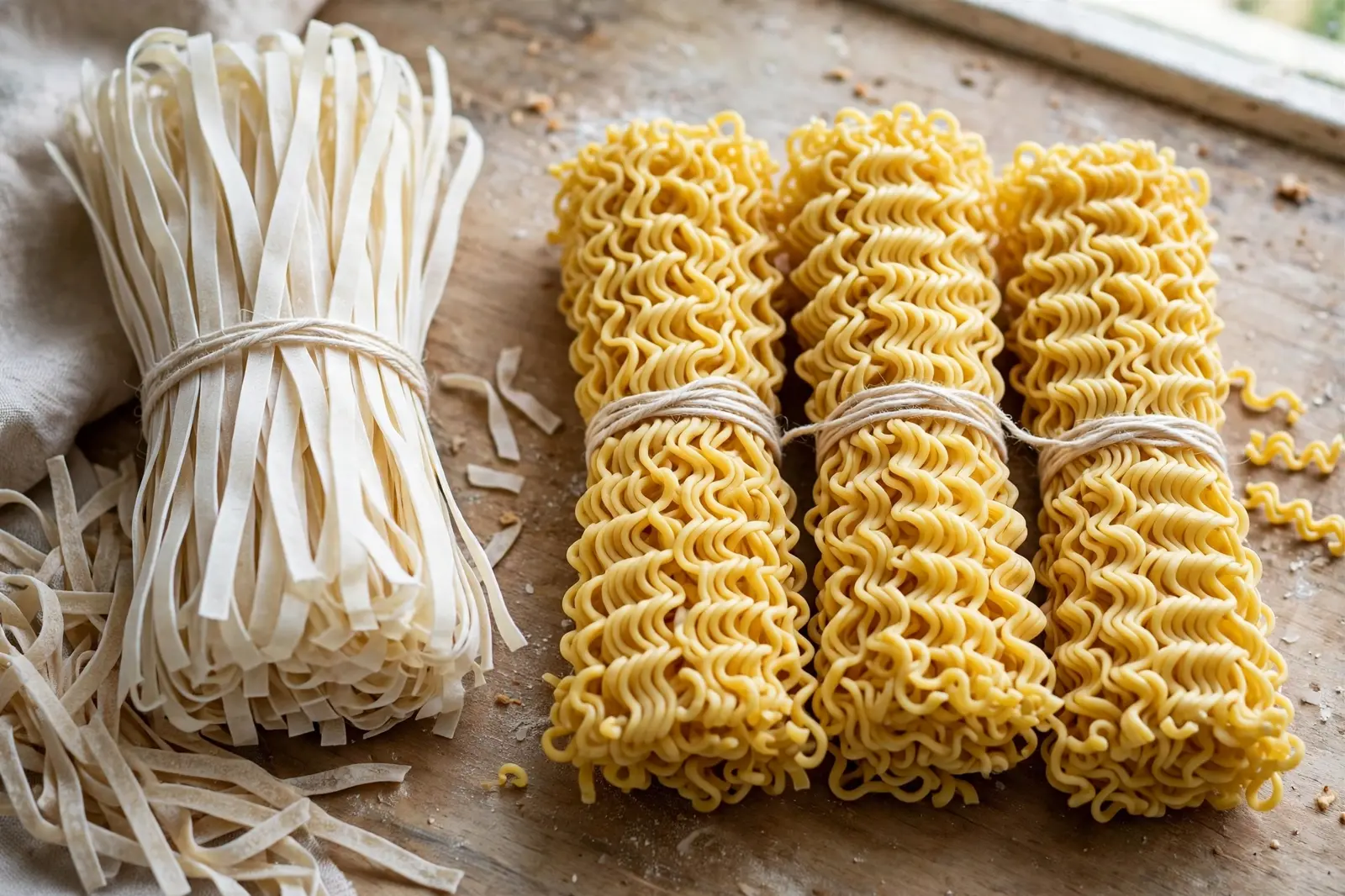
The noodles decide who can eat which bowl. Pho uses banh pho, flat rice noodles that cook in 1 to 2 minutes if fresh and about 5 if dried. They are naturally gluten-free, soft, and slippery, built to absorb the light broth. A rice noodle guide helps here because banh pho comes in several widths, and the 1-centimeter width is the classic.
Ramen noodles are wheat, and the kansui in the dough is the whole point of ramen's texture. They cook in 90 seconds to 3 minutes and stay springy in hot broth instead of going limp. Fresh or dried matters more with ramen than with pho: dried ramen noodles are fine, but the bite of a fresh alkaline noodle is what the dish is designed around. If you eat gluten-free, pho is your bowl; ramen is not.
How you eat them
The table looks different for each. A pho place brings a plate of herbs, bean sprouts, lime wedges, and chili with every bowl, and adding them is part of the dish. The proper order is taste the broth first, then add fish sauce for salt, lime for brightness, and chili for heat, in that order. Paul learned this the expensive way: dressing the bowl before tasting means guessing.
Ramen arrives complete. The cook arranged the toppings, chose the tare, and decided the fat level when you ordered (in Japan you often pick your noodle firmness, but the bowl itself is the cook's call). You eat it fast, while the noodles are still springy, and the spoon is for the broth, not for fishing out toppings.
Pho vs ramen at a glance
| Pho | Ramen | |
|---|---|---|
| Origin | Vietnam | Japan |
| Broth style | Clear, aromatic simmer | Clear to milky, depending on style |
| Typical simmer time | 2-3 hours (chicken), 4-8 hours (beef) | 3-5 hours (shio/shoyu), 12-18 hours (tonkotsu) |
| Noodle | Flat rice noodles, gluten-free | Wheat noodles with kansui, springy chew |
| Seasoning | At the table: fish sauce, lime, chili, herbs | In the bowl: tare (soy, miso, or salt base) |
| Signature toppings | Herb plate, bean sprouts, sliced meat | Chashu pork, ajitama egg, nori, menma |
| Bowl-to-bowl | Every diner's bowl differs | Every bowl of one style matches |
Which one should you make tonight?
It depends on the evening you are having. For a weeknight with a good store-bought broth, pho wins: simmer the broth with a charred onion, some ginger, and a few spices for 30 minutes, cook flat rice noodles, and let everyone at the table dress their own bowl. The hands-on finishing hides a shortcut broth better than any other trick.
For a cold, rainy night when you want richness, make ramen, and take the tare seriously. Even with store-bought chicken broth, a spoonful of miso or soy with a dab of sesame oil at the bottom of the bowl gets you most of the way there. Save tonkotsu for a weekend: 12 to 18 hours of rolling boil is a project, and Paul's advice is to use a pork neck bone or two, keep the water level topped up, and never let the boil stop. A stovetop with a lid cracked open works.
If you want one more long-simmered beef noodle soup to compare, Taiwanese beef noodle soup sits somewhere between the two philosophies: clear-ish broth, wheat noodles, and toppings arranged in the bowl like ramen, with star anise and heat like pho.
More noodle soup recipes
If this comparison sent you to the stove, start with Paul's pho ga, the chicken version for the classic clear broth. The Taiwanese beef noodle soup is the beefy middle ground. For a sour-spicy Thai direction, tom yum goong uses a completely different broth base. And the rice noodle guide sorts out which noodle width belongs in which bowl.
Cook one, eat it hot, and notice which seasoning step you reached for first. That tells you which bowl is yours.