
There is a version of this soup sold on nearly every street in Taipei, and every shop guards its own broth. The style I keep coming back to is hong shao, “red-braised”: the beef goes into the pot with soy sauce, chili bean paste, rock sugar, and a spice bag, and the broth turns a deep reddish brown that looks rich and tastes even richer.
This is a weekend soup. It takes most of an afternoon, most of it hands-off, and the pot rewards patience the way few dishes do. My ratio for four servings is one and a half pounds of beef shank to about eight cups of water. That gives a broth that reads beef first, spice second, and never tastes watery.

What is niu rou mian?
Niu rou mian (牛肉麵) is Taiwan’s national noodle soup. It came to the island in the late 1940s with soldiers and families from Sichuan and other mainland provinces, who combined Sichuan-style braised beef with the wheat noodles of northern China. Taiwan has since held beef noodle festivals and annual cook-offs around it, which tells you how seriously it is taken.
The hong shao style is the one most people picture: a spicy, savory braised broth built on beef, soy sauce, tomatoes, and a spice mix anchored by star anise. The broth is darker and more assertive than the clear “qing dun” style, which is simmered with bones and daikon. If you have only ever had beef rendang, this is a different animal: rendang is braised until nearly dry, while here the beef stays in its broth and the noodles drink it up.
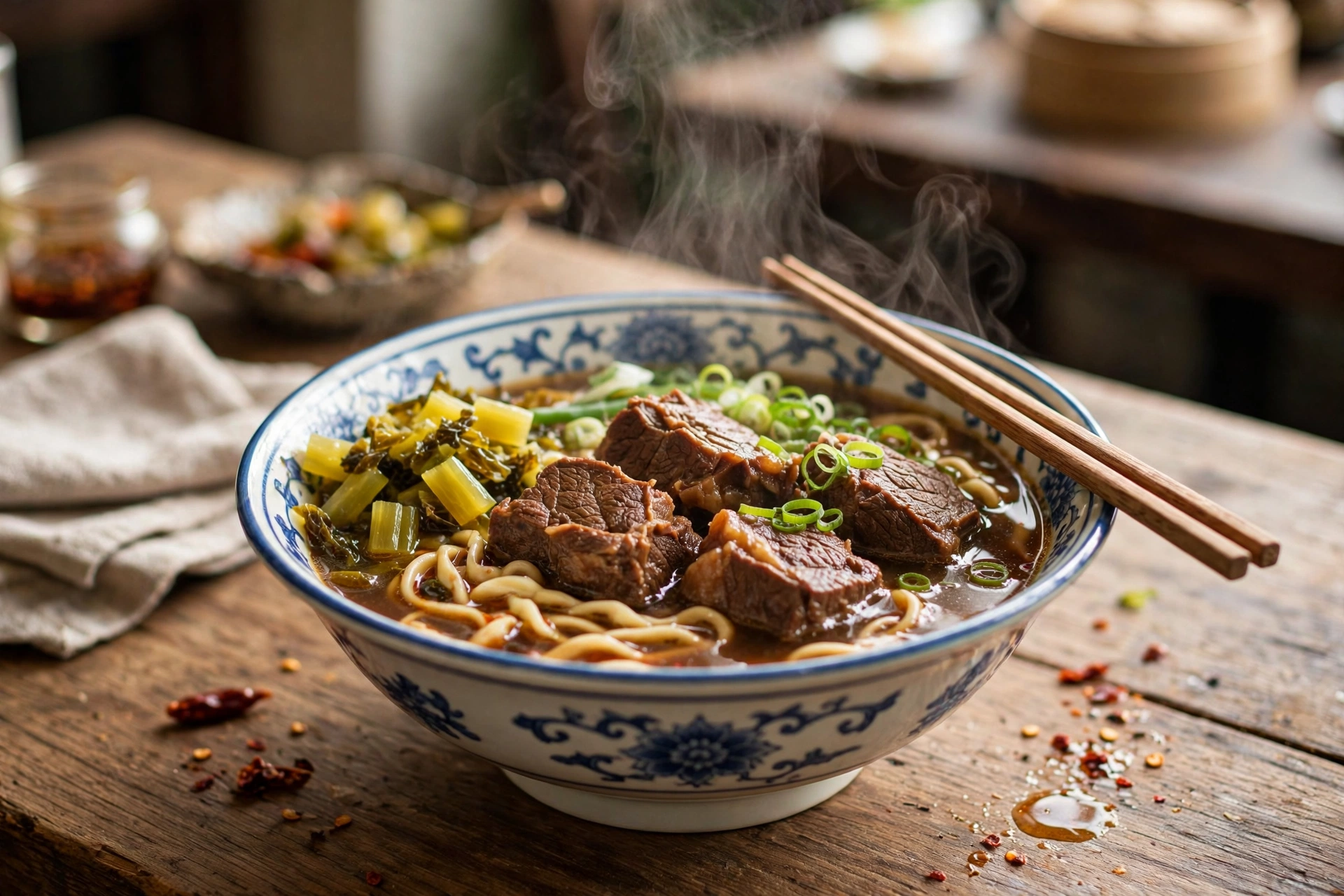
What to expect at the table: chewy wheat noodles, beef so tender it yields to a chopstick, bok choy for contrast, and the broth itself doing the heavy lifting. Pickled mustard greens on top are not a garnish, they are load-bearing: their sour crunch cuts the richness of the beef fat.
The beef: shank, parboiled, never skipped
Use beef shank, the cross-cut pieces with the white ring of tendon and marrow in the middle. I cut two-inch-thick pieces into chunks about two inches across. Chuck works in a pinch, but shank has more collagen, and collagen is what turns a long simmer into silky beef instead of dry beef.
Here is the step most first-timers skip, and the one that decides whether your broth is clear and clean or murky and funky: the parboil. Cover the beef with cold water, bring it to a rolling boil, and let it go for five minutes. You will see grey foam rise to the surface. Pour all of it out, rinse the beef under cold water, and scrub the pot clean before you start over with fresh water.
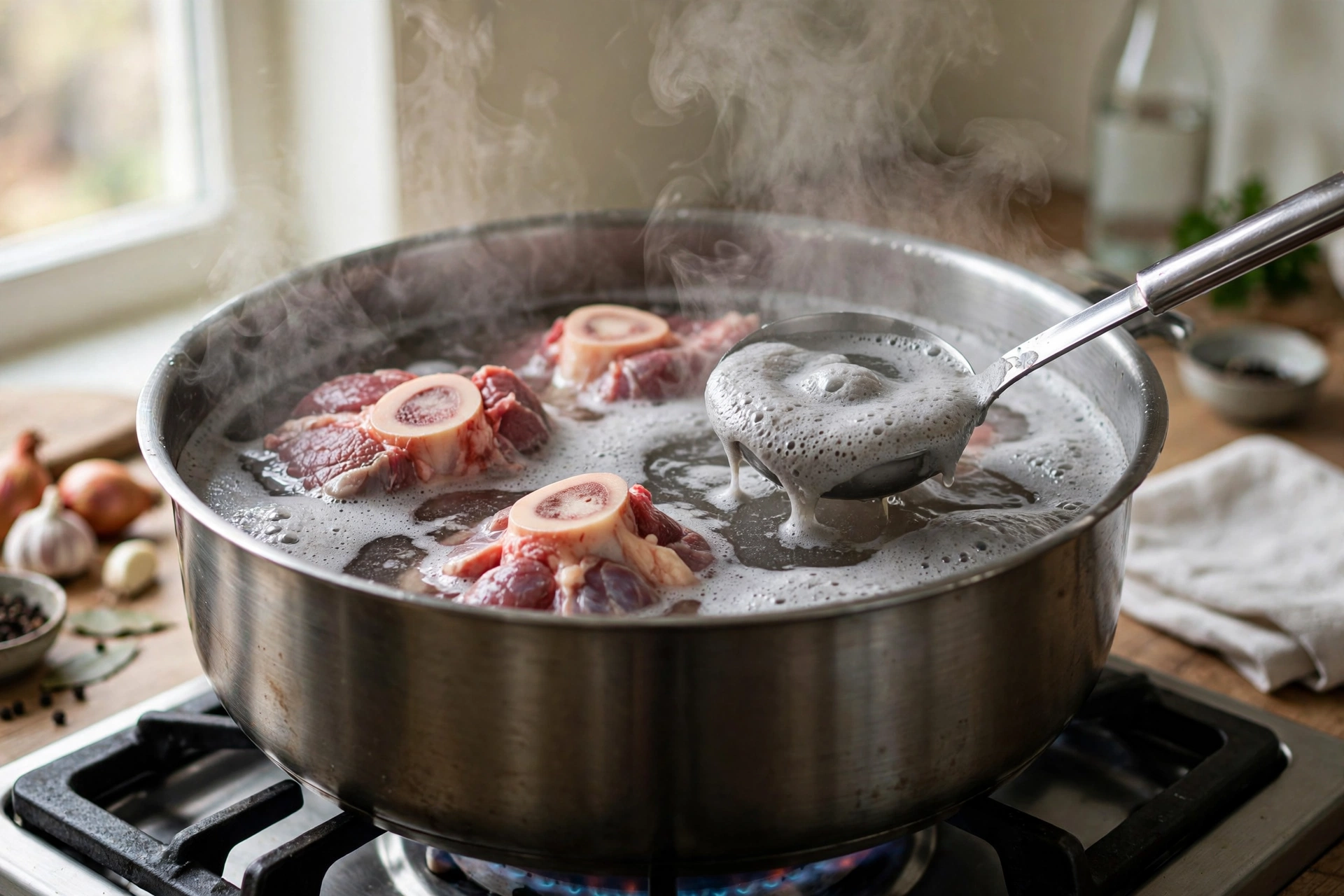
The first time I skipped this, my broth turned cloudy in the first hour and had a gamey edge I could not simmer away. The parboil takes ten minutes and buys you a clean-tasting broth for the rest of the cook. There is no fix for a murky broth once the beef is in; there is only prevention, and this is it.
Toast the spices, bag them, time them
The spice mix is what separates niu rou mian from any other beef soup: four star anise, one cinnamon stick, two bay leaves, a teaspoon each of Sichuan peppercorns, fennel seeds, and cloves. Toast them in a dry pot for a minute or two until fragrant, then tie them into a cheesecloth bag.
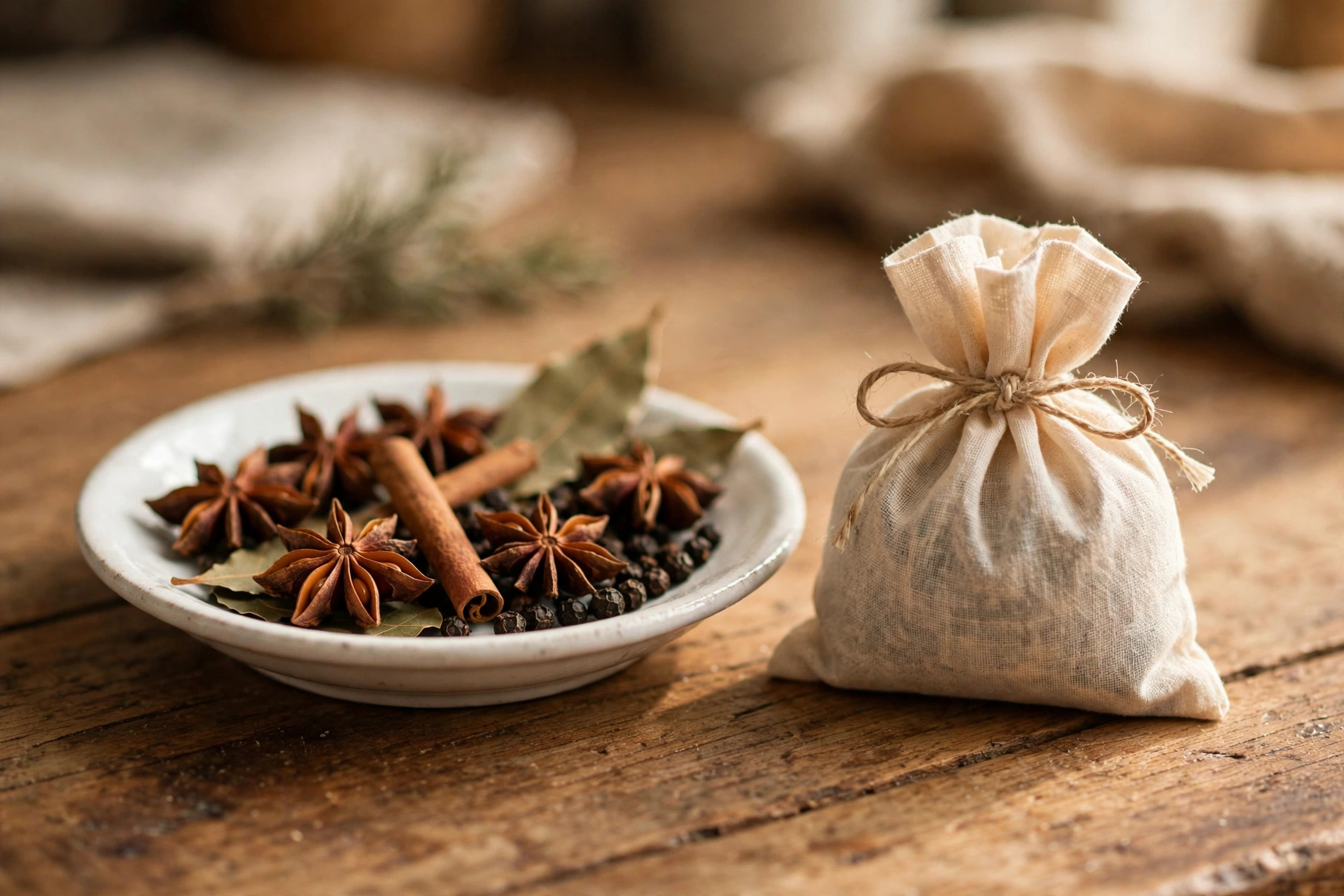
Two details I learned the hard way. First, never let whole spices swim loose in the broth: you will fish star anise out of bowls all evening, and someone will bite a clove. Second, pull the spice bag out after ninety minutes. I once left it in for the full three hours and the broth went medicinal, all star anise and nothing else. Ninety minutes gives you the warm spice base; the last hour of simmering is about beef and soy.
Build the braise
Heat two tablespoons of oil in the clean pot over medium heat. Add six slices of ginger, six smashed garlic cloves, and the white parts of four scallions, and cook for two minutes until fragrant. Add two tablespoons of doubanjiang, the salty fermented chili bean paste, and stir it in the oil for thirty seconds. It will turn the oil a deep red. Then add two tablespoons of Shaoxing wine, two tablespoons of light soy sauce, one tablespoon of dark soy sauce, thirty grams of rock sugar, and three quartered plum tomatoes.
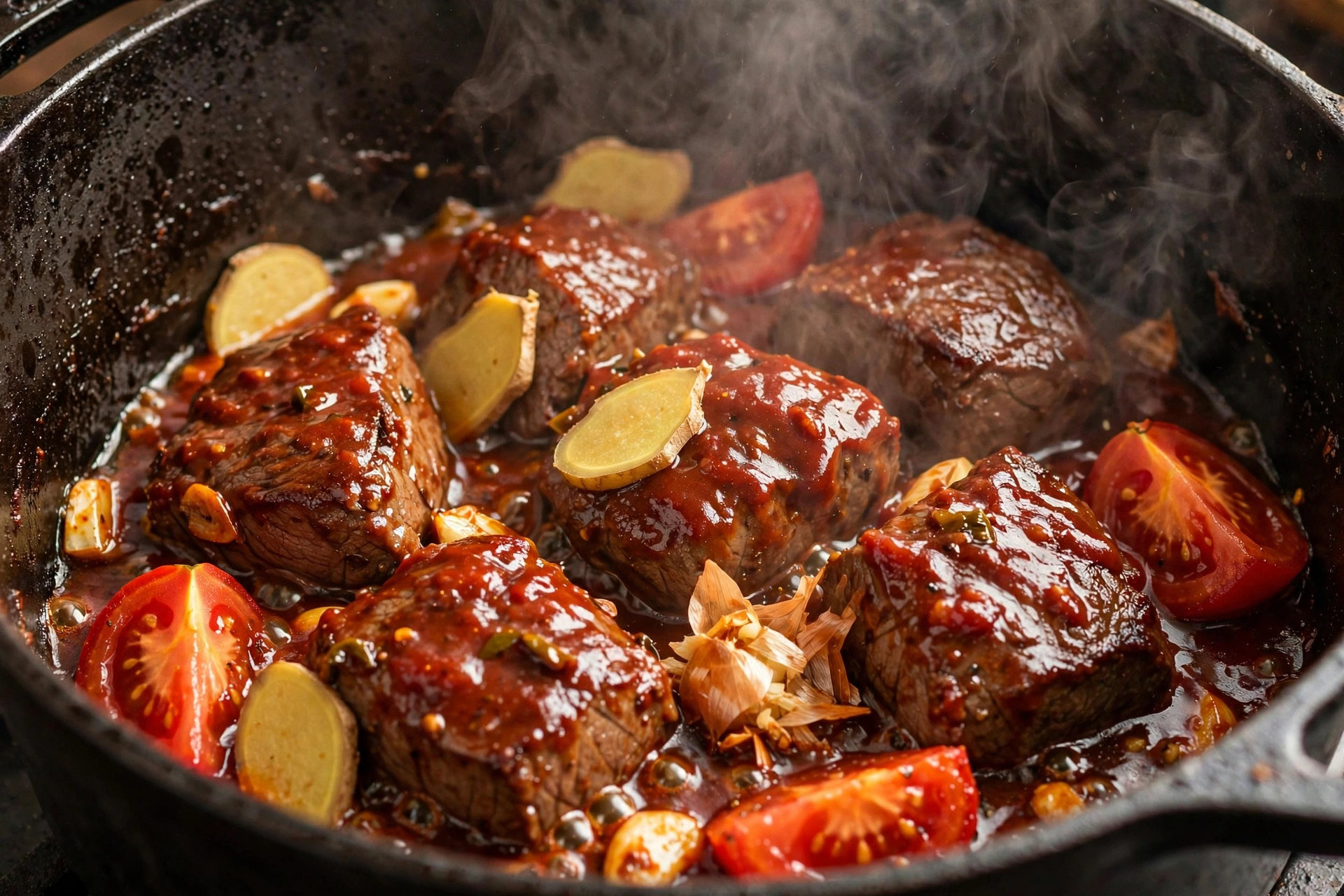
Add the parboiled beef and stir so every piece gets coated, about two minutes. Pour in eight cups of hot water, tuck in the spice bag, and bring it to a boil. Drop the heat to the barest simmer: you want a lazy bubble breaking the surface every second or two, not a rolling boil. A hard boil is what squeezes the beef dry and clouds the broth; a gentle simmer coaxes the collagen out.
Simmer for two and a half to three hours, lid slightly ajar. Check at the two-and-a-half-hour mark with a chopstick: it should slide into the thickest piece with almost no resistance. When the beef is done, pull the spice bag out if it is still in, and salt now, not earlier. I use about a teaspoon and a half of kosher salt, then taste. The broth reduces as it cooks, so anything you salt at the start tastes too salty at the end.
A pot of this soup tastes better the next day. If you have the time, cool it, refrigerate it overnight, and lift the solidified fat off the top before reheating. The flavors settle into each other and the beef relaxes even further.
Assemble the bowls
Cook eight ounces of dried wheat noodles and four baby bok choy in separate pots of salted boiling water, never in the broth. The noodles go two to three minutes in the water, the bok choy ninety seconds, straight into the bowls. Cooking either one in the broth muddies it with starch and turns the bok choy grey-green.
Divide the noodles among four wide bowls. Ladle the beef and broth over the top, set a bok choy or two against the rim, and finish with a spoonful of chopped pickled mustard greens and the sliced scallion greens. Serve it steaming, with chopsticks and a soup spoon.
If you like noodle soups in general, our laksa with coconut broth is the coconut-milk answer to this bowl: a different cuisine, the same logic of noodles under a deeply seasoned broth.
Troubleshooting: Fix My Taiwanese Beef Noodle Soup
Five things go wrong with this soup in Paul’s kitchen, and all five are fixable if you catch them. Pick what happened to yours.
HERB & LIME · KITCHEN HELP
Fix My Taiwanese Beef Noodle Soup
Choose what went wrong to see a practical next step.
Possible cause
What to try next
For next time
From Paul's kitchen. Results vary with beef cut, pot, and stove heat, adjust timing to your setup.
Quick reference (also works without JavaScript)
The broth is cloudy and smells a little off
Cause: The parboil was skipped, so blood and loose proteins dissolved straight into the braising liquid instead of being washed away first.
Try: Tonight's pot stays cloudy, strain the broth through a fine-mesh sieve and serve as is. Next time, do the parboil: five minutes at a rolling boil, then pour out the water and rinse the beef.
Prevent: Always parboil the beef first: cold water to a rolling boil for five minutes, discard the water, rinse the beef, and start the braise with fresh water in a clean pot.
The beef is still tough after three hours
Cause: The pot boiled too hard, which tightens the muscle fibers, or the collagen never got enough time near 180 degrees to melt into gelatin.
Try: Leave it on the lowest simmer and check every 30 minutes; undercooked shank does get tender with more time. If pieces vary, pull the soft ones out and keep the rest going.
Prevent: Keep the pot at a bare simmer, a lazy bubble every second or two, never a rolling boil, and give shank a full two and a half to three hours for the collagen to melt.
The broth tastes too salty
Cause: Salt was added before the long simmer, and the broth reduced around it, concentrating every grain of salt.
Try: Add a cup or two of hot water and simmer five minutes, then taste again. You can also lift out a ladle of broth, dilute it, and pour it back until it reads balanced.
Prevent: Salt only after the long simmer, with the spice bag out, the broth concentrates as it cooks, so seasoning early always overshoots.
The beef fell apart into shreds
Cause: The pieces were cut too small for a three-hour simmer, or they stayed in the pot well past tender, so the muscle fibers separated completely.
Try: Serve the shredded pieces over the noodles anyway, the flavor is all there. Pick the larger chunks out to keep for serving and let the small ones stay in the broth.
Prevent: Cut the shank into chunks at least two inches across and start checking at the two-and-a-half-hour mark; pull the beef once a chopstick slides in easily.
The noodles are soggy and the broth looks starchy
Cause: The noodles cooked in the soup pot, where they released starch into the broth and overcooked while the beef finished braising.
Try: Drain everything, rinse the noodles quickly in hot water, and reheat them in a fresh pot of clean salted water. Warm the broth separately and combine only in the bowl.
Prevent: Cook the noodles and the bok choy in their own pots of boiling water, never in the broth, noodle starch clouds the soup and keeps cooking past al dente.
Taiwanese Beef Noodle Soup (Hong Shao Niu Rou Mian)
Ingredients
Method
- Parboil the beef: cover the shank chunks with cold water, bring to a rolling boil, and cook for 5 minutes. Pour off the water, rinse the beef under cold water, and scrub the pot clean.
- Toast the spices: in the dry pot over medium heat, toast the star anise, cinnamon stick, bay leaves, Sichuan peppercorns, fennel seeds, and cloves for 1 to 2 minutes until fragrant. Tie them into a cheesecloth bag.
- Build the braise: heat the oil over medium heat. Add the ginger, garlic, and scallion whites; cook 2 minutes until fragrant. Stir in the doubanjiang for 30 seconds, then add the Shaoxing wine, both soy sauces, rock sugar, and tomatoes.
- Add the parboiled beef and stir to coat, about 2 minutes. Pour in the hot water, tuck in the spice bag, and bring to a boil. Drop the heat to the barest simmer and cook, lid slightly ajar, for 2 1/2 to 3 hours.
- At the 90-minute mark, pull the spice bag out. At the 2 1/2-hour mark, test the beef with a chopstick: it should slide into the thickest piece with almost no resistance.
- Remove the spice bag if it is still in. Stir in 1 1/2 teaspoons of kosher salt, taste, and adjust. Rest the pot off the heat for 15 minutes, or refrigerate overnight for a deeper broth.
- Cook the noodles and bok choy in separate pots of salted boiling water: noodles 2 to 3 minutes, bok choy 90 seconds. Divide the noodles among 4 wide bowls, ladle the beef and broth over, set bok choy against the rim, and top with pickled mustard greens and scallion greens.
Notes
Note 2: Pull the spice bag out after 90 minutes. A full three-hour soak turns the broth medicinal, all star anise and nothing else.
Note 3: A bare simmer is the whole technique: a lazy bubble every second or two. A hard boil squeezes the beef dry and clouds the broth.
Note 4: Salt only after the long simmer, with the spice bag out. The broth concentrates as it cooks, so seasoning early always overshoots.
Note 5: Cook the noodles and bok choy in their own pots of water, never in the broth. Noodle starch clouds the soup and the greens turn grey-green in the braising liquid.
More Chinese recipes
From the Garden
Baby bok choy is one of the easiest wins in a small garden: it germinates fast, likes cool weather, and a pot on a balcony will give you enough for a soup like this in about six weeks. The heads we pick at home stay emerald through a ninety-second blanch, which is the whole point of growing them fresh.
1 thought on “Taiwanese Beef Noodle Soup (Hong Shao Niu Rou Mian)”