
Cold soba is what I make when it is too hot to think about dinner but I still want real lunch. The noodles cook in under five minutes, the dressing is one bowl and a whisk, and the whole thing lands on the table chilled, nutty, and crunchy. Twenty minutes, one pot, no stove hovering.

What are soba noodles?
Soba are Japanese noodles made from buckwheat flour, which gives them an earthy, nutty flavor that wheat noodles do not have. The label tells you how much buckwheat is inside: juwari soba is 100 percent buckwheat, prized for flavor but fragile and quick to break, while nihachi is an 80/20 buckwheat-to-wheat blend that holds together better. Most dried soba at the store sits around 30 to 50 percent buckwheat, which is the forgiving middle ground and exactly what you want for a salad. Darker noodles generally mean more buckwheat.
Cold soba has a long tradition in Japan, where chilled noodles are served through the summer with dipping sauces. This salad borrows that idea and turns it into lunch: the same cold rinse, the same firm chew, plus vegetables and a sesame dressing instead of a dipping cup.
The sesame dressing: one ratio
The dressing follows a ratio I can remember without looking it up: 3-1.5-1. Three tablespoons soy sauce, one and a half tablespoons toasted sesame oil, one tablespoon rice vinegar, plus one tablespoon of sugar and one tablespoon of toasted sesame seeds to round it out. A spoonful of warm water loosens it so it coats instead of pooling. That ratio dresses six ounces of noodles exactly; scale it straight up for a crowd.
Two warnings from experience. First, toasted sesame oil is a finisher, not a base: a heavy hand turns the dressing bitter. Second, if the dressing comes out too thick, thin it with warm water a teaspoon at a time. Never add more oil to thin a dressing, it just gets greasy.
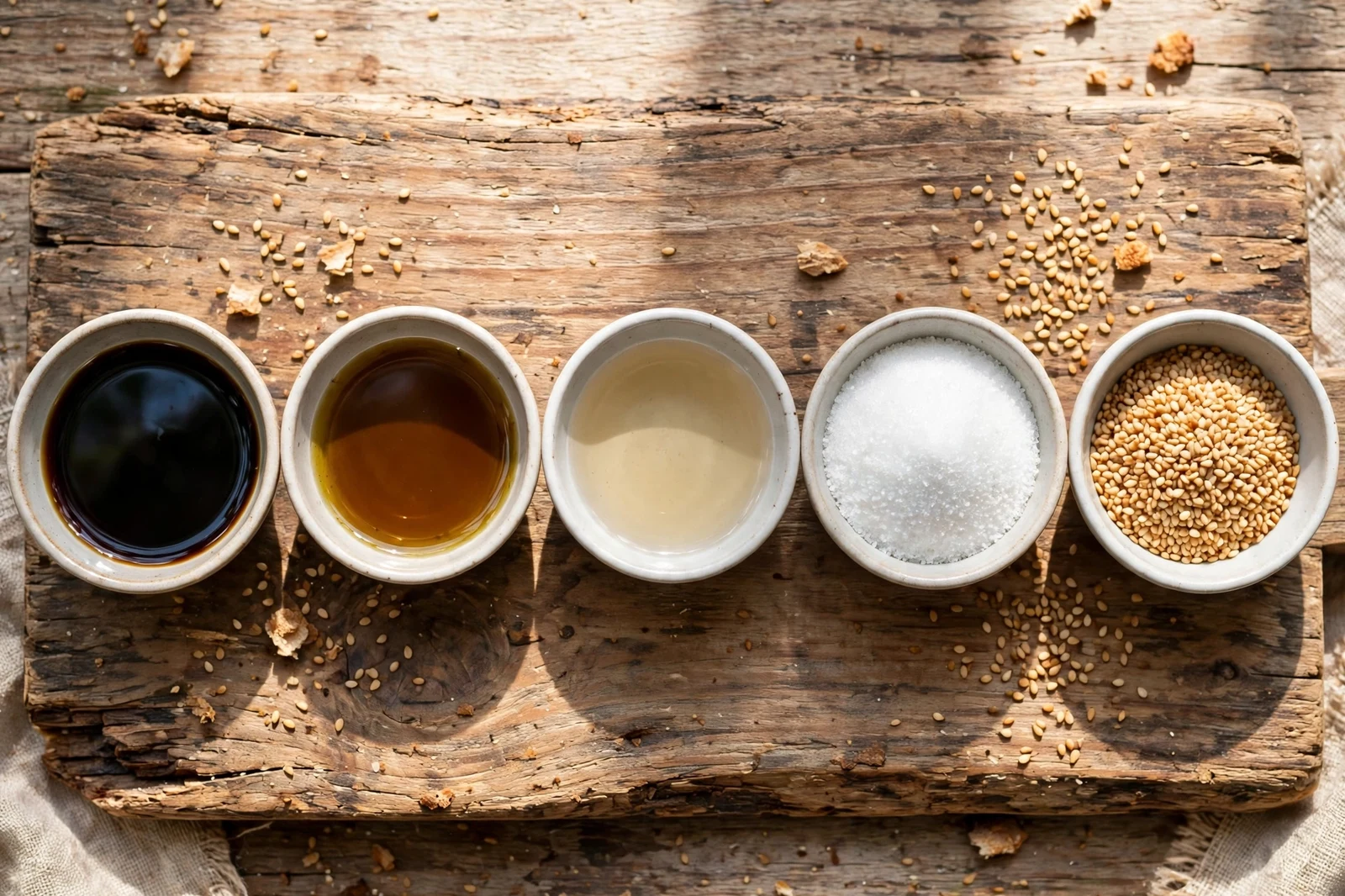
Ingredients
The full measured list is in the recipe card below. A few notes:
- Dried soba noodles, 6 oz (170 g). Regular blended soba is the right buy here; save the expensive 100-percent buckwheat for dipping, where its fragility does not matter. My udon vs soba guide walks through the noodle types if your shelf has options.
- Cucumber and carrot, cut into thin matchsticks. The crunch is the point, so cut them fresh and keep them cold.
- Scallions, thinly sliced, plus toasted sesame seeds and optional nori strips for the top.
- For serving: steamed rice is unnecessary here; the noodles are the meal. A Japanese cucumber sunomono on the side keeps the whole lunch cold and light.
How to make cold soba noodle salad
- Make the dressing first. Whisk the soy sauce, toasted sesame oil, rice vinegar, sugar, and warm water in a small bowl until the sugar dissolves, then stir in the sesame seeds. Set it aside.
- Bring a large pot of water to a rolling boil. Use plenty of water, at least 6 cups for 6 ounces of noodles, so the strands move freely. Add the soba, stir gently for the first 30 seconds to keep them from clumping, and cook one minute less than the package says, usually 4 to 5 minutes. Fish out one noodle and bite it: it should be tender with a slight bite in the center.
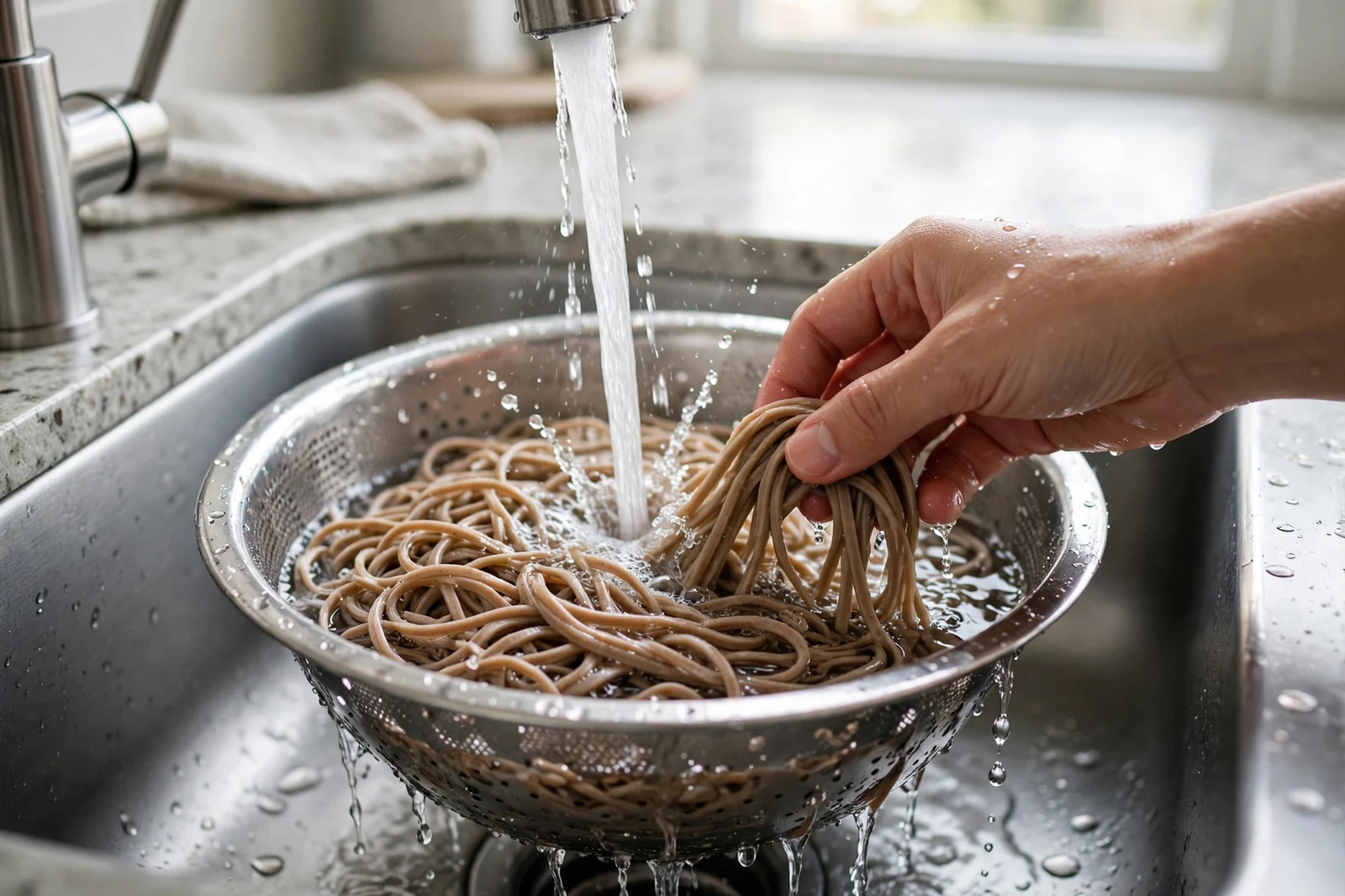
- Drain immediately and rinse under cold running water, rubbing the noodles gently with your hands until the water runs clear. This washes off the surface starch that makes soba glue itself together. For extra chew, dunk the rinsed noodles in ice water for 30 seconds, then shake the colander hard to get the water off. Wet noodles water down the dressing.

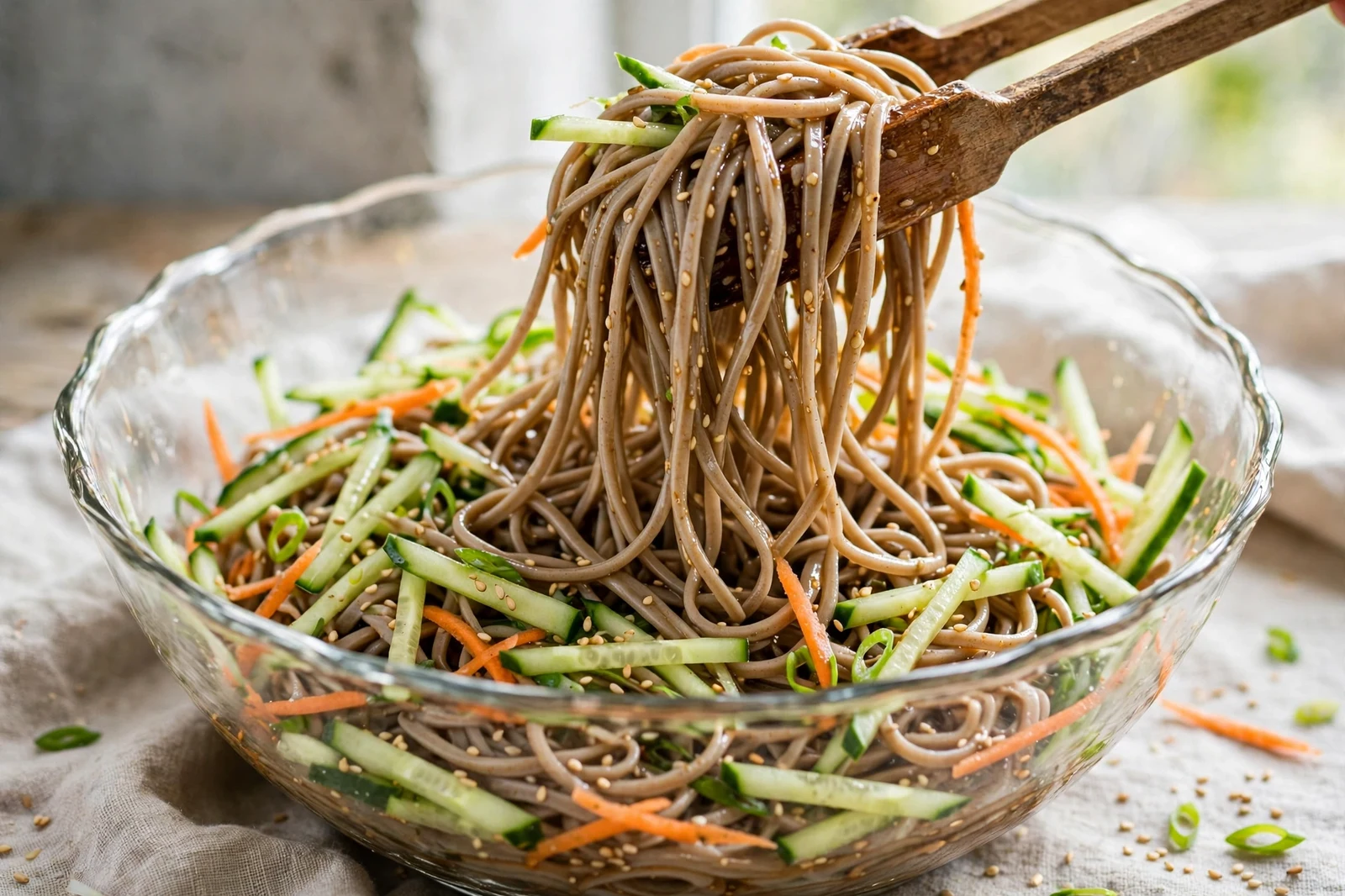
- Move the noodles to a large bowl and toss with half the dressing right away, within a couple of minutes of rinsing. Rinsed soba starts locking together fast, and dressing it early keeps every strand separate.
- Add the cucumber, carrot, and scallions and toss with the remaining dressing until everything is coated.
- Top with the extra sesame seeds and nori strips if using. Serve right away, or chill up to 2 hours. Give it one more toss before it hits the table.
Tips from Paul's kitchen
- Prep everything before the noodles hit the water. Soba keeps softening even after rinsing, so the vegetables and dressing should be waiting, not the other way around.
- Test for doneness a full minute before the package time. Thirty seconds past ideal is the difference between chewy and mushy with buckwheat noodles.
- Rinse until the water runs clear; stopping when the noodles merely feel cool leaves starch behind.
- Making it ahead: rinse the noodles, toss with a teaspoon of toasted sesame oil, and refrigerate in a covered container. Toss with the dressing just before serving to freshen it up.
- If the salad sits and tastes flat, the noodles drank the dressing. This is normal. Keep a spoonful of dressing back and toss it through right before serving.
Variations
- Add protein: shredded rotisserie chicken, shelled edamame, or a halved soft-boiled egg all sit well on top.
- Spicy: a spoonful of chili crisp in the dressing, or shichimi togarashi at the table.
- Creamier dressing: whisk a tablespoon of tahini into the dressing with an extra spoonful of warm water.
- No soba on the shelf: whole wheat spaghetti works in a pinch. It will not taste like buckwheat, but it takes the dressing and the chill just fine.
Troubleshooting: Fix My Cold Soba Noodle Salad
Soba is a fast noodle and most problems trace back to the pot or the rinse: mushy texture, clumps, a dressing that will not behave. Pick what went wrong below for the cause and the fix.
HERB & LIME · KITCHEN HELP
Fix My Cold Soba Noodle Salad
Choose what went wrong to see a practical next step.
Possible cause
What to try next
For next time
From Paul's kitchen. Results vary with noodle brand and stove heat, adjust timing to your setup.
Quick reference (also works without JavaScript)
The noodles turned mushy
Cause: Soba overcooks fast, and 30 seconds past ideal turns the strands gummy because buckwheat has little gluten to hold its shape.
Try: There is no rescue for already-mushy noodles, so start a fresh pot: cook one full minute less than the package says and bite-test a strand before draining.
Prevent: Set a timer, stir gently for the first 30 seconds, and drain the moment a test strand is tender with a slight bite in the center.
The noodles clumped into a sticky mass
Cause: Buckwheat releases a lot of surface starch, and without a thorough cold rinse that starch glues the strands together as they cool.
Try: Rinse the clumped noodles under cold running water, gently separating the strands with your fingers until the water runs clear, then shake dry.
Prevent: Drain and rinse under cold water for 30 to 60 seconds right after cooking, rubbing the noodles gently, and toss with the dressing within a couple of minutes.
The dressing came out too thick or separated
Cause: Toasted sesame oil is potent and resists blending with the water-based soy sauce and vinegar, so dumping everything together breaks the mix.
Try: Whisk in warm water one teaspoon at a time until it turns pourable again, and give a separated dressing a vigorous whisk or shake to bring it back.
Prevent: Whisk the soy sauce, vinegar, sugar, and water first, then whisk in the sesame oil last; never add more oil to thin a dressing, it only gets greasier.
The noodles broke into short pieces
Cause: High-buckwheat soba (juwari, 100 percent buckwheat) is fragile because buckwheat has no gluten, and rough stirring snaps the strands.
Try: Serve the pieces as-is over the vegetables; short noodles still taste right in a salad.
Prevent: Buy a blended soba (around 30 to 50 percent buckwheat) for salads, stir gently only in the first 30 seconds, and toss with tongs instead of chopsticks.
The salad tasted bland after sitting
Cause: Soba drinks up dressing as it sits, so a salad dressed an hour ago tastes flat and dry by serving time.
Try: Toss through a spoonful of reserved dressing right before serving to wake the flavors back up.
Prevent: Hold back a third of the dressing, chill the lightly dressed salad, and do the final toss just before it hits the table.
Cold Soba Noodle Salad with Sesame Dressing
Ingredients
Method
- Make the dressing. Whisk the soy sauce, toasted sesame oil, rice vinegar, sugar, and warm water in a small bowl until the sugar dissolves, then stir in the sesame seeds. Set aside.
- Cook the soba. Bring a large pot with at least 6 cups of water to a rolling boil. Add the noodles, stir gently for the first 30 seconds, and cook one minute less than the package says, usually 4 to 5 minutes. Bite-test one noodle: it should be tender with a slight bite in the center.
- Rinse cold. Drain immediately and rinse under cold running water, rubbing the noodles gently with your hands until the water runs clear. For extra chew, dunk in ice water for 30 seconds, then shake the colander hard to remove the water.
- Dress early. Move the noodles to a large bowl and toss with half the dressing within a couple of minutes of rinsing, before the strands start locking together.
- Add the vegetables. Add the cucumber, carrot, and scallions and toss with the remaining dressing until everything is coated.
- Finish and serve. Top with the extra sesame seeds and nori strips if using. Serve right away, or chill up to 2 hours and give it one more toss before serving.
Notes
More Japanese recipes
Keep the Japanese streak going with Salmon Teriyaki for a fast weeknight fish, Gyudon for savory beef over rice, Chicken Teriyaki for the glossy classic, or Yakisoba for stir-fried noodles when you want them hot.
From the garden
The scallions on top are the easiest win in the garden: a bunch of store-bought bases stood in a jar of water throws up new green shoots in days, which is exactly the method in my green onion growing guide. Snip what you need, leave the roots, and the same bunch keeps producing.