
At Thai street stalls, kor moo yang comes off the grill in whole pieces, charred at the edges and juicy inside, then sliced thin right before it reaches the plate. The cook hands it over with sticky rice and a small bowl of nam jim jaew, the sour, salty, chili-spiked dipping sauce that makes the whole plate work. This recipe follows that same order: marinate, grill whole, rest, slice thin, and serve at once.
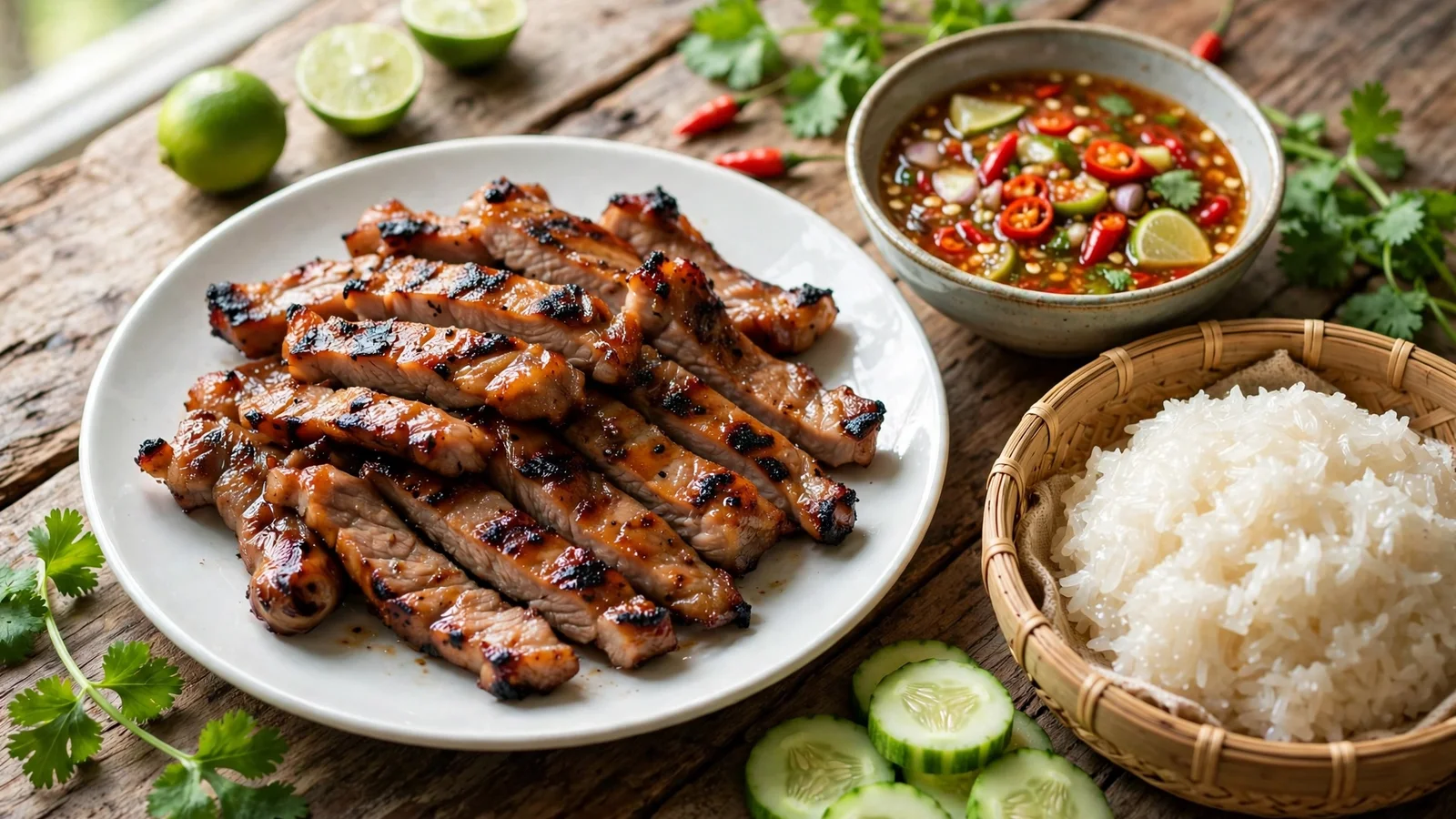
What is kor moo yang?
Kor moo yang is grilled pork neck, a cut from the top of the shoulder with fat running through the meat. That fat is the reason the cut suits the grill. It bastes the meat from inside as it cooks, so the pork stays moist even over high heat, and the edges crisp where the fat meets the grate. Pork neck is sold as pork collar in some butcher shops. If your butcher does not carry it, pork shoulder steaks cut about 1 inch thick are the closest swap, though they cook a little less evenly.
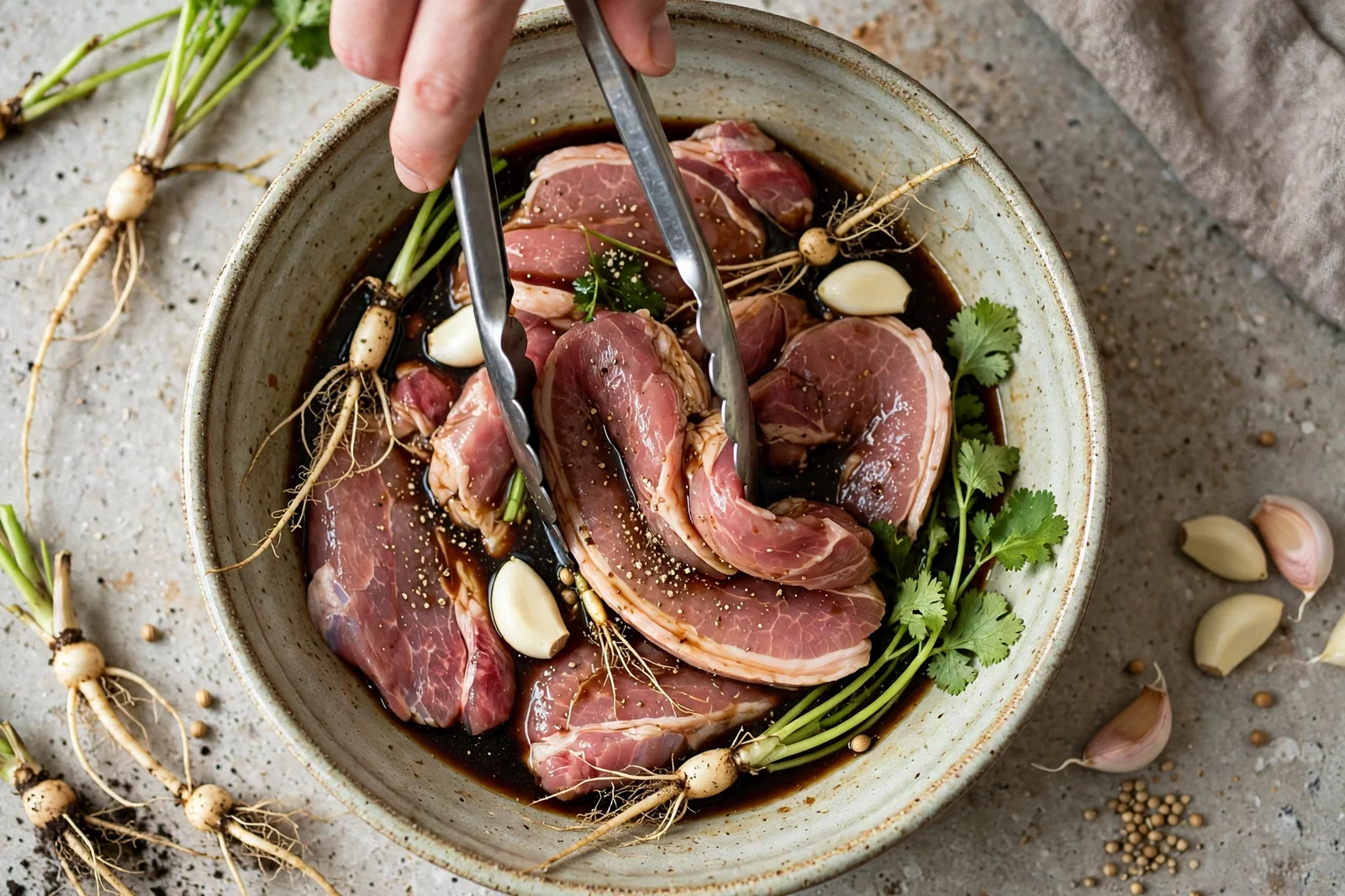
The marinade is simple: garlic, coriander root, white pepper, soy sauce, fish sauce, oyster sauce, and sugar, pounded into a paste. Coriander root is the part most home cooks skip, and it is the part that gives the pork its Thai street-stall flavor. If you can only find cilantro with the roots trimmed off, use the lower stems instead. They carry the same flavor, just a little milder.
Ingredients
For the pork:
- 2 pounds pork neck, cut into steaks about 1 inch thick
- 4 garlic cloves, peeled
- 2 tablespoons chopped coriander root, or cilantro stems
- 1 teaspoon white peppercorns
- 2 tablespoons soy sauce
- 1 tablespoon fish sauce
- 1 tablespoon oyster sauce
- 1 tablespoon sugar
- 1 tablespoon vegetable oil
For the nam jim jaew dipping sauce:
- 3 tablespoons fish sauce
- 2 tablespoons lime juice, from about 1 lime
- 1 tablespoon sugar
- 1 teaspoon toasted rice powder
- 1 small shallot, thinly sliced
- 1 to 2 Thai chilies, thinly sliced
- 1 tablespoon chopped cilantro
For serving:
- Sticky rice
- Cucumber slices
- Extra cilantro, for the table
How to make kor moo yang
Marinate the pork first. Pound the garlic, coriander root, and white peppercorns in a mortar until you have a coarse paste. Stir in the soy sauce, fish sauce, oyster sauce, sugar, and oil. Rub the paste over the pork steaks, cover, and refrigerate for at least 2 hours, or overnight for a deeper flavor. Take the pork out of the fridge 30 minutes before grilling so it cooks evenly.
While the pork rests, make the dipping sauce. Stir the fish sauce, lime juice, and sugar in a small bowl until the sugar dissolves. Stir in the toasted rice powder, shallot, chilies, and cilantro, then let the sauce sit for 10 minutes so the rice powder softens and the shallot loses its raw edge.
Heat the grill to medium-high and oil the grate. Shake the excess marinade off the pork and grill the steaks for 6 to 7 minutes per side, until the outside is well charred and an instant-read thermometer reads 145 degrees F in the thickest part. Move any piece that flares up to a cooler spot on the grate rather than letting the sugar in the marinade burn black. The same grill-and-rest order works for Gai Yang, Thai grilled chicken, where the rest before slicing matters just as much.

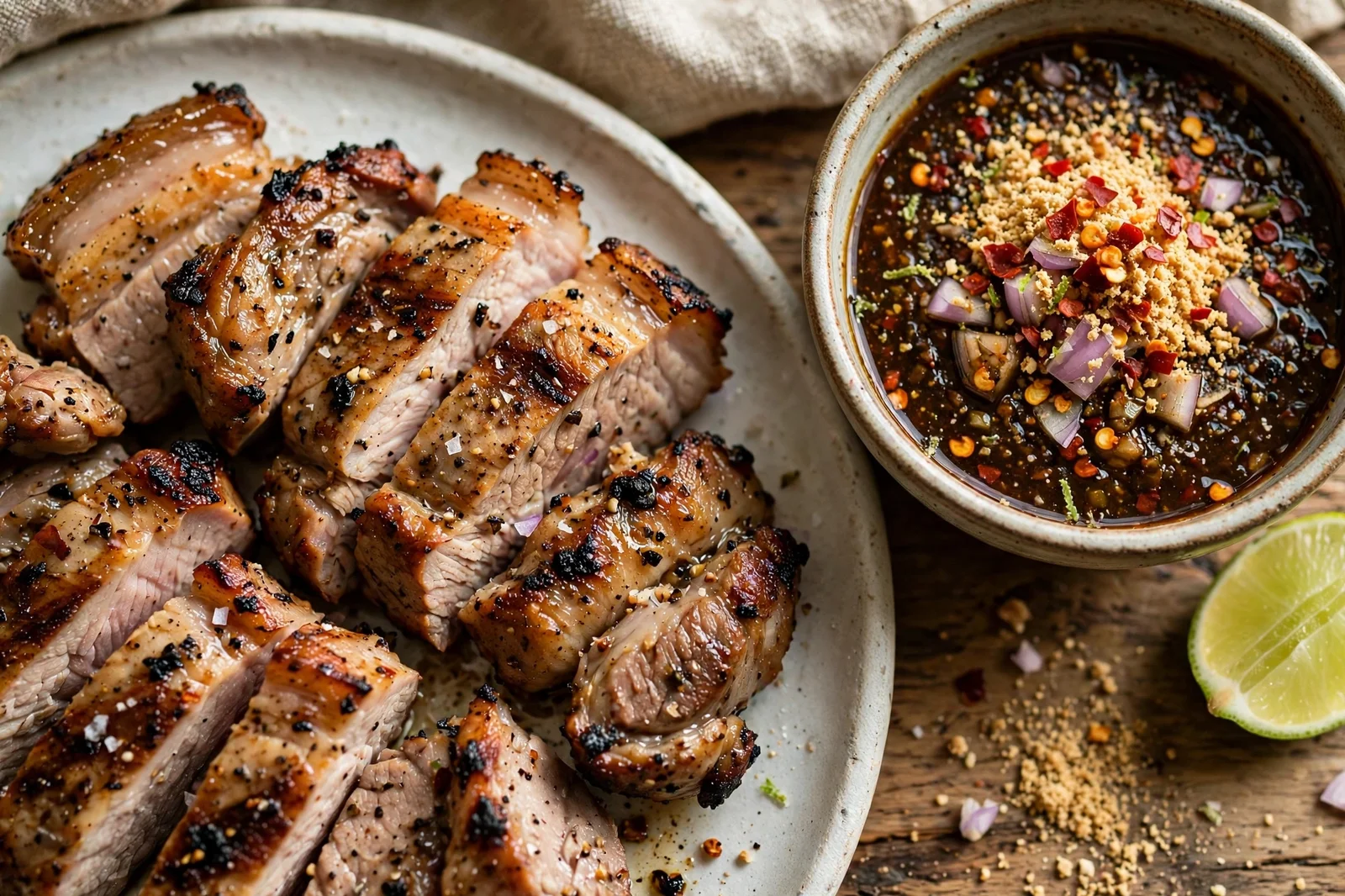
Rest the pork for 10 minutes under loose foil, then slice it thin, about 1/4 inch, against the grain and on a slight angle. The slices should show a charred edge and a pale, juicy center. Arrange them on a plate and serve at once with the dipping sauce, sticky rice, and cucumber.
Tips and variations
Grill the pork whole and slice it after resting, never before cooking. Thin slices grilled on their own dry out fast and lose the juice that makes this dish good. If you only have a grill pan, heat it until it just starts to smoke, work in a single layer, and open a window: the sugar in the marinade smokes as it chars.
For a milder sauce, leave out the chilies and add an extra spoonful of lime juice. For a hotter one, keep the chili seeds in. Leftover pork keeps in the fridge for 3 days and reheats well sliced into fried rice, where the charred edges turn into the best part of the pan.
Troubleshooting: Fix My Kor Moo Yang
If your first batch comes out dry, tough, or burnt at the edges, the fix is usually in the rest, the slice, or the heat. The section below covers the most common problems and how to fix each one.
HERB & LIME · KITCHEN HELP Choose what went wrong to see a practical next step. From Paul's kitchen. Results vary with pork thickness, grill heat, and stove setup, adjust timing to your setup. Quick reference (also works without JavaScript) Cause: Slicing straight off the grill lets the juices run out onto the board before they settle back into the meat. Try: Slice what is left as thin as you can and spoon the board juices and dipping sauce over it. Prevent: Rest the pork for 10 minutes under loose foil before slicing, and pull it at 145 degrees F so carryover heat finishes the job. Cause: Slices cut with the grain leave long muscle fibers that stay chewy no matter how well the pork was cooked. Try: Turn the piece 90 degrees and re-slice it thin across the grain, so each slice has short fibers. Prevent: Look for the direction of the fibers before you cut, then slice perpendicular to them at a slight angle, about 1/4 inch thick. Cause: Sugar in the marinade chars fast over very high direct heat, so the crust blackens while the center is still underdone. Try: Move the pork to a cooler part of the grate, close the lid if you can, and finish it gently until it reaches 145 degrees F. Prevent: Grill over medium-high heat, not the hottest spot, and move any flaring piece aside instead of letting it sit in the flames. Cause: A short marinade on a thick, whole piece seasons only the outside, since the paste cannot reach the center quickly. Try: Slice the pork and toss the slices in a little extra dipping sauce, which carries the same garlic and coriander flavors. Prevent: Pound the garlic, coriander root, and pepper into a paste first, and marinate for at least 2 hours, or overnight for the deepest flavor. Cause: Fish sauce and lime juice dominate when the sugar has not dissolved or the sauce was never tasted before serving. Try: Stir in sugar a pinch at a time, then lime juice or a spoonful of water, tasting after each addition until it tastes balanced. Prevent: Stir the fish sauce, lime juice, and sugar until the sugar fully dissolves, then add the shallot, chili, and toasted rice powder, and taste before serving.Fix My Thai Grilled Pork Neck (Kor Moo Yang)
Possible cause
What to try next
For next time
The pork came out dry
The slices are tough and chewy
The outside burned before the inside cooked
The marinade flavor stayed on the surface
The dipping sauce tastes too salty or sharp
Thai Grilled Pork Neck (Kor Moo Yang)
Ingredients
Method
- Marinate the pork: pound the garlic, coriander root, and white peppercorns in a mortar into a coarse paste. Stir in the soy sauce, fish sauce, oyster sauce, sugar, and oil. Rub over the pork steaks, cover, and refrigerate for at least 2 hours or overnight. Take the pork out of the fridge 30 minutes before grilling.
- Make the dipping sauce: stir the fish sauce, lime juice, and sugar in a small bowl until the sugar dissolves. Stir in the toasted rice powder, shallot, chilies, and cilantro, and let the sauce sit for 10 minutes.
- Grill the pork: heat the grill to medium-high and oil the grate. Shake the excess marinade off the pork and grill the steaks for 6 to 7 minutes per side, until well charred outside and 145 degrees F in the thickest part. Move any flaring piece to a cooler spot on the grate.
- Rest and slice: rest the pork for 10 minutes under loose foil, then slice thin, about 1/4 inch, against the grain and on a slight angle.
- Serve: arrange the slices on a plate and serve at once with the dipping sauce, sticky rice, and cucumber slices.
Notes
More Thai recipes
If you like this plate, try Pla Neung Manao, Thai steamed fish with lime and garlic, Gai Yang, Thai grilled chicken, Khao Kha Moo, Thai braised pork leg with pickled mustard greens, or Pad Kana Moo Krob, Thai stir-fried Chinese broccoli with crispy pork.
From the garden
Coriander root is the reason to grow a pot of cilantro and pull the whole plant, roots and all, when you cook Thai food at home. The roots keep for a week wrapped in a damp towel in the fridge, and a plant grown for its leaves gives you the roots for free.