
Some weeknight dinners earn a permanent spot in the rotation because they land two textures at once. Pad kana moo krob is one of those: thick-stemmed Chinese broccoli, still bright and snappy, tossed in a salty-sweet oyster sauce glaze with chunks of crispy pork belly that crackle when you bite them. Over steamed jasmine rice, it is a complete dinner in one bowl, and it takes 25 minutes if the pork is already made.
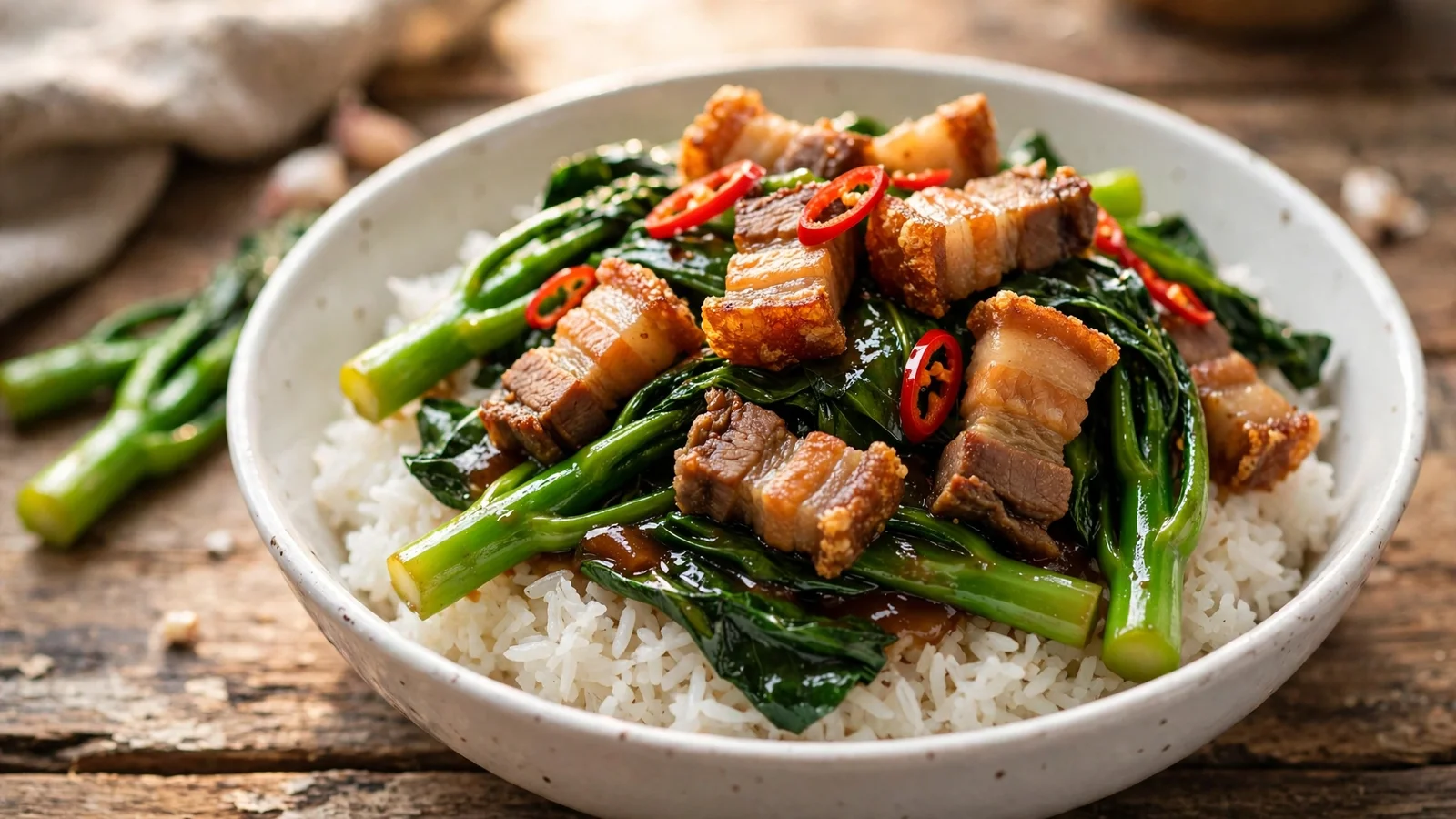
The pork is the part most home cooks skip. Real moo krob takes a long afternoon of simmering, drying, and frying, so I buy it from a Chinese barbecue shop. You get the blistered crackling without the afternoon of splattering oil. The wok part is genuinely fast, as long as everything is cut and the sauce is mixed before the heat goes on.
What is pad kana moo krob?
The name tells you the whole dish: pad means stir-fried, kana is Chinese broccoli (gai lan), and moo krob is crispy pork. In Thailand it is a one-plate rice dish, the kind sold at lunch stalls spooned over steamed rice, with a dish of chilies in fish sauce on the side.
Expect a contrast plate. The greens keep a faint bitter edge, like broccoli rabe with the volume turned down, and the pork brings salt, fat, and crunch. The sauce ties them together: oyster sauce, soy sauce, a little sugar, and stock, reduced to a glaze that clings instead of pooling. If you know the Cantonese dim sum version, blanched gai lan with warm oyster sauce, this is its rowdier Thai cousin, and I cover the gentle blanched version in my gai lan with oyster sauce post.
The two textures that make it work
Two things have to be right, and both are about timing. Chinese broccoli is two vegetables in one: thick stems that need real heat and delicate leaves that cook in a minute. Throw them in together and the leaves are gone before the stems lose their raw edge. So they go in separately. The stems get the wok first, the leaves join for the last minute.
The second is the pork. Crackling turns leathery the longer it sits in sauce, so the pork goes in for the final 30 seconds, just long enough to warm through and pick up a glaze. That order, stems, leaves, then pork at the end, is the whole dish.
Getting the gai lan ready
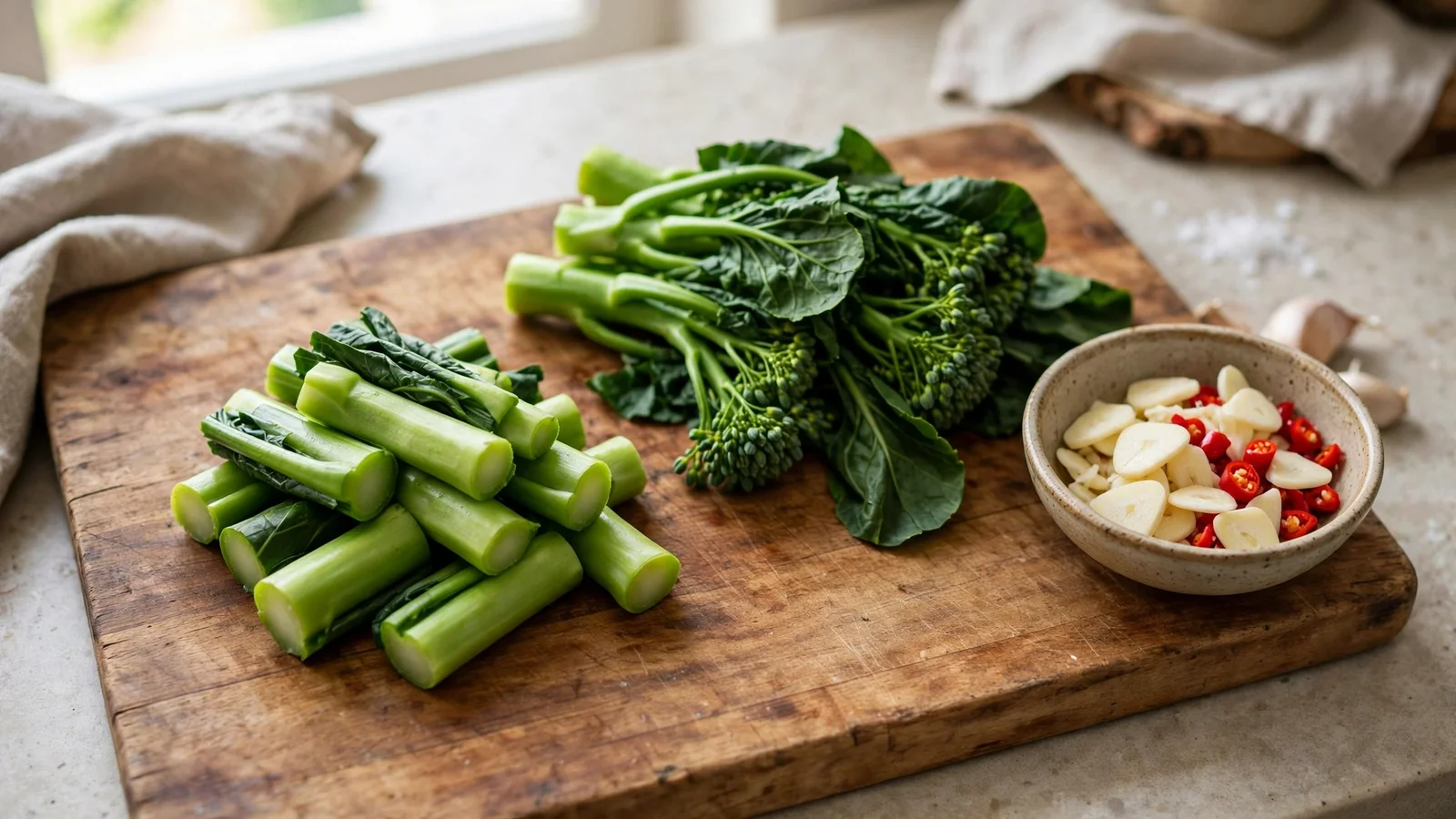
Buy a pound of gai lan with stalks no thicker than your thumb. Wash it well, then dry it. Surface water is the enemy here: it turns the wok into a steamer and the greens come out gray and limp instead of bright and snappy.
Cut the stalks into 2-inch pieces and keep them in one pile, leaves in another. If any stalks are thicker than a thumb, peel the tough outer skin with a vegetable peeler first. The peeled core is the sweetest part of the vegetable, and unpeeled thick stems are the reason home versions of this dish come out fibrous.
The one-minute blanch
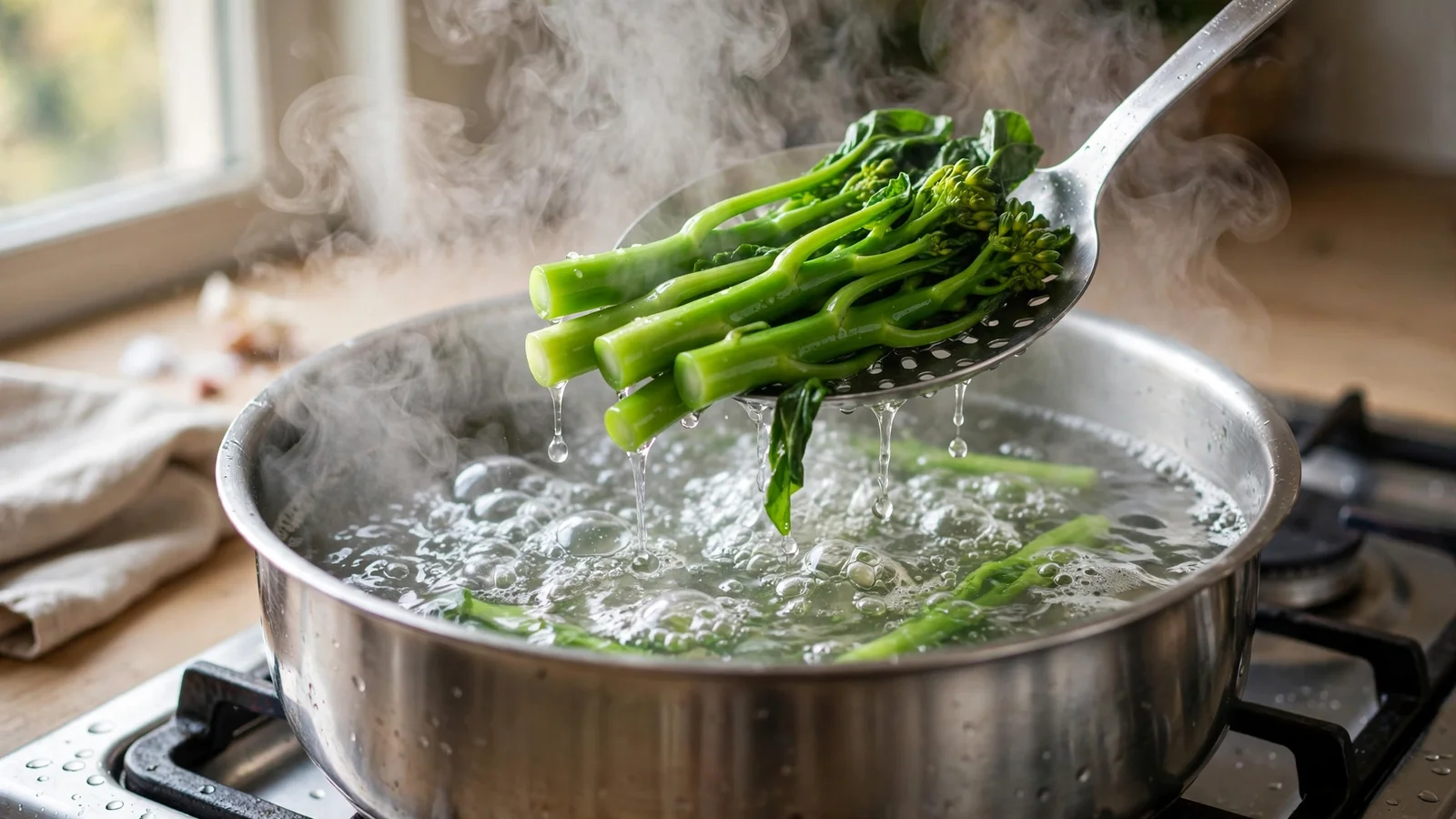
This step is optional, and it is also the most reliable route to tender stems. Bring a pot of water to a rolling boil, salt it well, and blanch the stems for 1 minute. Lift them out with a slotted spoon, drain them hard, and skip the ice bath. The leaves go in for 15 seconds, just to set the color, then come out the same way.
Skip the blanch only if your stalks are thin. Thick stalks need that full minute of boiling water to cook through, and no amount of extra wok tossing will save a raw center without overcooking everything around it.
The crispy pork
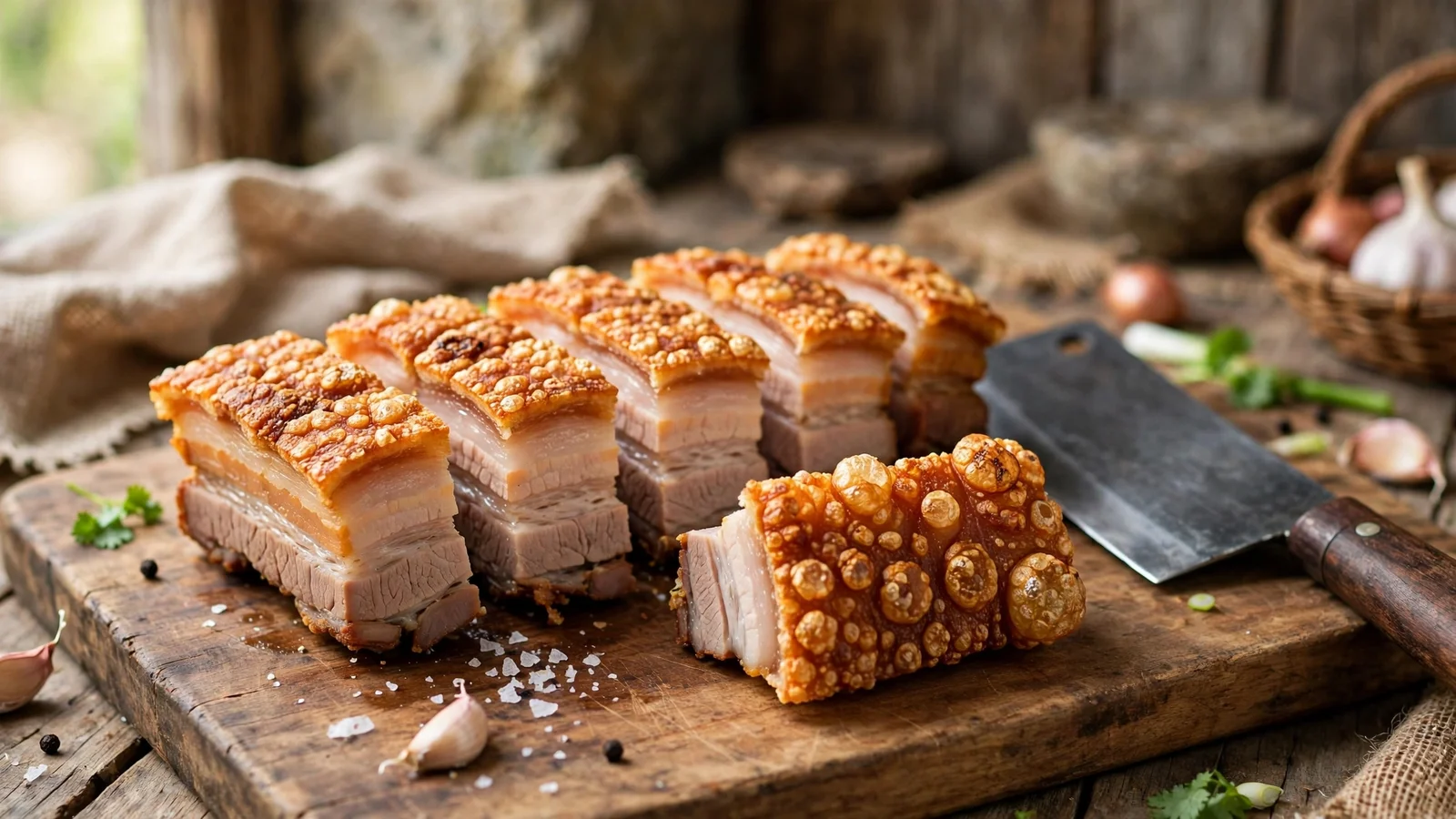
Ask the barbecue shop for moo krob with blistered, well-rendered skin, and buy it the day you plan to cook. Cut it into bite-size chunks just before it goes in the wok.
If the skin softened on the way home, which it will in a sealed bag, fix it first. Lay the pieces skin-side down in a dry skillet over medium heat for a few minutes until the skin crackles again, then chop. Skip this and the pork starts soft and never recovers in the wok.
The sauce and the stir fry
My ratio for a pound of greens: 2 tablespoons oyster sauce, 1 tablespoon light soy sauce, 1 teaspoon dark soy sauce for color, 1 teaspoon sugar, a quarter cup of chicken stock, and half a teaspoon of white pepper. Mix it in a small bowl and taste it. Oyster sauce brands vary a lot in salt, and this is the moment to adjust, not after it hits the wok. For more on picking the right bottle, my oyster sauce guide walks through the labels.
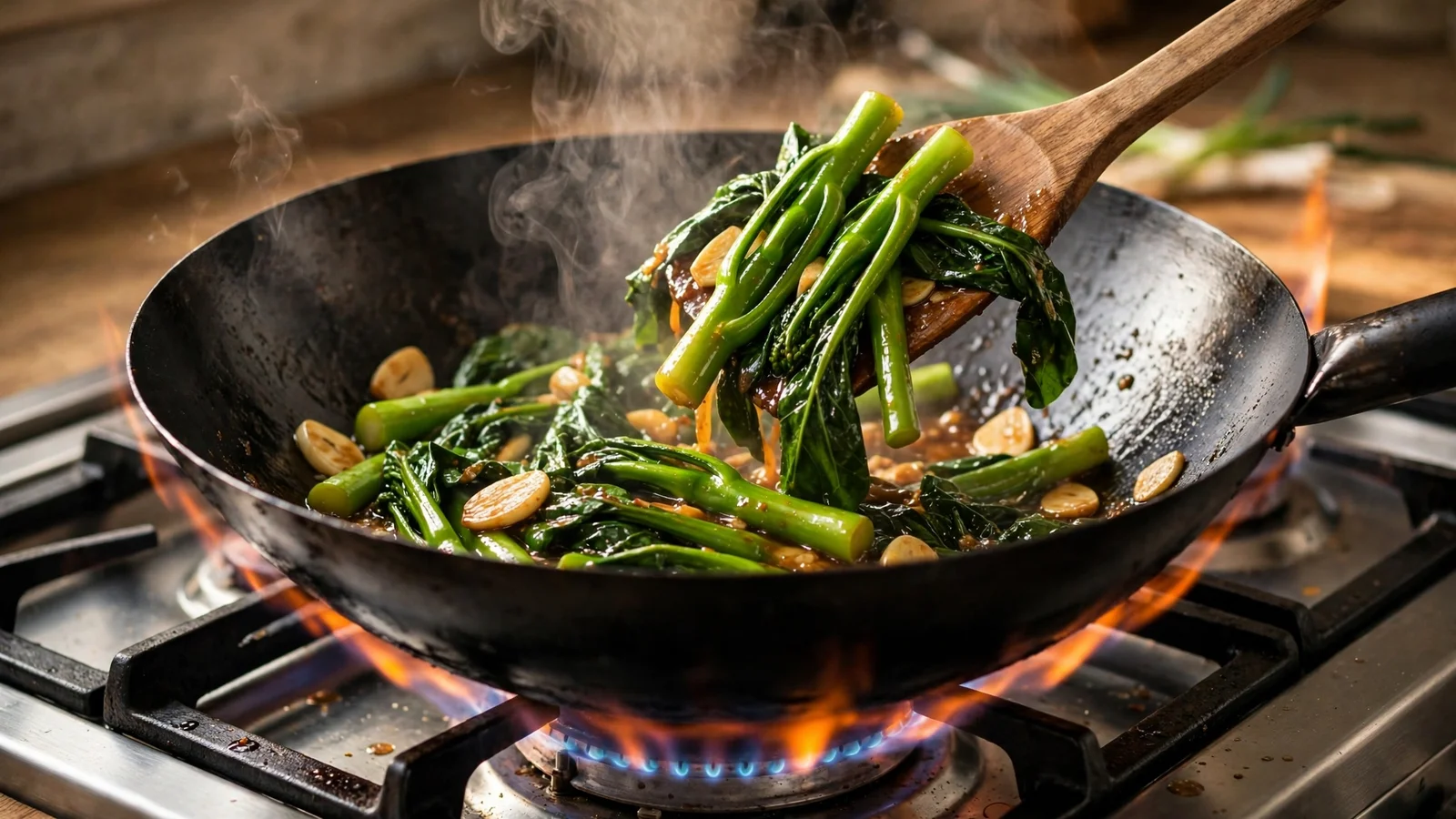
Heat the wok over high heat until a drop of water skips. Add a tablespoon of oil, then the sliced garlic and chilies, 20 to 30 seconds until the garlic turns golden. Add the stems and toss for 2 to 3 minutes until bright green and just tender. Pour in the sauce, let it bubble and thicken slightly, then fold in the leaves for 1 minute. The pork goes in last: toss for 30 seconds to coat and warm through, then get it onto a plate. The wok stops being your friend the moment you walk away.
How to serve
Serve it hot over steamed jasmine rice, which soaks up the glaze the way it is supposed to. Put a small dish of sliced chilies in fish sauce on the table for anyone who wants heat and funk with the rich pork.
Two servings makes a proper rice-plate dinner. Double everything and it feeds four as part of a shared Thai spread, though the wok should not be crowded past a single layer, so work in two batches.
Troubleshooting: Fix My Pad Kana Moo Krob
The usual failures are tough stems, limp greens, soft crackling, a too-salty sauce, or burnt garlic. Here is how to think about each one, plus the interactive troubleshooter below.
HERB & LIME · KITCHEN HELP Choose what went wrong to see a practical next step. From Paul's kitchen. Results vary with gai lan thickness, pork cut, and stove heat, adjust timing to your setup. Quick reference (also works without JavaScript) Cause: Chinese broccoli is two vegetables in one: thick stems need real heat while the leaves cook in about a minute, so they never finish at the same time. Try: Pull the leaves out early next time and keep the stems in the wok until they give when you press them with a fingernail; the separated piles trick keeps each at its best. Prevent: Cut stems and leaves into separate piles before cooking, peel stems thicker than your thumb, and blanch thick stalks for 1 minute first. Cause: Wet greens drop the wok temperature and steam instead of searing, and overcrowded pans trap the same steam. Try: Next round, shake the greens dry in a colander for a few minutes and get the wok ripping hot before they go in, so they sear green instead of boiling pale. Prevent: Wash and dry the gai lan completely before it goes near the wok, and cook in a single loose layer over high heat. Cause: Crackling rehydrates the longer it sits in liquid, so pork added early steams under the sauce and turns leathery. Try: Toss the pork in for the final 30 seconds only, just to warm through and pick up a glaze, then plate immediately. Prevent: Re-crisp store-bought pork skin-side down in a dry skillet before chopping, and add the pork last every time. Cause: Oyster sauce, light soy sauce, and seasoning sauce all carry salt, and brands differ enough that a fixed recipe can overshoot. Try: Stir in 1 to 2 tablespoons of water or stock and taste again; a pinch more sugar balances the salt if it is still sharp. Prevent: Mix the sauce in a small bowl and taste it before it hits the wok, then adjust down with water or up with soy as your bottle needs. Cause: Minced garlic in a screaming-hot wok goes from golden to bitter in under a minute, and burnt garlic taints the whole dish. Try: If the garlic turns dark brown, scoop it out, wipe the wok, and start the aromatics over with fresh oil rather than building on a bitter base. Prevent: Bloom sliced garlic and chilies for 20 to 30 seconds until just golden, then add the stems immediately so the wok cools slightly.Fix My Pad Kana Moo Krob
Possible cause
What to try next
For next time
The stems are still tough when the leaves are done
The greens turned limp and dull instead of bright
The crispy pork went soft in the sauce
The sauce came out too salty
The garlic burned before the greens cooked
Pad Kana Moo Krob (Thai Stir-Fried Chinese Broccoli with Crispy Pork)
Ingredients
Method
- Prep the greens. Wash the gai lan and dry it completely. Cut the stalks into 2-inch pieces and keep them in one pile, leaves in another. Peel any stalks thicker than your thumb with a vegetable peeler.
- Blanch the stems. Bring a pot of well-salted water to a rolling boil. Blanch the stems for 1 minute, the leaves for 15 seconds. Lift out with a slotted spoon and drain hard.
- Ready the pork. If the crispy pork skin softened in the bag, lay the pieces skin-side down in a dry skillet over medium heat for a few minutes until the skin crackles again. Chop into bite-size pieces.
- Mix the sauce. Whisk the oyster sauce, light and dark soy sauce, sugar, stock, and white pepper in a small bowl. Taste it now and adjust: more water if it runs salty, a pinch more sugar if it feels harsh.
- Stir fry. Heat the wok over high heat until a drop of water skips. Add the oil, garlic, and chili, 20 to 30 seconds until the garlic turns golden. Add the stems and toss 2 to 3 minutes until bright green and just tender. Pour in the sauce, let it bubble and thicken slightly, then fold in the leaves for 1 minute.
- Finish with the pork. Add the pork pieces and toss for 30 seconds, just long enough to warm through and glaze. Plate immediately over steamed jasmine rice.
Notes
More Thai recipes
- Pad see ew: Thai soy sauce noodles with chicken
- Pad Thai with shrimp
- Tom yum fried rice
- Khao soi: Thai coconut curry noodles
From the garden
Gai lan is a fall green where I grow: sow it in mid to late August for a fall harvest of tender stems. A single row gives months of stir-fries like this one, and the planting dates are in my Asian greens planting calendar if you want to time it.