
Samgyetang is the soup I make when I want a whole meal in one bowl and nothing else on the table. A small chicken, stuffed with glutinous rice, garlic, jujubes, and a whole ginseng root, simmers in plain water until the meat falls off the bone and the rice inside turns thick and porridge-like. The broth stays light and clear, seasoned at the table with salt and pepper, and the chicken is torn apart with chopsticks right in the bowl. The ratio I use every time is one small chicken to 1/3 cup of glutinous rice and one ginseng root, and the cook runs 20 minutes at a boil followed by about 40 minutes at a gentle simmer.
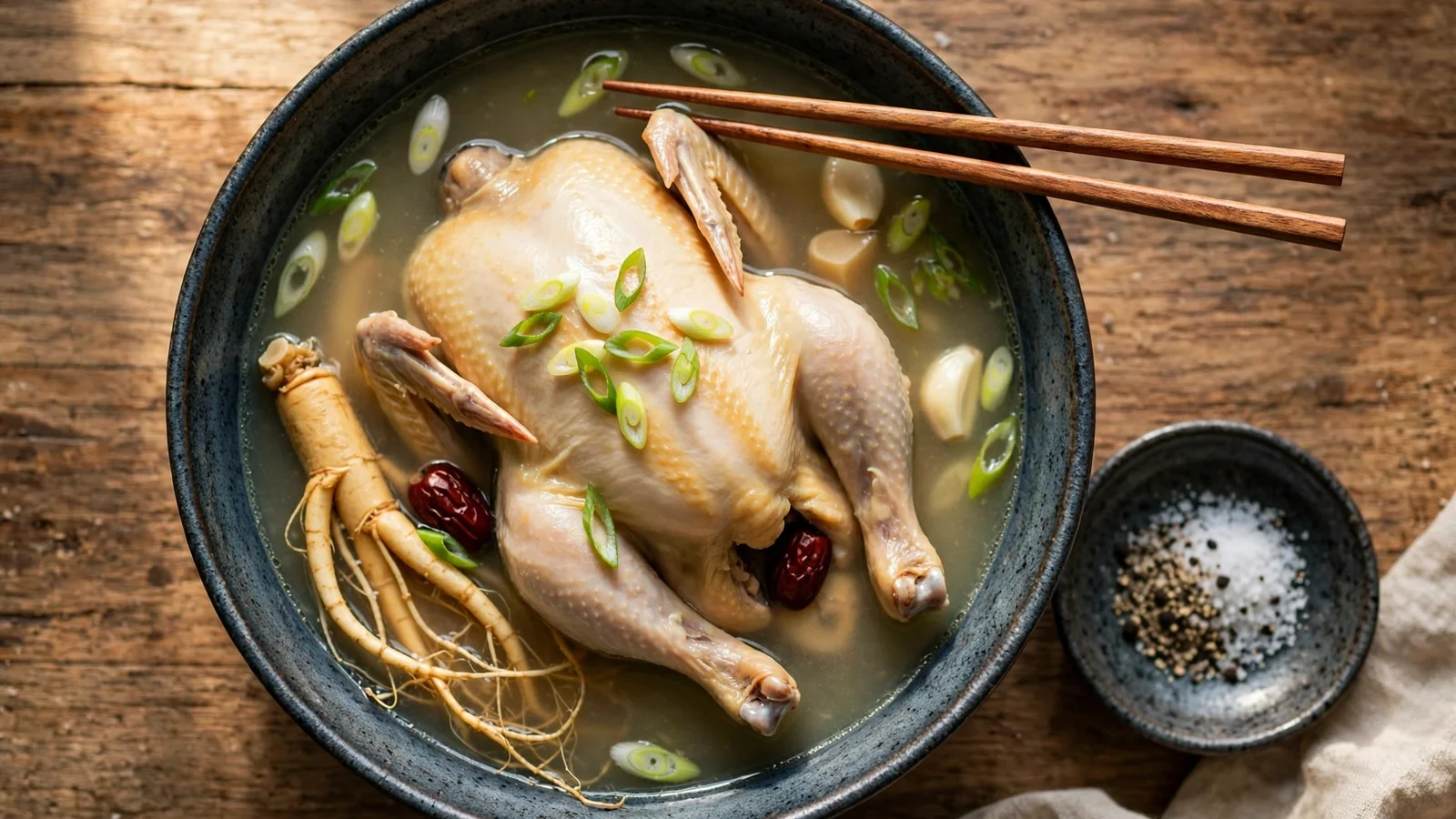
What is samgyetang?
Samgyetang is a Korean soup made from a whole young chicken stuffed with glutinous rice and simmered with ginseng, garlic, and jujubes. The name breaks down simply: sam means ginseng, gye means chicken, and tang means soup. It is a summer dish in Korea, eaten on the hottest days of the year, but home cooks make it year-round, and it works just as well on a cold night.
Expect a mild, clean-tasting soup, not a heavily spiced one. The broth is seasoned lightly or not at all in the pot, and each person salts their own bowl at the table. The chicken should be so tender that it pulls apart with chopsticks, and the rice inside should be soft and thick, almost like porridge. If you know our kimchi jjigae, this is its opposite in temper: where that stew is hot, sour, and loud, samgyetang is quiet, and the ginseng gives the broth a faint earthy, slightly bitter edge that the sweet jujubes round out.
Ingredients
For the chickens:
- 2 Cornish hens or small young chickens, about 1 to 1 1/2 pounds each
- 2/3 cup glutinous rice, rinsed and soaked for 1 hour, then drained
- 2 fresh ginseng roots, scrubbed clean
- 8 garlic cloves, peeled
- 6 dried jujubes
- 4 chestnuts, peeled, or 4 gingko nuts, roasted and peeled
For the broth:
- 8 cups water
- 2 scallions, white parts only, cut into 2-inch pieces
- 1 small piece of ginger, about 1 inch, sliced
To serve:
- Sliced scallions
- Salt and black pepper, mixed, for the table
- Toasted sesame seeds
- Kimchi, on the side
How to make samgyetang
Soak the rice first. Rinse the glutinous rice until the water runs mostly clear, then cover it with cold water and soak for 1 hour. Drain it well. Unrinsed rice starch clouds the broth and turns it gray, so this rinse is worth the minute it takes. While the rice soaks, clean the chickens: rinse them inside and out under cold water, pull out any blood clots caught between the ribs with a spoon, and trim off the wing tips, tail, and extra fat around the cavity.
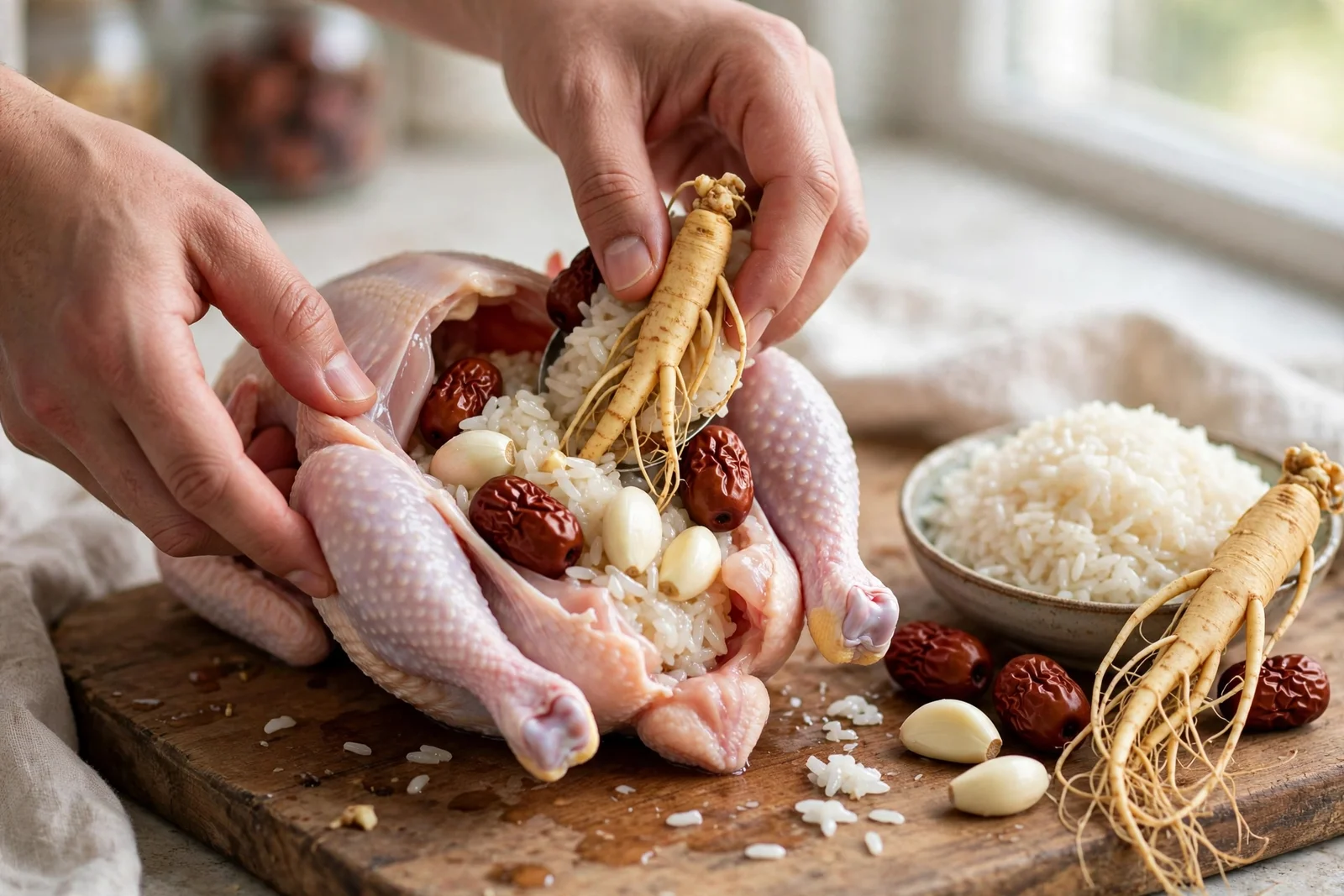
Stuff the chickens. Mix the drained rice with the garlic, jujubes, and chestnuts, then spoon the mix into each cavity, about 1/3 cup of rice per bird. Tuck one ginseng root into each bird on top of the rice. Do not overfill: the rice swells as it cooks, and a packed cavity splits the skin. Close each bird by crossing the drumsticks and tucking each leg end through a small slit cut in the skin on the opposite side, or tie the legs together with kitchen twine. A closed bird keeps the stuffing where it belongs.
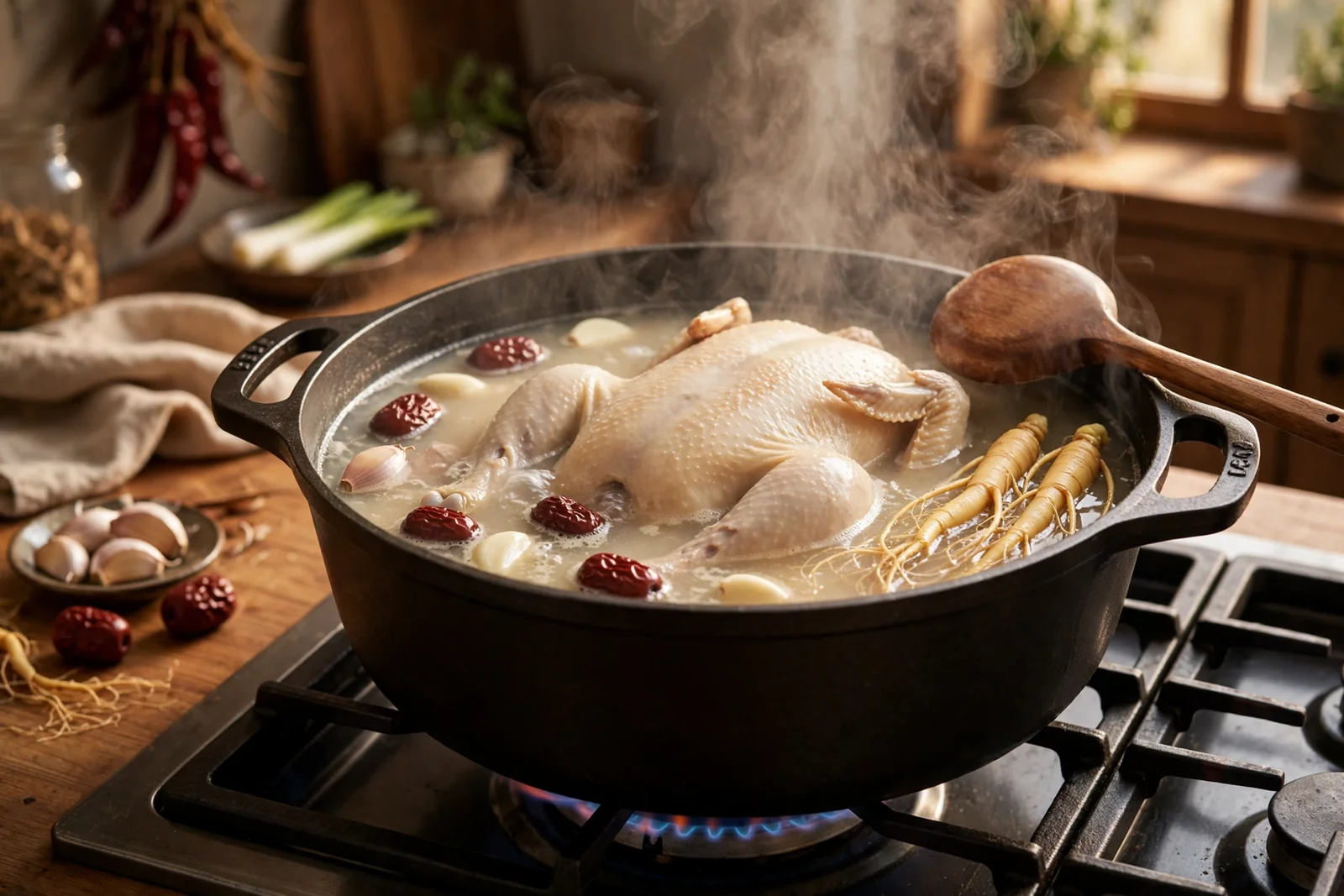
Simmer the soup. Set the stuffed birds in a large heavy pot, add the water, scallion whites, and ginger, and bring the pot to a boil over medium-high heat. Skim off the gray foam that rises in the first minutes, then cover and boil for 20 minutes. Turn the heat down to medium-low and simmer gently for about 40 minutes more, until the chicken is cooked through and the meat pulls easily from the bone. A hard boil the whole way through tears the skin and breaks the meat apart before it reaches the bowl, so keep the simmer gentle after the first 20 minutes.
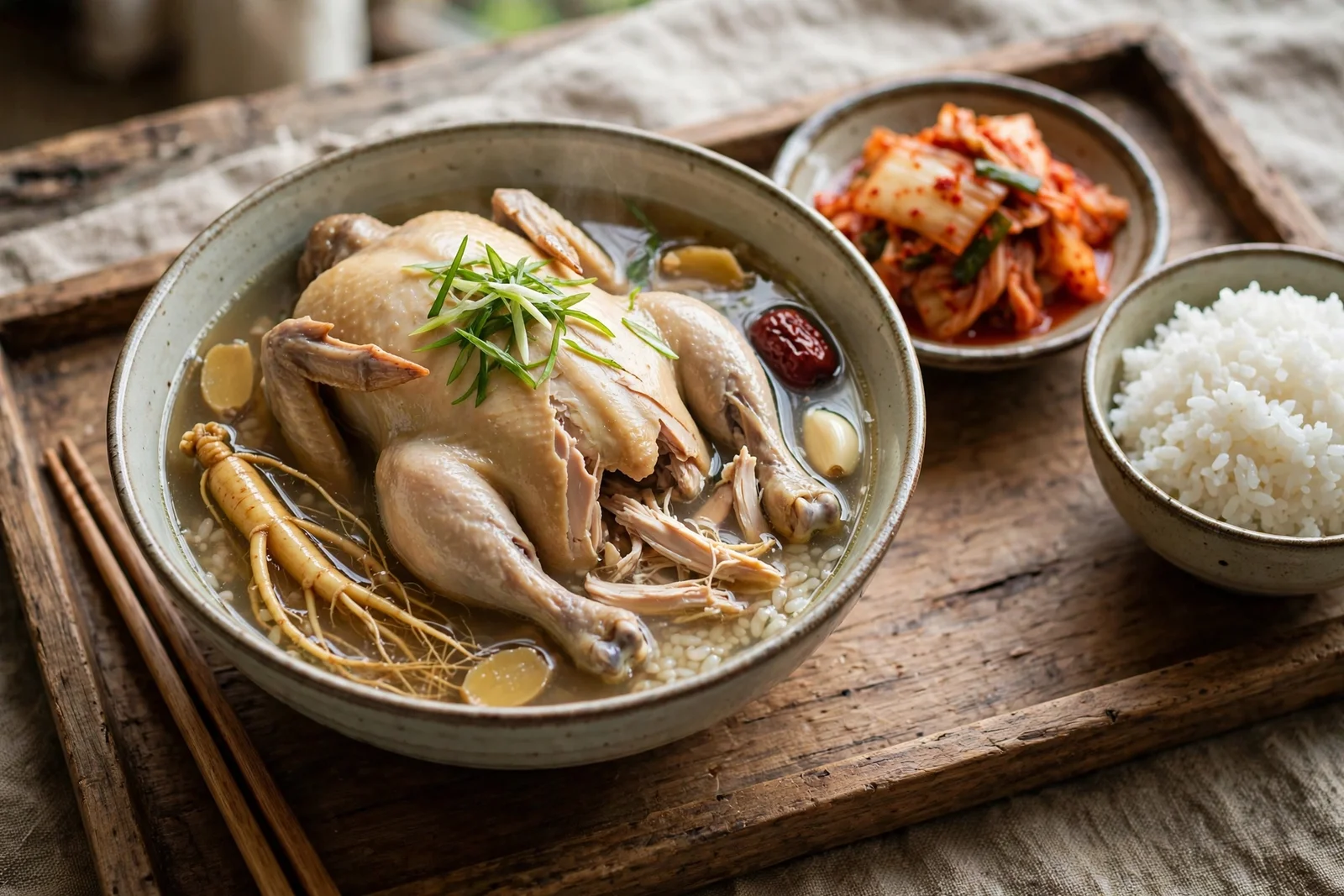
Serve one bird per bowl. Lift each chicken into a deep bowl, ladle the broth over it, and scatter sliced scallions on top. Put the salt and pepper mix and the toasted sesame seeds on the table so each person seasons their own bowl, a pinch at a time, and tastes as they go. Tear the chicken apart with chopsticks in the bowl and spoon up the rice from inside the cavity with the broth. Our japchae makes a good second dish when you want more than soup on the table, but most nights the soup, kimchi, and a bowl of rice are enough.
Tips and variations
If you cannot find fresh ginseng, use dried ginseng, soaked in warm water for 30 minutes first, or a samgyetang herb kit from a Korean grocery store, which bundles ginseng with milk vetch root and other soup herbs. Use one root per bird either way. More than that turns the broth bitter, and no amount of jujube fixes it.
For a larger pot, a 3 to 4 pound chicken works, but it needs a longer cook, about 90 minutes total, and the rice stuffing should go up to 1/2 cup. Check the thigh: the meat should pull from the bone with no resistance. A big bird also needs a bigger pot, since the broth must cover the chicken, or the top dries out while the bottom overcooks.
Leftovers keep in the fridge for 3 days in a sealed container, with the chicken kept in the broth so it does not dry out. Reheat gently over low heat until the soup is hot all the way through, and do not let it boil hard. The rice in the cavity thickens the broth as it sits, so add a splash of water when reheating if it turns too thick.
Troubleshooting: Fix My Samgyetang
If your first pot comes out cloudy, bland, bitter, or with the stuffing spilled into the broth, the cause is usually in the rice prep, the bird size, or the seasoning at the table. The section below covers the most common problems and how to fix each one.
HERB & LIME · KITCHEN HELP
Fix My Samgyetang
Choose what went wrong to see a practical next step.
Possible cause
What to try next
For next time
From Paul's kitchen. Results vary with chicken size, ginseng, and stove heat, adjust timing to your setup.
Quick reference (also works without JavaScript)
The broth turned cloudy and gray
Cause: Unrinsed rice starch and unscummed foam cloud the broth as the chicken cooks.
Try: For the pot you already made, strain the broth through a fine strainer and serve it as is, the flavor is still fine.
Prevent: Rinse the glutinous rice until the water runs mostly clear, soak it for 1 hour, and skim the gray foam off the surface in the first minutes of boiling.
The stuffing spilled into the broth
Cause: The cavity was overfilled or the legs were left loose, so the rice swelled out during the simmer.
Try: Spoon the spilled rice back into the bowls with the broth, it still tastes the same, just less tidy.
Prevent: Fill each bird only about two thirds full, about 1/3 cup of rice per small bird, then cross the drumsticks and tuck each leg through a slit in the opposite skin, or tie the legs with kitchen twine.
The chicken fell apart into shreds
Cause: The bird cooked too long or at too hard a boil, so the meat broke down before serving.
Try: Serve the shredded meat in the broth as a pulled chicken soup, and season each bowl at the table.
Prevent: Use a small young chicken or Cornish hen, boil covered for 20 minutes, then simmer gently for about 40 minutes, and stop once the meat pulls easily from the bone.
The broth tastes bland
Cause: Samgyetang broth is cooked almost unseasoned on purpose, so it tastes flat if no salt is added at the table.
Try: Season your bowl now with the salt and pepper mix, a pinch at a time, tasting after each addition.
Prevent: Put a small dish of salt mixed with black pepper and toasted sesame seeds on the table, and let each person season their own bowl.
The broth tastes bitter from the ginseng
Cause: Too much ginseng, or powdered ginseng, overpowers the broth, since ginseng turns bitter in large amounts.
Try: Add a few more jujubes and a splash of water, simmer 10 minutes more, and balance each bowl with a pinch of salt.
Prevent: Use one whole fresh ginseng root per bird, no more, and keep the jujubes in the pot, since their sweetness rounds out the bitter edge.
Samgyetang: Korean Ginseng Chicken Soup
Ingredients
Method
- Soak the rice: rinse the glutinous rice until the water runs mostly clear, cover with cold water, and soak for 1 hour, then drain well.
- Clean the chickens: rinse them inside and out under cold water, pull out any blood clots caught between the ribs with a spoon, and trim off the wing tips, tail, and extra fat around the cavity.
- Stuff the chickens: mix the drained rice with the garlic, jujubes, and chestnuts, spoon about 1/3 cup of rice mix into each cavity, and tuck one ginseng root into each bird. Cross the drumsticks and tuck each leg end through a small slit in the skin on the opposite side, or tie the legs with kitchen twine.
- Simmer: set the stuffed birds in a large heavy pot, add the water, scallion whites, and ginger, and bring to a boil over medium-high heat. Skim off the gray foam, cover, and boil for 20 minutes, then turn down to medium-low and simmer gently for about 40 minutes more, until the chicken is cooked through and the meat pulls easily from the bone.
- Serve: lift each chicken into a deep bowl, ladle the broth over it, and scatter sliced scallions on top. Serve the salt and pepper mix and toasted sesame seeds at the table so each person seasons their own bowl, and serve kimchi on the side.
Notes
More Korean recipes
Kimchi jjigae, japchae, Korean galbi, and tteokbokki, four Korean plates that share this table, from stew to noodles to grilled meat.
From the garden
The scallions on top of this soup are the reason I keep a pot of them by the kitchen door. Our guide to growing green onions in pots covers starting from store-bought bases, and a fresh-cut handful, sliced thin, tastes sharper than a bunch that has sat in the fridge for a week.