
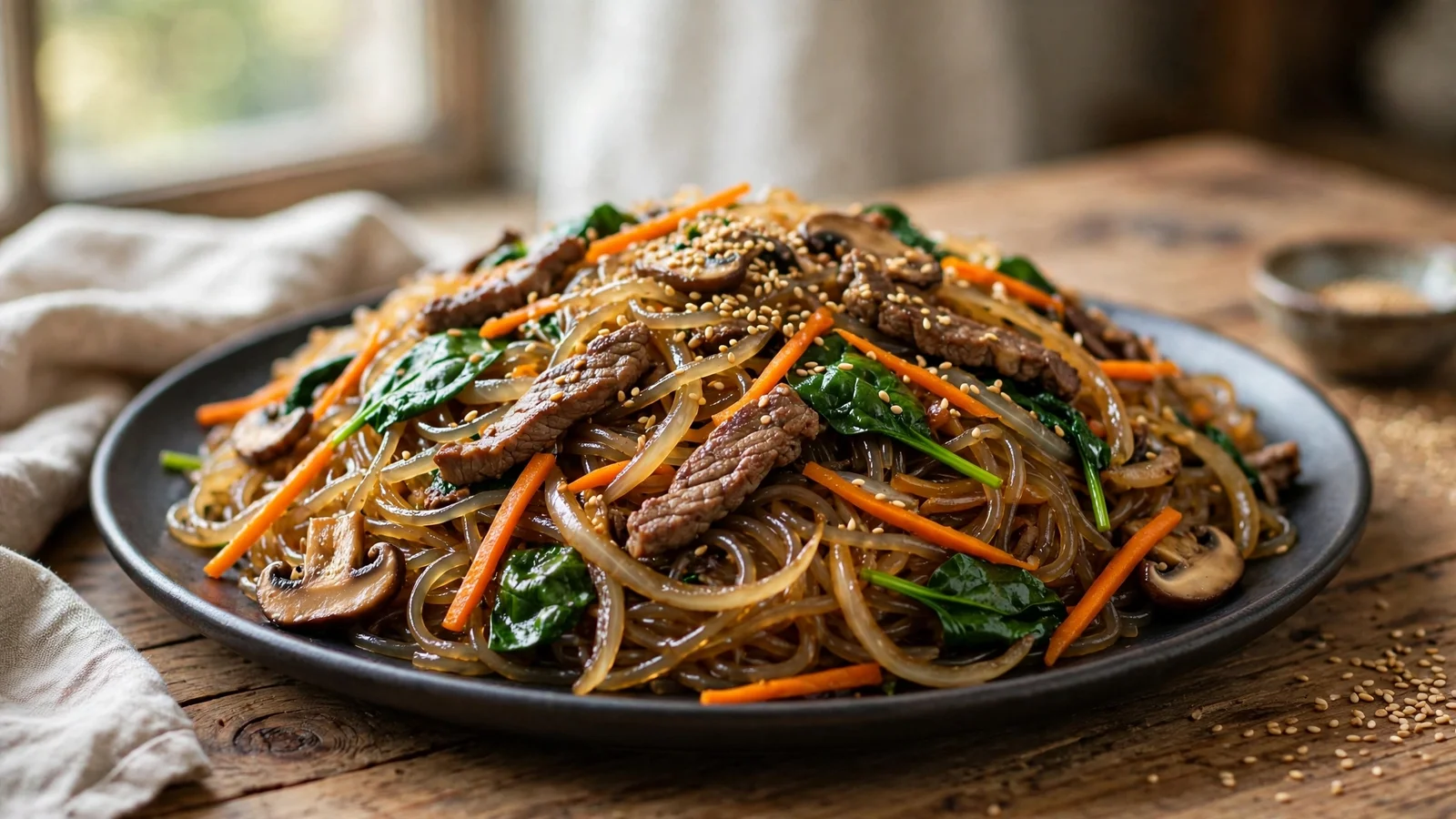
Japchae is a celebration dish that happens to work beautifully on a weeknight, too. Chewy glass noodles made from sweet potato starch get tossed with strips of marinated beef, wilted spinach, sweet carrots, onions, and mushrooms, all glossed in a soy-sesame sauce that leans a little sweet. Every ingredient keeps its own color and texture, so a platter of japchae looks like confetti and tastes balanced in a way few stir-fries manage.
Unlike a lot of noodle dishes, japchae is not saucy. The noodles should shine, not swim. The sauce clings, the vegetables stay crisp-tender, and the beef is cooked separately so it browns instead of steaming. That “cook things in batches, combine at the end” approach is the whole secret, and it is easier than it sounds.
What Makes Glass Noodles Different
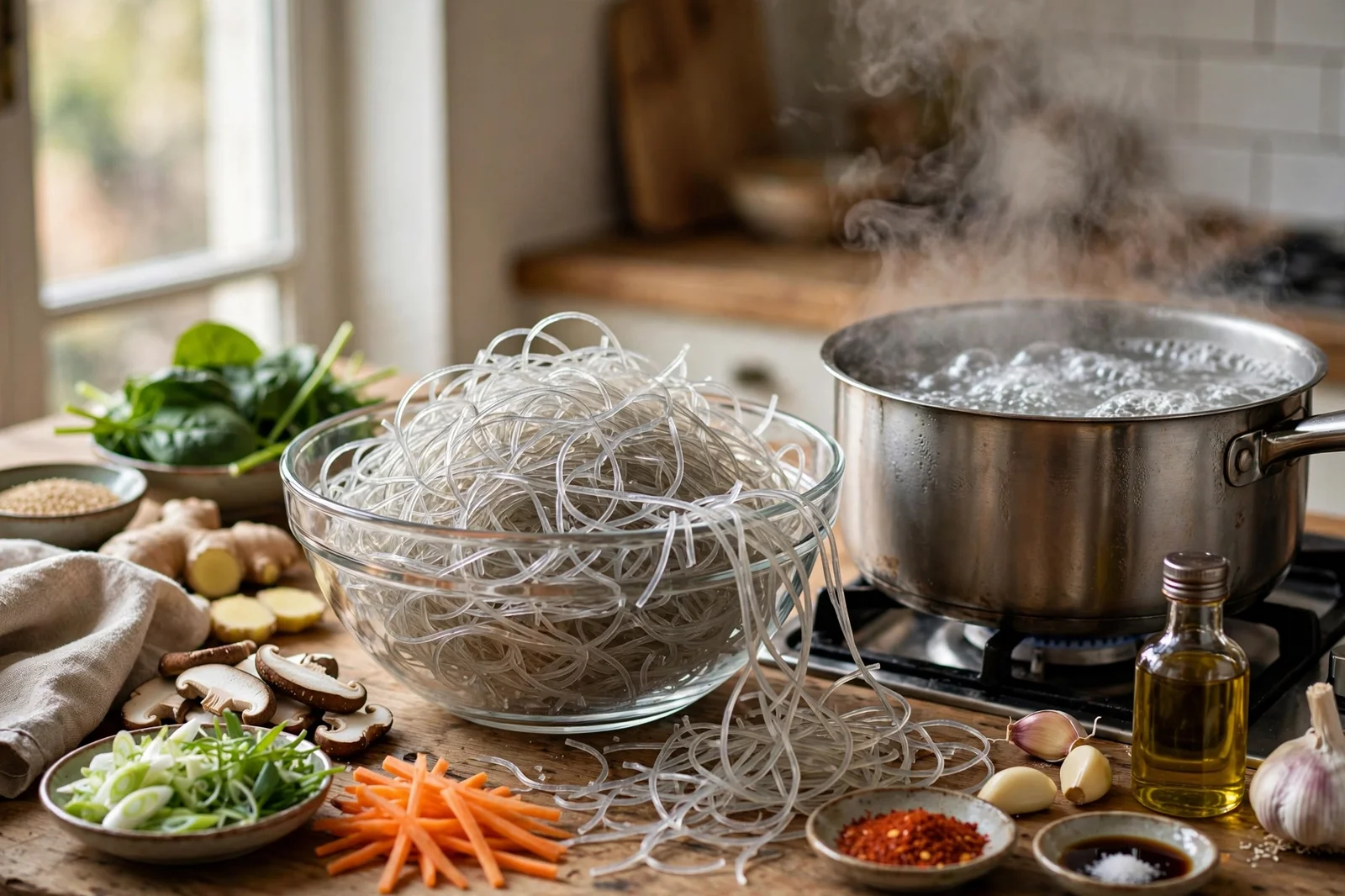
Glass noodles — also called cellophane noodles or dangmyeon in Korean — are made from sweet potato starch and water. Dry, they are grayish and wiry. Cooked, they turn translucent, springy, and wonderfully chewy, with a bounce that wheat noodles and rice noodles do not quite match.
That chew is exactly why japchae holds up so well at room temperature and even cold. The noodles do not go limp the way pasta does, which is why japchae is a fixture at Korean parties and holidays: it can sit out on a table for an hour and still taste like itself. It is also why leftovers keep their texture for days.
A quick buying note: sweet potato glass noodles are usually sold in large bags in the noodle aisle of Korean and pan-Asian markets, sometimes coiled into bundles. Cut the cooked noodles a few times with kitchen scissors before tossing — the strands are long, and shorter lengths are easier to mix and eat.
Japchae: Korean Glass Noodle Stir-Fry
Chewy sweet potato glass noodles tossed with marinated beef, spinach, carrots, mushrooms, and onions in a sweet-savory sesame soy glaze.
Prep time: 25 minutes
Cook time: 20 minutes
Total time: 45 minutes
Servings: 4 to 6
Ingredients
- 8 ounces (225 g) sweet potato glass noodles (dangmyeon)
- 8 ounces (225 g) beef sirloin or ribeye, cut into thin strips
- 4 ounces (115 g) fresh spinach, washed
- 1 medium yellow onion, thinly sliced
- 1 large carrot, cut into thin matchsticks
- 4 ounces (115 g) shiitake or cremini mushrooms, thinly sliced
- 3 scallions, cut into 1-inch pieces
- 3 cloves garlic, minced, divided
- 3 tablespoons neutral oil, divided
- 2 tablespoons toasted sesame oil, divided
- Toasted sesame seeds, for serving
For the beef marinade:
- 1 tablespoon soy sauce
- 1 teaspoon sugar
- 1 teaspoon toasted sesame oil
- 1 clove garlic, minced (from the amount above)
- A few grinds of black pepper
For the noodle sauce:
- 1/4 cup soy sauce
- 2 tablespoons sugar
- 1 tablespoon toasted sesame oil (from the amount above)
- 1/2 teaspoon black pepper
Instructions
- Marinate the beef. Toss the beef strips with the marinade ingredients and set aside for at least 15 minutes while you prep the vegetables. Even a short rest seasons the meat and helps it brown.
- Cook the noodles. Bring a large pot of water to a boil, add the glass noodles, and cook according to the package directions, usually 6 to 8 minutes, until translucent and chewy but not soft. Drain, rinse briefly under cold water to stop the cooking, and drain well. Snip the noodles a few times with kitchen scissors, then toss them with 1 tablespoon of sesame oil so they do not stick together.
- Blanch the spinach. In the same pot of just-boiled water, or a fresh one, blanch the spinach for about 30 seconds, until just wilted. Drain, rinse cold, and squeeze out as much water as you can. Season it lightly with a pinch of salt and a few drops of sesame oil, and set it aside in a large mixing bowl.
- Stir-fry the vegetables in batches. Heat 1 tablespoon of neutral oil in a large skillet or wok over medium-high heat. Cook the onion with a pinch of salt until softened and lightly sweet, about 3 minutes, then add it to the bowl. Cook the carrot matchsticks for 2 minutes, until crisp-tender, and add them to the bowl. Cook the mushrooms until they release their liquid and start to brown at the edges, about 4 minutes, and add them too. Keep the batches quick and the pan hot — vegetables that steam in a crowded pan lose the clean texture japchae is known for.
- Cook the beef. Add a little more oil if the pan is dry, then add the beef in a single layer and let it sear for a minute before stirring. Cook until browned in spots, about 3 to 4 minutes. Add the scallions and the remaining garlic for the last 30 seconds. Add everything to the bowl.
- Warm and season the noodles. Return the noodles to the pan with the noodle sauce — soy sauce, sugar, the sesame oil, and black pepper. Toss over medium heat for 1 to 2 minutes, until the noodles absorb the sauce and turn glossy. Glass noodles drink up sauce quickly, so work fast and do not walk away.
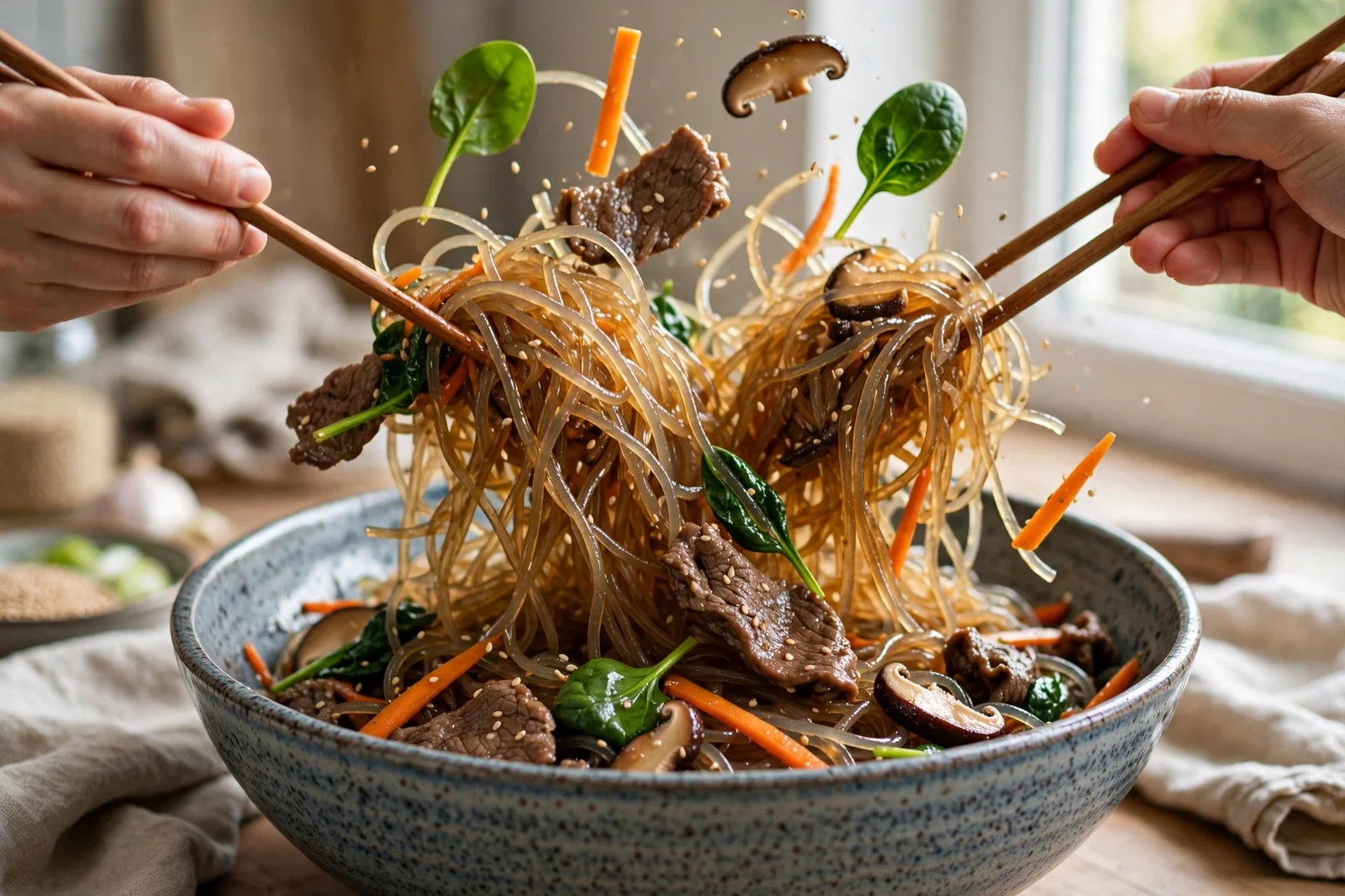
- Combine. Pour the warm noodles over the beef and vegetables in the bowl and toss with your hands or two big spoons. Taste and adjust: a little more soy sauce for salt, a pinch more sugar for sweetness. Shower with sesame seeds and serve warm or at room temperature.
Notes
- Cook the components separately and combine at the end. It takes a few extra minutes, but it is what keeps every vegetable distinct instead of turning the whole pan into a uniform stir-fry.
- Squeeze the spinach properly. Water hiding in spinach leaves dilutes the sauce and makes the noodles slippery in the wrong way.
Why the Order Matters
Japchae is less a single stir-fry than a set of small ones that meet in a bowl. Beef cooked alone browns; beef cooked on top of wet vegetables steams and turns gray. Spinach blanched and squeezed stays bright green instead of bleeding water into the noodles. Mushrooms given their own few minutes can actually caramelize at the edges.
The noodles, meanwhile, never get stir-fried hard. They are already cooked — the brief return to the pan with the sauce is just to warm them and let them absorb seasoning. Treat them gently and they stay bouncy. This is also why japchae is a forgiving dish for entertaining: every component can be made an hour ahead and tossed together right before serving.
If you like this kind of structured, component-by-component cooking, Bo Luc Lac: Vietnamese Shaking Beef rewards the same patience — a hard sear, a simple sauce, and everything served at its peak.
Variations Worth Trying
The classic version above is a starting point, not a rule book:
- Chicken japchae: swap the beef for thinly sliced chicken thigh, marinated the same way. Cook it a minute or two longer than the beef.
- Vegetarian japchae: skip the beef and double the mushrooms, or add strips of firm tofu, pan-fried until golden before the vegetables go in.
- Seafood japchae: use peeled shrimp, added at the very end of the vegetable batch so they stay plump, plus a handful of squid rings if you like.
- Spicy japchae: whisk a tablespoon of gochugaru or a spoonful of gochujang into the noodle sauce. It is not traditional, but it is very good.
- Bell peppers: thin strips of red or yellow bell pepper, stir-fried briefly with the onion, add sweetness and another stripe of color.
For a fresh, crunchy counterpoint to a glossy noodle platter, a quick cucumber side is hard to beat — Oi Muchim: Korean Cucumber Salad shares the same sesame backbone and takes about five minutes.
Serving and Leftovers
Serve japchae warm or at room temperature, heaped on a wide platter with sesame seeds scattered over the top.
Leftovers keep well in an airtight container in the fridge for up to 4 days. The noodles firm up when cold; a short rest at room temperature, or 20 seconds in the microwave, brings back their chew. You can also refresh a cold portion in a skillet with a teaspoon of water and a drop of sesame oil. Japchae does not freeze well — the noodles turn brittle — so plan to enjoy it within the week.
Final Thoughts
Japchae looks like a special-occasion dish, and it is — but the work is mostly chopping and a sequence of quick, simple cooking steps. Keep a bag of sweet potato noodles in the pantry and the dish becomes available whenever you have a carrot, an onion, a handful of spinach, and a little protein to use up. Few recipes turn that list into something this colorful.
Japchae: Korean Glass Noodle Stir-Fry
Ingredients
Method
- Marinate the beef: toss the beef strips with 1 tablespoon soy sauce, 1 teaspoon sugar, 1 teaspoon sesame oil, a clove of minced garlic, and black pepper. Rest at least 15 minutes.
- Boil the glass noodles 6 to 8 minutes until translucent and chewy. Drain, rinse cold, drain well, snip with kitchen scissors, and toss with 1 tablespoon sesame oil.
- Blanch the spinach 30 seconds, drain, rinse cold, squeeze dry, and season with a pinch of salt and a few drops of sesame oil.
- Stir-fry the onion, carrot, and mushrooms in separate batches in a hot skillet with neutral oil until just tender and lightly browned at the edges.
- Sear the beef in a single layer until browned in spots, about 3 to 4 minutes. Add the scallions and remaining garlic for the last 30 seconds.
- Return the noodles to the pan with the soy sauce, sugar, sesame oil, and black pepper. Toss over medium heat 1 to 2 minutes until glossy and the sauce is absorbed.
- Combine the noodles with the beef, vegetables, and spinach. Toss, adjust salt and sweetness, and finish with sesame seeds. Serve warm or at room temperature.
1 thought on “Japchae: Korean Glass Noodle Stir-Fry”