Bibim Naengmyeon: Korean Spicy Cold Buckwheat Noodles

Bibim naengmyeon is chewy buckwheat noodles tossed in a sweet, sour, and spicy gochujang sauce with cucumber, pear, and egg. Ice-cold and ready in 25 minutes.

Bibim naengmyeon is chewy buckwheat noodles tossed in a sweet, sour, and spicy gochujang sauce with cucumber, pear, and egg. Ice-cold and ready in 25 minutes.

Bossam is tender boiled pork belly sliced thin and wrapped in lettuce with kimchi and ssamjang. The simmer time, aromatics, and slicing notes inside the post.

Kongguksu is a cold Korean soybean noodle soup: creamy homemade soy milk, chewy somyeon noodles, cucumber, tomato, and egg, served ice cold, salted to taste.

Galbi jjim braises thick bone-in short ribs in a soy and Asian pear sauce until the meat pulls from the bone, with daikon, carrots, chestnuts, and jujubes.

Kimbap rice is seasoned with sesame oil and salt and rolled around cooked fillings, while sushi rice is vinegared and often topped with raw fish. Compare them.

Crisp Korean pickled radish cubes in a sweet vinegar brine, ready after a day in the fridge. The cool, tangy side dish served with Korean fried chicken.

Blanched soybean sprouts tossed with garlic, sesame oil, and scallions make a nutty Korean side dish in 15 minutes, with a lid-on blanch that keeps them crisp.
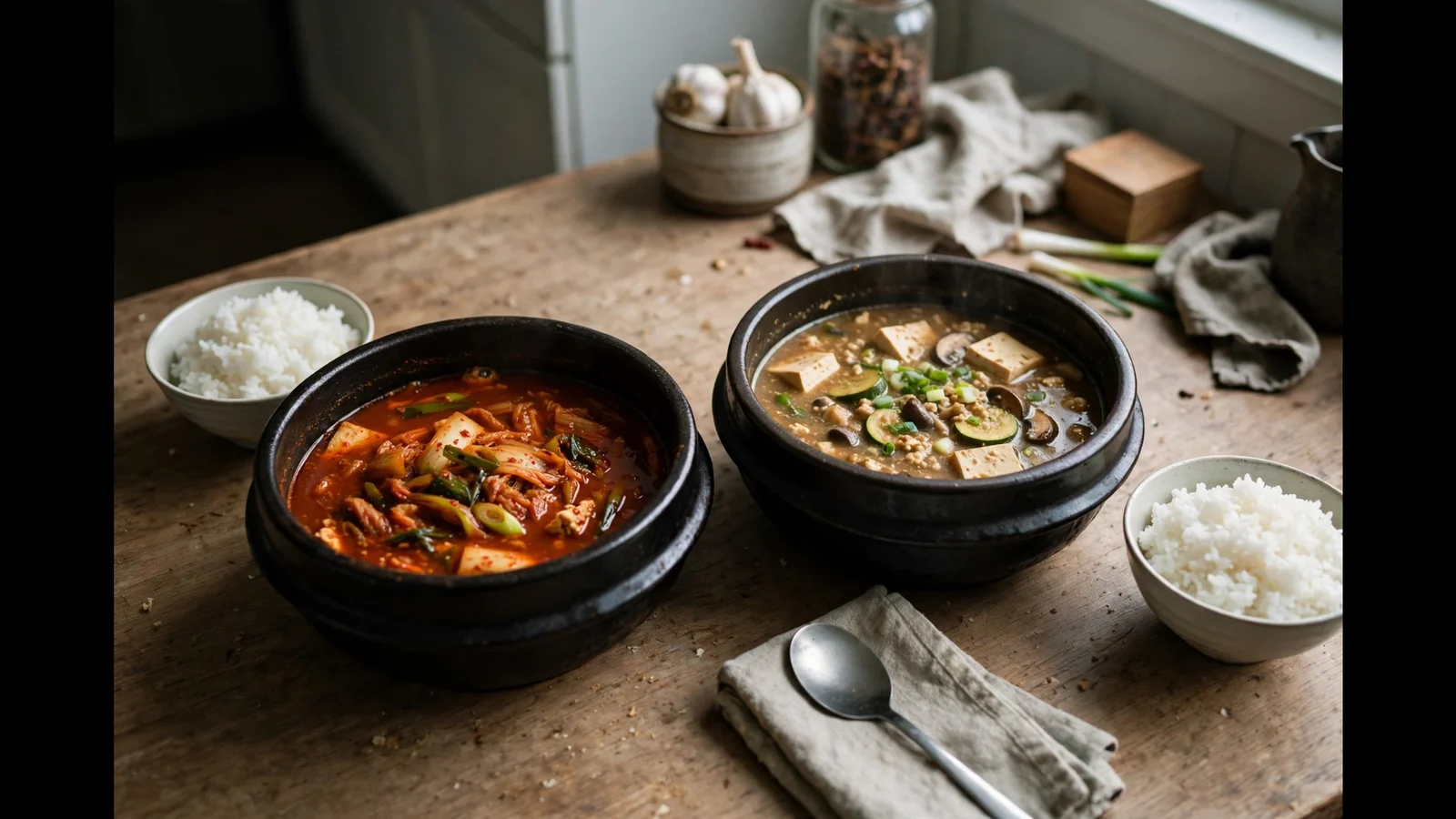
Kimchi jjigae is sour and spicy, built on aged kimchi. Doenjang jjigae is earthy and mild, built on soybean paste. Compare flavor, heat, ingredients and timing.

Jeyuk bokkeum in 35 minutes: thin-sliced pork in a gochujang marinade, seared in a single layer, then tossed with onion and cabbage. Serve it hot over rice.
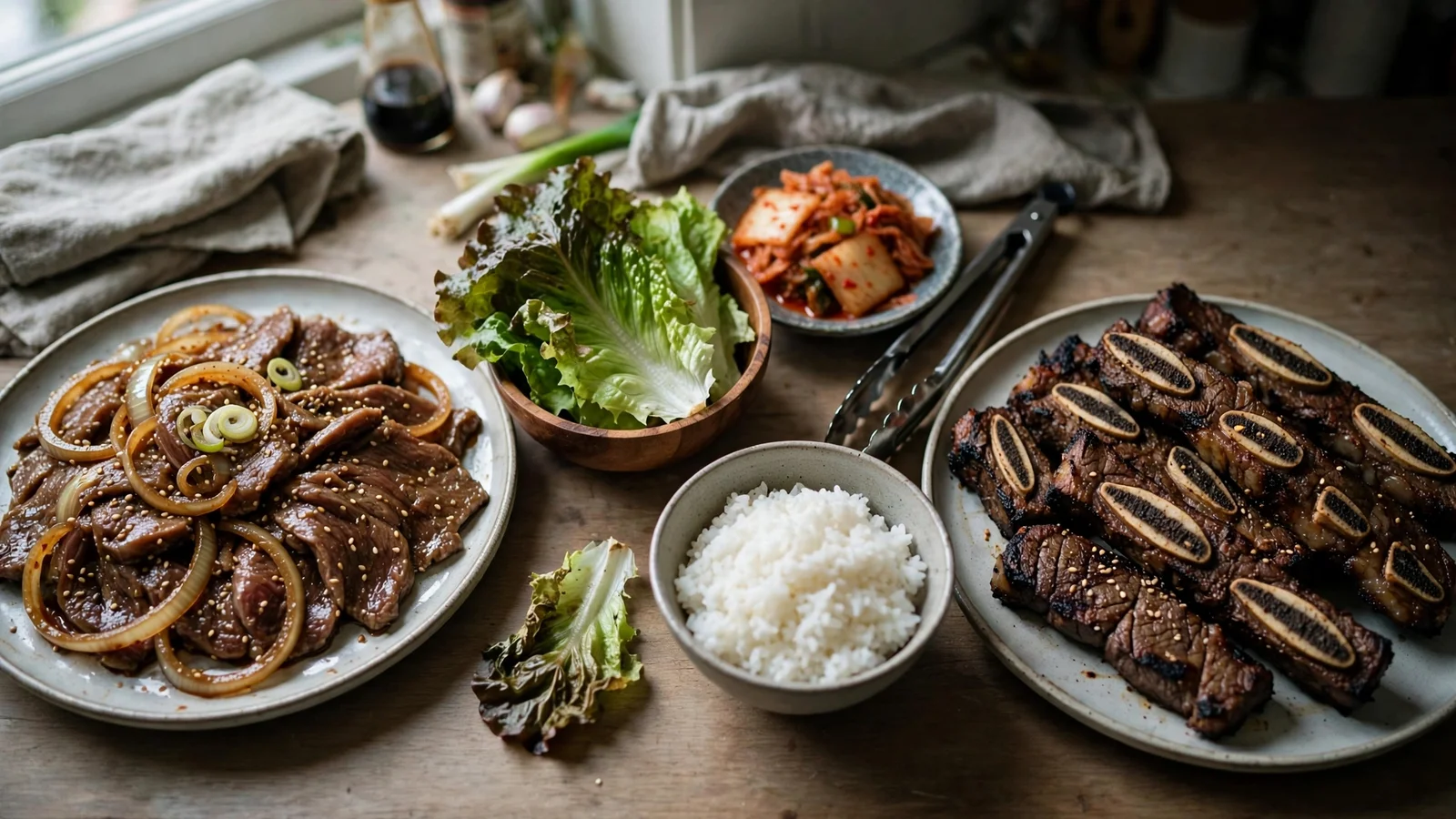
Bulgogi is thin-sliced marinated beef and galbi is bone-in short ribs. Here is how the cut, marinade, and cooking differ, and which one fits your dinner.