
Ayam masak merah is the dish I cook when I want chicken that tastes like a celebration without spending the whole afternoon at the stove. Turmeric-rubbed chicken gets fried until golden, then braised in a sauce built from dried chilies, onion, garlic, ginger, galangal, and lemongrass, with tomato paste and ketchup giving it the deep red color that gives the dish its name. The whole thing takes about 80 minutes, and most of that is hands-off simmering while the sauce thickens around the chicken.
What is ayam masak merah?
The name translates plainly: ayam means chicken, masak means cooked, and merah means red. It is a Malay dish from Malaysia and Singapore, and it shows up at weddings and festive meals, usually next to rice. The chicken is fried first, then finished in the sauce, so the pieces stay intact and pick up color twice, once from turmeric in the pan and once from the chili tomato sauce.
Expect a sauce that coats a spoon rather than pooling thin on the plate, with heat that warms rather than burns. Dried chilies give the color and a steady warmth, tomato paste gives body, and a spoon of ketchup plus a little sugar rounds the sour edge of the tomato. Cinnamon and star anise sit in the background, and you notice them most in the smell while the pot simmers. If you have made my mee rebus, you know the same Malaysian habit of building a sauce from a blended paste first and letting the garnish go in last.
Fry the chicken first, but do not cook it through
Rub 2 pounds of bone-in, skin-on chicken thighs and drumsticks with 1 teaspoon ground turmeric and 1 teaspoon salt, then leave the pieces for 20 minutes while 8 dried red chilies soak in hot water. The turmeric stains the skin gold and seasons it, and the short rest lets the salt start working before the chicken hits the oil.

Heat about 1/2 cup neutral oil in a wide pan over medium-high heat and fry the chicken skin-side down for 3 to 4 minutes per side, in batches so the pan stays uncrowded. You want golden skin and a little color on the meat, nothing more. The chicken finishes cooking in the sauce, and pieces fried all the way through here turn dry by the time the sauce is done. Set the fried pieces on a plate and pour off all but 3 tablespoons of the oil. My roti canai uses the same idea of working in batches so the pan heat stays high, and it matters just as much here.
Fry the paste until the oil separates
Blend the drained chilies with 1 large chopped red onion, 4 cloves garlic, 1 inch ginger, 1 inch galangal, and the white parts of 2 lemongrass stalks, adding 2 tablespoons water only if the blender needs help. The paste should look smooth and thick, not watery. If it turns out thin, the sauce takes longer to thicken later, so add water a spoon at a time.
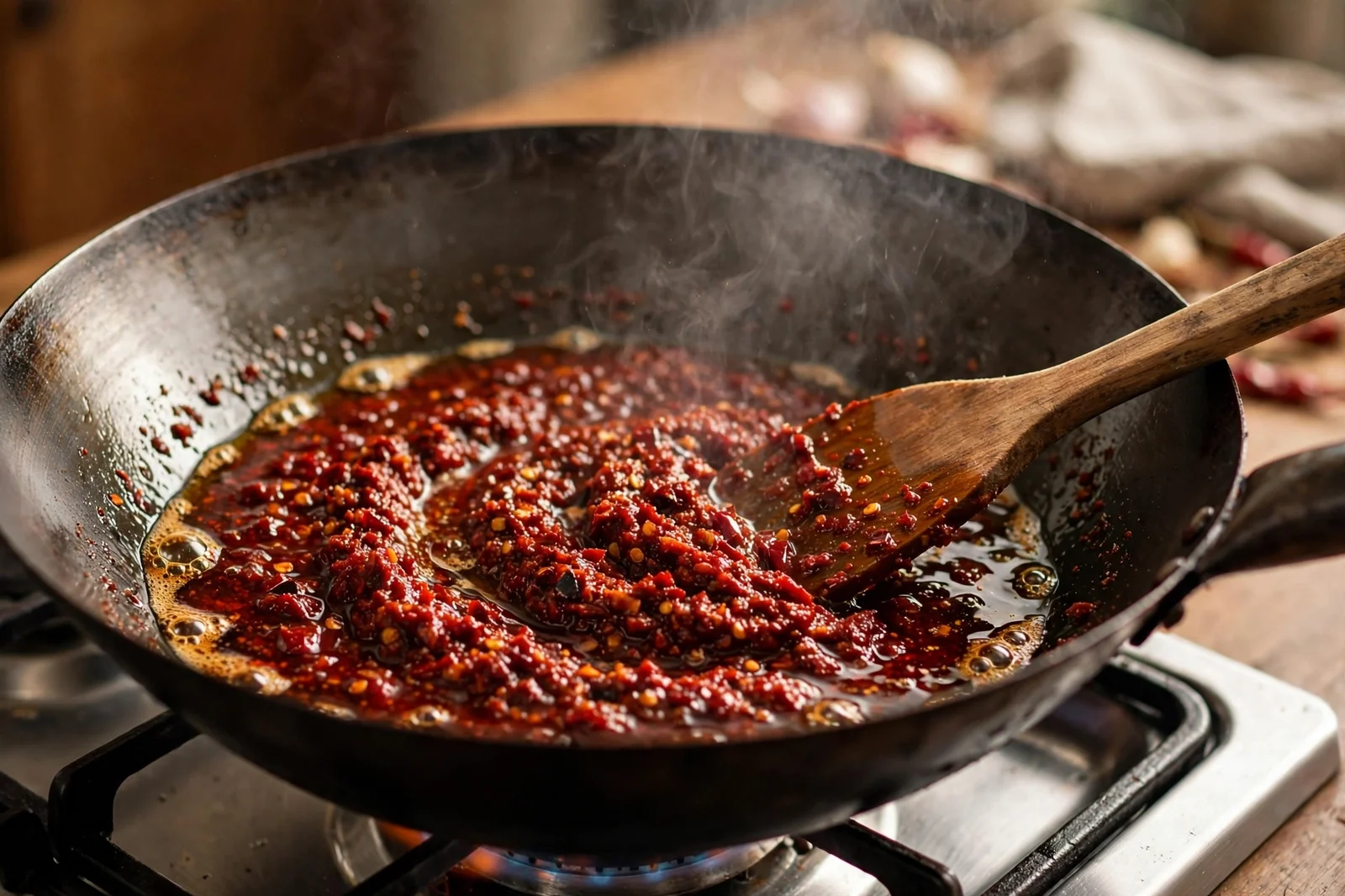
Warm the reserved 3 tablespoons oil over medium heat and fry the paste with 1 cinnamon stick and 1 star anise, stirring often, for 8 to 10 minutes. Watch for two changes: the paste turns a darker red, and oil starts to show at the edges of the pan. That separation is the sign the raw edge has cooked out. A paste pulled off the heat at 3 minutes still tastes sharp and uncooked, and no amount of simmering after fixes it fully. Stir in 3 tablespoons tomato paste and cook 1 minute more, then add 2 tablespoons ketchup, 1 tablespoon sugar, 1 teaspoon salt, and 1 cup water.
Braise covered, then finish uncovered
Return the chicken to the pan and turn each piece so it sits in the sauce. Cover and simmer on low for 25 minutes, turning the pieces once halfway through. The sauce should bubble gently, not boil hard. A hard boil tightens the meat and throws oil out of the sauce, so turn the heat down if the lid starts rattling.
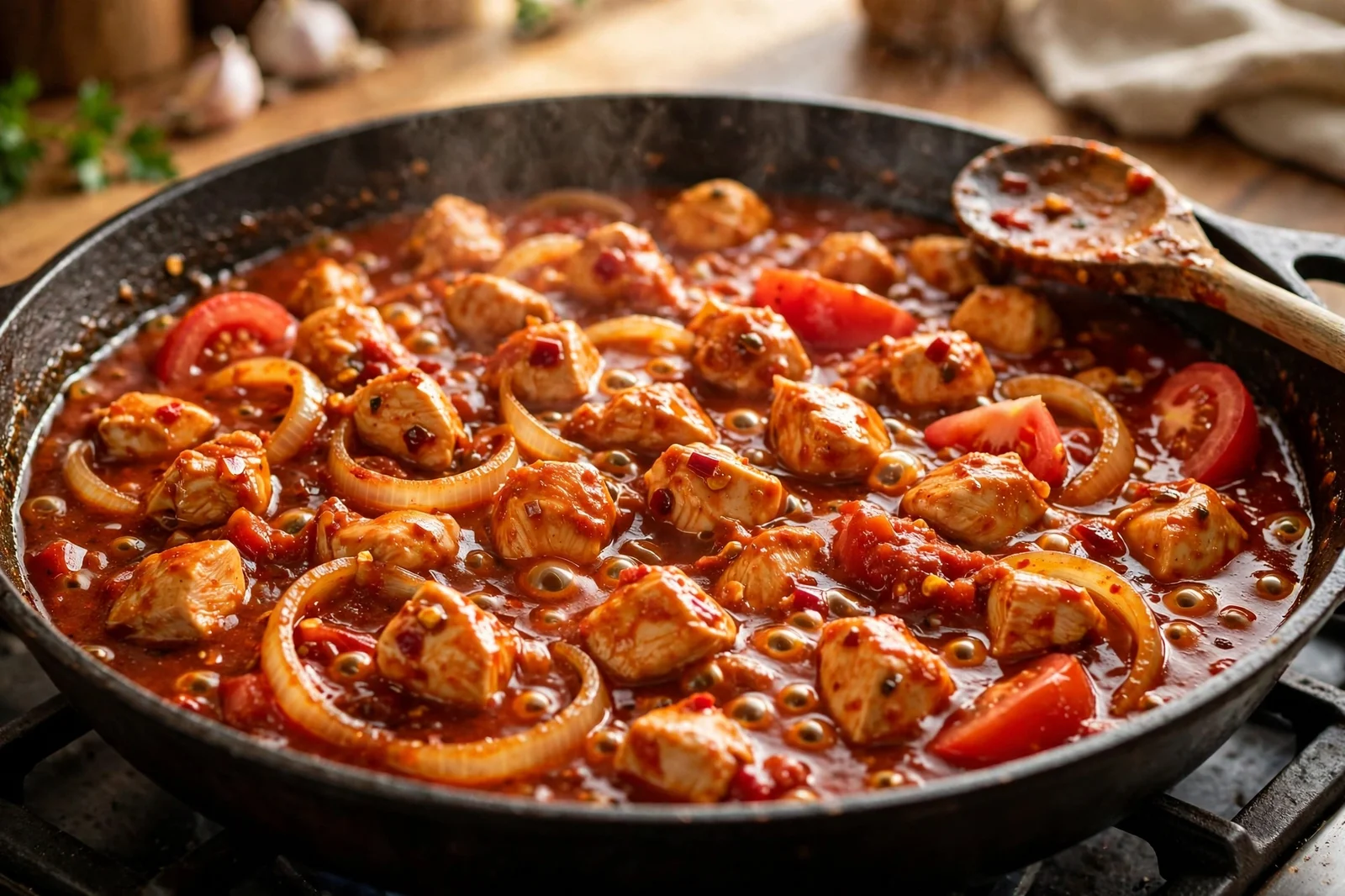
Uncover, add 1 sliced onion in rings and 2 tomatoes cut into wedges, and simmer 5 to 8 minutes more with the lid off. The sauce thickens until it coats the back of a spoon, the onion rings soften while keeping their shape, and the tomatoes soften without falling apart. Taste and add salt a pinch at a time. Rest the pan for 5 minutes before serving so the sauce settles on the chicken instead of sliding off. Serve with plain steamed rice. My jasmine rice guide covers the rinse and rest that keep the grains separate under a saucy main like this one.
Troubleshooting: Fix My Ayam Masak Merah
If a batch comes out wrong, the cause is usually one of five things: a thin sauce, a raw spice taste, dry chicken, skin that goes soft, or a sauce that lands too sweet or too sharp. Work through them one at a time and the next batch lands closer.
HERB & LIME · KITCHEN HELP
Fix My Ayam Masak Merah
Choose what went wrong to see a practical next step.
Possible cause
What to try next
For next time
From Paul's kitchen. Results vary with chicken size, oil, and stove heat, adjust timing to your setup.
Quick reference (also works without JavaScript)
The sauce stays thin
Cause: The spice paste went into the pot with too much water, or it was not fried long enough for the oil to separate.
Try: Simmer the sauce uncovered for a few more minutes, stirring often, until it coats the back of a spoon.
Prevent: Blend the paste thick, adding water a spoon at a time, and fry it until oil shows at the edges of the pan before adding the tomato paste and water.
The sauce tastes raw and sharp
Cause: The blended chili paste was only briefly fried, so the raw onion, garlic, and chili flavors never cooked out.
Try: Keep frying the paste on medium heat, stirring, until it turns darker red and smells fragrant, then rebuild the sauce from there.
Prevent: Fry the paste a full 8 to 10 minutes, stirring often, and look for the color change and oil separation before moving on.
The chicken turns dry
Cause: The chicken was fried until cooked through before the braise, so the extra 25 minutes in the sauce overcooked it.
Try: For the batch in front of you, serve the driest pieces with extra sauce and rice, and shorten the braise next time.
Prevent: Fry the chicken only until golden, 3 to 4 minutes per side, and let the covered simmer finish the cooking.
The crispy skin goes soft
Cause: Fried chicken softens once it simmers in sauce, so a long covered braise always trades crisp skin for saucy meat.
Try: Lift the pieces out, spoon the thickened sauce over them at serving, and keep any leftover crisp pieces out of the pot.
Prevent: If crisp skin matters to you, fry the chicken close to serving time and simmer it in the sauce only long enough to heat through and coat.
The sauce is too sweet or too sharp
Cause: The balance between tomato paste, ketchup, and sugar is off, since ketchup and sugar push sweet while tomato paste pushes sharp.
Try: If it is too sweet, add a pinch of salt and a splash of water. If it is too sharp, add a pinch of sugar and simmer 2 minutes more, tasting as you go.
Prevent: Measure the sauce base instead of pouring freely, starting from 3 tablespoons tomato paste to 2 tablespoons ketchup for 2 pounds of chicken.

Ayam Masak Merah: Malaysian Red Chicken Curry
Ingredients
Method
- Rub the chicken with the turmeric and salt and leave for 20 minutes. Meanwhile, soak the dried chilies in hot water for 15 minutes, then drain.
- Heat the 1/2 cup oil in a wide pan over medium-high heat. Fry the chicken skin-side down for 3 to 4 minutes per side, in batches, until golden but not cooked through. Set aside and pour off all but 3 tablespoons of the oil.
- Blend the drained chilies, chopped onion, garlic, ginger, galangal, and lemongrass into a smooth thick paste, adding the 2 tablespoons water only if the blender needs help.
- Warm the reserved 3 tablespoons oil over medium heat. Fry the paste with the cinnamon stick and star anise, stirring often, for 8 to 10 minutes, until it turns darker red and oil separates at the edges of the pan.
- Stir in the tomato paste and cook 1 minute, then add the ketchup, sugar, salt, and 1 cup water. Return the chicken to the pan, turning each piece to coat. Cover and simmer on low for 25 minutes, turning once halfway through.
- Uncover, add the onion rings and tomato wedges, and simmer 5 to 8 minutes more until the sauce coats a spoon and the tomatoes soften but hold their shape. Rest 5 minutes, scatter cilantro over the top, and serve with rice.
Notes
More Malaysian recipes
- Mee Rebus: Malaysian Noodles in Sweet Potato Gravy
- Roti Canai: Malaysian Flaky Flatbread
- Bak Kut Teh: Malaysian Pork Rib Soup
- Malaysian Curry Puffs: Flaky Karipap
From the garden
The lemongrass in this paste needs only the white lower part of the stalk, and one stalk from a pot of lemongrass gives enough for the whole recipe. A stalk cut at the base sends up new shoots within weeks, so a single pot keeps a small kitchen supplied through the warm months.
1 thought on “Ayam Masak Merah: Malaysian Red Chicken Curry”