
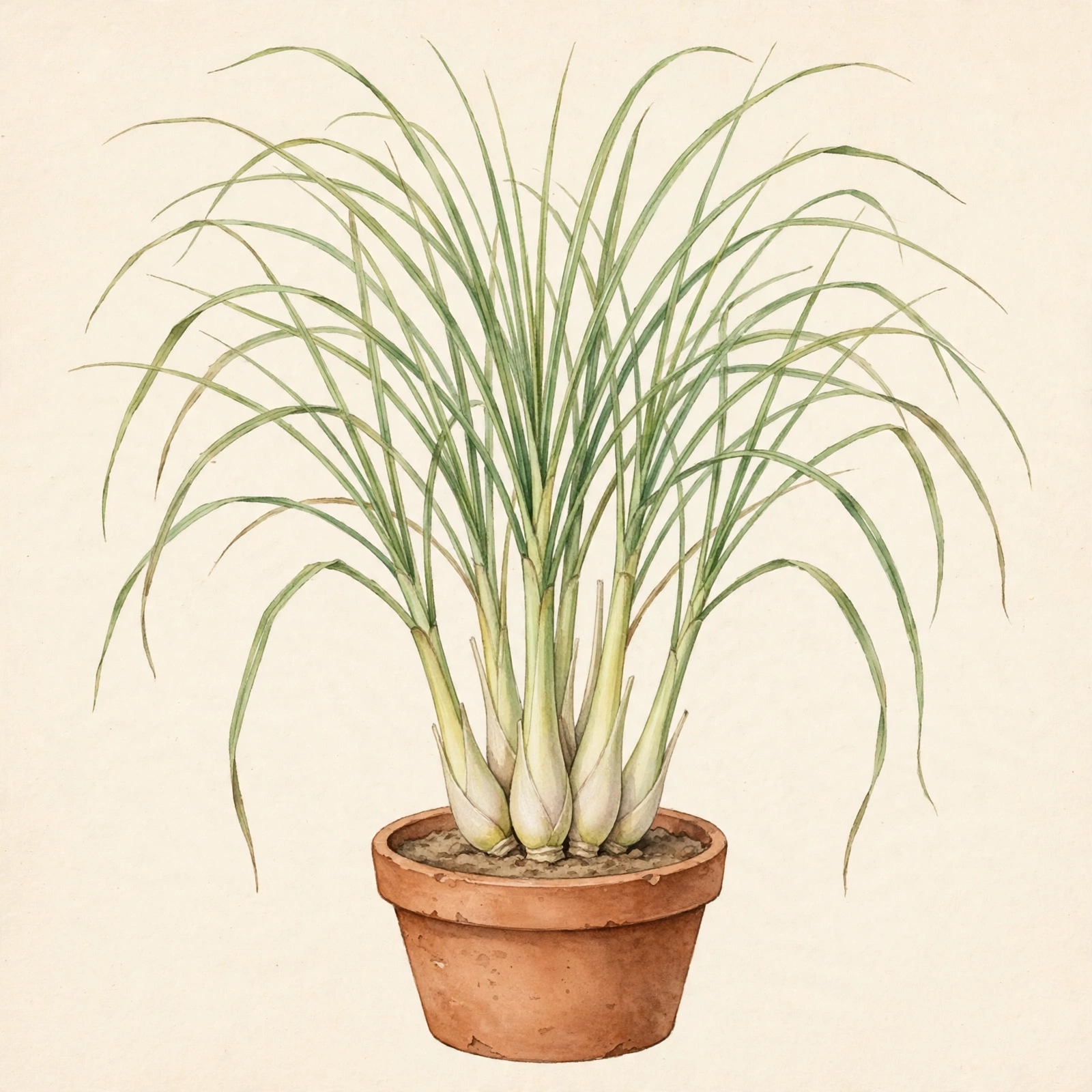
Lemongrass is one of those ingredients that goes from grocery-store afterthought to something you’ll wonder why you ever bought dried. Fresh stalks have a bright lemony perfume that powder and paste can’t touch — and the plant itself is almost absurdly low-maintenance once it has heat and water. It’s a tender perennial grass (Cymbopogon citratus) that most of the U.S. grows as an annual or overwinters indoors, according to Utah State University Extension’s peer-reviewed lemongrass fact sheet.
A note on how this guide was written: we haven’t grown lemongrass in our own garden yet, so nothing here is a personal growing diary. Everything below comes from university extension research, cited at the bottom. Where sources are regional (Utah), we’ve noted it and stuck to advice that applies generally.
The pot matters more than you’d think
Lemongrass wants to become a 3-to-6-foot clump. Utah State recommends spacing divisions 3 feet apart in the ground, which tells you a lot about how much root room it likes. For a container, go generous: at least a 5-gallon pot (12 inches wide and deep, minimum) for one plant, with drainage holes. Utah State specifically warns against waterlogged soil — lemongrass likes moisture but not soggy roots, so a quality potting mix plus a pot that actually drains is the starting point.
In warm zones (USDA 9–11), a big pot can live outside year-round. Everywhere else, the pot is what makes the whole thing work, because you’ll be carrying it indoors for winter.
Three ways to start a plant
From grocery-store stalks. This is the trick that makes lemongrass famous among frugal gardeners, and Utah State confirms it works: fresh stalks — the kind sold at Asian grocery stores, with leaves and roots trimmed off — will root in a glass of water in about two weeks. Pick the firmest, freshest stalks you can find. Once roots appear, pot them up.
From a nursery plant. Nurseries and garden centers sell small starter lemongrass plants, and Utah State lists this as the standard approach. This is the fastest route to a real harvest.
By dividing a clump. If you (or a gardening friend) already have a plant, divide last year’s clump. Lemongrass is rarely grown from seed — divisions and nursery plants are how it’s done.
Plant out after the danger of frost has passed. Utah State notes lemongrass grows slowly until summer heat arrives, then “increases in size dramatically” — so don’t panic if your spring plant looks unimpressive in May.
Light, water, and feeding
Full sun is non-negotiable: the more heat and light, the better. In Utah’s dry climate, Utah State recommends misting and regular watering — and for containers specifically, water regularly so pots don’t dry out. In practice, that means checking container lemongrass daily in summer heat. Dry roots are the fastest way to stall a plant.
Feeding is where containers differ from the ground. Utah State’s recommendation for outdoor potted lemongrass is a half-strength solution of a balanced, water-soluble fertilizer every week to 10 days during the growing season (roughly June through September). Plants in the ground get fed monthly; indoor overwintering plants get fed monthly at most. Lemongrass is a grass, and like most grasses it’s a nitrogen hog in summer — don’t be shy, but don’t double the dose either. Half-strength, often, beats full-strength, occasionally.
Overwintering: don’t let the first frost take it
Lemongrass is damaged by frost. Before the first fall frost, bring potted plants indoors to a warm, bright, sunny spot. Utah State adds a useful backup plan: save a 6-inch section of the bulbous shoot base (with roots attached) before the frost, and pot it for the following year. Plants grown indoors through winter won’t produce many stalks because of low light — that’s expected, not a failure. They bounce back quickly when they go back outside in spring.
Harvesting
Utah State says harvest once stalks reach about ½ inch thick. To harvest, push an outer stem to the side, twist, and pull it off, or cut at ground level with a knife. Peel away the outer woody layers and trim off the leaves — the tender inner core is what you cook with.
A few practical notes from the fact sheet:
- Harvest older, outer stalks first — it encourages new growth from the center.
- The leaves aren’t waste: dry them in the sun or oven and use them like bay leaves in soups and teas.
- Fresh stalks freeze well for up to 6 months, so a fall harvest can carry your cooking through winter.
Pest-wise, there’s good news: Utah State describes lemongrass as “generally free of pests and diseases when grown correctly.” Indoors, watch for spider mites — the tiny yellow speckling on leaves is the giveaway — and knock them off with a strong spray of water.
In the kitchen
Fresh lemongrass is the backbone of so many of the dishes we love. Our Vietnamese Lemongrass Chicken and Lemongrass Tofu with Fresh Herbs are both built around it. In the meantime: slice the tender core thinly for stir-fries and marinades, bruise whole stalks with the back of a knife and simmer them in soups and curries, then fish them out before serving.
Sources
- Utah State University Extension, “Lemongrass in the Garden” — container culture, propagation, fertilizing, overwintering, harvest. https://extension.usu.edu/yardandgarden/research/lemongrass-in-the-garden
1 thought on “How to Grow Lemongrass in Pots”