
Tempeh kecap is the weeknight plate I reach for when I want something salty, sweet, and crisp without a long ingredient list. Cubes of tempeh go into a hot pan until their edges turn gold, then they get tossed with shallots, garlic, and chili in kecap manis, the thick sweet soy sauce that gives this dish its dark coat and its name. It takes 35 minutes from slicing to serving, and it sits well on plain rice, which soaks up the sauce left in the pan.

What is tempeh kecap?
Tempeh is a firm cake of fermented whole soybeans from Indonesia. You can see the beans in each slice, and the cake holds its shape in the pan in a way soft tofu does not. Kecap manis is Indonesian sweet soy sauce, thicker and sweeter than regular soy sauce, with a molasses-like taste. In this dish, the two meet in a simple way: fried tempeh, softened shallots, and a sauce that clings instead of pooling.
Expect a salty-sweet coat first, then warmth from the chili and a nutty bite from the tempeh itself. The sauce should look dark and glossy on each cube, not watery. If you have cooked with kecap manis before, in Indonesian nasi goreng for example, the flavor here will feel familiar, only the tempeh carries it instead of rice. My soy sauce guide explains how kecap manis differs from light soy, dark soy, and tamari, and why it cannot be swapped one for one with regular soy sauce.
Cut the tempeh small and steam it first
Cut two 8-ounce blocks of tempeh into 3/4-inch cubes. Small cubes fry faster, pick up more sauce, and stay crisp at the edges. A thick slab stays soft in the middle and soaks up sauce unevenly, so keep the cut close to 3/4 inch on each side.
Steam the cubes for 10 minutes in a steamer basket over boiling water, then pat them dry with a clean towel. Steaming takes the edge off the bitter note that raw tempeh can carry, and it opens the texture so the sauce sticks better later. This is the step most often skipped, and it is the one that changes the result most. Wet cubes will not brown, so do not skip the drying.

Fry in a single layer
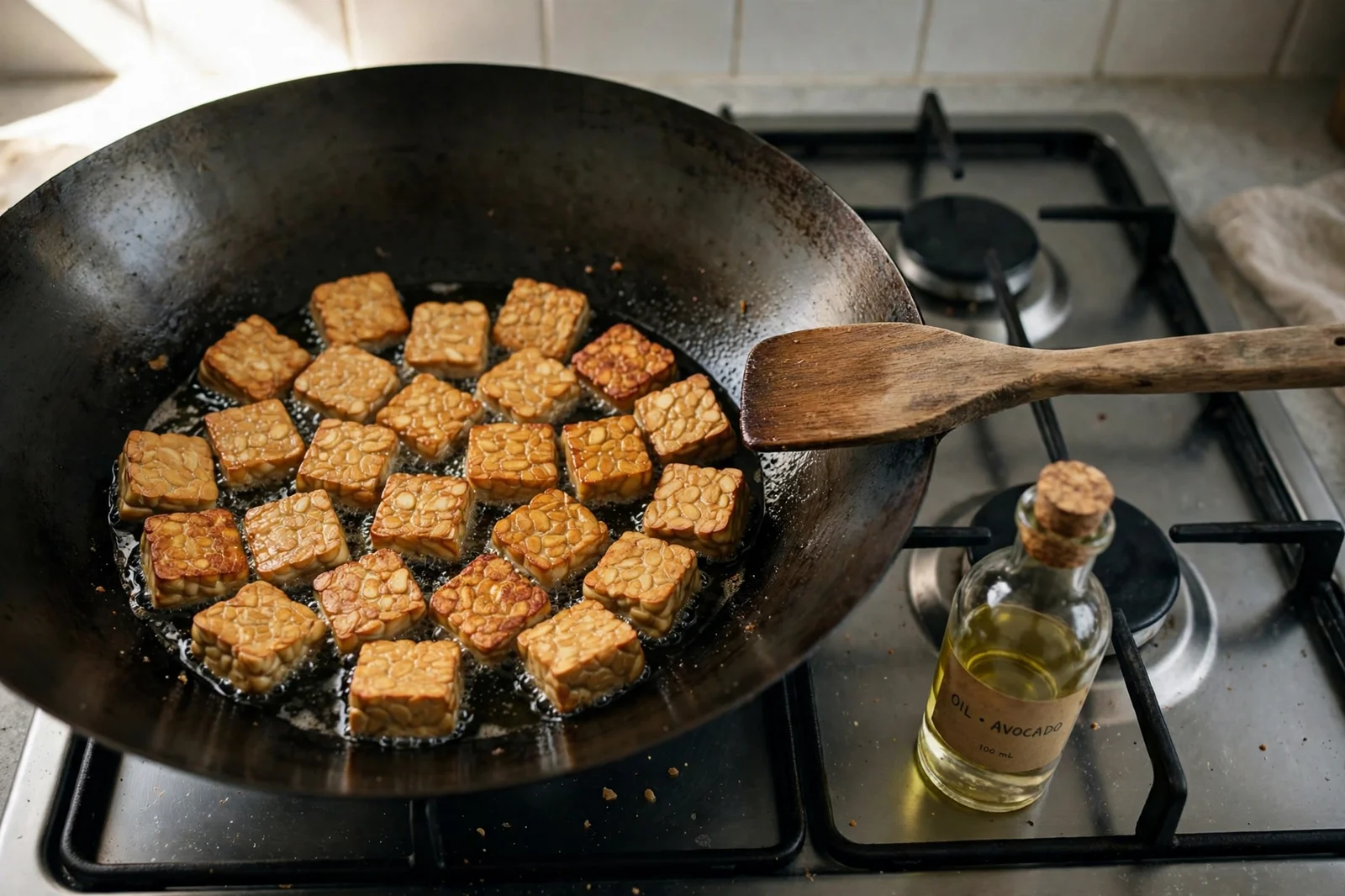
Heat 3 tablespoons of neutral oil in a large wok or heavy skillet over medium-high heat. When the oil shimmers, add the tempeh in a single layer and leave it alone for 3 to 4 minutes until the underside turns gold. Turn the cubes and fry 4 to 5 minutes more until most sides have color. If the pan holds less than 12 inches across, fry in two batches. A crowded pan drops the heat, and the cubes steam instead of browning.
Move the fried tempeh to a plate. Keep the heat at medium-high, not full blast, for the next step. The sauce has sugar in it, and sugar burns fast on high heat.
Make the sauce and toss on low heat
Mix 4 tablespoons kecap manis, 1 tablespoon soy sauce, 2 tablespoons water, and 1 teaspoon lime juice in a small bowl before the aromatics go in. That ratio, 4 parts kecap manis to 1 part soy sauce, gives a coat that tastes sweet first and salty second, with the lime juice cutting the sweetness just enough. Taste the mix and add a little more lime juice if your brand of kecap manis runs very sweet.
Add 3 thinly sliced shallots to the same pan with a little more oil if the pan looks dry, and cook for 2 minutes until they soften. Add 3 thinly sliced garlic cloves and 1 sliced red chili and cook for 30 seconds until they smell fragrant. Do not let the garlic go past light gold. Return the tempeh to the pan, pour in the sauce, and turn the heat to low. Toss for 2 minutes until each cube is coated and the sauce has thickened to a glaze. Take the pan off the heat at once. Left on the heat, the sugar in the sauce will darken and turn bitter.

Tips and variations
Serve over jasmine rice and spoon any sauce left in the pan over the top. For a milder plate, leave the chili seeds out or use half a chili. For more heat, add a second chili with the garlic. For a drier, snack-style plate, skip the water in the sauce and toss for 1 minute longer, so the coat sets firmer on the cubes. Leftovers keep for 3 days in the fridge and reheat in a skillet over low heat with a splash of water. Do not microwave the leftovers on high, since the sauce can scorch in spots before the middle warms through.
If you like this kind of soy-based cooking, my tofu guide covers which tofu types hold up to frying and which fall apart, so you can tell at a glance when tempeh is the better choice for a dish like this one.
Troubleshooting: Fix My Tempeh Kecap
If a batch comes out wrong, the cause is usually one of five things: tempeh that tastes bitter, cubes that turn soggy instead of crisp, a sauce that burns in the pan, a coat that tastes too sweet or too salty, or cubes that break apart when tossed. Work through them one at a time and the next batch lands closer.
HERB & LIME · KITCHEN HELP
Fix My Tempeh Kecap
Choose what went wrong to see a practical next step.
Possible cause
What to try next
For next time
From Paul's kitchen. Results vary with tempeh brand, pan size, and stove heat, adjust timing to your setup.
Quick reference (also works without JavaScript)
The tempeh tastes bitter
Cause: Raw tempeh can carry a bitter edge from fermentation, and it stays when the cubes go straight into the pan.
Try: Next time, steam the cubes for 10 minutes and pat them dry before frying, then taste one cube before saucing.
Prevent: Always steam or simmer tempeh first, since that step softens it and lets the sauce soak in evenly.
The cubes turned soggy instead of crisp
Cause: Crowding the pan drops the heat, so the tempeh steams in its own moisture instead of browning.
Try: For this batch, spread the cubes on a hot oiled tray and fry or bake them again until the edges color, then toss with fresh sauce.
Prevent: Fry in a single layer and leave the cubes alone for 3 to 4 minutes per side, cooking in two batches if the pan is under 12 inches across.
The sauce burned in the pan
Cause: Kecap manis is high in sugar, and sugar goes from caramelized to bitter quickly on high heat.
Try: Take the pan off the heat at once, discard any blackened sauce, and toss the tempeh in a fresh batch of sauce on low heat.
Prevent: Turn the heat to low before the sauce goes in, toss for no more than 2 minutes, and pull the pan off the heat as soon as the coat thickens.
The coat tastes too sweet or too salty
Cause: Kecap manis brands vary in sweetness and salt, so a fixed amount can tip the balance either way.
Try: If it is too sweet, add a squeeze of lime juice and a pinch of salt. If it is too salty, add a tablespoon of water and a little more kecap manis.
Prevent: Taste the sauce mix before it goes in the pan, and start with 1 teaspoon of lime juice, adding more only if your brand runs very sweet.
The cubes broke apart when tossed
Cause: Stirring before a crust forms breaks the soft cubes, since nothing holds them together yet.
Try: Serve the broken pieces as they are over rice, they still taste the same, and handle the next batch with a wide spatula instead of a spoon.
Prevent: Let each side brown undisturbed first, then fold gently with a spatula, and cut cubes close to 3/4 inch so they hold their shape.
Tempeh Kecap: Indonesian Sweet Soy Tempeh
Ingredients
Method
- Cut the tempeh into 3/4-inch cubes. Steam the cubes for 10 minutes in a steamer basket over boiling water, then pat them dry with a clean towel.
- Mix the kecap manis, soy sauce, water, and lime juice in a small bowl. Taste the mix and add a little more lime juice if your brand of kecap manis runs very sweet.
- Heat the oil in a large wok or heavy skillet over medium-high heat. When the oil shimmers, add the tempeh in a single layer and fry 3 to 4 minutes without moving it, until the underside turns gold. Turn the cubes and fry 4 to 5 minutes more until most sides have color. Fry in two batches if the pan is under 12 inches across. Move the fried tempeh to a plate.
- Add the shallots to the same pan with a little more oil if the pan looks dry, and cook for 2 minutes until softened. Add the garlic and chili and cook for 30 seconds until fragrant, keeping the garlic at light gold.
- Return the tempeh to the pan, pour in the sauce, and turn the heat to low. Toss for 2 minutes until each cube is coated and the sauce has thickened to a glaze. Take the pan off the heat at once.
- Serve over jasmine rice, spooning any sauce left in the pan over the top.
Notes
More Indonesian recipes
Indonesian nasi goreng, Soto ayam Indonesian chicken soup, Sayur lodeh Indonesian vegetable curry, and Gado-gado vegetable salad with peanut sauce, four Indonesian plates that share this table, from fried rice and soup to a coconut vegetable curry and a peanut-dressed salad.