
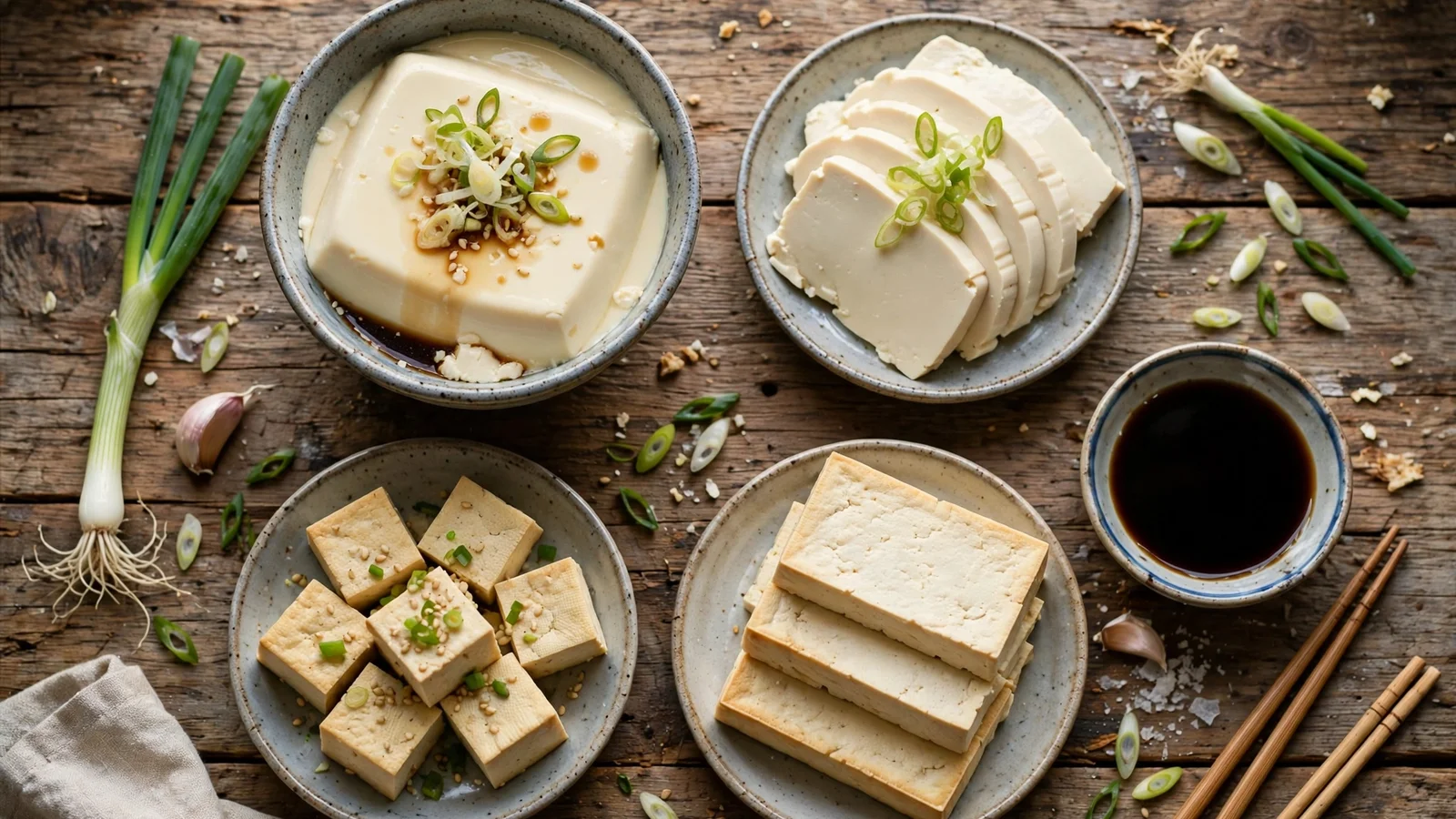
Standing in front of the tofu case can feel puzzling the first time. A wall of white blocks stretches across the shelf, all labeled tofu, but the texture words keep shifting: silken, soft, medium, firm, extra-firm, super-firm. They look almost identical through the plastic, yet the wrong pick can turn a planned stir-fry into soup or leave a broth feeling oddly chewy. The system is simpler than it looks. Once you know what each type is made for, you will grab the right block without thinking twice.
This guide covers how tofu is made, what separates silken from soft from firm and extra-firm, how to handle and store each one, and which dishes each type suits best. If you are building a broader pantry, it pairs well with the essential Asian pantry guide.
How Tofu Is Made, in Plain Terms
All tofu starts as soy milk. Dried soybeans are soaked, ground with water, and cooked into fresh soy milk. A coagulant is stirred in to set the milk into curds, much like cheese-making. The curds are pressed into blocks, and how much water gets pressed out creates the different types.
Less pressing leaves more water in the curd, giving a soft, delicate block. More pressing pushes out more water, giving a denser, chewier block. Silken tofu is the exception: it is not pressed at all. The soy milk sets right in its package, smooth and custard-like, with no curd separation. That is why silken has such a uniform, spoonable texture and breaks if you treat it like a firm block. Keep that picture in mind, water in versus water out, and every label below will make sense.
Silken Tofu: The Custard
Silken tofu is the softest type you will find. It comes in a shelf-stable box or a refrigerated tube, sets without pressing, and holds together only loosely. Spoon it and it quivers, then gives way with almost no chew. The flavor is clean and mild, a little like fresh soy milk.
Reach for silken when texture is the point:
- Blended into smoothies, dressings, and creamy sauces where it disappears but adds body
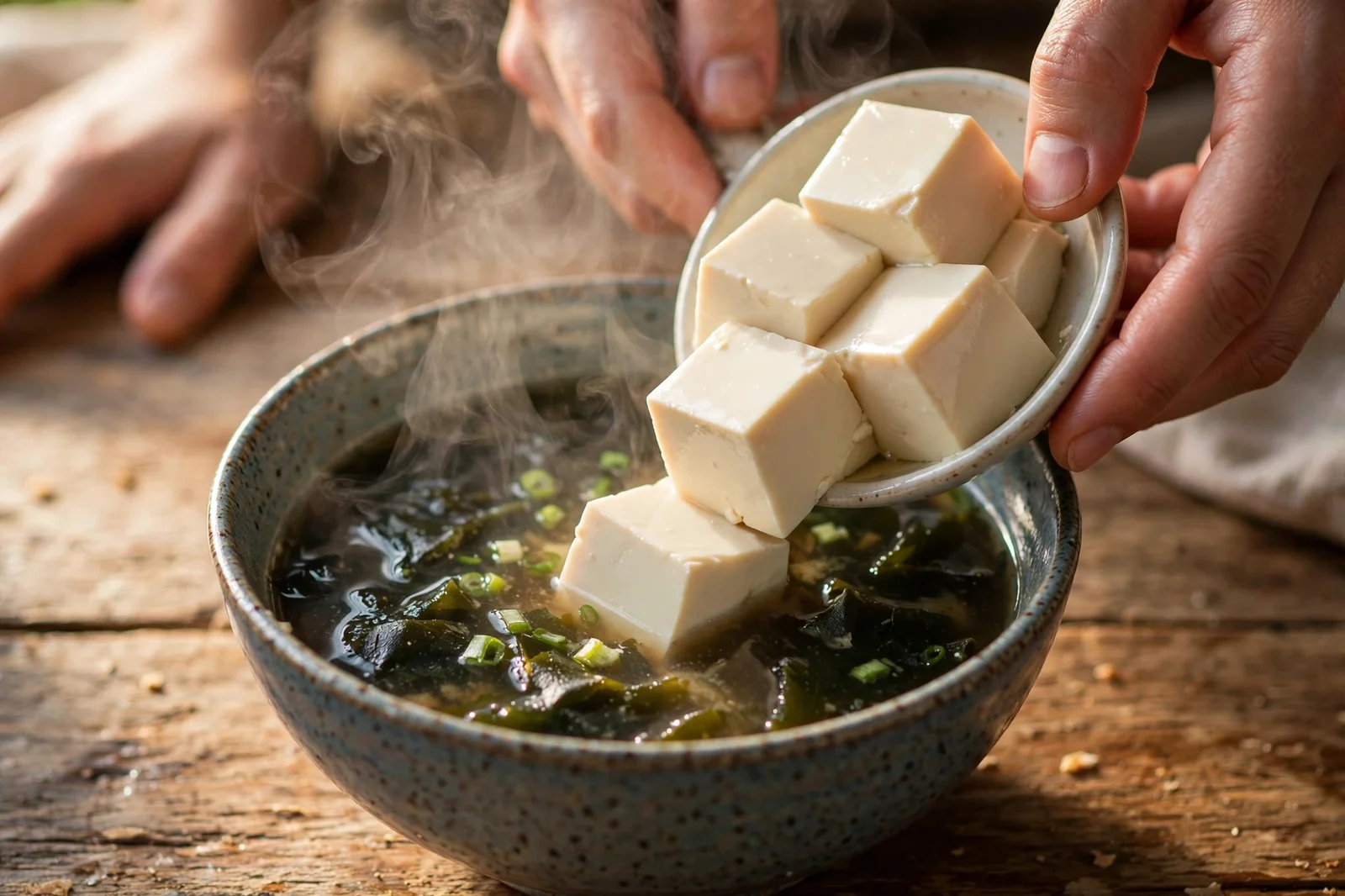
- Gently slid into brothy soups like classic miso soup, where small cubes warm through if handled lightly
- Scooped cold with a savory topping, a common Japanese serving style with soy sauce, grated ginger, and scallion
- Whipped into desserts, dips, and soft scrambles that need a gentle set
Handle silken with care. Drain the liquid, slide the block onto a plate in one piece when you can, cut with a gentle sawing motion, and lift pieces with a wide spoon or spatula rather than tongs. Stirring hard will break it, so add it near the end of cooking and let the broth heat it through with little movement. Shelf-stable silken keeps for months in the pantry. Once opened, use it within 2 to 3 days.
Soft Tofu: Tender but Sliceable
Soft tofu (sometimes labeled regular) is pressed lightly. It holds a shape when sliced, but the knife meets little resistance and the edges look moist and tender. It is a step firmer than silken, with a delicate bite that still feels creamy. Many Korean soft tofu stews use a tube of extra-soft soon tofu, which sits between silken and soft.
Soft tofu suits dishes where you want gentle pieces that soak up broth:
- Soups and hot pots where cubes should stay intact but remain tender, similar to the approach in yudofu
- Braises with a light sauce, where the tofu drinks in flavor without turning spongy
- Steamed tofu with a warm soy and sesame topping
- Soft scrambles when you prefer an almost egg-like curd
Drain soft tofu briefly before cooking. Set slices on a clean towel for 10 to 15 minutes to remove surface water. That short rest helps sauces cling and keeps soups from tasting watered down. Cook it gently, sliding it into a simmer rather than a boil and nudging it with a spoon instead of tossing.
Firm Tofu: The Everyday Workhorse
Firm tofu is where many home cooks should start. It is pressed enough to hold clean edges when sliced, feels springy when you press a corner with a fingertip, and offers a mild chew. It absorbs marinades better than soft types because the surface can be dried and lightly browned.
Firm tofu handles the widest range of weeknight cooking:
- Stir-fries where cubes need to keep their shape with vegetables
- Pan-frying and baking for golden edges
- Crumbled fillings and scrambles with a more substantial bite
- Grilling in thick slabs that will not fall through the grate
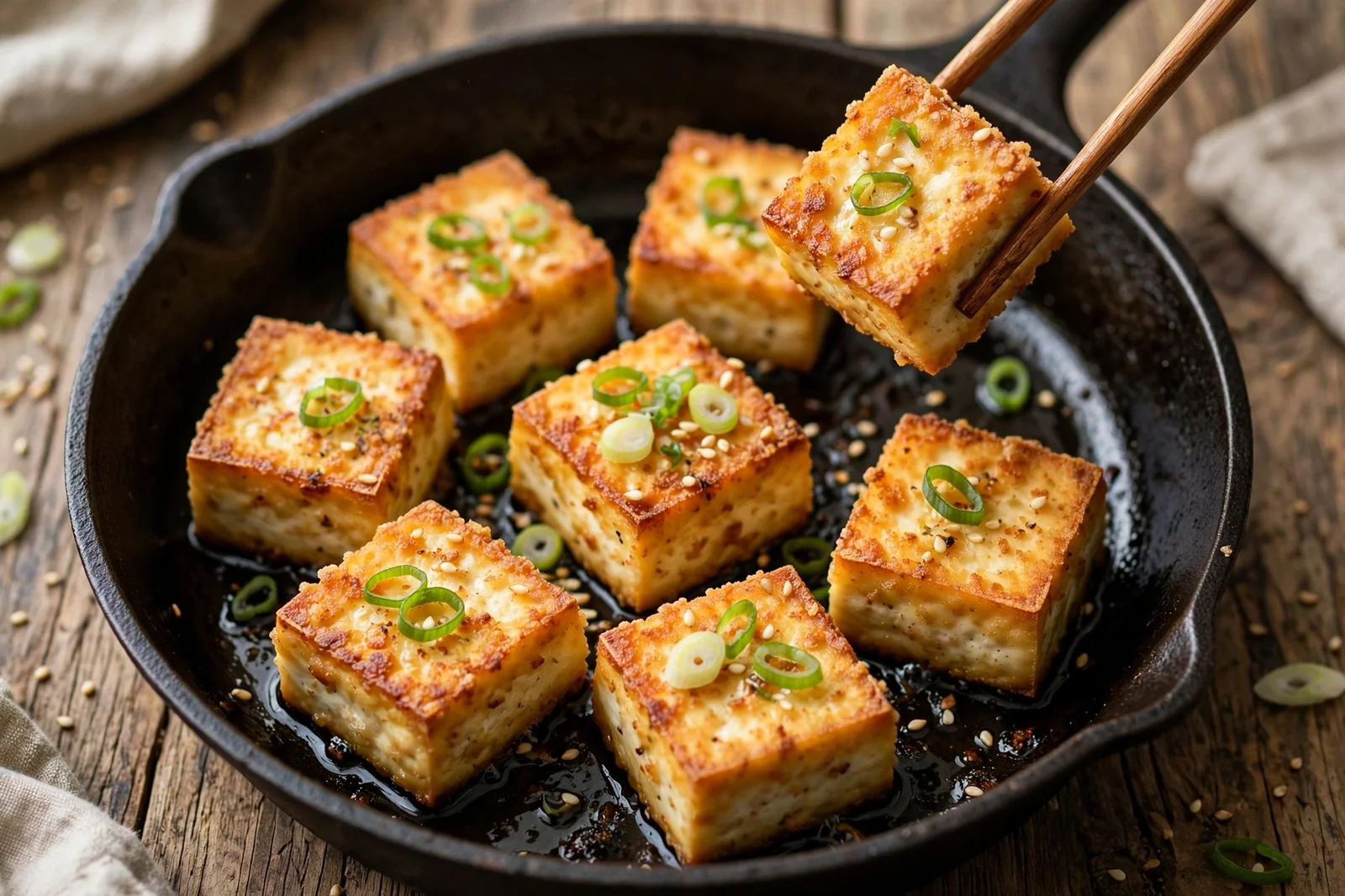
For crisp results, pressing matters. Wrap the block in a clean towel or paper towels, set a plate on top, and add a modest weight like a can of beans for 20 to 30 minutes. Patting the surface dry after pressing helps oil stay hot and encourages browning instead of steaming. After pressing, tossing cubes in a teaspoon or two of cornstarch gives a thin coat that turns crisp in hot oil. Agedashi tofu uses a similar light coat for its delicate crust.
Extra-Firm Tofu: Dense and Chewy
Extra-firm tofu has the most water pressed out. The block feels solid in the hand, slices into slabs that barely bend, and chews with a satisfying density. With less water inside, it browns faster than softer types and stands up to high heat and bold seasonings.
Choose extra-firm when you want structure:
- High-heat stir-fries and sheet-pan roasts
- Air-fried or deep-fried cubes that should stay crisp
- Sandwich slices, skewers, and grill marks
- Hearty dishes like mapo tofu if you prefer cubes that hold firm in a spicy sauce
Extra-firm still likes a quick press, but 10 to 15 minutes is usually enough. It also freezes well. Freezing makes it spongier and chewier after thawing, which many cooks like for saucy dishes. Freeze the whole unopened block, then thaw, press, and cook. The color may turn slightly golden after freezing; that is normal. A newer label, super-firm or high-protein tofu, is even denser and sold vacuum-packed with very little liquid. Treat it like extra-firm.
A Simple Side-by-Side
If you remember one snapshot, make it this:
- Silken: no pressing, custard-soft, best blended, scooped, or warmed gently in broth
- Soft: light pressing, tender slices, best in soups, steams, and gentle braises
- Firm: moderate pressing, springy and sliceable, best all-purpose choice for stir-fry and pan-frying
- Extra-firm: heavy pressing, dense and chewy, best for crisping, roasting, and grilling
Water content drops as you move down that list, and chew rises. When a recipe just says tofu without a type, firm is the safest guess for most savory dishes.
How to Buy and Store Tofu
At the store, check the date first. Refrigerated tofu in water should have at least a week before its use-by date. The liquid in the tub should look clear, not cloudy or pink, and the package should not be bulging. At Asian markets you may also find fresh tofu in water bins or wrapped blocks made that day. Those are best for same-day cooking and keep for only 2 to 3 days.
At home, keep unopened refrigerated tofu in its original liquid. Once opened, transfer leftovers to a clean container, cover with fresh cold water, seal, and refrigerate. Change the water daily. Firm and extra-firm keep for 3 to 5 days after opening this way, soft tofu for 2 to 3 days. If the tofu smells sour, feels slimy, or the water turns cloudy fast, it is past its best. Silken in a shelf-stable box needs no refrigeration until opened. After opening, treat it like fresh tofu and use it promptly.
Pressing, Draining, and Freezing: What Actually Helps
Here is a plain rule. Press when you want browning or a firmer bite. Skip pressing when the tofu goes into soup, a braise, or a blender. Soft and silken tofu should not be weighted down; their charm is tenderness.
A few practical notes:
- For stir-fry and frying: press firm or extra-firm for 15 to 30 minutes, slice, pat dry, then cook in a hot pan with space between pieces. Crowding drops the pan temperature and steams the surface.
- For soups and hot pots: drain but do not press. Slide cubes in near the end so they warm through and stay silky.
- For freezing: freeze firm or extra-firm for a spongier texture later. Thaw in the fridge, press out the thaw liquid, and use in saucy dishes.
- For marinades: pressed tofu absorbs more. Even 20 minutes in soy sauce, a little oil, and an acid like rice vinegar or lime juice makes a clear difference.
Three Easy Ways to Practice
You do not need a complicated recipe to learn the types. These small tests make the differences obvious:
- The soup test. Warm a simple broth with a little miso or soy sauce. Add a few cubes each of silken and firm tofu. You will feel silken melt while firm keeps a gentle chew.
- The pan test. Press and cube firm and extra-firm tofu. Pan-fry both until golden. Extra-firm browns a touch faster and feels denser.
- The blend test. Blend silken tofu with lemon juice, a pinch of salt, and a spoon of olive oil. The smooth result shows why silken is the blender’s favorite.
Once those clicks happen, reading a recipe gets easier. You will start to picture the finished bite and choose the block that gets you there.
Common Mix-Ups to Avoid
A few small habits prevent most tofu disappointments. Do not stir silken tofu like a stew; fold it in and leave it alone. Do not skip drying firm tofu before frying; surface water is the enemy of a crisp crust. Do not assume all Asian labels match American ones exactly. Japanese momen (cotton) tofu is close to firm, while kinugoshi is silken. Korean labels often mark soon tofu and firm blocks clearly in English. When in doubt, press the corner through the package: the less it gives, the firmer the block inside.
Tofu has a mild flavor by design. It is a carrier, not the seasoning itself. Sauces, broths, and toppings do that work. A block that tastes plain on its own will taste right once it sits in a good sauce for a few minutes. Pick one type to keep on hand this week based on what you cook most. A tub of firm covers the widest ground for beginners. Add a box of silken for soups and blends, and you will be ready for most of what comes up.