
Galangal is the rhizome that gives tom yum and Thai curries their piney, citrusy bite, and it is hard to find fresh in most grocery stores. Dried galangal works in a pinch, but it tastes flat next to the fresh root. Growing it in a pot solves the supply problem: one pot, one rhizome piece, and 10 months later you have more galangal than a home cook can use in a season.
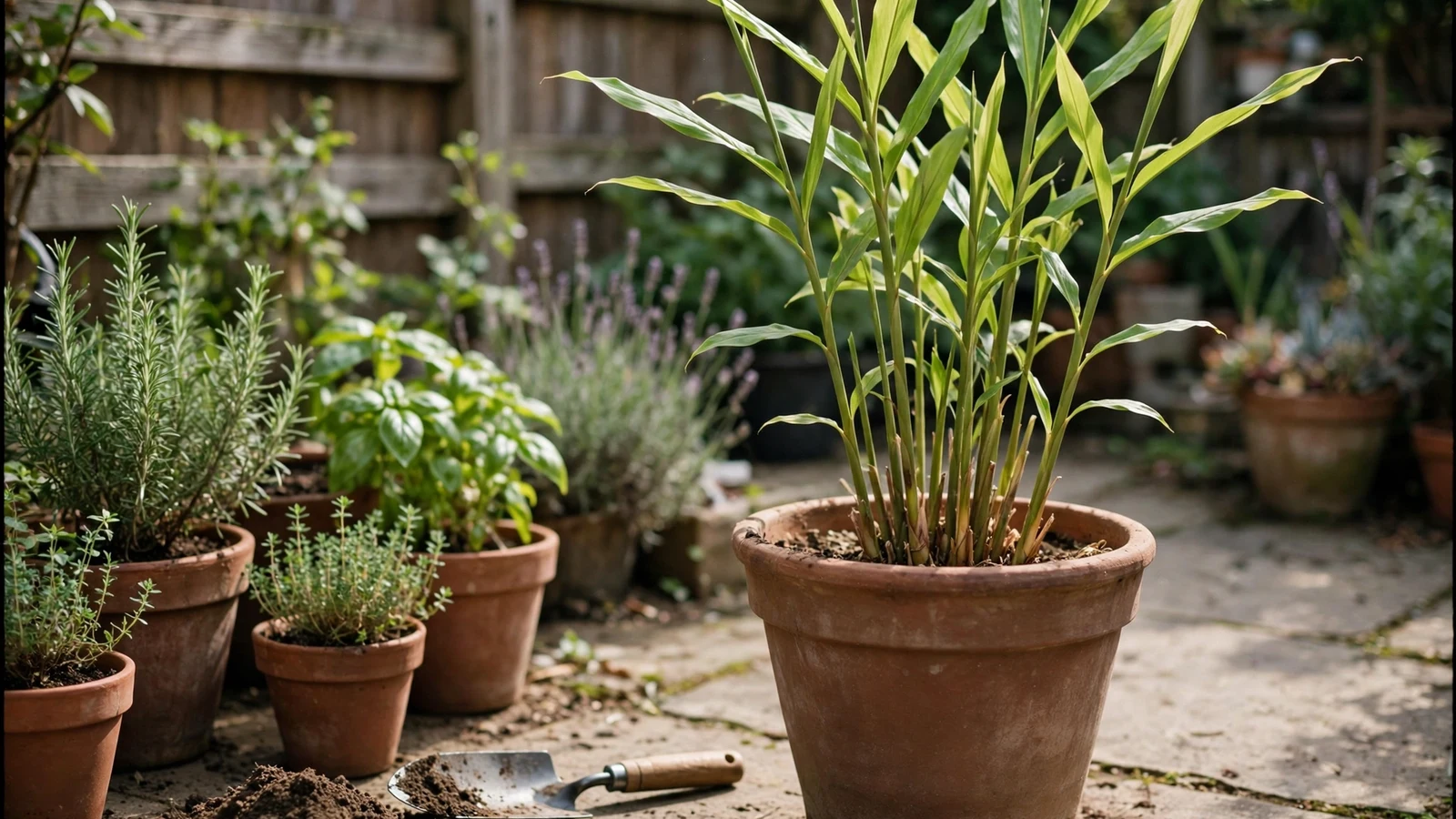
Galangal is a tropical plant, so it wants warmth, rich soil, and a big pot. It grows slowly for the first months, then takes off in summer heat. Paul grows it in a 5-gallon pot on a sunny patio, and the plant comes inside before the first cold nights of fall. The rhizome you harvest is the same one you plant next spring, so a single pot keeps giving year after year.
What galangal needs
Galangal (Alpinia galanga) is a cousin of ginger, but it grows taller and wants more heat. It needs soil above 60 degrees Fahrenheit to start growing, full sun or light shade, and a pot deep enough for the rhizome to spread. A 5-gallon pot, about 12 inches deep and 12 inches across, holds one plant comfortably. Smaller pots work for a first season, but the rhizome runs out of room fast, and the harvest shrinks with it.
The soil should drain well and stay rich. Paul uses 1 part potting mix to 1 part compost, which holds moisture without staying soggy. Galangal rots in wet soil, so the pot needs drainage holes and a saucer that gets emptied after watering, not left full.
Picking a rhizome to plant
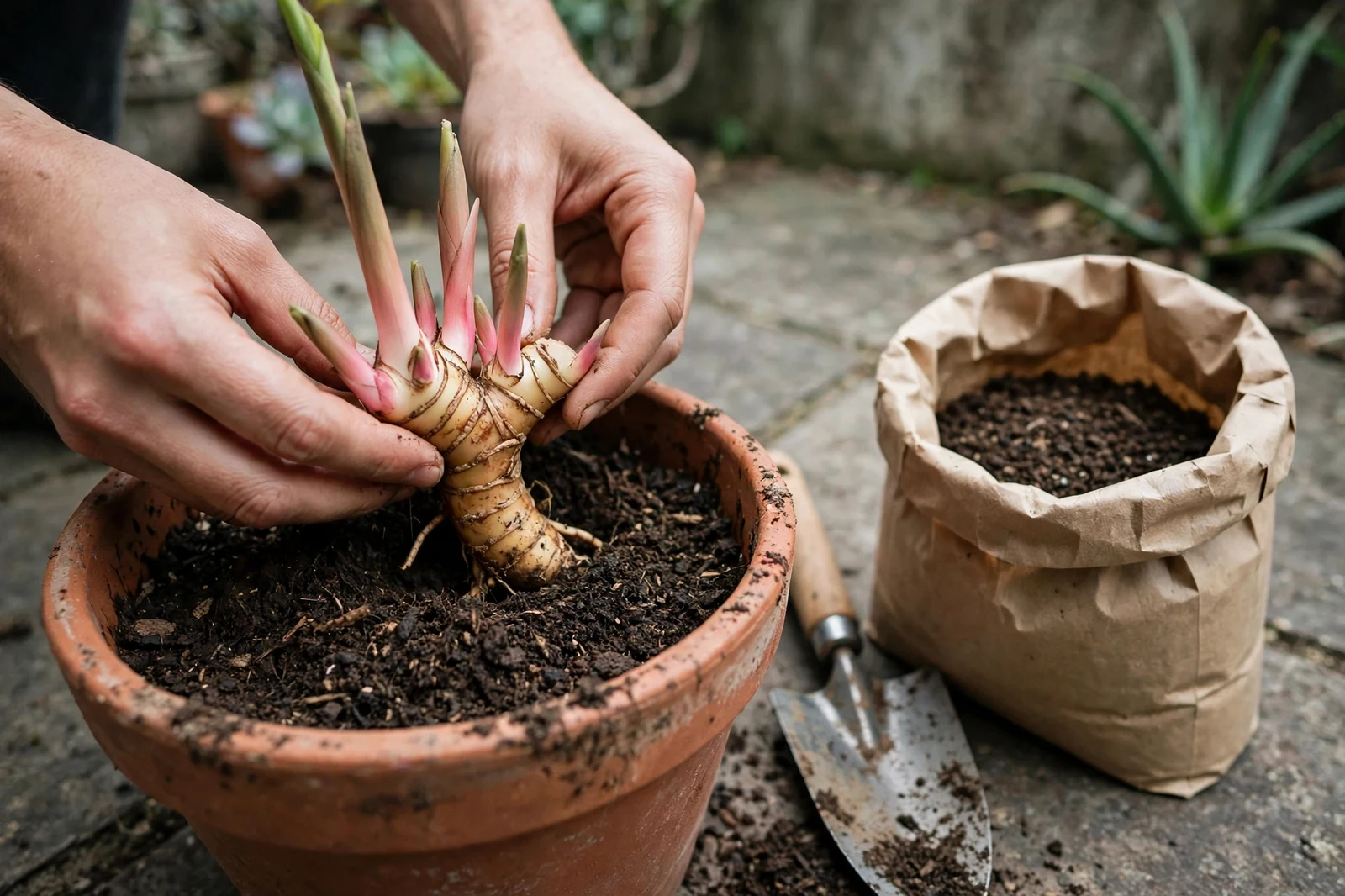
Buy a fresh rhizome from an Asian grocery store, not a dried one. Look for a piece with firm skin, no soft spots, and at least one pinkish bud or eye, which is where the shoot comes out. A piece about 4 inches long with 2 or 3 eyes is enough for one pot. If the rhizome has no visible buds, set it in a warm spot for a week and check again: buds often appear once the root warms up.
Cut the rhizome into pieces with at least one eye each, if it is large enough. Let the cut ends dry for a day before planting, so they callus over and resist rot in the soil. Our guide to growing ginger in pots uses the same eye-and-callus method, and ginger and galangal grow well side by side on the same patio.
Planting step by step
Plant in late spring, when the soil in the pot stays above 60 degrees day and night. Fill the pot with the potting mix and compost blend, leaving 2 inches at the top. Lay the rhizome piece flat, eyes facing up, and cover it with 2 inches of soil. Water it well, then set the pot in full sun.
Shoots appear in 3 to 4 weeks, sometimes longer if the spring is cool. Do not dig the rhizome up to check: the wait is normal, and disturbing it sets the plant back. Water when the top inch of soil feels dry, and feed once a month with a balanced liquid fertilizer at half strength through the growing season.
Care through the season
Galangal grows slowly in spring and fast in summer. By midsummer the plant stands 2 to 3 feet tall, with long green leaves that smell faintly of citrus when bruised. Water deeply once or twice a week, more in a heat wave, and mulch the top of the pot with straw or shredded leaves to hold moisture. The plant likes humidity, so a spot near other pots or a wall does better than an exposed windy corner.
Galangal has few pests in a pot. Slugs sometimes chew young shoots in spring: pick them off by hand in the evening, or set the pot on feet so slugs have a harder climb. The plant rarely flowers in a pot, and it does not need to. The leaves are the sign of health: deep green and upright means the rhizome below is growing.

Harvesting and storing
Harvest after 10 to 12 months, when the leaves start to yellow in fall. Tip the pot on its side and slide the whole root ball out, then brush the soil off and break the rhizome into pieces. Save the best piece, with 2 or 3 eyes, to replant next spring. The rest is yours to cook with.
Fresh galangal keeps 2 weeks in the fridge, wrapped in a damp paper towel inside a bag. For longer storage, peel it, slice it into coins, and freeze them flat in a bag: frozen slices go straight into a soup pot without thawing, and they keep 6 months. Dried galangal from the store works for a long simmer, but fresh slices give tom yum the bright bite that dried root cannot match. Our ginger vs galangal guide explains how the two roots differ in the pot.

Overwintering the pot
Frost kills the leaves, and growth stalls below 50 degrees, so bring the pot inside before the first cold nights. Cut the leaves back to 6 inches, set the pot in a bright spot, and water sparingly through winter, just enough to keep the soil from drying out completely. The plant rests, and the rhizome waits. In spring, move it back outside after the last frost, and new shoots appear in a few weeks.
In warm climates where nights stay above 55 degrees, the pot can stay outside all year, and the plant grows year-round. In that case, harvest a piece of rhizome whenever you need it, and replant the rest right away.