
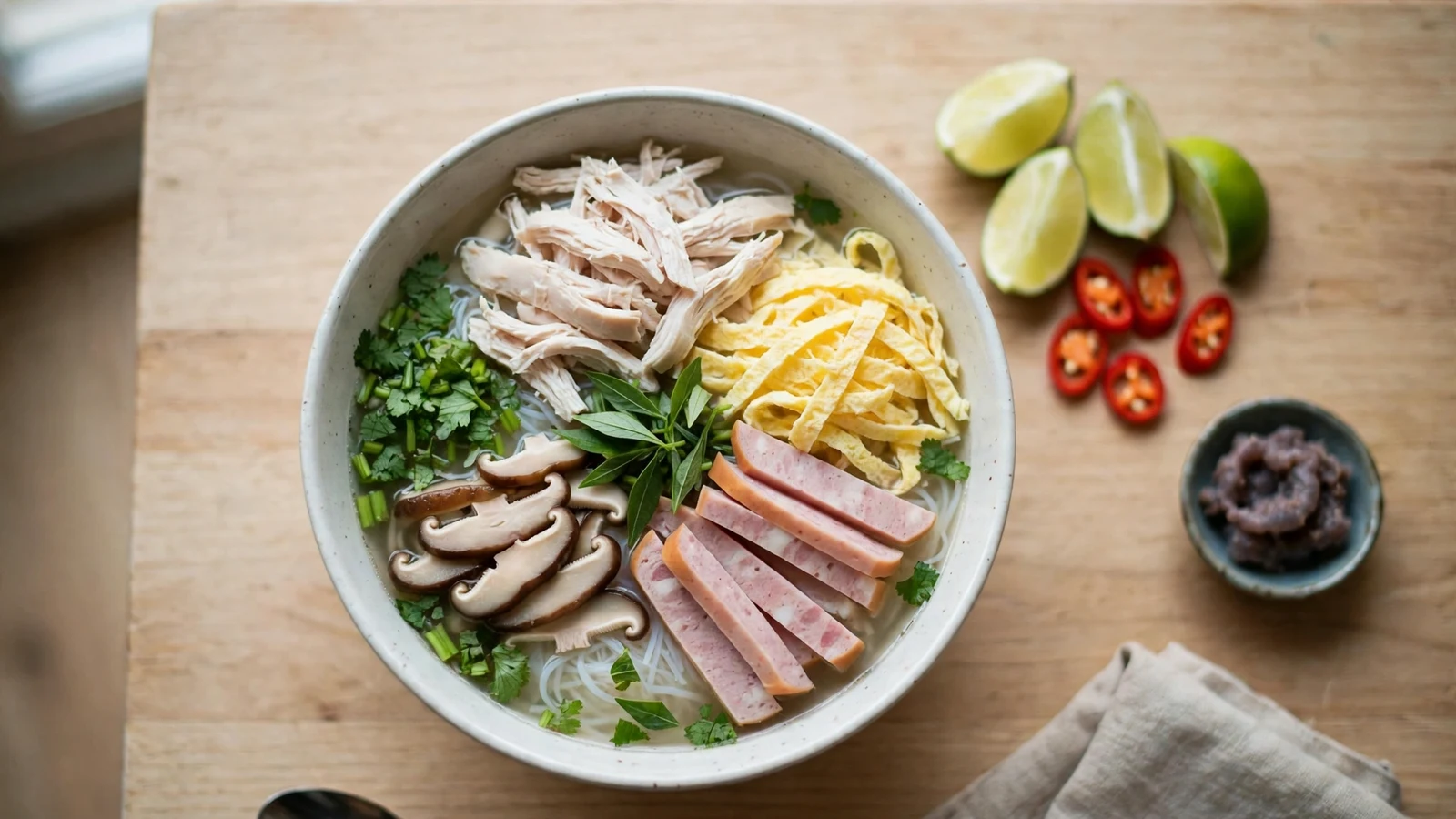
Bun thang is the bowl Paul makes when a whole chicken and a free afternoon line up: a clear broth built from chicken, dried shrimp, and shiitake mushrooms, poured over thin rice vermicelli and finished with small piles of shredded chicken, egg ribbons, cha lua, and fresh herbs. It comes from Hanoi, where it was traditionally cooked for Tet, using up the chicken and eggs left after the new year feast. The broth stays clear and light, and the toppings do the talking, each in its own small pile so you can see everything before the first spoonful. Our Pho Ga is the quicker chicken noodle soup in this kitchen, flat rice noodles in a spiced broth, while bun thang takes the longer road: more parts, a quieter broth, and a bowl that looks arranged rather than thrown together.
What is bun thang?
The name is often read as a ladder, or a measure made of many small parts, and the name fits: the dish is a set of small components, each prepared on its own, then set side by side in the bowl. The broth is chicken simmered with dried shrimp and dried shiitake mushrooms, seasoned with fish sauce and a little rock sugar, and held at a bare simmer so it stays clear. The noodles are thin round rice vermicelli. The toppings are shredded chicken from the same bird that made the broth, thin ribbons of egg crepe, matchsticks of cha lua, sliced shiitake from the pot, and a spoonful of shrimp floss, with cilantro, rau ram, and scallions over the top. A dab of mam tom, fermented shrimp paste, sits on the side for anyone who wants it. Compared with pho ga, the difference is easy to see: pho ga uses flat rice noodles and a broth spiced with star anise and cinnamon, with sliced chicken and herbs, while bun thang uses round vermicelli, an unspiced broth, and a whole set of toppings arranged in piles. It is a weekend bowl, not a weeknight one: the broth takes about an hour, the toppings take another half hour of small jobs, and the payoff is a bowl that tastes light and full at the same time.
Ingredients
For the broth
- 1 whole chicken, about 1.6 kg (3 1/2 lb)
- 12 cups cold water
- 1 oz (28 g) dried shrimp, rinsed
- 6 dried shiitake mushrooms, rinsed
- 1 large yellow onion, halved
- 1 piece fresh ginger, about 3 inches, halved lengthwise
- 1 teaspoon rock sugar, or granulated sugar
- 1 1/2 tablespoons fish sauce, plus more to taste
- 1 1/2 teaspoons fine sea salt
For the egg ribbons
- 4 large eggs
- 1 teaspoon cornstarch
- 1/2 teaspoon fish sauce
- Pinch of black pepper
- 1 tablespoon neutral oil, for the pan
For the toppings
- 6 oz cha lua (Vietnamese pork roll), cut into thin matchsticks
- 1/4 cup shrimp floss (ruoc tom), or finely chopped dried shrimp
- 1 cup mixed herbs: cilantro, Vietnamese coriander (rau ram), and scallions, chopped
For serving
- 10 oz dried thin rice vermicelli (bun)
- 4 lime wedges
- 1 Thai chile, sliced
- 1 teaspoon mam tom (fermented shrimp paste), optional, per bowl
How to make it
Start with the broth, since it sets the pace for everything else. Put the whole chicken in a large stockpot, cover with cold water, and bring to a boil. Let it boil for 5 minutes, then drain everything into a colander, rinse the chicken under cold water, and wash the pot. This short parboil pulls out the foam and loose bits that would cloud the broth later, and it is the cheapest insurance in the whole recipe. If you skip it, you will spend the rest of the cook skimming, and the broth will still turn out less clear.
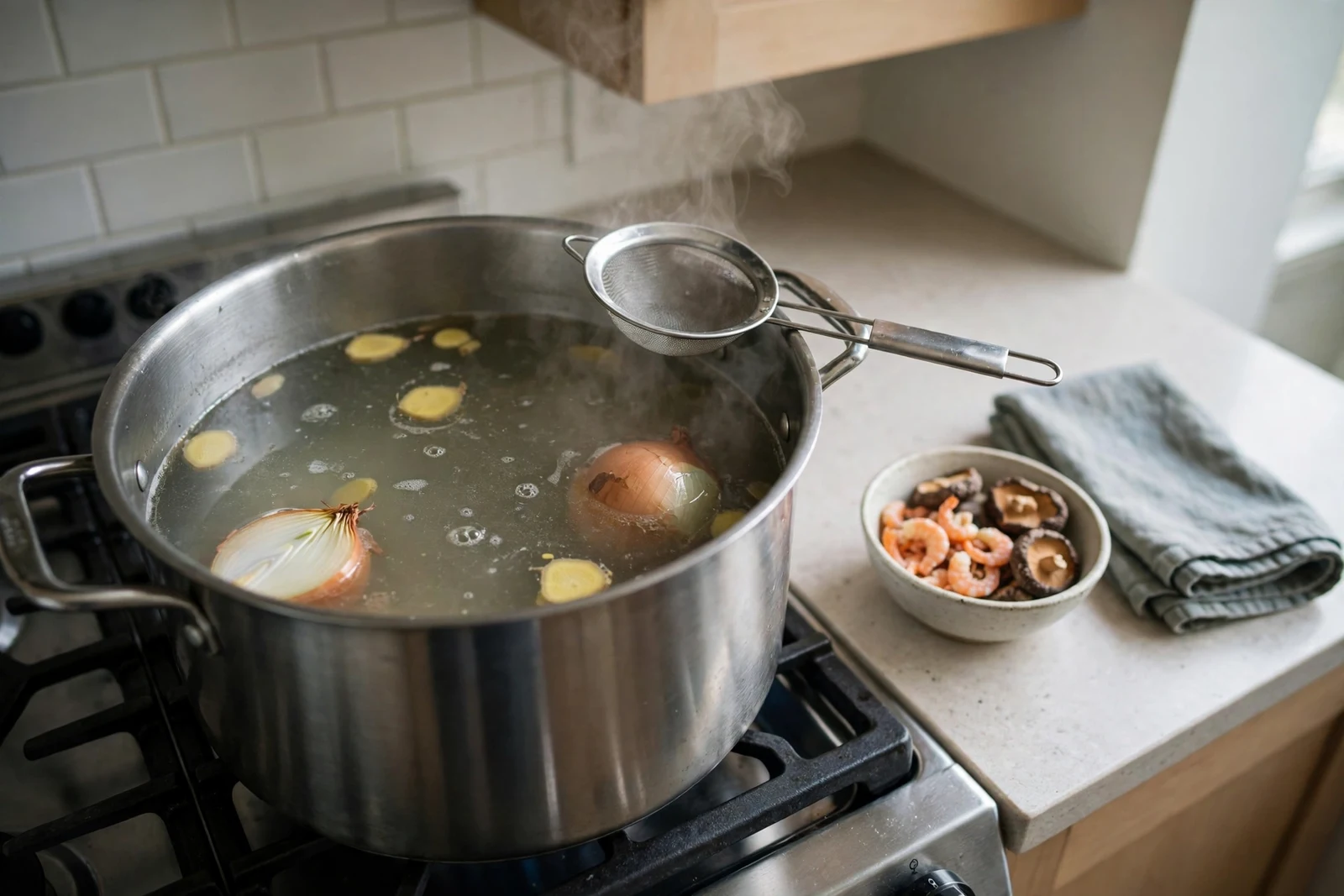
Return the clean chicken to the pot with 12 cups of fresh cold water, the dried shrimp, the shiitake mushrooms, the onion, and the ginger. Bring the pot up until the first few bubbles break the surface, then turn the heat down at once. The water should barely tremble, with a bubble rising here and there and no rolling movement at all. A rolling boil is what clouds a broth: it knocks fat and protein into tiny particles that stay suspended. Hold that bare simmer for 45 minutes, skimming off any scum that rises. Lift the chicken out when a thermometer in the thickest part of the thigh reads 165°F (74°C), and drop it straight into a bowl of ice water for 10 minutes. The cold bath stops the cooking and firms the skin, so the meat shreds in clean strands instead of falling apart. Let the broth go for 15 minutes more, then strain it through a fine sieve lined with cheesecloth into a clean pot. Stir in the fish sauce, rock sugar, and salt, then taste: it should taste a touch salty on its own, since the plain noodles will pull salt out of it once they are in the bowl.
While the broth finishes, make the egg ribbons. Whisk the eggs with the cornstarch, fish sauce, and pepper until smooth. The cornstarch is doing real work here: 1 teaspoon for 4 eggs is enough to let the crepe hold together when you roll and slice it, without making it taste starchy. Heat a nonstick skillet over low heat with a thin film of oil, pour in just enough egg to coat the pan in a thin layer, and swirl. Cook 1 to 2 minutes until set, with no browning and no flip, then slide the crepe onto a plate. Repeat until the egg is used up; you should get 3 or 4 thin crepes. Stack them, roll them into a tight log, and slice across the roll as thin as you can. If the first crepe tears, the pan was too hot or the layer was too thick; turn the heat down and pour less next time.

Shred the cooled chicken by hand, discarding skin and bones, and slice the shiitake from the broth into thin strips. Cook the vermicelli by the package directions, drain it well, and divide it between 4 bowls at once, while it is still hot and loose. Noodles that sit in the colander clump into a solid nest, and no amount of broth pulls them apart cleanly. Arrange the toppings in separate piles over the noodles: shredded chicken, egg ribbons, cha lua matchsticks, shiitake strips, and a spoonful of shrimp floss. Scatter the herbs over the top, then ladle the hot broth over everything. Serve at once with lime wedges, sliced chile, and a small dish of mam tom on the side. For the noodles themselves, our rice noodle guide covers which noodle suits which dish, and our dried shiitake guide covers how to rinse and soak the mushrooms so they give up their flavor instead of grit.

Tips and variations
The broth keeps 2 to 3 days in the fridge, and the toppings keep a day in separate containers, so the whole dish works as a make-ahead weekend project: cook the broth and toppings on Saturday, then cook noodles and assemble on Sunday. The fat sets on top of the cold broth in a solid layer; lift it off before you reheat. For a weeknight shortcut, use a rotisserie chicken and good boxed chicken broth, and steep the dried shrimp and shiitake in the hot broth for 30 minutes before you strain it. You lose some depth, but the egg ribbons and the pile of toppings still carry the bowl. If you cannot find cha lua, thin-sliced deli ham is the closest swap. If you cannot find shrimp floss, finely chopped rehydrated dried shrimp gives the same salty hit in a different shape. Leave the mam tom out entirely if you like; the bowl stands on its own, and fish sauce with lime at the table covers the salt and the acid.
Troubleshooting: Fix My Bun Thang
Bun thang has a few places where it goes wrong, and all of them show up in the bowl: cloudy broth, flat broth, egg ribbons that tear, dry chicken, and too much mam tom. Pick what went wrong below for the fix.
This troubleshooting guide is not available yet.
Bun Thang: Hanoi Chicken Noodle Soup
Ingredients
Method
- Put the whole chicken in a large stockpot, cover with cold water, and bring to a boil. Boil 5 minutes, then drain into a colander, rinse the chicken under cold water, and wash the pot.
- Return the chicken to the clean pot with 12 cups of fresh cold water, the dried shrimp, shiitake mushrooms, onion, and ginger. Bring to the first bubbles, then drop to the lowest heat so the surface barely trembles. Simmer 45 minutes, skimming often.
- Lift the chicken out when a thermometer in the thickest part of the thigh reads 165 F (74 C) and drop it into ice water for 10 minutes. Simmer the broth 15 minutes more, then strain through a fine sieve lined with cheesecloth. Stir in the fish sauce, rock sugar, and salt; it should taste a touch salty.
- Whisk the eggs with the cornstarch, fish sauce, and pepper. Cook thin crepes in an oiled nonstick skillet over low heat, 1 to 2 minutes each, with no browning and no flip. Stack, roll into a tight log, and slice thin.
- Shred the cooled chicken by hand, discarding skin and bones, and slice the shiitake from the broth into thin strips. Cook the vermicelli by the package directions, drain well, and divide between 4 bowls at once.
- Arrange the toppings in separate piles over the noodles: shredded chicken, egg ribbons, cha lua matchsticks, shiitake strips, and a spoonful of shrimp floss. Scatter the herbs, ladle the hot broth over everything, and serve at once with lime wedges, sliced chile, and mam tom on the side.
Notes
More Vietnamese recipes
If this bowl sent you looking for more, start with Pho Ga: Vietnamese Chicken Noodle Soup, then Bun Bo Hue: Vietnamese Spicy Beef Noodle Soup, Cao Lau: Hoi An Noodles with Pork and Herbs, and Bun Rieu: Vietnamese Crab and Tomato Noodle Soup.
From the garden
Rau ram is one of the herbs Paul keeps in pots by the back door. It grows fast in warm weather, so one pot covers a lot of bowls, and our guide to growing Vietnamese coriander in pots covers the pot size and watering routine that keeps a plant going through the warm months.