
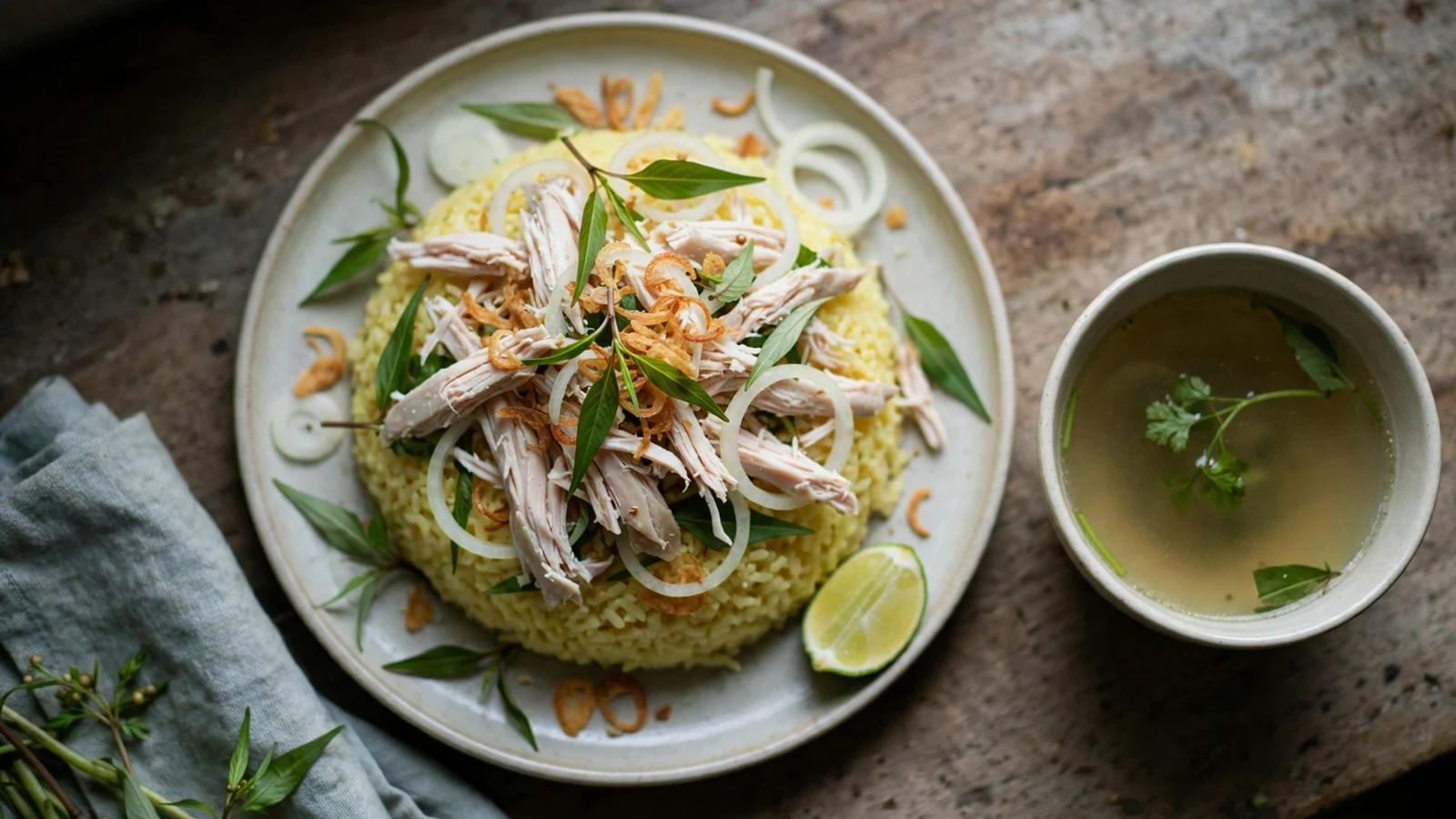
Com ga is the plate Paul orders first whenever the conversation turns to Hoi An: a mound of pale gold rice cooked in chicken broth, topped with chicken that has been poached, cooled, and torn by hand, then tossed with thin onion slices, rau ram, and lime juice. The rice carries the dish. It is cooked in the same broth that poached the bird, with a spoonful of the fat skimmed off the top and one teaspoon of turmeric for every two cups of rice, so each grain turns glossy and separate, fragrant from ginger and scallion, and just gold enough to look like late afternoon light. A small bowl of the hot broth comes on the side, with a fish sauce dip for the chicken. Our Hainanese Chicken Rice is the plainer cousin from the same family tree, poached chicken sliced over ginger rice, while this Hoi An plate is louder: shredded chicken, raw onion, herbs, and lime in every bite.
What is com ga?
Com ga means chicken rice, and the Hoi An version is the signature plate of the old trading port in central Vietnam. It grew out of Hainanese chicken rice, brought by Chinese traders centuries ago, and changed along the way: the chicken is shredded instead of sliced, the rice is cooked in rendered chicken fat with turmeric, and the meat is tossed like a salad with onion, rau ram, and lime before it meets the rice. The Hoi An cooks judge a plate on three words, rao, thom, beo: the grains dry and separate, fragrant, and rich from the fat in the broth. The rice should never be sticky, and the color should be pale gold, not the saffron-bright yellow in most photos. A little fresh turmeric does the work, and some stalls add gac fruit for color instead of dye. If you have made Chao Ga: Vietnamese Chicken Rice Porridge before, you already know the poaching step: the same gentle simmer that keeps the chicken juicy also makes the broth that cooks the rice. The difference is what happens after, where the congee stays soft and soupy and this plate turns dry, separate, and sharp with lime.
Ingredients
For the poached chicken
- 1 whole chicken, about 1.4 kg (3 lb)
- 1 thumb of ginger, sliced into coins
- 4 scallions, cut in half
- 2 teaspoons fine sea salt
- Water to cover, about 3 liters
For the turmeric rice
- 2 cups jasmine rice (400 g), rinsed
- 2 tablespoons chicken fat skimmed from the broth, or neutral oil
- 1 teaspoon ground turmeric
- 2 1/4 cups hot chicken broth (540 ml), from poaching
- 1 teaspoon fish sauce
- 1/2 teaspoon fine sea salt
For the chicken salad
- 1 medium white onion, sliced paper thin
- 3/4 cup Vietnamese coriander (rau ram) leaves, lightly packed
- 2 tablespoons lime juice
- 1 teaspoon sugar
- 1/2 teaspoon black pepper, freshly ground
- 1/2 teaspoon fine sea salt
For the dipping sauce and serving
- 3 tablespoons fish sauce
- 2 tablespoons lime juice
- 1 tablespoon sugar
- 1 garlic clove, minced
- 1 small red chili, sliced thin
- 2 tablespoons water
- 2 tablespoons fried shallots, to serve
- Lime wedges, to serve
How to make it
Start the chicken in cold water. Put the chicken, ginger, scallions, and salt in a large pot, cover with cold water, and bring it up slowly over medium heat. Starting cold keeps the skin from splitting as the pot heats. When the water reaches a bare simmer, small bubbles rising and the surface just shivering, turn the heat down and hold it there, between 85 and 90 degrees C, for 25 to 30 minutes. A rolling boil is the one thing to avoid: it tightens the meat and leaves it dry and stringy. The chicken is done when the thickest part of the thigh reads 74 degrees C on a thermometer, or the juices run clear when you pierce it. Turn the heat off and let the bird rest in the pot for 10 minutes, then lift it out and set it aside to cool. Keep the broth. Skim 2 tablespoons of fat off the top and save it for the rice. Our guide to How to Cook Perfect Jasmine Rice Every Time covers the same low-and-slow patience for rice, and the same rule applies here: the pot should never boil hard.

While the chicken cools, cook the rice. Rinse the jasmine rice until the water runs mostly clear, then drain it well. Warm the skimmed chicken fat in a wide pan over medium heat, add the turmeric, and stir for 30 seconds until it smells warm and earthy. Add the rice and stir for 1 to 2 minutes, until every grain is coated and pale gold. Tip the rice into the rice cooker or a heavy pot, pour in 2 1/4 cups of the hot broth, and add the fish sauce and salt. That ratio matters: 2 cups of rice to 2 1/4 cups of broth. More liquid and the grains go soft and stick together; less and they stay hard in the middle. Cook on the standard white rice setting, or bring to a boil, cover, and simmer on the lowest heat for 12 minutes, then leave the lid on and rest the rice off the heat for 10 minutes before you fluff it with a fork. If your ginger is fresh and you want to stretch it, our guide to peeling ginger without wasting it shows how to get the most out of each piece.

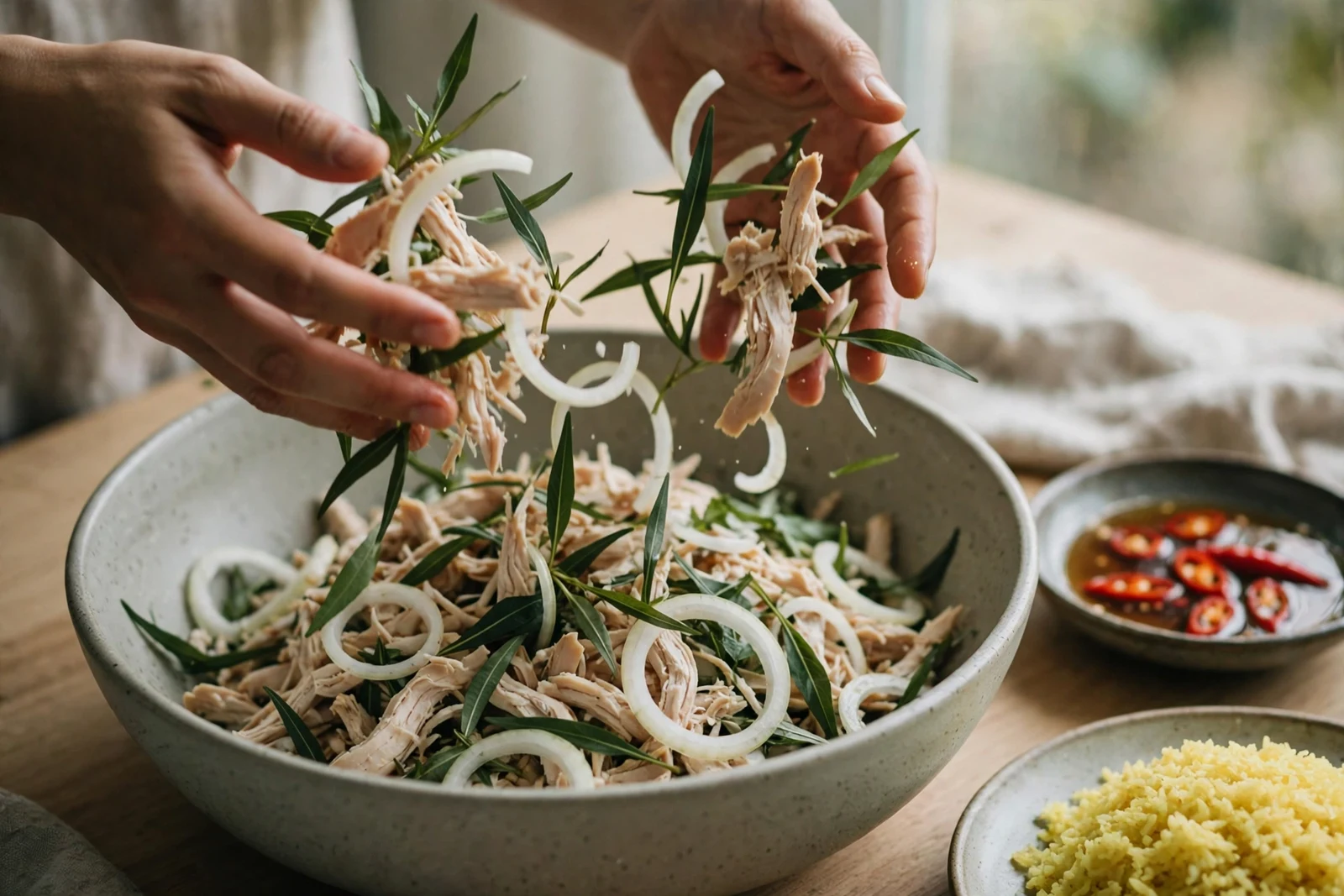
When the chicken is cool enough to handle, pull the meat off the bones by hand and tear it along the grain into bite-size strips. Tearing, not cutting, is the Hoi An way: it leaves ragged edges that catch the dressing, and the meat stays tender instead of turning into neat, dry slices. Slice the onion as thin as you can and soak it in a bowl of cold water for 10 minutes, then drain it well. The soak takes the harsh raw bite out of the onion while keeping the crunch. Toss the shredded chicken, onion, rau ram, lime juice, sugar, salt, and pepper in a large bowl, and let it sit for 5 minutes so the flavors settle. Do not mix the salad more than 10 minutes before serving, or the herbs wilt and the onion softens.
Stir the dipping sauce together in a small bowl: fish sauce, lime juice, sugar, minced garlic, sliced chili, and water, until the sugar dissolves. Taste it and adjust: more lime if it tastes too salty, a pinch more sugar if the lime is sharp. To serve, pack the turmeric rice into a small bowl and turn it out onto each plate for a tidy mound, or just spoon it on. Top with a heap of the chicken salad, scatter fried shallots over the top, and set a lime wedge on the side. Put a small bowl of the hot poaching broth beside each plate, with the dipping sauce in the middle of the table. Eat the rice with the salad in the same bite, and sip the broth between bites. Chicken Congee (Jook) is the other way to use up the same poaching broth, if you have a pot of it left after this plate.
Troubleshooting: Fix My Com Ga
Most com ga problems come from heat, water, or timing: a boil that was too hard, a rice ratio that was off, or a salad mixed too early. Pick the problem that matches your batch below for a practical next step.
This troubleshooting guide is not available yet.
Com Ga: Hoi An Chicken Rice
Ingredients
Method
- Put the chicken, ginger, scallions, and salt in a large pot and cover with cold water. Bring it up slowly over medium heat to a bare simmer, small bubbles rising and the surface just shivering, then turn the heat down and hold it between 85 and 90 degrees C for 25 to 30 minutes. The chicken is done when the thickest part of the thigh reads 74 degrees C, or the juices run clear when pierced. Turn the heat off, rest the bird in the pot for 10 minutes, then lift it out and set it aside to cool. Keep the broth and skim 2 tablespoons of fat off the top for the rice.
- Rinse the jasmine rice until the water runs mostly clear, then drain it well. Warm the skimmed chicken fat in a wide pan over medium heat, add the turmeric, and stir for 30 seconds until it smells warm and earthy. Add the rice and stir for 1 to 2 minutes, until every grain is coated and pale gold. Tip the rice into the rice cooker or a heavy pot, pour in 2 1/4 cups of the hot broth, and add the fish sauce and salt. Cook on the standard white rice setting, or bring to a boil, cover, and simmer on the lowest heat for 12 minutes, then leave the lid on and rest the rice off the heat for 10 minutes before fluffing with a fork.
- When the chicken is cool enough to handle, pull the meat off the bones by hand and tear it along the grain into bite-size strips. Slice the onion as thin as you can and soak it in a bowl of cold water for 10 minutes, then drain it well.
- Toss the shredded chicken, onion, rau ram, lime juice, sugar, salt, and pepper in a large bowl, and let it sit for 5 minutes so the flavors settle. Do not mix the salad more than 10 minutes before serving, or the herbs wilt and the onion softens.
- Stir the fish sauce, lime juice, sugar, minced garlic, sliced chili, and water in a small bowl until the sugar dissolves. Taste and adjust: more lime if it tastes too salty, a pinch more sugar if the lime is sharp.
- Pack the turmeric rice into a small bowl and turn it out onto each plate for a tidy mound, or just spoon it on. Top with a heap of the chicken salad, scatter fried shallots over the top, and set a lime wedge on the side. Put a small bowl of the hot poaching broth beside each plate, with the dipping sauce in the middle of the table.
Notes
More Vietnamese recipes
Four more from the same shelf: Cao Lau: Hoi An Noodles with Pork and Herbs is the other Hoi An signature to make when you want pork and herbs over noodles instead of rice; Bun Cha: Vietnamese Grilled Pork with Noodles is the Hanoi grilled pork and noodle bowl to make when you want smoke and char; Com Tam: Vietnamese Broken Rice with Grilled Pork is the Saigon broken rice plate to make when you want grilled pork over rice with a fried egg; and Chao Ga: Vietnamese Chicken Rice Porridge is the chicken rice porridge to make when you want the same poached chicken in a soft, warming bowl.
From the garden
The turmeric in this rice comes from a pot by the back door, and the ginger from the pot beside it. Both plants grow slowly and ask for little: a wide pot, warm sun, and soil that drains. Our guides to growing turmeric in pots and growing ginger in pots cover how to keep them going, so there is always a fresh piece to slice into the poaching pot instead of a dried jar from the shelf.
From Paul’s kitchen.