
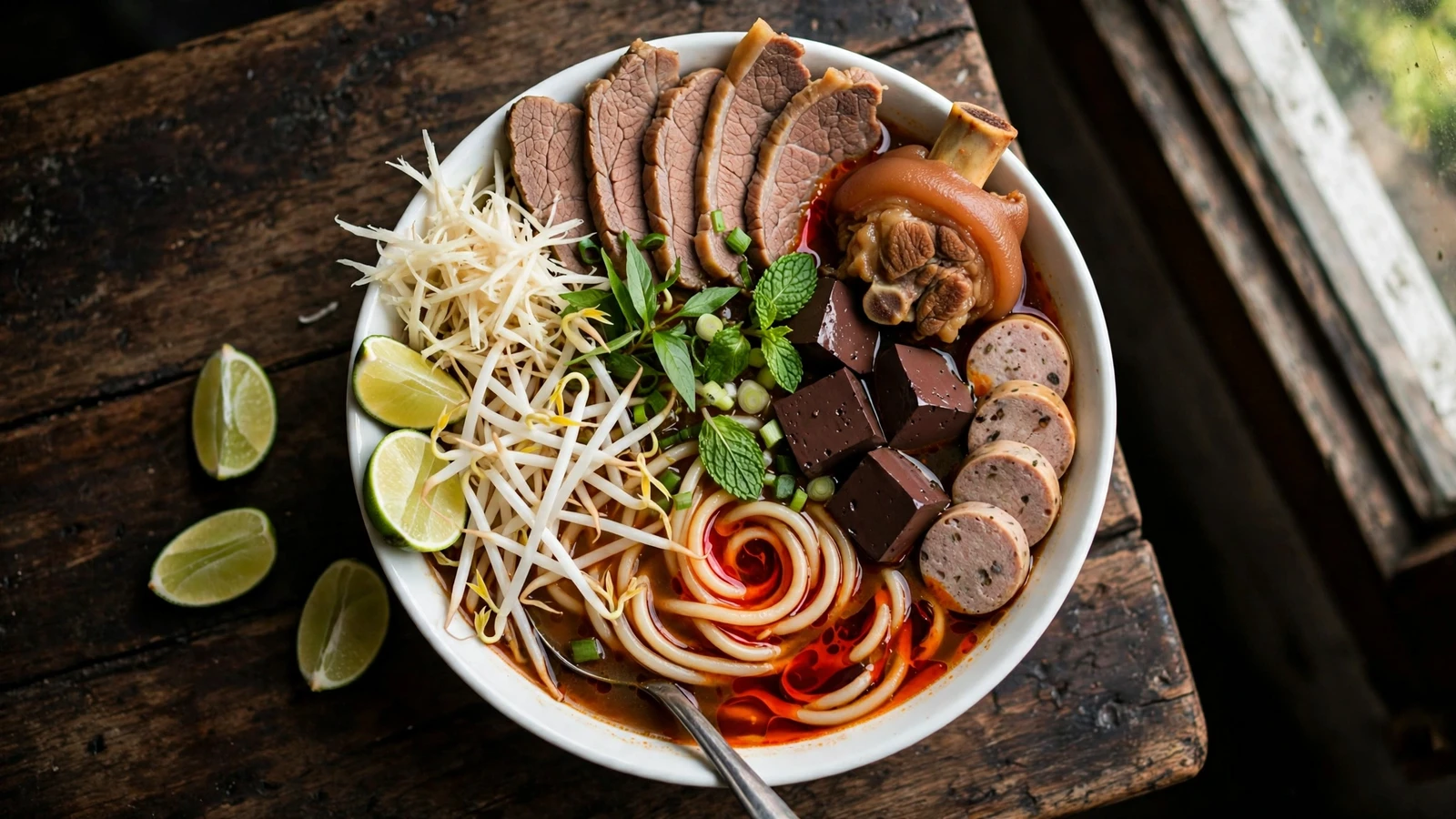
If pho is Vietnam’s gentle ambassador, bun bo Hue is its fiery hometown hero. The first thing you notice is the color: a brick-red broth, burnished by annatto oil and chili sate, with ribbons of that red oil floating on top. Then the smell hits — lemongrass first, then the deep, unmistakable funk of shrimp paste, then beef. Thick round rice noodles soak it all up, and every bite is salty, sour, sweet, and hot at once, cooled by crunchy raw vegetables and a squeeze of lime.
This is the signature dish of Hue, the old imperial capital of central Vietnam, where the cooking runs bolder and spicier than anywhere else in the country. It’s a weekend project — the broth wants three unhurried hours — but the technique is simple: parboil, simmer, bloom your sate, and season with a brave hand. One pot feeds six generously, and the leftovers might be even better.
What Is Bun Bo Hue?
Bun bo Hue (say “boon baw hway”) is a spicy beef noodle soup from the city of Hue in central Vietnam. Three things set it apart from other Vietnamese soups. First, the noodles: thick, round rice vermicelli about as wide as spaghetti, chewy rather than slippery — a completely different mouthfeel from the flat noodles in pho. Second, the seasoning: the broth is built on beef bones and pork hocks, then layered with smashed lemongrass and mam ruoc, Vietnamese fermented shrimp paste, which gives the soup its signature savory depth. Third, the color: cooks bloom annatto seeds in oil until it turns amber-red, then fry minced lemongrass, shallots, and chili in that oil to make a sate that stains the whole bowl brick-red.
A proper bowl arrives loaded: thin slices of beef shank, cubes of blood cake, pork hock or Vietnamese pork sausage, and a mountain of fresh vegetables on the side — shredded banana blossom, bean sprouts, rau ram (Vietnamese coriander), and lime. You season it yourself with more shrimp paste, chili, and fish sauce at the table. If you’ve made our Pho Ga and want the bolder, brasher cousin from central Vietnam, this is your next pot.
Why This Recipe Works
The soul of bun bo Hue is the broth, and the broth lives or dies on two measured moves I worked out in Paul’s kitchen.
Two more hard-won details: chill the cooked beef shank for 30 minutes before slicing — cold meat cuts into thin, clean slices instead of ragged chunks. And never boil the blood cake; a lazy simmer keeps it smooth, while a rolling boil turns it honeycombed and rubbery.
Ingredients
### For the broth
- 2 lb beef shank, cut into large chunks
- 1 lb pork hocks, cut into pieces (ask the butcher)
- 4 quarts water, plus more as needed
- 5 stalks lemongrass, smashed and cut into 3-inch pieces
- 1 yellow onion, halved
- 1 (3-inch) piece fresh ginger, smashed
- 2 tablespoons shrimp paste (mam ruoc), divided
- 2 tablespoons fish sauce, plus more to taste
- 2 tablespoons rock sugar or granulated sugar
- 1 tablespoon kosher salt, plus more to taste
### For the annatto-chili sate
- 1/4 cup neutral oil (avocado, canola, or vegetable)
- 2 tablespoons annatto seeds (achiote)
- 2 stalks lemongrass, finely minced
- 2 shallots, finely minced
- 3 cloves garlic, finely minced
- 2 tablespoons chili flakes, plus more to taste
### For the noodles and toppings
- 1 lb thick round rice noodles (labeled bun bo Hue or thick rice vermicelli)
- 8 oz Vietnamese pork sausage (cha lua or cha bo), sliced
- 8 oz coagulated pork blood, cut into 1-inch cubes
- 1/2 lb beef sirloin or eye of round, very thinly sliced
- 2 cups shredded banana blossom or green cabbage
- 2 cups bean sprouts
- 1 cup rau ram (Vietnamese coriander) and mint leaves
- 1/2 cup thinly sliced scallions
- 1/2 white onion, very thinly sliced and soaked in cold water
- Lime wedges and sliced Thai chilies, for serving
How to Make Bun Bo Hue
- Parboil the bones and meat. Put the beef shank and pork hocks in a large stockpot, cover with cold water, and bring to a rolling boil. Boil 5 minutes — the surface will foam with gray scum. Drain everything into a colander, rinse the meat and bones under cold running water, and scrub the pot clean. This is what keeps the final broth clean and bright instead of muddy.
- Start the broth. Return the rinsed meat and bones to the clean pot with the smashed lemongrass, onion, ginger, and 4 quarts of water. Dissolve 1 tablespoon of the shrimp paste in 1 cup of hot water, strain through a fine-mesh sieve, and stir it into the pot. Bring to a boil, then drop to the gentlest simmer — a few lazy bubbles breaking the surface, no more. Skim any foam that rises in the first 20 minutes. Simmer, uncovered, 2 1/2 to 3 hours.
- Pull the meats as they finish. At about 1 hour, check the pork hocks — the skin should be tender and the meat yielding. Lift them out and set aside. At 2 1/2 to 3 hours, test the beef shank by poking a chopstick through the center; it should slide in with barely any resistance and no blood oozing out. Lift the shank out, cool briefly, then wrap and refrigerate for 30 minutes — the chill is what lets you slice it paper-thin later. Fish out and discard the spent lemongrass, onion, and ginger.
- Poach the blood cake. While the broth simmers, rinse the blood cubes under cold water. Put them in a small pot with fresh water, a smashed shallot, and a slice of ginger. Bring just to the barest simmer — never a rolling boil — and hold it there for about 1 hour, until the cubes are firm and set. Drain and rinse with cold water. Low heat is the whole trick: hard boiling turns blood cake spongy and honeycombed.
- Make the annatto-chili sate. In a small saucepan, heat the oil over medium heat. Add the annatto seeds and cook, stirring, about 90 seconds, until the oil turns a vivid amber-red. Strain out the seeds and discard them — leaving them in invites bitterness. Return the red oil to the pan, add the minced lemongrass, shallots, and garlic, and fry 3 to 4 minutes until fragrant and golden. Stir in the chili flakes and the remaining 1 tablespoon of shrimp paste (straight from the jar this time — the hot oil tames it) and cook 1 minute more. Set aside; half goes into the broth, half stays on the table.
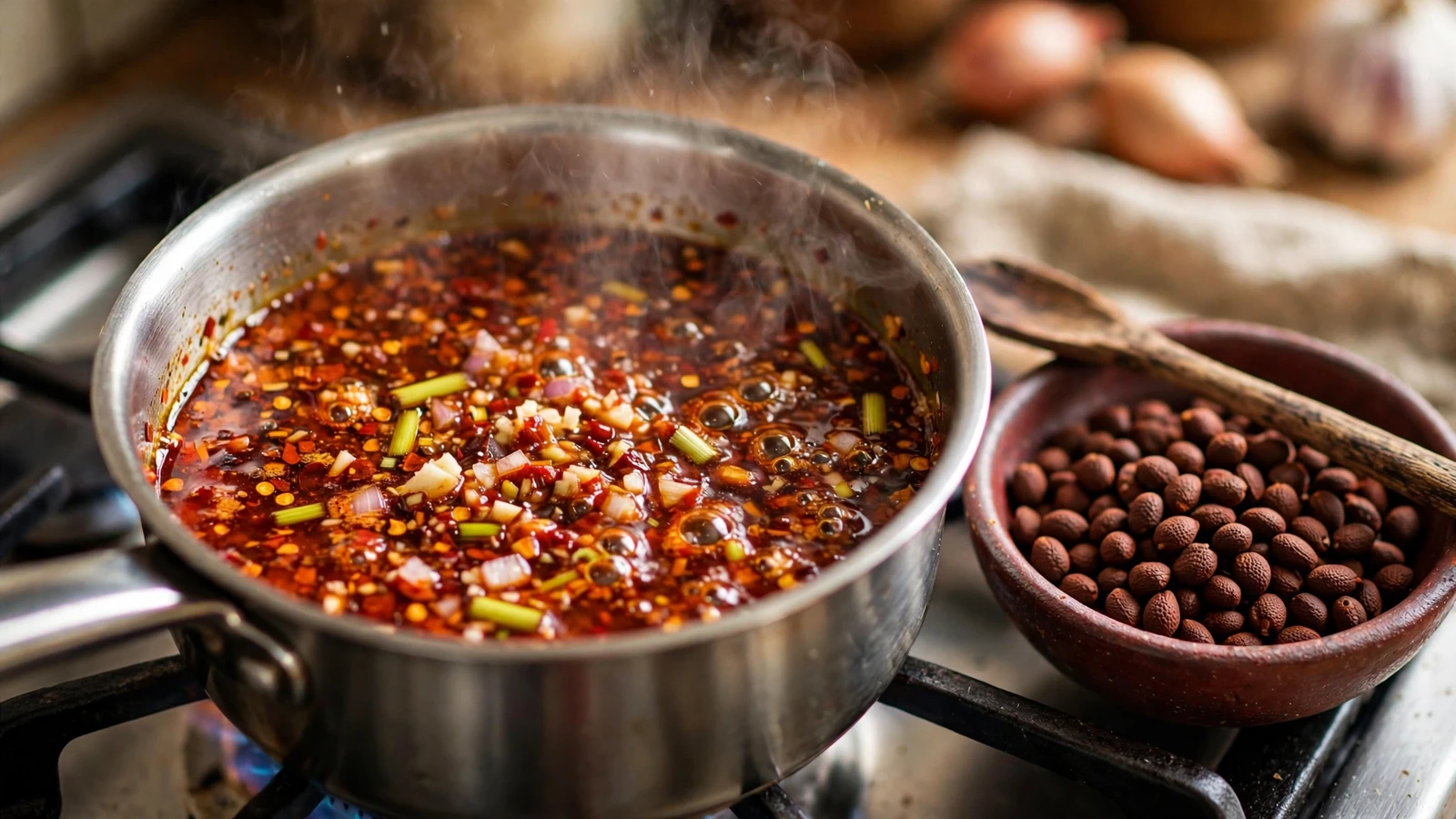
- Season the broth. Stir half the sate into the simmering broth along with the fish sauce, rock sugar, and salt. Simmer uncovered 15 minutes so the flavors marry. Taste and adjust: it should be savory and aromatic first, with lemongrass up front and a slow chili warmth at the back. Add more fish sauce for salt, a pinch more sugar if the shrimp paste tastes harsh.
- Cook the thick noodles. Thick bun noodles are denser than they look — ignore the optimism of the package, which often says 7 or 8 minutes. In a separate large pot of boiling salted water, cook the noodles until fully tender with no chalky core, usually 10 to 20 minutes depending on the brand. Drain, rinse under cold water to stop the cooking, and shake dry. (Cooking them separately keeps the broth from turning starchy.)
- Slice the beef. Unwrap the chilled shank and slice it against the grain as thin as you can — about 1/8 inch. The chill pays off here: warm shank tears, cold shank slices like a dream.
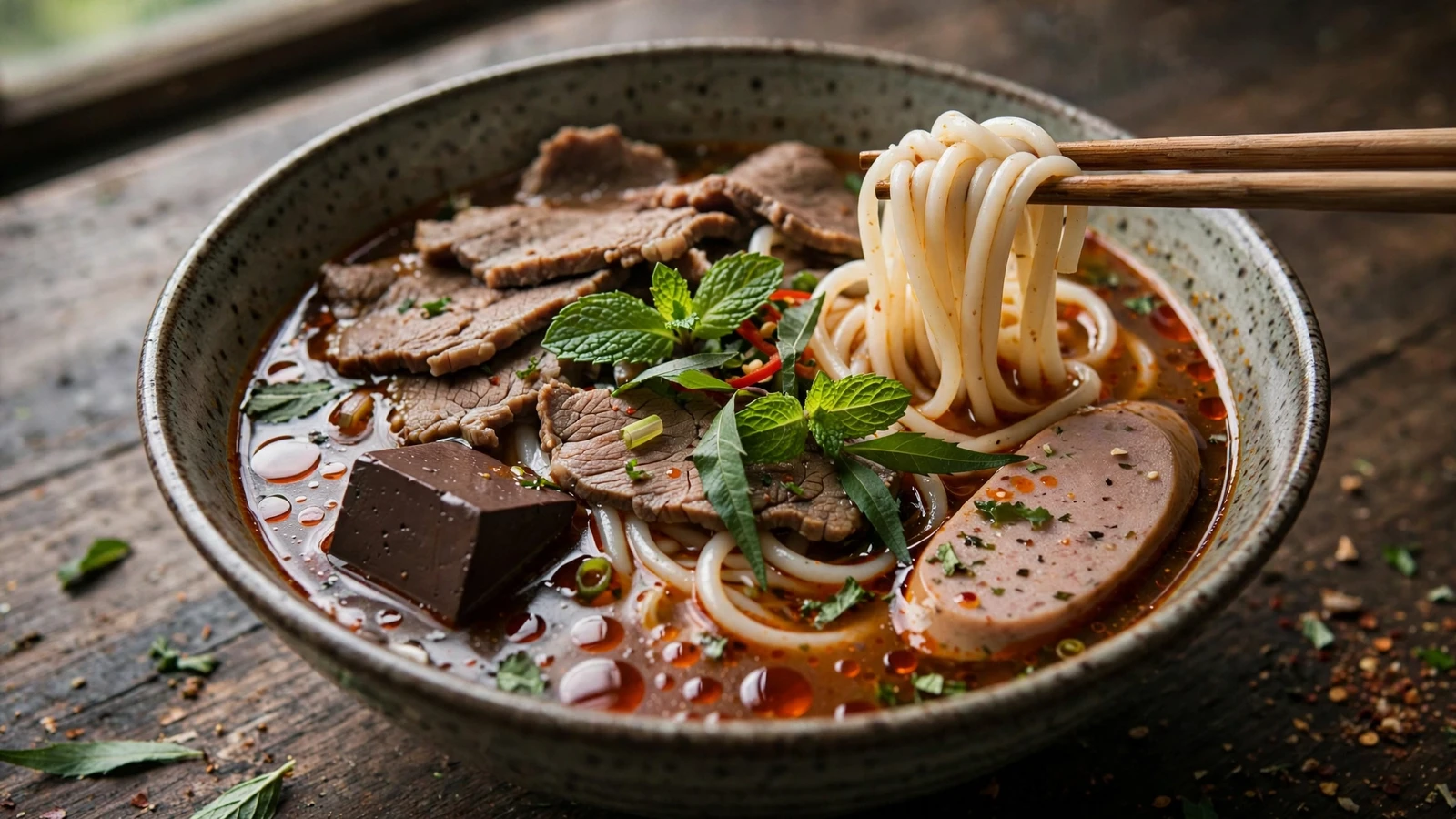
- Assemble the bowls. Divide the noodles among six large, warmed bowls. Arrange sliced beef shank, a piece of pork hock, blood cake cubes, pork sausage slices, and a few slices of raw sirloin over the noodles — the hot broth will cook the raw beef in the bowl. Ladle the broth over everything, hot enough to make the sirloin blush. Serve immediately with the vegetable platter, lime wedges, chilies, and the reserved sate on the side.
Tips for the Best Bun Bo Hue
Troubleshooting: Fix My Bun Bo Hue
Broth cloudy, too funky, or the wrong color? Noodles gummy? Pick your problem below — these are the five most common bun bo Hue mishaps and exactly how to fix each one.
HERB & LIME · KITCHEN HELP
Fix My Bun Bo Hue
Choose what went wrong to see a practical next step.
Possible cause
What to try next
For next time
From Paul's kitchen. Results vary with meat cuts, noodles, and stove heat — adjust timing to your setup.
Quick reference (also works without JavaScript)
The broth is cloudy and muddy-looking
Cause: The bones and meat went straight into the pot without parboiling, or the broth boiled hard instead of simmering gently.
Try: For the next pot, cover the shank and hocks with cold water, boil 5 minutes, then drain, rinse everything under cold water, scrub the pot clean, and start the real broth. Keep it at the gentlest simmer — a few lazy bubbles, never a rolling boil — and skim the foam that rises in the first 20 minutes.
Prevent: Always parboil and rinse bones before the long simmer, and keep the lid off so the broth reduces instead of churning. Remove the onion and ginger once they start falling apart so they don't disintegrate into the broth.
The broth smells too funky or tastes harsh from shrimp paste
Cause: Too much shrimp paste went in at once, or it was added straight from the jar without dissolving, so it tastes raw instead of mellow.
Try: Ladle some broth into a cup, dissolve a spoonful of rock sugar or a splash more fish sauce and stir it back in to round out the harshness. Then simmer the pot uncovered for 15 more minutes — time mellows the funk.
Prevent: Dissolve shrimp paste in a cup of hot water and strain it through a fine sieve before adding, and season in two passes: half early in the simmer, the second half at the end. Start with about 2 tablespoons per 4 quarts of water and taste before adding more.
The broth is pale instead of brick-red
Cause: The annatto oil was skipped, the seeds were under-steeped, or the red sate never made it into the pot.
Try: Make a quick rescue sate: heat neutral oil, steep 2 tablespoons annatto seeds until the oil turns vivid amber-red (about 90 seconds), strain out the seeds, fry minced lemongrass, shallots, garlic, and chili flakes in the red oil, and stir half into the hot broth.
Prevent: Bloom the annatto seeds first, off to the side, before building the sate — pull them off the heat the moment the oil turns amber-red, because scorched annatto tastes bitter. Half the finished sate seasons the broth; the rest goes on the table.
The thick noodles are gummy, mushy, or still chalky
Cause: Package directions for thick bun bo Hue noodles are often wildly off — many brands need far longer than the 7–8 minutes printed on the bag.
Try: Cook the noodles in a separate pot of boiling salted water until fully tender with no chalky core, usually 10–20 minutes depending on brand. Drain, rinse under cold water to stop the cooking, and let the hot broth reheat them in the bowl.
Prevent: Taste a noodle before draining rather than trusting the package timer. Never cook the noodles in the broth itself — the starch clouds it — and don't soak dried thick noodles too long or they go gummy.
The blood cake is rubbery or honeycombed
Cause: The blood cake was boiled hard instead of poached, which traps steam and leaves a spongy, honeycombed texture.
Try: For the next batch, rinse the blood cubes, put them in a pot with fresh water, a smashed shallot, and a slice of ginger, and hold at the barest simmer — never a rolling boil — for about 1 hour until just set, then drain and rinse cold.
Prevent: Low heat is the whole trick: if you see vigorous bubbling around the cubes, the heat is too high. Add the cooked cubes to the broth only at the end to warm through.
Recipe Card
Bun Bo Hue (Spicy Vietnamese Beef Noodle Soup)
Ingredients
Method
- Parboil the bones and meat. Put the beef shank and pork hocks in a large stockpot, cover with cold water, and bring to a rolling boil. Boil 5 minutes, then drain, rinse the meat and bones under cold running water, and scrub the pot clean.
- Start the broth. Return the rinsed meat and bones to the clean pot with the smashed lemongrass, onion, ginger, and 4 quarts of water. Dissolve 1 tablespoon of the shrimp paste in 1 cup of hot water, strain through a fine-mesh sieve, and stir into the pot. Bring to a boil, then reduce to the gentlest simmer. Skim foam during the first 20 minutes. Simmer, uncovered, 2 1/2 to 3 hours.
- Pull the meats as they finish. At about 1 hour, lift out the pork hocks when the skin is tender. At 2 1/2 to 3 hours, test the beef shank with a chopstick — it should slide in with barely any resistance. Lift it out, cool briefly, then wrap and refrigerate 30 minutes for easier slicing. Discard the spent lemongrass, onion, and ginger.
- Poach the blood cake. Rinse the blood cubes, put them in a small pot with fresh water, a smashed shallot, and a slice of ginger. Hold at the barest simmer — never a rolling boil — for about 1 hour, until firm and set. Drain and rinse with cold water.
- Make the annatto-chili sate. Heat the oil over medium heat, add the annatto seeds, and cook about 90 seconds, until the oil turns vivid amber-red. Strain out and discard the seeds. Return the red oil to the pan, fry the minced lemongrass, shallots, and garlic 3 to 4 minutes until fragrant and golden, then stir in the chili flakes and the remaining 1 tablespoon of shrimp paste and cook 1 minute more. Reserve half for the table.
- Season the broth. Stir half the sate into the simmering broth with the fish sauce, rock sugar, and salt. Simmer uncovered 15 minutes. Taste and adjust: savory and aromatic first, lemongrass up front, slow chili warmth at the back.
- Cook the thick noodles in a separate large pot of boiling salted water until fully tender with no chalky core, usually 10 to 20 minutes depending on brand. Drain, rinse under cold water, and shake dry.
- Slice the chilled beef shank against the grain as thin as you can, about 1/8 inch.
- Assemble the bowls. Divide the noodles among six large warmed bowls. Arrange sliced beef shank, a piece of pork hock, blood cake cubes, pork sausage slices, and raw sirloin slices over the noodles. Ladle the hot broth over everything. Serve immediately with the vegetable platter, lime wedges, chilies, and reserved sate on the side.
Notes
More Vietnamese Recipes
- Pho Ga: Vietnamese Chicken Noodle Soup — the gentler, golden chicken broth every noodle-soup lover should know.
- Vietnamese Ginger Chicken (Ga Kho Gung) — caramelized chicken with ginger, another central-Vietnam favorite.
- Com Tam: Vietnamese Broken Rice with Grilled Pork — the Saigon rice-plate classic with grilled pork and egg.
- Vietnamese Tamarind Shrimp Soup (Canh Chua Tom) — sweet, sour, and light — the soup that tastes like summer in the Mekong Delta.
From the Garden
This soup asks for five stalks of lemongrass, which is exactly why I keep a pot of it by the kitchen door — one honest observation from a season of growing it: lemongrass wants heat and neglect in roughly equal measure, and a single healthy clump yields more stalks in a summer than one cook can use. If you’re curious, our guide to overwintering lemongrass indoors walks through keeping it alive through the cold months so it’s ready when soup season returns.
1 thought on “Bun Bo Hue: Vietnamese Spicy Beef Noodle Soup”