
The Banchan That Disappears First
Some side dishes sit politely at the edge of the table. Oi muchim is not one of them. These Korean cucumber salads show up as crisp, ice-cold coins of cucumber coated in a spicy, garlicky, sesame-laced dressing — sweet heat from gochugaru, a tug of rice vinegar, a whisper of sugar to round everything out. One bite and you understand why Korean restaurants refill this banchan without being asked.
It also happens to be one of the fastest Korean sides you can make at home. There's no cooking, no special equipment, and no advance planning beyond a quick salt-and-rest that draws out the cucumbers' water so they stay crunchy instead of going limp. If you keep gochugaru in your pantry, the rest is basic stuffing you probably already own.
Serve it next to grilled meats, fried rice, or a rich bowl of noodles — anywhere something cold, crisp, and punchy belongs.
What Makes Oi Muchim Different from Other Cucumber Salads
Every culture seems to have its own cucumber salad, and they all solve the same problem in different ways. A Japanese sunomono leans sweet and tart with rice vinegar; a Thai cucumber salad brings lime and chilies. Oi muchim is the Korean answer: bolder, redder, and built on gochugaru — Korean chili flakes — which give it a fruity, smoky heat and that unmistakable crimson tint.
The signature move is salting. Cucumbers are more than 95 percent water, and without salting, that water weeps out and dilutes the dressing into a sad pink puddle. Ten minutes of salting, a quick squeeze, and your cucumbers keep their crunch and the dressing clings instead of sliding off.
Ingredients
For the cucumbers:
- 2 English or Persian cucumbers (about 1 1/4 pounds), sliced 1/4-inch thick
- 1 teaspoon kosher salt
For the dressing:
- 2 tablespoons gochugaru (Korean chili flakes)
- 1 tablespoon rice vinegar
- 1 tablespoon toasted sesame oil
- 1 tablespoon soy sauce
- 1 teaspoon granulated sugar
- 3 garlic cloves, minced (about 1 tablespoon)
- 1 teaspoon toasted sesame seeds, plus more to finish
- 2 scallions, thinly sliced
Optional but great:
- 1 teaspoon fish sauce instead of half the soy sauce, for extra depth
- A pinch of MSG-free mushroom powder or a crumbled dash of dashi granules for savoriness
How to Make Oi Muchim
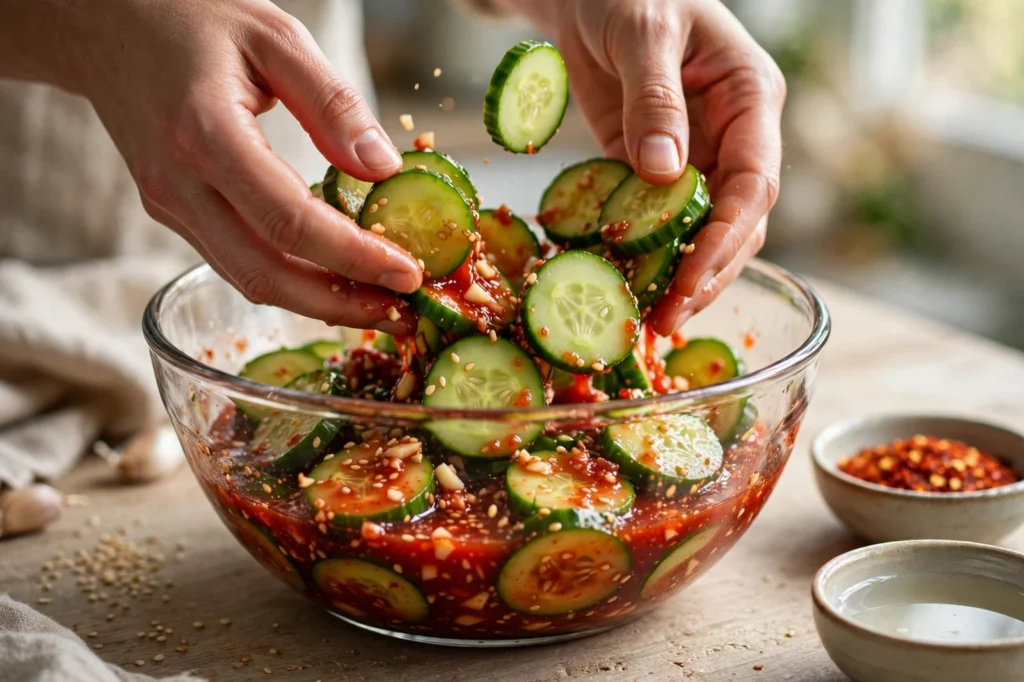
Step 1. Salt the cucumbers. Toss the cucumber slices with the kosher salt in a colander or large bowl. Let them sit for 10 minutes. You'll see water beading on the surface — that's exactly what you want out of there.
Step 2. Squeeze, don't rinse. Grab handfuls of cucumber and squeeze firmly over the sink to press out the water. You want them damp, not dripping. (Skip the rinse — the residual salt is part of the seasoning.)
Step 3. Whisk the dressing. In a large mixing bowl, stir together the gochugaru, rice vinegar, sesame oil, soy sauce, sugar, minced garlic, and sesame seeds until the sugar dissolves. Taste it: it should be spicy, tangy, a little sweet, and assertive. The cucumbers will mellow it, so bold is good.
Step 4. Toss everything together. Add the squeezed cucumbers and sliced scallions to the dressing. Toss with your hands or tongs until every slice is coated in that red, glossy dressing.
Step 5. Rest and serve. Let the salad sit for 5 minutes so the cucumbers absorb the flavors, then toss once more and finish with an extra sprinkle of sesame seeds. Serve cold.
Tips for the Best Oi Muchim
Pick the right cucumber. English or Persian cucumbers are the move — thin skins, tiny seeds, naturally crisp. If all you have are regular slicing cucumbers, peel them in stripes and scoop out the seeds with a spoon; the watery seed core is the enemy of crunch.
Mind your gochugaru. Gochugaru ranges from mild to face-melting. Start with the full 2 tablespoons if yours is a standard medium-heat bag from a Korean grocery; if you're using a particularly fiery one, pull back to 1 tablespoon and add more to taste. Whatever you do, don't swap in cayenne or generic red pepper flakes — the flavor is completely different, and you'll miss the fruity sweetness that makes this dish.
Slice evenly. A quarter-inch is the sweet spot. Thinner slices go limp; thicker ones don't absorb the dressing. A mandoline earns its keep here, but a sharp knife and a steady hand do the job.
Serve it fresh. Oi muchim is at its absolute best within a few hours of making it. Leftovers keep in the fridge for a day or two, but the cucumbers soften and the dressing loses its edge. Make just what you'll eat.
Variations
Oi Muchim with perilla leaves. Tear 5 or 6 perilla leaves (kkaennip) into bite-size pieces and toss them in with the cucumbers. They add a minty, anise-like note that's classic in Korean cooking and lovely with the heat.
Carrot and onion oi muchim. Add half a carrot cut into matchsticks and a quarter of a small onion sliced paper-thin. Salt them along with the cucumbers — they add color, sweetness, and crunch.
Low-sodium version. Cut the soy sauce to 2 teaspoons and add a squeeze of lemon juice to keep the flavors bright without the extra salt. The dressing will be a touch less savory but still plenty punchy.
No-heat version for kids. Skip the gochugaru entirely and double the sesame oil, adding 1 tablespoon of toasted sesame seeds. You get a garlicky sesame cucumber salad that kids tend to love — same crunch, no fire.
What to Serve with Oi Muchim
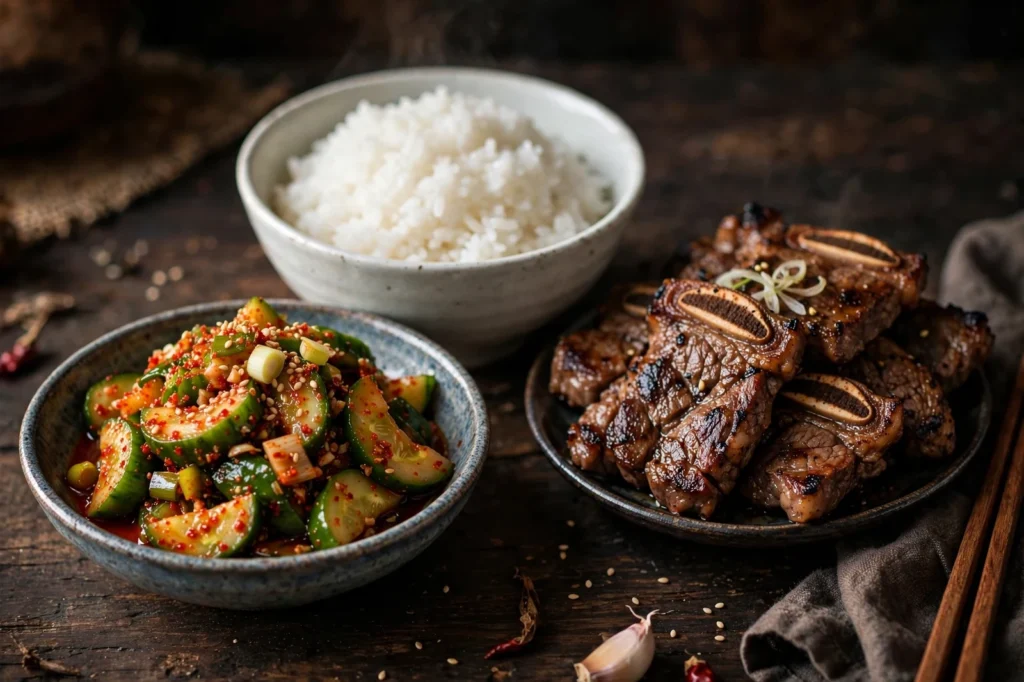
This is banchan — a side dish — so it shines next to almost any Korean or pan-Asian main. It's a natural partner for grilled short ribs or bulgogi, where the cold crunch cuts through rich, fatty meat. It perks up a bowl of plain rice with a fried egg on top. And it sits beautifully next to fried rice or noodle dishes, giving your palate a bright, spicy reset between bites.
Storage
Refrigerate in an airtight container for up to 2 days. The cucumbers will soften over time — stir before serving and don't expect day-two crunch. This one isn't a meal-prep candidate, but at 15 minutes, it never needs to be.
Frequently Asked Questions
Can I make oi muchim ahead of time? You can salt and squeeze the cucumbers up to a day ahead and keep them in the fridge, then toss with freshly mixed dressing just before serving. Fully assembled, it's best eaten the same day.
Is gochugaru gluten-free? Most plain gochugaru is just dried, ground chilies and is naturally gluten-free. Check the label for additives, and use tamari instead of soy sauce in the dressing if gluten is a concern.
Can I use this dressing on other vegetables? Absolutely — the same dressing is wonderful on blanched bean sprouts, shredded cabbage, or sliced zucchini. Salt watery vegetables first, just like the cucumbers.
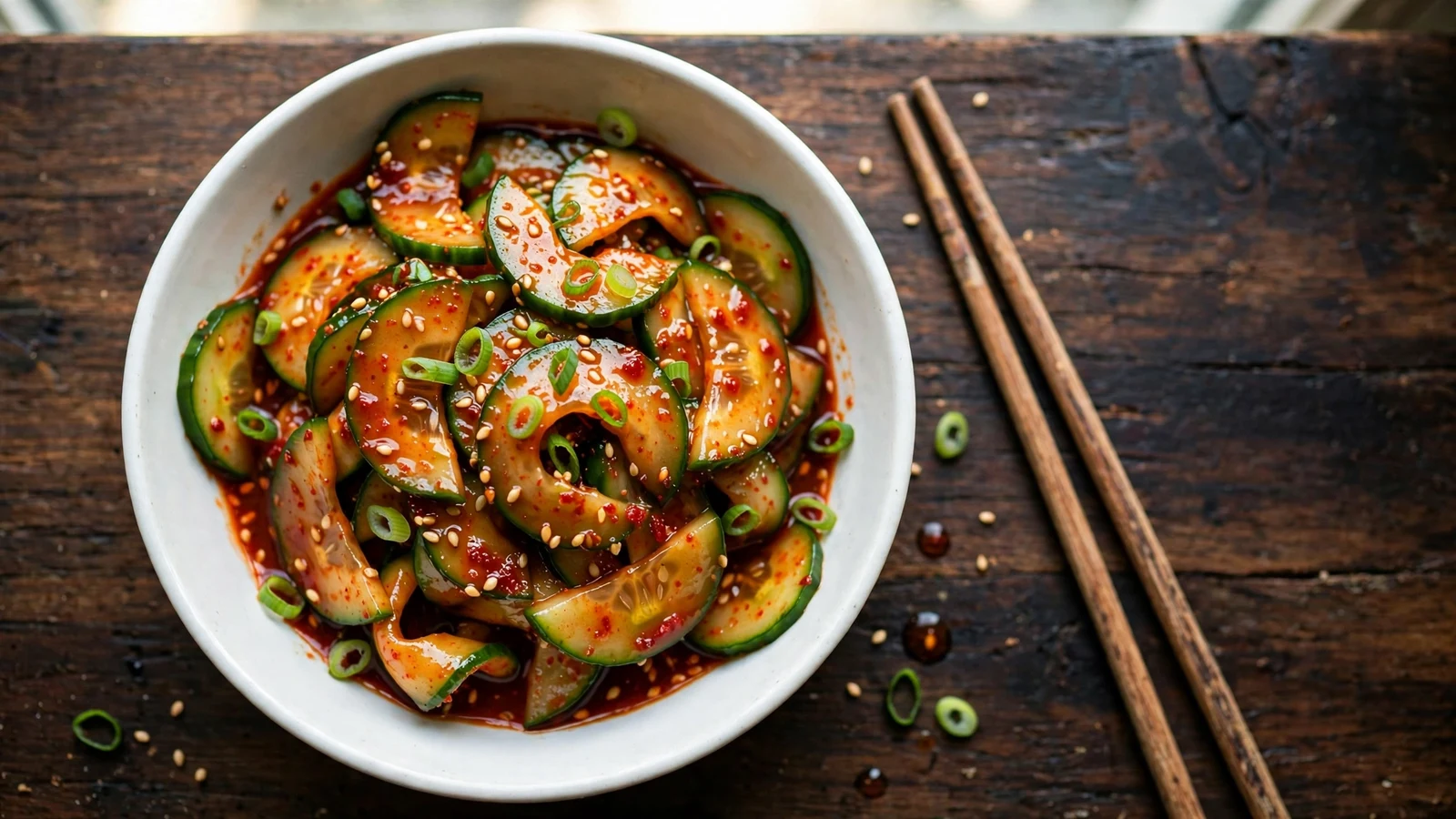
Oi Muchim: Korean Spicy Cucumber Salad
Ingredients
Method
- Toss cucumber slices with kosher salt in a colander or bowl. Let sit 10 minutes to draw out water.
- Squeeze handfuls of cucumber firmly over the sink to press out water. Do not rinse.
- Whisk gochugaru, rice vinegar, sesame oil, soy sauce, sugar, minced garlic, and sesame seeds in a large bowl until sugar dissolves.
- Add cucumbers and scallions to the dressing and toss until every slice is coated.
- Rest 5 minutes, toss once more, finish with extra sesame seeds, and serve cold.
4 thoughts on “Oi Muchim: Korean Spicy Cucumber Salad (Ready in 15 Minutes)”