
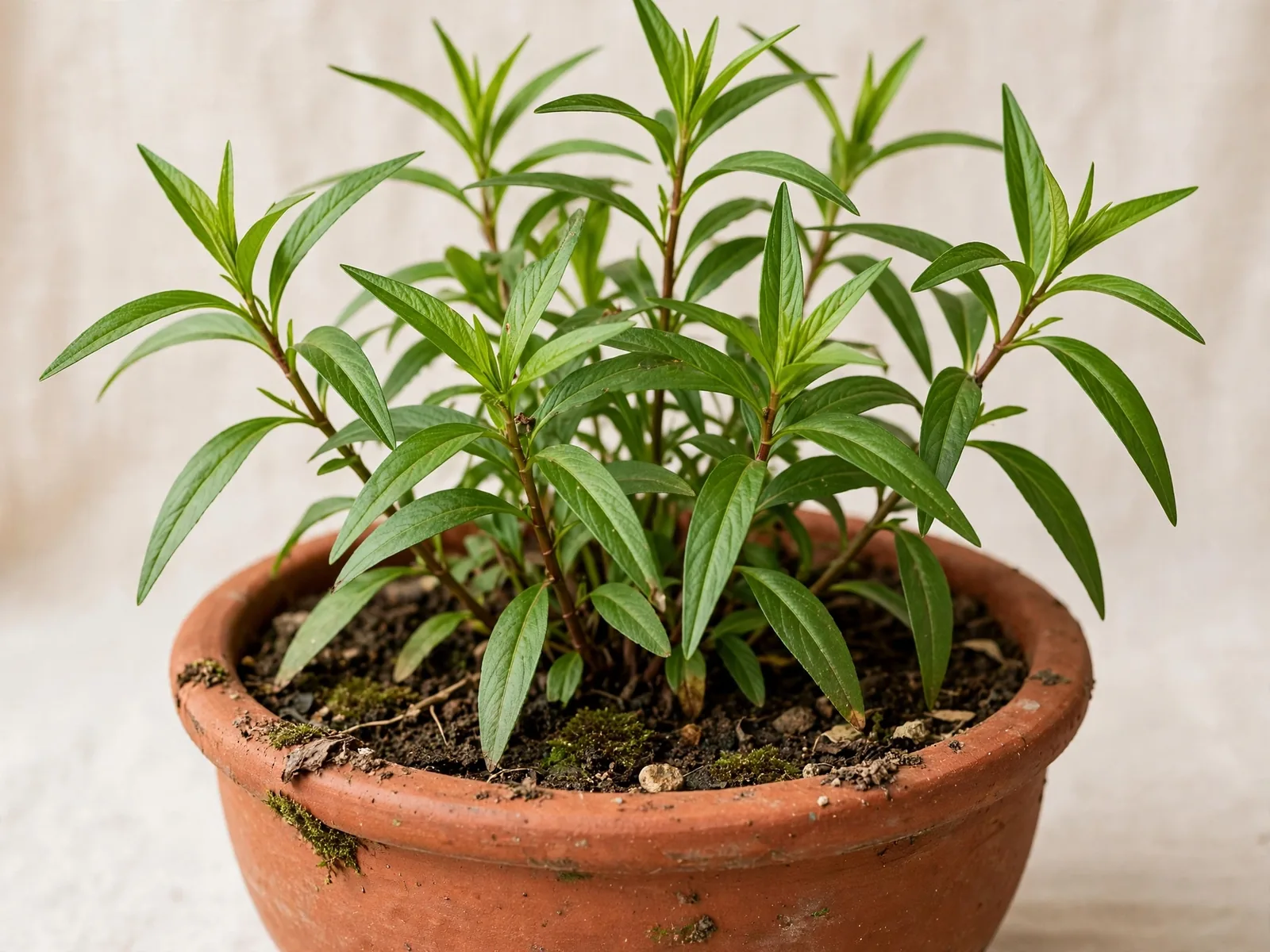
Rau ram is the peppery, citrusy herb you’ll find tucked next to the noodles in pho and spring rolls. Its English name is Vietnamese coriander, and it’s worth knowing right away: despite the name, it’s not related to the cilantro you buy at the grocery store. It’s a tropical plant with a flavor all its own, and once you taste it, store-bought cilantro starts to feel like a compromise.
Here’s the good news for gardeners: rau ram is one of the easiest herbs you can grow. It roots from cuttings almost as readily as mint, loves damp soil, and is happy in a pot on a balcony.
One honest note before we start: this guide is compiled from published horticultural references, not from a personal grow log. Where a specific growing detail comes from, we cite the source. We haven’t fabricated any harvest results or trial notes.
Know Your Plant First
The botanical name is Persicaria odorata, in the Polygonaceae family (the same family as rhubarb and buckwheat). This matters because it explains the look: long, pointed, lance-shaped leaves on reddish stems that are jointed at each leaf, creeping outward rather than growing upright like a bush.
The most recognizable feature is on the leaf itself. Each mature leaf usually carries a dark chestnut-brown marking shaped like a V or chevron near its center — the Royal Horticultural Society describes this dark purple-brown chevron as characteristic of Persicaria odorata. Treat it as one clue among several, not a pass/fail test: the University of Washington’s horticulture library notes that several plants in the Persicaria genus show similar V-shaped leaf markings. Confirm the whole picture — lance-shaped pointed leaves, reddish jointed stems, a creeping growth habit, and the distinctive peppery-citrus aroma when a leaf is crushed — and buy starter plants from a reputable nursery. Never eat, or encourage eating, a plant you cannot positively identify.
A few quick facts from growing references:
- It grows about 15–30 cm tall (6–12 inches) as a creeping, spreading plant, and can reach wider in ideal tropical conditions.
- It’s a tropical perennial, frost-tender: the above-ground parts are damaged as soon as temperatures hit 0°C / 32°F.
- In USDA zones 9–11 it can live outdoors year-round; everywhere else, growers treat it as a summer annual or bring it indoors for winter.
- Flowers are small pink-white spikes that appear in summer in warm climates; outside the tropics, flowering and seed production are rare — which is why almost everyone propagates it from cuttings.
Climate and Where to Put It
Rau ram wants what the tropics give it: warmth, humidity, and moisture. If you live in a frost-free climate (USDA zones 9–11), it can live in the ground year-round and spread like mint. Everywhere else, treat it as a summer annual or keep it in a pot you can move indoors.
Light matters more than people expect. It tolerates full sun in breezy spots with boggy soil, but in hot climates the leaves do better with partial shade — strong afternoon sun can scorch them and turn the flavor bitter. Morning sun with afternoon shade is the sweet spot most references land on.
The non-negotiable requirement is water. This plant evolved in wet conditions and wants consistently moist soil — some growers even keep it in bog-like pots or near water. Mulch helps in hot weather to keep the soil from drying out.
The Pot Setup
For most readers, a pot is the way to go. Rau ram spreads by trailing stems that root wherever they touch soil, so a container keeps it from wandering across the garden bed — the same reason experienced growers contain mint.
A practical setup:
- Pot size: 8–12 inches wide is plenty for a steady kitchen supply.
- Soil: Rich, moisture-holding potting mix with plenty of organic matter. It likes slightly acidic to neutral soil (around pH 5.5–7).
- Drainage: Keep the mix damp, not swampy in a sealed pot. If the pot has drainage holes and you water often, it will be happy.
- Feeding: A light, balanced liquid fertilizer every few weeks during active summer growth is enough. Overfeeding isn’t the risk here — underwatering is.
Propagating from Cuttings
This is the easiest part, and it’s the main reason growing references call this plant beginner-friendly. You can start a whole new plant from grocery-store sprigs if they’re fresh.
- Snip a healthy 4–6 inch stem just below a leaf node.
- Strip off the lower leaves, leaving a few at the top.
- Stand the cutting in a glass of water or stick it directly into moist potting mix.
- Keep it in indirect light (not harsh sun) and keep the mix lightly moist.
- Roots typically appear in one to three weeks. A gentle tug that meets resistance means it’s rooted.
Some growers tent the pot with a loose plastic bag to hold humidity, but many simply root cuttings on a windowsill in water. You can also divide an established clump in spring by pulling the root ball apart and replanting the sections.
Care Through the Season
Watering. This is the whole job. Check the soil often in summer; it should feel damp, not dry. Pots dry out faster than garden beds, so a balcony plant may need daily watering in a heat wave.
Pinching and pruning. Regular snipping keeps the plant bushy and delays flowering. Once it flowers, leaf flavor can turn bitter, so pinching flower spikes when they appear extends your harvest window.
Overwintering. Where winters freeze, bring the pot inside before the first frost. A bright windowsill with enough humidity will keep it alive through winter — and a few fresh cuttings started in late summer work as an insurance policy if the mother plant doesn’t make it.
Harvesting and Using It
Snip the young, tender leaves and use them fresh — the flavor fades fast once dried, and most references say drying isn’t worth it. Regular picking encourages new growth and keeps the plant compact.
In the kitchen, rau ram is used raw or added at the very last minute: over spring rolls, pho, noodle salads, and rice paper rolls. The flavor is coriander-like with a lemony note and a peppery kick.
Common Problems
Published growing references report that rau ram has few serious pest or disease problems, which matches its reputation as an easy plant. The issues that do come up are mostly about conditions, not bugs:
- Wilting or scorched leaves — almost always underwatering or too much hot afternoon sun. Move to afternoon shade and water more often.
- Leggy, sparse growth — not enough harvesting. Cut it back; it responds well to regular picking.
- Slugs — in damp garden beds, slugs may chew the leaves. In pots, this is rarely an issue.
Cooking with rau ram
Rau ram is the classic finishing herb for Vietnamese salads such as goi ga (chicken cabbage salad) and is traditionally served alongside hot vit lon (balut). Use young leaves raw or add them at the very end of cooking — heat dulls their peppery-citrus bite.
Sources
- A Seed to Life, “Grow Rau Ram organically | Vietnamese Coriander” — zones 9–11, consistently moist organic-rich soil, propagation from stem cuttings in water. https://www.aseedtolife.com/blogs/gardening/grow-rau-ram-organically-vietnamese-coriander
- Nurtured Life, “How to Grow Vietnamese Mint” — stem cuttings root within days, consistently damp soil, harvest young leaves fresh. https://nurturedlife.com.au/vietnamese-mint/
- Promesse de Fleurs, “Vietnamese Coriander — Persicaria odorata” — perennial habit, foliage damaged at 0°C, plant after last frost, partial shade preferred. https://www.promessedefleurs.ie/vegetable-gardens/vegetable-plants/vegetable-plants-a-to-z/vietnamese-coriander-persicaria-odorata.html
- RxHarun plant profile, “Persicaria odorata, Vietnamese coriander” — botanical description, propagation by stem and root cuttings, coriander-lemony flavor notes. https://rxharun.com/resources/rx-vegetables-herbs-and-spices-a-z/persicaria-odorata-vietnamese-coriander-cambodian-mint-praew-leaf/
- Royal Horticultural Society, Persicaria odorata plant profile — dark purple-brown chevron description. https://www.rhs.org.uk/plants/118209/persicaria-odorata/details
- University of Washington Elisabeth C. Miller Library, More about Persicaria — V-shaped markings across the genus. https://depts.washington.edu/hortlib/pal/more-about-persicaria/
Editorial note: No personal growing trials were conducted for this article, and no harvest or flavor claims are presented as first-hand experience. Growing guidance is compiled from the published horticultural references above.
1 thought on “How to Grow Vietnamese Coriander (Rau Ram): A Beginner’s Guide”