
Crisp Edges, Light Sauce, All About the Noodles
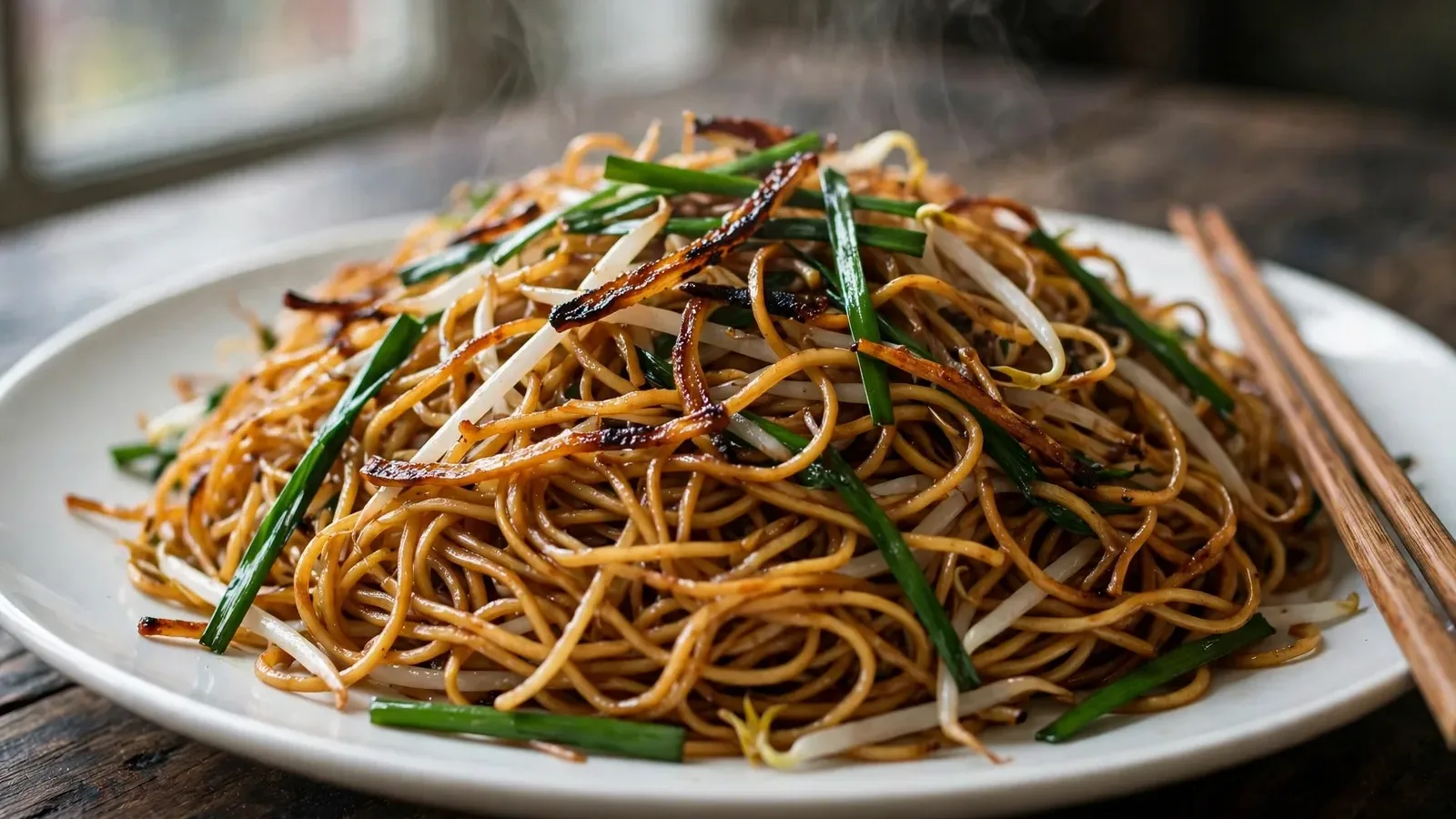
Cantonese soy sauce chow mein — often listed as supreme soy sauce chow mein — is the plate that proves how much flavor thin egg noodles can carry with almost nothing on them. No heavy sauce, no pile of protein. Just noodles fried until the edges turn golden and a little crisp, bean sprouts that stay snappy, garlic chives cut long so they twine through the strands, and a soy blend that seasons more than it soaks.
If you have read our Lo Mein vs Chow Mein: What's the Difference?, this is the chow mein side of that line in its purest form: par-cooked noodles, dried well, fried in a hot wok until part crisp and part tender, then glossed with sauce at the very end. It eats light, it cooks fast, and the texture does most of the talking.
Why This Version Stays Crisp
Three small habits decide whether you get crisp-edged chow mein or a soft tangle:
- Dry the noodles after par-cooking. Surface water is the enemy. Drain well, spread the noodles on a tray or wide plate, and let them sit 10 to 15 minutes while you prep the sprouts and chives. They should feel dry to the touch, not wet.
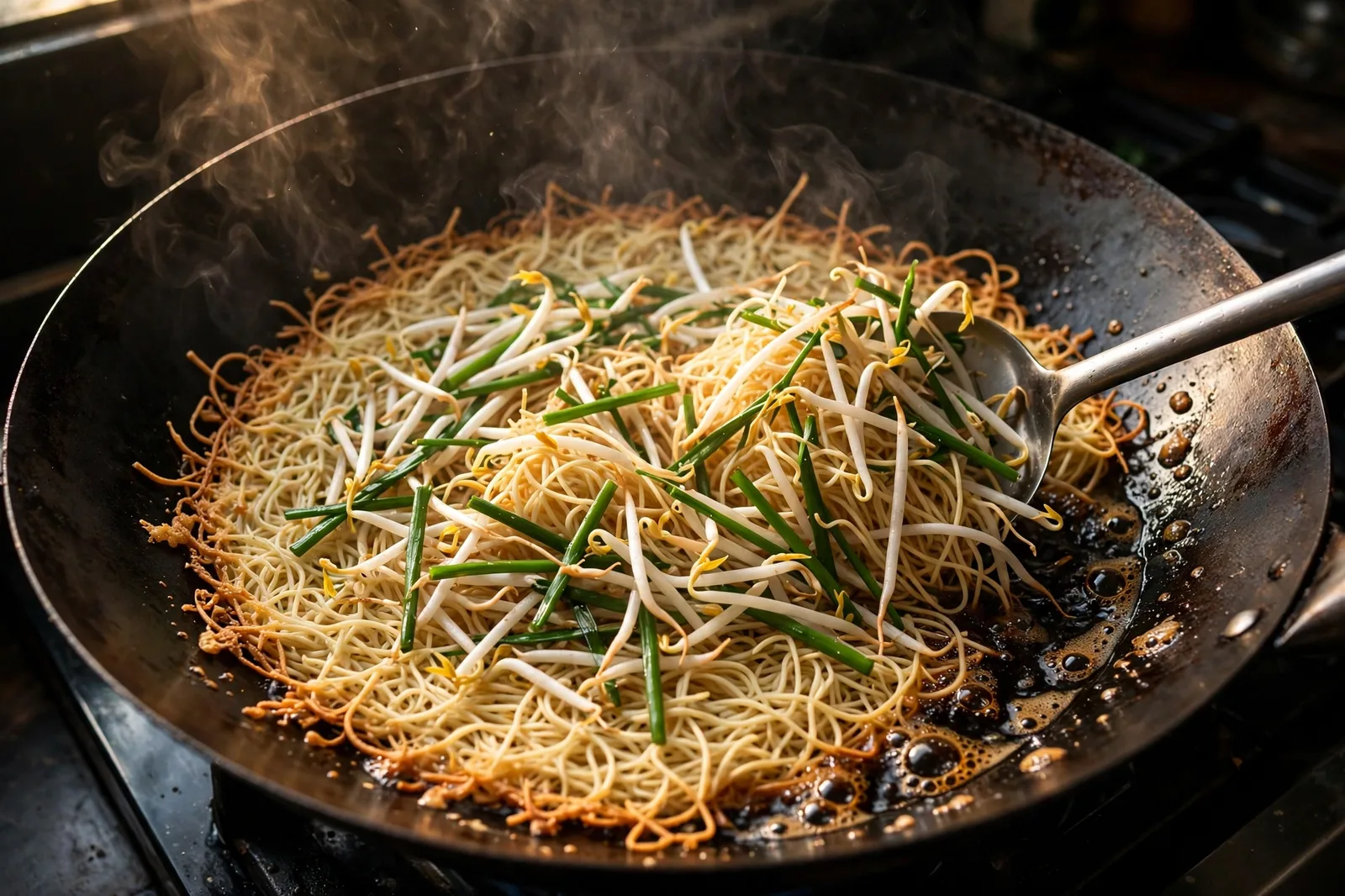
- Fry in an even layer and leave it alone. Spread the noodles across the hot wok, press them lightly, and do not touch them for 2 minutes. That quiet contact is where the golden crust forms. Flip once and give the second side the same treatment.
- Add the sauce late and light. The supreme soy blend goes in around the edge of the wok and tosses through in under a minute. Any longer and the noodles drink it up and go soft. Less is more here — you can always add a splash at the table, but you cannot take crispness back.
That hands-off sear is the same idea behind What Is Wok Hei and How to Get It at Home: hot metal, a little patience, and letting the food sit still long enough to actually sear.
Ingredients
For the noodles and vegetables:
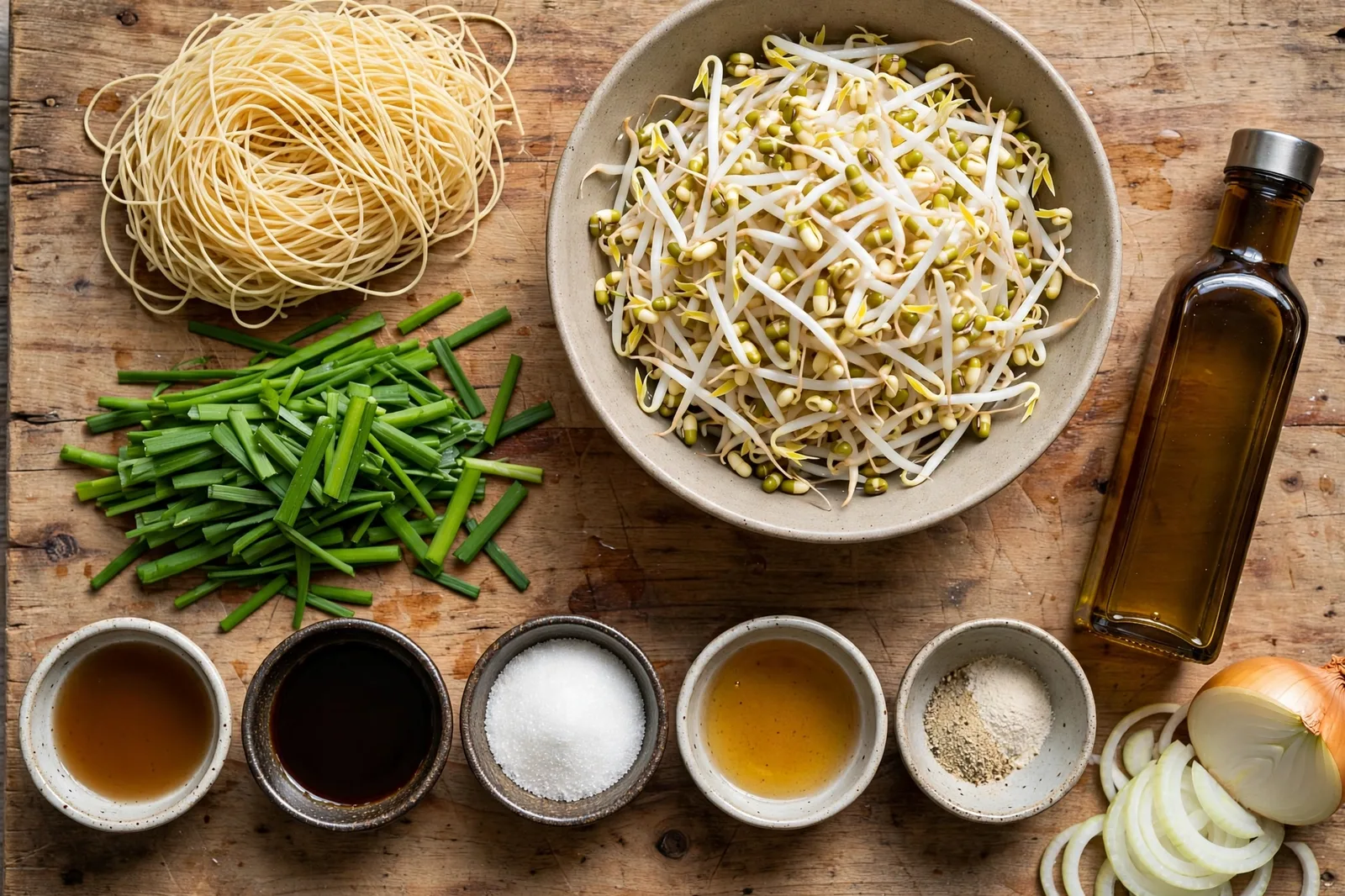
- 12 oz (340 g) fresh thin Hong Kong-style egg noodles (or dried thin egg noodles)
- 3 tablespoons neutral high-heat oil (peanut, avocado, or grapeseed), divided
- 4 cups (300 g) mung bean sprouts, rinsed and drained very well
- 1 bunch (about 4 oz / 115 g) garlic chives, cut into 2-inch lengths (or 6 scallions, cut the same way)
- 1/2 small yellow onion, thinly sliced (optional)
For the supreme soy sauce:
- 2 tablespoons light soy sauce
- 2 teaspoons dark soy sauce
- 1 teaspoon sugar
- 1 tablespoon Shaoxing wine (or dry sherry)
- 2 tablespoons water or unsalted chicken stock
- 1/4 teaspoon ground white pepper
- 1 teaspoon toasted sesame oil
For serving:
- Extra sliced scallions or chives
- Homemade Chili Oil at the table (optional)
Prep: 15 minutes. Cook: 10 minutes. Total: 25 minutes. Serves 4 as a main plate with a side, or 6 as part of a larger spread.
How to Make It, Step by Step
1. Par-cook and dry the noodles. Bring a large pot of water to a boil. Add the noodles and cook just until they loosen and turn barely tender — about 1 minute for fresh noodles, or 1 minute less than the package direction for dried. Drain in a colander, rinse briefly under cold water to stop the cooking, and shake off as much water as you can. Spread the noodles on a rimmed tray or wide plate in a loose layer and let them dry for 10 to 15 minutes. Toss them once or twice so the bottom layer dries too.
2. Mix the supreme soy sauce. Stir the light soy sauce, dark soy sauce, sugar, Shaoxing wine, water or stock, and white pepper together in a small bowl until the sugar dissolves. Set it near the stove. Stir the toasted sesame oil in only at the very end.
3. Sear the noodles. Heat a wok or large cast-iron skillet over high heat until it just begins to smoke. Add 2 tablespoons of the oil and swirl to coat. Add the dried noodles in an even layer, spread them out with chopsticks or tongs, and press them lightly into the pan. Leave them undisturbed for 2 minutes, until the bottom turns golden and crisp in spots. Flip the noodle layer in sections and cook 1 to 2 minutes more, until the second side picks up color. Move the noodles to a plate. They will not be crisp all the way through — crisp edges with tender centers is the goal.
4. Stir-fry the vegetables fast. Return the wok to high heat. Add the remaining 1 tablespoon of oil. Add the onion (if using) and stir-fry 30 seconds. Add the bean sprouts and stir-fry 45 to 60 seconds, just until they lose their raw edge but still snap. Add the garlic chives and toss for 20 seconds, until they wilt slightly and turn bright.
5. Bring it together. Return the noodles to the wok. Pour the soy sauce mixture around the edge of the hot wok so it sizzles on contact, then toss everything together quickly and evenly for 45 to 60 seconds. The noodles should turn glossy and evenly brown, with no puddle of sauce in the pan. Take the wok off the heat and stir in the toasted sesame oil.
6. Serve right away. Pile the noodles onto a warm platter, making sure some of the crisp strands sit on top. Scatter extra chives or scallions over the plate and serve at once, with chili oil at the table if you like heat.
The Supreme Soy Blend: What Each Part Does
The sauce looks simple, and it is — which is why the balance matters. Our Soy Sauce Guide: Light vs Dark vs Tamari breaks the pantry down in full, but for this plate:
| Part | Job on the plate | If you adjust it |
|---|---|---|
| Light soy sauce | Salt and clean soy flavor — the main seasoning | Add 1 teaspoon more if the noodles taste flat after tossing |
| Dark soy sauce | Deep color and a faint caramel roundness | A little goes a long way; too much turns the noodles bitter and too dark |
| Sugar | Rounds the salt and helps the edges caramelize in the wok | Skip it and the sauce tastes sharp; double it and the dish reads sweet |
| Shaoxing wine | Warmth and aroma when it hits the hot wok | Dry sherry is the closest swap; water works if you keep the rest the same |
| White pepper | Gentle heat that sits behind the soy | Black pepper works, but use a touch less — it reads stronger here |
A good rule for this dish: the mixed sauce should taste a little saltier than you want the finished noodles to taste. The noodles and sprouts will soften it in the toss.
Variations and Add-Ins
The classic plate is intentionally plain, which makes it a friendly base. Keep the noodle method the same and change the toss-ins:
- Char siu chow mein: Add 6 oz (170 g) of sliced Char Siu: Chinese BBQ Pork in step 4, after the sprouts, just to warm through. The sweet edges of the pork love the salty soy noodles.
- Shrimp chow mein: Stir-fry 8 oz (225 g) of peeled shrimp in the wok before the vegetables, 1 to 2 minutes until just pink, set aside, and toss back in at the end.
- Chicken or beef: Slice 8 oz (225 g) thin, toss with 1 teaspoon soy sauce and 1 teaspoon cornstarch, sear first until just cooked, and hold while you fry the noodles.
- Mushroom and greens: Add a handful of sliced fresh shiitakes with the onion, and a handful of baby bok choy leaves with the sprouts for a meat-free plate with more chew.
- Softer, saucier take: If you prefer your noodles on the lo mein side, add 2 extra tablespoons of water or stock to the sauce and toss a few seconds longer. The texture will be softer and glossier — a different plate, and a good one.
Serving and Storage Notes
Serve chow mein the moment it comes out of the wok. The crisp edges start softening within minutes as the steam from the sprouts settles into the noodles, and that contrast is the whole reason to make this dish. It pairs well with a crisp, cool side and something with a little richness — our Sichuan Dry-Fried Green Beans bring heat and blister, and Ginger Scallion Chicken makes the meal feel like a full Cantonese table without much extra work.
Leftovers keep for up to 3 days in the refrigerator. They will not be crisp the next day — no reheating trick fully brings that back — but they are still very good. Reheat in a hot wok or skillet with a teaspoon of oil, tossing until hot and a little re-crisped at the edges, or eat them at room temperature as a noodle salad with a squeeze of lime and a drizzle of chili oil.
Cantonese Soy Sauce Chow Mein
Ingredients
Method
- Par-cook and dry the noodles: Bring a large pot of water to a boil. Add the noodles and cook just until they loosen and turn barely tender — about 1 minute for fresh noodles, or 1 minute less than the package direction for dried. Drain, rinse briefly under cold water, shake off as much water as you can, and spread on a rimmed tray in a loose layer to dry for 10 to 15 minutes, tossing once or twice.
- Mix the supreme soy sauce: Stir the light soy sauce, dark soy sauce, sugar, Shaoxing wine, water or stock, and white pepper together in a small bowl until the sugar dissolves. Set near the stove. Hold the toasted sesame oil for the end.
- Sear the noodles: Heat a wok or large cast-iron skillet over high heat until it just begins to smoke. Add 2 tablespoons of the oil and swirl to coat. Add the dried noodles in an even layer, spread out, and press lightly. Leave undisturbed for 2 minutes, until the bottom turns golden and crisp in spots. Flip in sections and cook 1 to 2 minutes more. Move the noodles to a plate.
- Stir-fry the vegetables fast: Return the wok to high heat. Add the remaining 1 tablespoon of oil. Add the onion (if using) and stir-fry 30 seconds. Add the bean sprouts and stir-fry 45 to 60 seconds, just until they lose their raw edge but still snap. Add the garlic chives and toss for 20 seconds, until wilted slightly and bright.
- Bring it together: Return the noodles to the wok. Pour the soy sauce mixture around the edge of the hot wok so it sizzles on contact, then toss everything together quickly for 45 to 60 seconds, until the noodles turn glossy and evenly brown with no puddle of sauce in the pan. Take the wok off the heat and stir in the toasted sesame oil.
- Serve right away: Pile the noodles onto a warm platter with some crisp strands on top. Scatter extra chives or scallions over the plate and serve at once, with chili oil at the table if you like heat.