
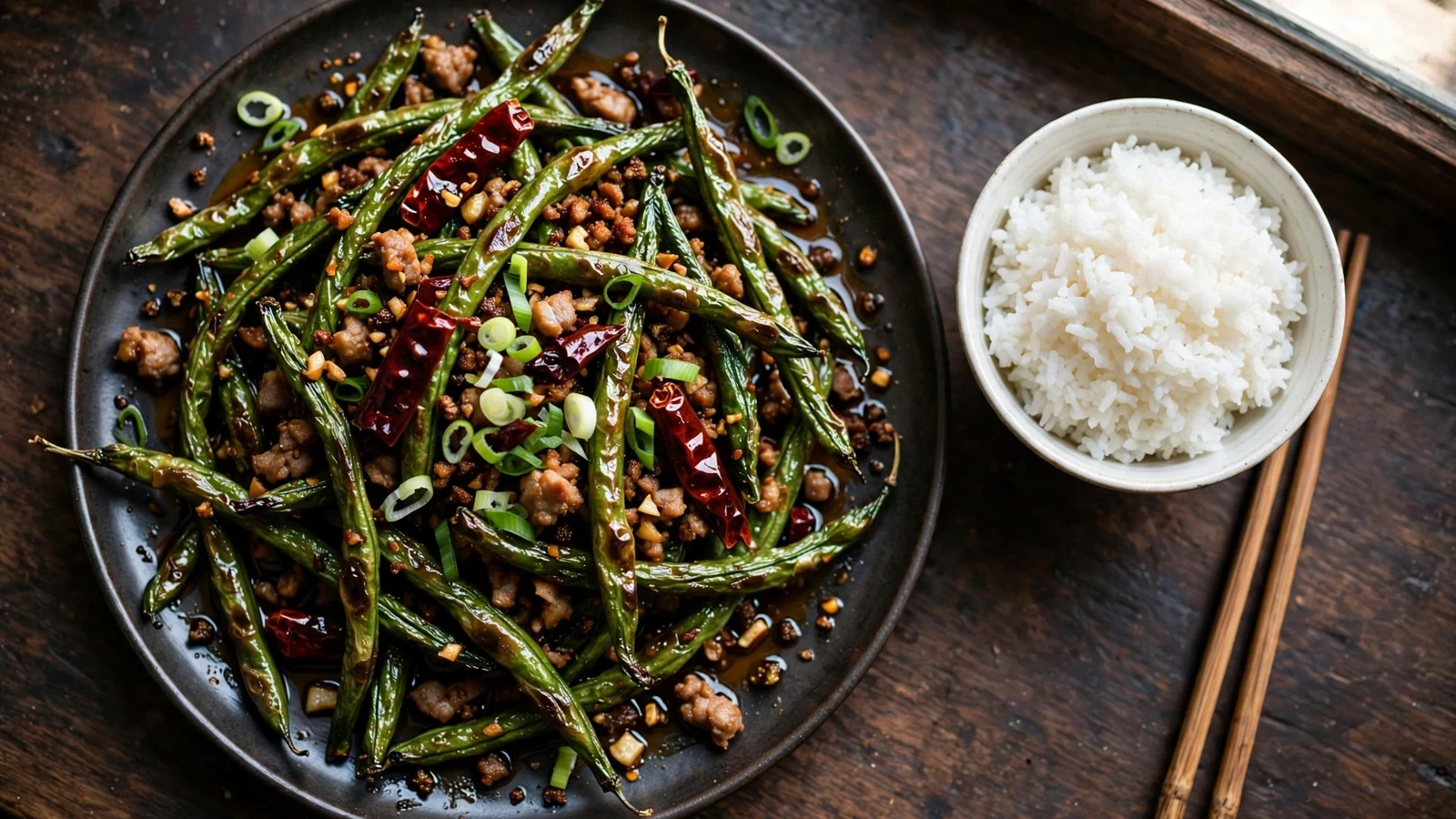
Blistered Beans, Savory Bits, Real Heat
Gan bian si ji dou is the green bean dish that ruins plain green beans for a lot of people. The beans cook in hot oil until their skins wrinkle and blister, their middles turn silky, and their flavor concentrates into something almost smoky. Then they get tossed with garlic, ginger, dried red chilies, Sichuan peppercorns, preserved vegetable, and a small amount of well-browned ground pork that clings to the beans in crisp, salty bits.
"Dry-fried" does not mean cooked without oil. It means the beans fry without a sauce bath — no added water, no braising liquid, nothing to soften them back up. The seasoning is oil, aromatics, and the browned bits from the pan. If you like the glossy, garlicky treatment in our Chinese Garlic Eggplant, this is its leaner, snappier cousin: less sauce, more blister, and a warm tingle from the peppercorns.
The One Rule That Matters: Dry Beans, Hot Pan, No Crowding
Green beans are full of water, and that water is the enemy of blistering. Three habits decide whether this dish lands:
- Dry the beans well. After trimming, pat them thoroughly with a clean towel and let them sit on the towel for 10 minutes if you have time. Surface water makes the oil jump and steams the beans instead of blistering them.
- Give them room. Fry in one layer with space between the beans. A crowded pan drops the temperature, and you get steamed, army-green beans instead of wrinkled ones. Two batches in a wok is fast and worth it.
- Leave them alone, then move them. Let the beans sit against the hot metal for 30 to 60 seconds at a time so the skins char in spots, then toss. Constant stirring gives even, pale beans; patience gives blisters.
That focused, high-heat pan work is the same idea behind What Is Wok Hei and How to Get It at Home — a ripping-hot, uncrowded pan leaves a flavor you cannot get from gentle cooking.
Ingredients
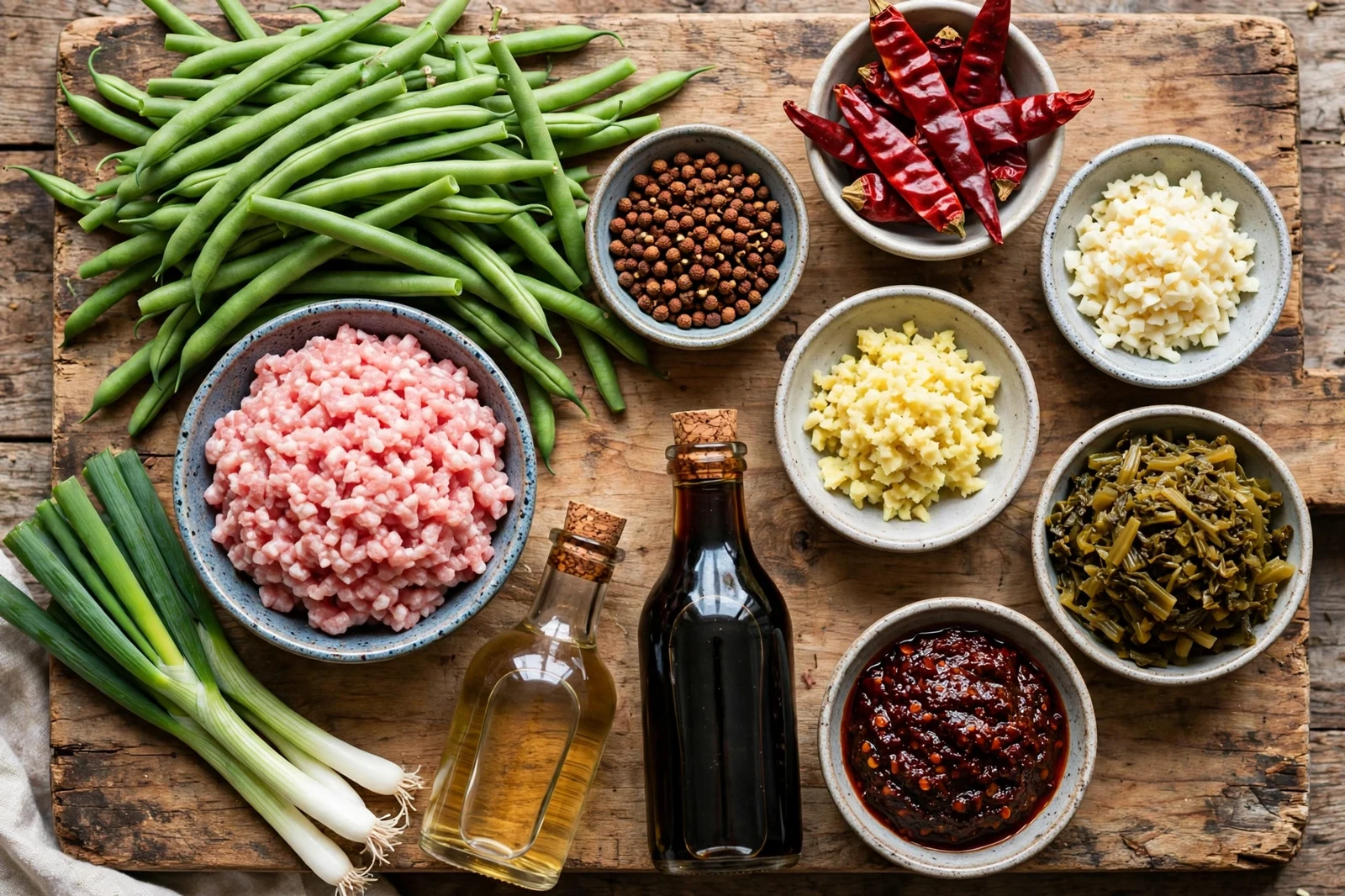
- 1 lb (450 g) green beans, ends trimmed and cut into 2- to 3-inch lengths, dried very well
- 3 tablespoons neutral high-heat oil (peanut, avocado, or grapeseed), divided
- 4 oz (115 g) ground pork (or 4 oz / 115 g finely chopped fresh mushrooms for a meat-free version)
- 2 tablespoons Sichuan ya cai or finely chopped zha cai (preserved mustard greens), rinsed briefly if very salty and squeezed dry
- 1 tablespoon Sichuan chili bean paste (doubanjiang), optional but very good
- 4 cloves garlic, finely minced
- 1 tablespoon finely minced fresh ginger
- 1 teaspoon Sichuan peppercorns, lightly crushed
- 6 to 8 dried red chilies, snipped into pieces, seeds shaken out for milder heat
- 1 tablespoon Shaoxing wine (or dry sherry)
- 1 teaspoon light soy sauce, plus more to taste
- 1/2 teaspoon sugar
- 1/2 teaspoon fine sea salt, plus more to taste
- 1 teaspoon toasted sesame oil, optional, for finishing
- 2 scallions, thinly sliced, for serving
Prep: 15 minutes. Cook: 15 minutes. Total: 30 minutes. Serves 4 as a side dish.
How to Make It, Step by Step
1. Dry and cut the beans. Trim the stem ends and cut the beans into 2- to 3-inch pieces. Spread them on a clean kitchen towel, pat them dry, and leave them for about 10 minutes while you prep everything else. Any water left on the beans will fight the blistering in the next step.
2. Blister the beans. Heat a wok or large cast-iron skillet over high heat until it just begins to smoke. Add 2 tablespoons of the oil and swirl to coat. Add half the beans in a single layer and cook, undisturbed, for 1 minute, then toss and spread them out again. Keep cooking, tossing every 30 to 60 seconds, for 5 to 7 minutes total, until the skins are wrinkled and blistered with browned spots and the beans are crisp-tender. Move them to a plate. Repeat with the second half, adding a drizzle more oil if the pan looks dry.
3. Crisp the pork. Pour off all but about 1 tablespoon of oil from the pan and return it to medium-high heat. Add the ground pork, press it into a thin layer, and let it brown undisturbed for 2 minutes before breaking it into small bits. Cook 2 to 3 more minutes, until the pork is deeply browned at the edges and cooked through. If you are using mushrooms instead, cook them the same way until their liquid cooks off and the edges brown.
4. Bloom the aromatics. Push the pork to one side. Add the garlic, ginger, Sichuan peppercorns, dried chilies, preserved vegetable, and doubanjiang (if using) to the cleared space. Stir for 30 to 45 seconds, until the oil turns red and fragrant, then toss everything together. Pour the Shaoxing wine around the edge of the pan and let it sizzle off for a few seconds.
5. Bring the beans back. Return the blistered beans and any juices on the plate to the pan. Add the soy sauce, sugar, and salt. Toss over high heat for 1 to 2 minutes, until every bean is glossy and coated with the aromatic bits. Taste a bean: it should be savory first, then warm, with a light tingle building at the end. Add a pinch more salt or soy sauce if it tastes flat.
6. Finish and serve. Take the pan off the heat. Stir in the toasted sesame oil if you are using it, and shower the scallions over the top. Serve right away, while the beans are still wrinkled and the pork bits are crisp. A spoonful of Homemade Chili Oil at the table suits anyone who wants more heat.
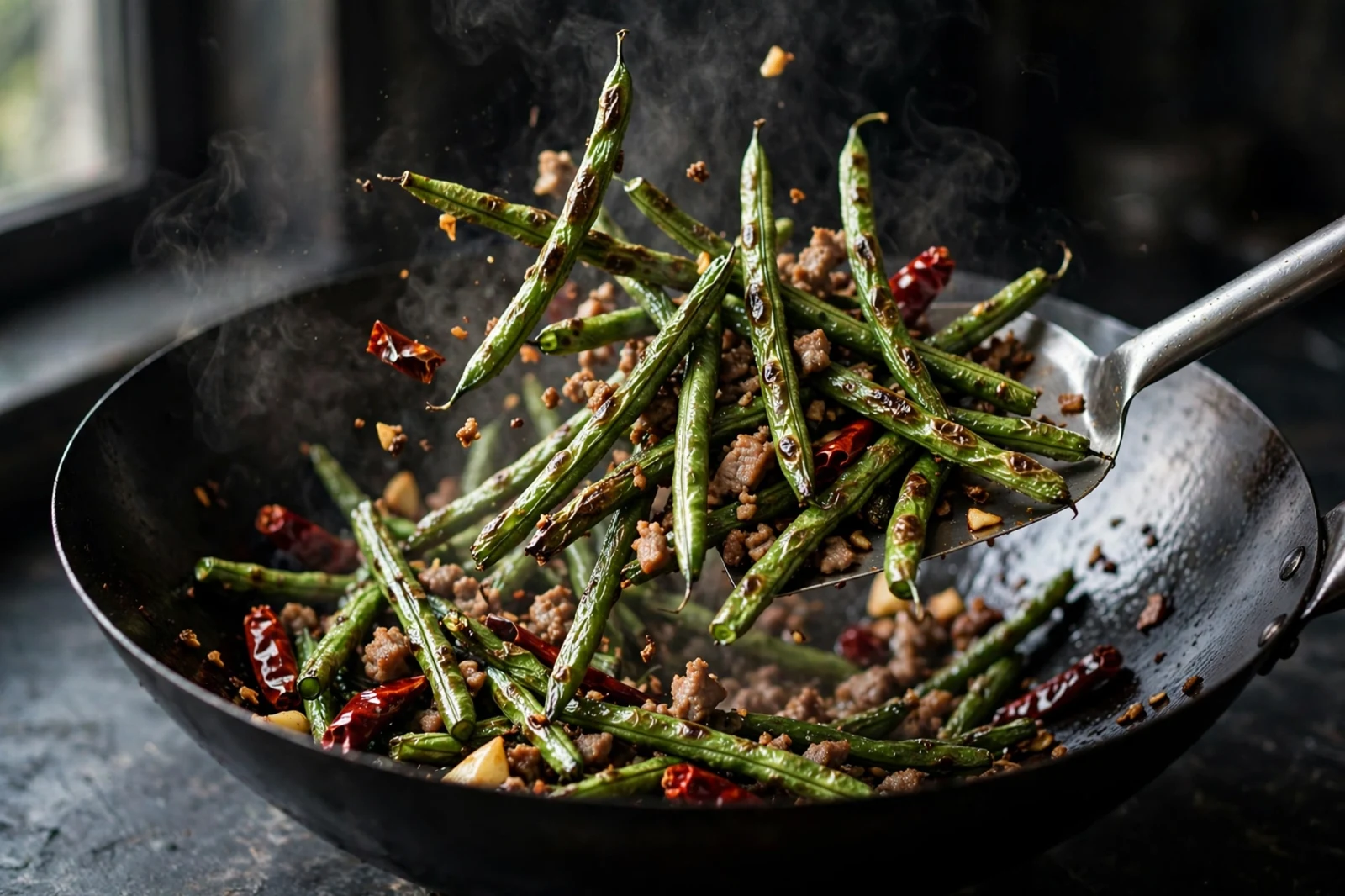
Three Ways to Blister the Beans
The wok method above gives the best char, but it is not the only route. All three get seasoned the same way in step 3 onward — only the bean-cooking step changes.
| Method | How | Texture | Best when |
|---|---|---|---|
| Wok or cast-iron skillet | Fry in a thin layer of oil over high heat, 5–7 minutes per batch | Deep blisters, light char, silky centers | You want the classic restaurant texture |
| Air fryer | Toss beans with 1 tablespoon oil and a pinch of salt; cook at 400°F (200°C) for 10–12 minutes, shaking the basket twice | Evenly wrinkled, a little chewier, no char spots | You want hands-off cooking and less oil on the stove |
| Oven | Toss beans with 1 tablespoon oil and a pinch of salt on a large sheet pan; roast at 450°F (230°C) for 15–18 minutes, turning once | Wrinkled and roasted, milder browning | You are cooking a double batch for a group |
Whichever method you pick, season the beans while they are hot so the pork, chili, and peppercorn mixture clings instead of sliding off.
Getting the Balance Right
Bland beans. The pan was not hot enough, or the beans went in wet and steamed. Next time, dry them longer and preheat until the pan smokes lightly. For this batch, a splash more soy sauce and a pinch of salt at the end will help — and check whether your preserved vegetable was very mild; a teaspoon of doubanjiang wakes up a quiet pan fast. Our Soy Sauce Guide: Light vs Dark vs Tamari explains why light soy sauce is the right one here — dark soy sauce would sweeten and darken the beans too much.
Too much tingle. Sichuan peppercorns build as you eat. Drop to 1/2 teaspoon, and crush them coarsely instead of fine — coarser pieces give aroma with less numbing punch per bite.
Soggy leftovers. Blistered beans soften in the fridge; that is the trade for making them ahead. Reheat leftovers in a dry, hot skillet for 2 to 3 minutes instead of the microwave, and they will pick up some of their chew back.
Variations Worth Knowing
- Meat-free, still savory: Swap the pork for finely chopped fresh mushrooms or crumbled firm tofu, browned hard in the same step. Keep the doubanjiang and preserved vegetable — they carry the savory depth. Our Tofu Guide: Silken vs Soft vs Firm vs Extra-Firm will help you pick the right block if you go the tofu route.
- With yardlong beans: In Sichuan, this dish is often made with yardlong beans (jiang dou). They are denser than green beans and take 1 to 2 minutes longer to blister, but the method is identical and the finished beans are a little meatier.
- Milder, weeknight version: Skip the dried chilies, keep the peppercorns at 1/2 teaspoon, and leave out the doubanjiang. The dish becomes garlicky and savory rather than spicy, and kids tend to eat a surprising amount of it.
- Extra crisp: After blistering, spread the beans on a rack or paper towels for 2 minutes before the final toss. Any surface oil that drains off is oil that will not soften the finished dish.
Serving and Leftovers
Serve these beans hot, straight from the wok, with plain steamed rice to catch the chili oil and pork bits — How to Cook Perfect Jasmine Rice Every Time is the plate this dish was built for. They sit well next to mild mains that need a loud neighbor: steamed fish, a plain omelet, or a simple tofu soup. For a fuller Sichuan-leaning spread, put them beside Mapo Tofu and a cooling bowl of Smashed Cucumber Salad with Garlic — hot, tingling, and cold dishes cover the table nicely.
Leftovers keep, covered, in the refrigerator for up to 3 days. The beans will soften; reheat them in a hot, dry skillet rather than the microwave. Cold leftovers chopped small also make a good fried-rice addition the next day, pork bits and all.
Recipe Card Summary
Sichuan dry-fried green beans: green beans blistered in hot oil until wrinkled, then tossed with crisped ground pork, preserved mustard greens, doubanjiang, garlic, ginger, dried chilies, and Sichuan peppercorns. Prep 15 minutes, cook 15 minutes. Serves 4 as a side.
Sichuan Dry-Fried Green Beans
Ingredients
Method
- Dry and cut the beans: Trim the stem ends and cut the beans into 2- to 3-inch pieces. Spread them on a clean kitchen towel, pat them dry, and leave them for about 10 minutes while you prep everything else. Any water left on the beans will fight the blistering in the next step.
- Blister the beans: Heat a wok or large cast-iron skillet over high heat until it just begins to smoke. Add 2 tablespoons of the oil and swirl to coat. Add half the beans in a single layer and cook, undisturbed, for 1 minute, then toss and spread them out again. Keep cooking, tossing every 30 to 60 seconds, for 5 to 7 minutes total, until the skins are wrinkled and blistered with browned spots and the beans are crisp-tender. Move them to a plate. Repeat with the second half, adding a drizzle more oil if the pan looks dry.
- Crisp the pork: Pour off all but about 1 tablespoon of oil from the pan and return it to medium-high heat. Add the ground pork, press it into a thin layer, and let it brown undisturbed for 2 minutes before breaking it into small bits. Cook 2 to 3 more minutes, until the pork is deeply browned at the edges and cooked through. If you are using mushrooms instead, cook them the same way until their liquid cooks off and the edges brown.
- Bloom the aromatics: Push the pork to one side. Add the garlic, ginger, Sichuan peppercorns, dried chilies, preserved vegetable, and doubanjiang (if using) to the cleared space. Stir for 30 to 45 seconds, until the oil turns red and fragrant, then toss everything together. Pour the Shaoxing wine around the edge of the pan and let it sizzle off for a few seconds.
- Bring the beans back: Return the blistered beans and any juices on the plate to the pan. Add the soy sauce, sugar, and salt. Toss over high heat for 1 to 2 minutes, until every bean is glossy and coated with the aromatic bits. Taste a bean: it should be savory first, then warm, with a light tingle building at the end. Add a pinch more salt or soy sauce if it tastes flat.
- Finish and serve: Take the pan off the heat. Stir in the toasted sesame oil if you are using it, and shower the scallions over the top. Serve right away, while the beans are still wrinkled and the pork bits are crisp.
1 thought on “Sichuan Dry-Fried Green Beans (Gan Bian Si Ji Dou)”