
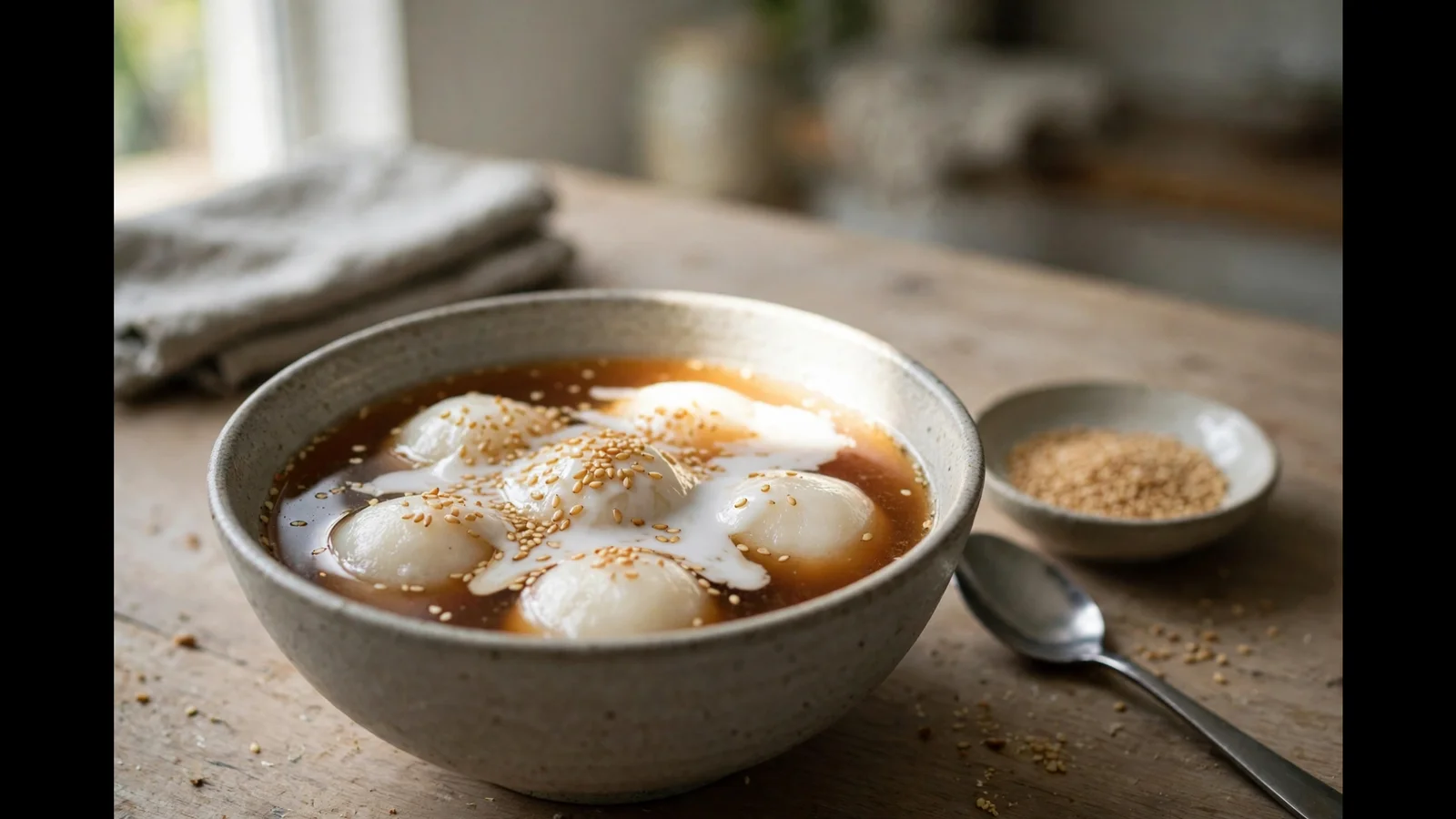
Che troi nuoc is the dessert Paul makes when the weather turns cold and the kitchen needs something warm on the stove: white glutinous rice balls with a sweet mung bean center, floating in a clear ginger syrup, with a spoonful of coconut milk over the top. The numbers are measured: 150 grams of glutinous rice flour to 20 grams of rice flour, about 120 ml of warm water at 50°C for the dough, 100 grams of mung beans for the filling, and 150 grams of palm sugar in a liter of water for the syrup. The recipe makes 12 balls, three to a bowl for four servings, and the whole pot takes about 70 minutes plus a two-hour soak for the beans.
What is che troi nuoc?
Che troi nuoc means “floating on water dessert,” after the way the rice balls rise to the surface when they are cooked. It is a Vietnamese sweet of glutinous rice flour dough wrapped around a mung bean paste filling, served warm in a ginger syrup with coconut milk. The dish is a Tet favorite, made for Lunar New Year, and it sits next to Che Ba Mau: Vietnamese Three-Color Dessert and Che Thai: Vietnamese Fruit Cocktail Dessert as one of the Vietnamese sweets on this site. Where che ba mau is cold and layered in a glass and che thai is fruit in chilled coconut milk, che troi nuoc is served hot, and the ginger in the syrup gives it a gentle heat that the other two do not have. The closest cousin is the Chinese tang yuan, small rice balls in a sweet soup, but the Vietnamese version is defined by its mung bean filling and the ginger syrup it swims in. Our guide to Sticky Rice 101: Soak, Steam, Serve covers the glutinous rice the flour is milled from, and why only glutinous rice flour gives this chew.
Ingredients
For the mung bean filling
- 1/2 cup split hulled mung beans (100 g), soaked 2 hours
- 3 tablespoons granulated sugar (36 g)
- 2 tablespoons coconut milk (30 ml), full-fat
- 1/4 teaspoon sea salt
- 1 tablespoon desiccated coconut (optional)
For the dough
- 1 1/4 cups glutinous rice flour (150 g), plus a little extra for dusting
- 2 tablespoons rice flour (20 g)
- About 1/2 cup warm water (120 ml), at 50°C (120°F)
For the ginger syrup
- 4 cups water (1 liter)
- 3/4 cup palm sugar (150 g), chopped, or light brown sugar
- 1 piece fresh ginger (about 2 inches), peeled and thinly sliced
- 1 pandan leaf, knotted (optional)
For the coconut sauce and serving
- 1/2 cup coconut milk (120 ml), full-fat
- 1 tablespoon granulated sugar (12 g)
- Pinch of sea salt
- 1 teaspoon tapioca starch, mixed with 1 tablespoon water
- 1 tablespoon toasted sesame seeds
How to make it
Start with the filling. Drain the soaked mung beans and steam them for 20 minutes, until they are soft enough to crush between your fingers. Mash them in a bowl, or pulse them in a food processor, then tip the paste into a dry pan over medium heat with the sugar, coconut milk, salt, and desiccated coconut if you are using it. Stir for 3 to 4 minutes, until the paste dries out enough to hold its shape when you squeeze a spoonful in your palm. A wet filling is the main reason a ball leaks in the pot, so do not skip this step. Let the paste cool, then roll it into 12 small balls, about 15 grams each, and set them on a plate.

Make the dough next. Stir the glutinous rice flour and rice flour together in a bowl, then pour in the warm water a little at a time, mixing with chopsticks until a shaggy dough forms. Turn it out and knead for 5 minutes, until it is smooth, soft, and pliable, with a feel like a soft earlobe. The water temperature matters here: water at about 50°C hydrates the flour so the dough bends instead of cracking, while cold water leaves it stiff and hot water makes it gummy. If the dough feels dry and crumbly, add warm water a teaspoon at a time. If it sticks to your hands, dust in a little more glutinous rice flour. Cover the dough with a damp cloth and rest it for 10 minutes.
Shape the balls one at a time. Pinch off a piece of dough, about 22 grams, and roll it into a ball, then flatten it into a disc in your palm and press your thumb into the center to make a small pouch. Set a mung bean ball in the pouch, gather the edges of the dough up around it, and pinch the seam shut. Roll the ball gently between your palms until it is smooth, and check that there are no cracks and no air pockets between the dough and the filling. Air trapped inside expands in the hot water and splits the ball open. Keep the finished balls under a damp cloth while you shape the rest, or the surface dries out and cracks before they reach the pot. Banh Da Lon: Vietnamese Layered Pandan Cake uses the same mung bean filling in a different form, steamed in layers instead of wrapped in dough.

Make the syrup while the balls rest. Put the water, palm sugar, ginger, and pandan leaf in a medium pot, bring it to a boil, then turn the heat down and simmer for 10 minutes, until the sugar has dissolved and the ginger has scented the water. Taste it before the balls go in: it should be sweet and warm with ginger, never cloying, and a spoonful of hot water fixes a syrup that is too sweet. Keep it at a gentle simmer, not a rolling boil.
Cook the balls in plain water first, never straight in the syrup. Bring a large pot of water to a boil and drop the balls in a few at a time, in two batches of six, so the water stays hot and they do not crowd and stick. They sink at first, then rise to the surface after 5 to 7 minutes. Let them float for 1 more minute, then lift them out with a slotted spoon and drop them straight into the simmering syrup. Simmer for 5 minutes, no longer, so the balls soak up the ginger flavor without turning soft and fragile. Cooking them directly in the syrup can leave the centers raw, since the sugar slows the dough from cooking through.

Make the coconut sauce while the balls simmer. Warm the coconut milk with the sugar and salt in a small pan, stir in the tapioca starch slurry, and simmer for 1 minute, until the sauce thickens enough to coat the back of a spoon. Serve three balls to a bowl with a ladle of hot syrup, spoon over the coconut sauce, and scatter with toasted sesame seeds. The balls are best eaten right away, while they are soft and chewy. Leftovers keep in the syrup in the fridge for 1 day, and a gentle reheat in the syrup brings the chew back, though the balls firm up a little once cold.
Troubleshooting: Fix My Che Troi Nuoc
Most che troi nuoc problems come from the dough, the seal, or the simmer. Pick the problem that matches your bowl below for a practical next step.
HERB & LIME · KITCHEN HELP
Fix My Che Troi Nuoc
Choose what went wrong to see a practical next step.
Possible cause
What to try next
For next time
From Paul's kitchen. Results vary with flour brand, mung bean soak, and stove heat, adjust timing to your setup.
Quick reference (also works without JavaScript)
The dough cracked while I wrapped the filling
Cause: The dough was too dry, or it was mixed with cold water, so it could not bend around the filling without splitting.
Try: Knead in warm water, about 50C, a teaspoon at a time until the dough is smooth and pliable, then wrap the balls right away.
Prevent: Mix the dough with warm water, knead it for a full 5 minutes, and keep the dough and the shaped balls under a damp cloth.
The filling leaked out while cooking
Cause: Air was trapped between the dough and the filling, the seam was left open, or the filling was too wet to hold together.
Try: Lift the burst balls out with a slotted spoon and strain the cooking water if mung bean has clouded it, then cook the rest as usual.
Prevent: Dry-fry the mung bean paste until it holds its shape when squeezed, press out air pockets while wrapping, and pinch every seam fully shut.
The balls turned hard after cooking
Cause: They simmered in the syrup too long, or sat in it for hours, so the dough soaked up liquid and then firmed up as it cooled.
Try: Warm the balls gently in fresh hot syrup for 2 to 3 minutes to soften them again, and serve them right away.
Prevent: Simmer the balls in the syrup for 5 minutes only, and serve within 30 minutes of cooking.
The balls stuck together in the pot
Cause: Too many balls went in at once, which dropped the water temperature and let them sit against each other while soft.
Try: Separate them gently with a slotted spoon while the water is at a boil, and lift out any that have torn.
Prevent: Cook in batches of six, keep the water at a rolling boil, and stir once gently right after the balls go in.
The syrup is too sweet, or the ginger is too strong
Cause: Palm sugar varies in sweetness, and a long simmer concentrates both the sugar and the ginger heat.
Try: Stir in hot water a spoonful at a time until the sweetness feels right, and fish out some ginger slices if the heat is too much.
Prevent: Taste the syrup before the balls go in, start with a little less palm sugar than the recipe lists, and simmer for 10 minutes only.
Che Troi Nuoc: Glutinous Rice Balls in Ginger Syrup
Ingredients
Method
- Make the filling. Drain the soaked mung beans and steam them for 20 minutes, until they are soft enough to crush between your fingers. Mash them in a bowl, or pulse them in a food processor, then tip the paste into a dry pan over medium heat with the sugar, coconut milk, salt, and desiccated coconut if you are using it. Stir for 3 to 4 minutes, until the paste dries out enough to hold its shape when you squeeze a spoonful in your palm. Let the paste cool, then roll it into 12 small balls, about 15 grams each.
- Make the dough. Stir the glutinous rice flour and rice flour together in a bowl, then pour in the warm water a little at a time, mixing with chopsticks until a shaggy dough forms. Turn it out and knead for 5 minutes, until it is smooth, soft, and pliable, with a feel like a soft earlobe. If the dough feels dry and crumbly, add warm water a teaspoon at a time. If it sticks to your hands, dust in a little more glutinous rice flour. Cover the dough with a damp cloth and rest it for 10 minutes.
- Shape the balls. Pinch off a piece of dough, about 22 grams, and roll it into a ball, then flatten it into a disc in your palm and press your thumb into the center to make a small pouch. Set a mung bean ball in the pouch, gather the edges of the dough up around it, and pinch the seam shut. Roll the ball gently between your palms until it is smooth, with no cracks and no air pockets between the dough and the filling. Keep the finished balls under a damp cloth while you shape the rest.
- Make the syrup. Put the water, palm sugar, ginger, and pandan leaf in a medium pot, bring it to a boil, then turn the heat down and simmer for 10 minutes, until the sugar has dissolved and the ginger has scented the water. Taste it before the balls go in, and keep it at a gentle simmer, not a rolling boil.
- Cook the balls in plain water. Bring a large pot of water to a boil and drop the balls in a few at a time, in two batches of six. They sink at first, then rise to the surface after 5 to 7 minutes. Let them float for 1 more minute, then lift them out with a slotted spoon and drop them straight into the simmering syrup. Simmer for 5 minutes, no longer.
- Make the coconut sauce and serve. Warm the coconut milk with the sugar and salt in a small pan, stir in the tapioca starch slurry, and simmer for 1 minute, until the sauce thickens enough to coat the back of a spoon. Serve three balls to a bowl with a ladle of hot syrup, spoon over the coconut sauce, and scatter with toasted sesame seeds. Serve right away.
Notes
More Vietnamese recipes
Four more from the same shelf: Che Chuoi: Vietnamese Banana in Coconut Milk is the warm banana dessert to make when you want coconut milk and something soft; Che Ba Mau: Vietnamese Three-Color Dessert is the cold layered dessert to make when you want color in a glass; Banh Flan: Vietnamese Caramel Flan is the steamed custard to make when you want something smooth and quiet; and Banh Da Lon: Vietnamese Layered Pandan Cake is the steamed layer cake to make when you want to cut squares at the table. For the mung bean side of this dessert, Xoi Xeo: Vietnamese Sticky Rice with Mung Beans uses the same beans in a savory sticky rice.
From the garden
The ginger in the syrup comes from a pot by the back door, and fresh ginger makes a real difference here: the slices stay firm and fragrant through a 10-minute simmer, while older ginger turns stringy and dull. Our guide to growing ginger in pots covers how to start a rhizome and when to dig it up.
From Paul’s kitchen.