
Order rice porridge at a Cantonese restaurant and the menu says jook. Open a cookbook and the same bowl is called congee. The two words name the same dish, a pot of rice simmered in water or stock until the grains break down into porridge, but they do not point at the same thing. Congee is the broad English word for rice porridge across Asia. Jook is the Cantonese name for one regional style of it. The difference that matters sits in the bowl: how smooth the porridge is, how much water went in, and what lands on top.
The short answer
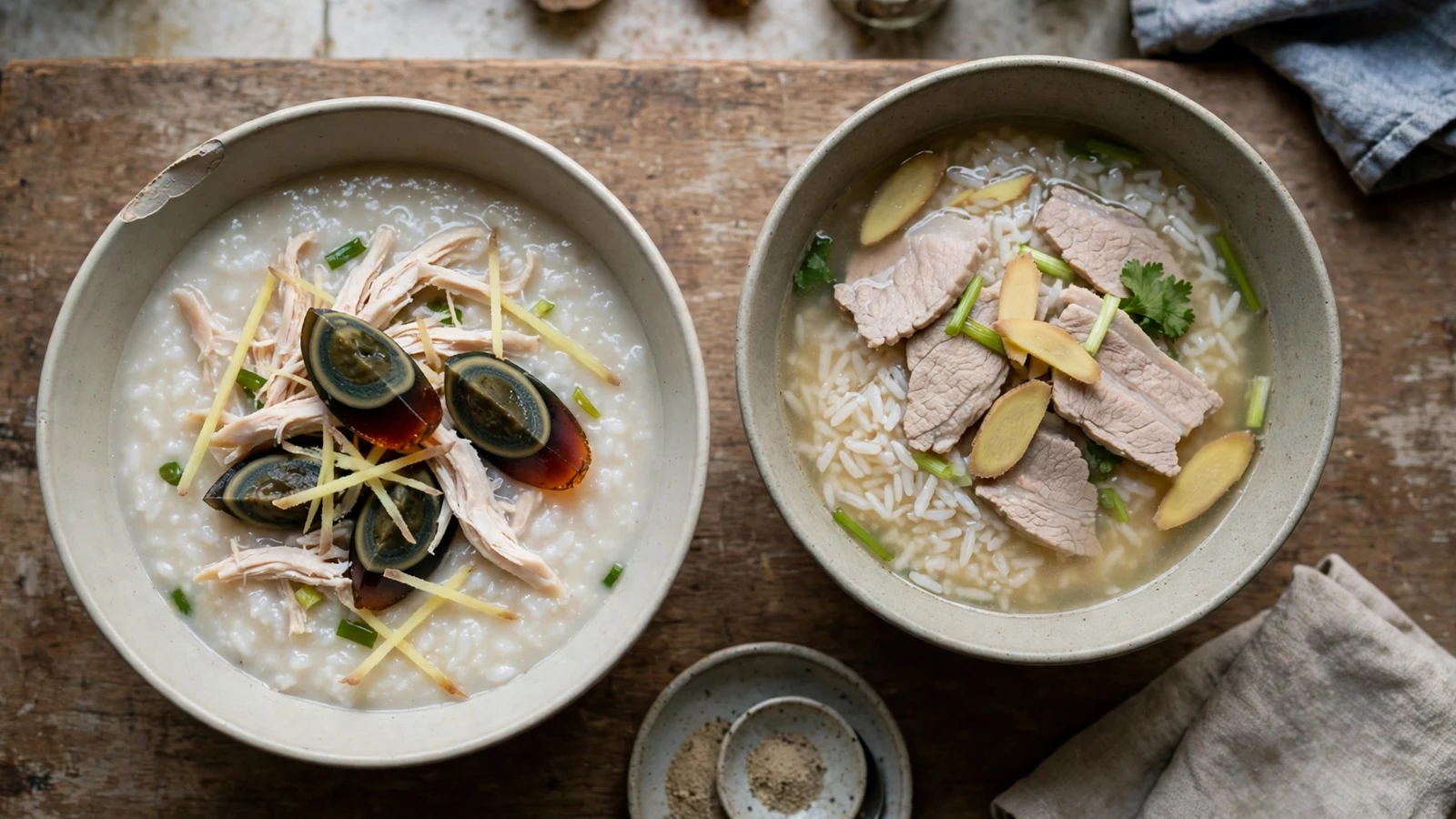
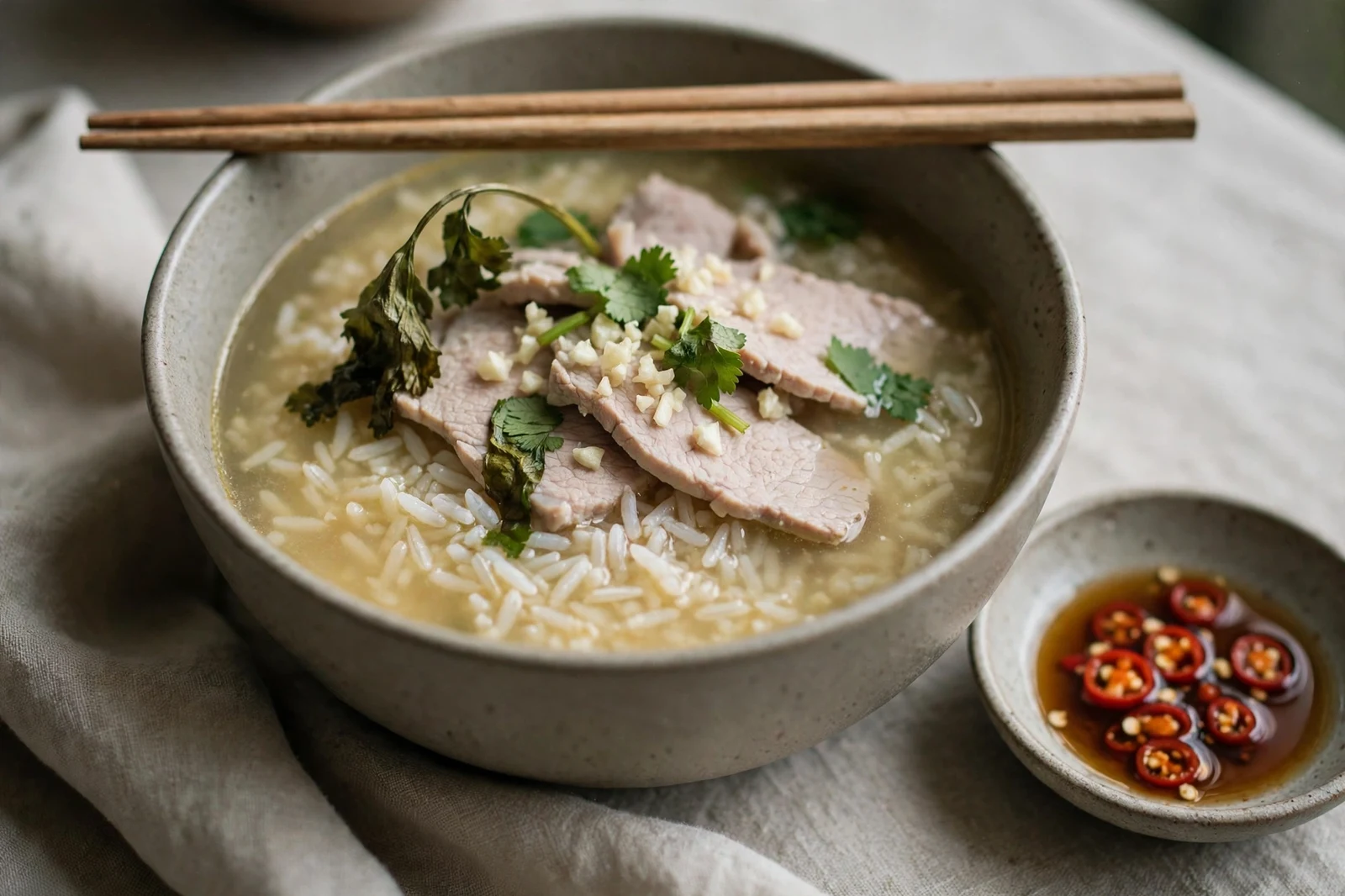
Congee is the general term. Jook is Cantonese. If the porridge is silky smooth, cooked for an hour or more with the grains broken down, and topped with century egg, ginger, scallions, and white pepper, you are eating jook, and calling it congee is also correct. If the bowl is a Thai khao tom with grains you can still see, or a Filipino arroz caldo with garlic chips, congee fits and jook does not.
| Congee | Jook | |
|---|---|---|
| Word | General English term for Asian rice porridge | Cantonese name for rice porridge (粥, zuk) |
| Origin of the word | From Tamil kanji, by way of Portuguese | From Cantonese zuk |
| Range | Covers every regional style | One regional style: Guangdong and Hong Kong |
| Texture | Thick, loose, smooth, or grainy, style by style | Silky smooth, grains broken down |
| Usual ratio | 1:8 to 1:12 rice to liquid, by style | About 1:10 rice to liquid |
| Cook time | 30 minutes to 2 hours, by style | 1 to 1.5 hours on the stove |
| Toppings | Varies by region | Century egg, ginger, scallions, white pepper, fried dough |
Congee, in brief
Congee is the catch-all word, and its history fits the dish. The word entered English from Tamil kanji, the word for rice porridge, by way of Portuguese canja. The same pot of rice and water shows up across Asia under different names. In Mandarin it is zhou. In Japanese it is okayu. In Thai it is khao tom, cooked looser, with the grains left whole. In the Philippines it is arroz caldo, often with chicken, ginger, and garlic chips. None of these is wrong, and none of them is the same bowl. The word congee holds the whole family, and the regional name tells you which bowl you are getting.
Jook, in brief
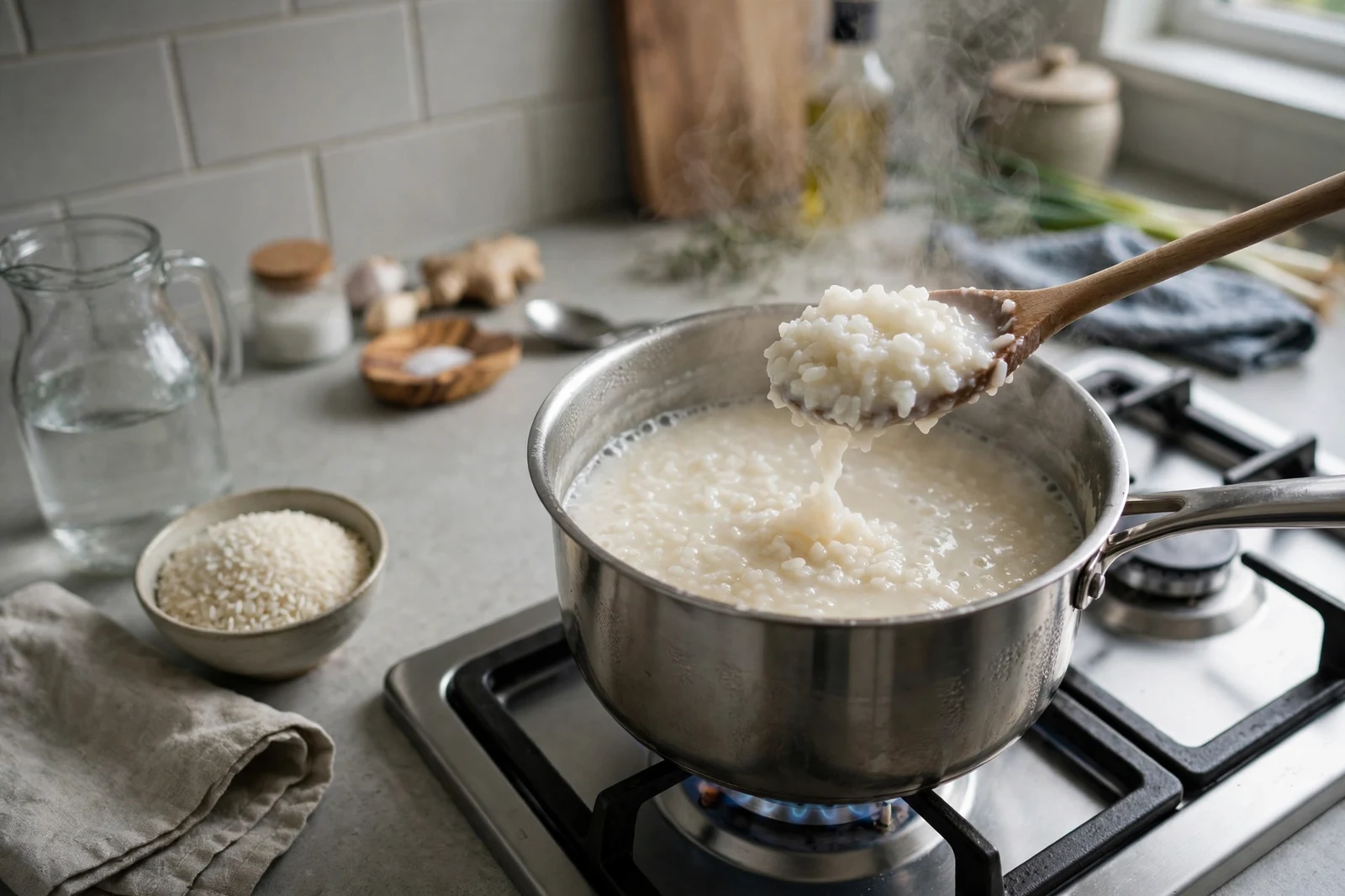
Jook is the Cantonese word for rice porridge, written 粥 and pronounced zuk. In Guangdong and Hong Kong it means one thing: rice simmered until the grains give up and turn into a smooth, creamy porridge, with almost no whole grains left to see. The pot starts with about 1 cup of rice to 10 cups of water or stock. It simmers for 1 to 1.5 hours, stirred every 10 to 15 minutes so the rice does not catch on the bottom. The long cook is the point: the starch leaves the grains and thickens the liquid, which is what makes jook feel silky instead of watery. Our own version, with chicken and ginger, is in chicken congee (jook).
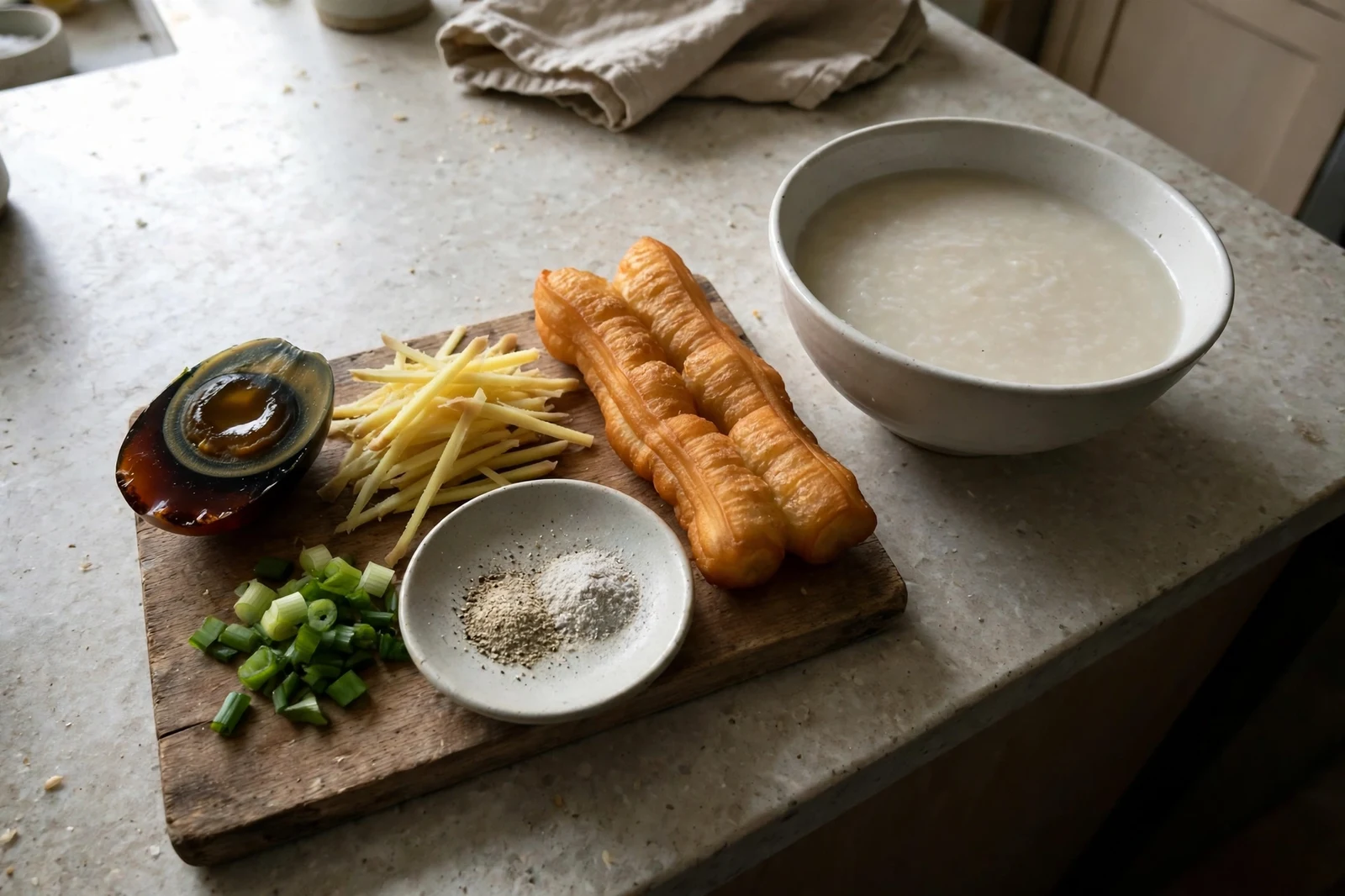
The toppings are part of the definition. A bowl of jook usually arrives with sliced century egg, julienned ginger, chopped scallions, and a pinch of ground white pepper, plus fried dough sticks on the side for dipping. Plain jook, just rice and water, is the base that congee shops sell with a row of small side dishes: salted egg, pickles, braised peanuts, and pork floss.
The texture test: ratios and time
Texture is where the words stop being interchangeable. Three ratios cover most bowls: 1:8 rice to liquid gives a thick porridge that coats the spoon; 1:10 gives the medium, silky jook most Cantonese shops serve; 1:12 gives a thin, soupy bowl. The ratio is only half the story. A 1:10 pot stirred now and then for 30 minutes still shows grains. The same pot at 60 to 90 minutes turns smooth. Two shortcuts help on a weeknight: freeze the washed rice overnight, since the ice cracks the grains and they break down in about 20 minutes of simmering, or use a pressure cooker, about 30 minutes on high with a natural release. A rice cooker with a porridge setting does the same work with no watching. Whatever the method, the porridge thickens as it sits, so cook it slightly looser than you want and let it rest. Our rice cooker notes are in how to choose a rice cooker for Asian cooking.
When to use each word
- You are reading a Cantonese menu: jook. The kitchen will serve the silky, long-cooked style with the classic toppings.
- You are writing a recipe for the general dish: congee. The word covers every style, and readers will know what you mean.
- You are talking about a specific regional bowl: use its own name. Khao tom, arroz caldo, okayu, and chao each carry their own texture and toppings, and calling them jook would point at the wrong region.
- You are ordering and unsure: look at the toppings. Century egg, ginger, scallions, and white pepper mean jook. Garlic chips, calamansi, and ginger mean arroz caldo. Visible grains in a gingery broth mean khao tom.
One note worth keeping: a few pages online swap the two and call congee the Cantonese word. That is backwards. Jook is the Cantonese word, and congee reached English from Tamil kanji. If a source tells you otherwise, it has the two mixed up.
More rice porridge posts
- Chicken Congee (Jook): Silky Rice Porridge
- Arroz Caldo: Filipino Chicken Rice Porridge
- Khao Tom: Thai Rice Soup with Pork and Ginger
- Jasmine Rice vs Sticky Rice: Differences and Best Uses
From the garden
Fresh ginger and scallions are the two toppings that change a bowl of jook the most, and both grow in pots on a balcony. Ginger takes a wide pot and most of a warm season, and scallions regrow from the white bases of store-bought bunches in a glass of water. My notes on the ginger are in how to grow ginger in pots.