
Arroz caldo is the bowl Paul makes when someone in the house is under the weather, when rain is coming down outside, or when breakfast needs to be warm and filling. It is a Filipino chicken rice porridge, cooked until the rice breaks down into a thick, spoon-coating soup, seasoned with ginger, garlic, and fish sauce, and finished with toasted garlic, a hard-boiled egg, scallions, and calamansi. It sits in the same comfort-food family as chicken congee, but the flavor leans Filipino: more garlic, more ginger, fish sauce instead of soy, and a squeeze of calamansi at the table.
The pot takes about an hour, most of it hands-off simmering. Paul uses a mix of glutinous rice and jasmine rice, bone-in chicken thighs, and 8 cups of broth for 1 1/2 cups of rice, and the porridge feeds 4 generously. Leftovers thicken in the fridge and loosen back up with a splash of hot water, so one pot covers breakfast the next morning too.
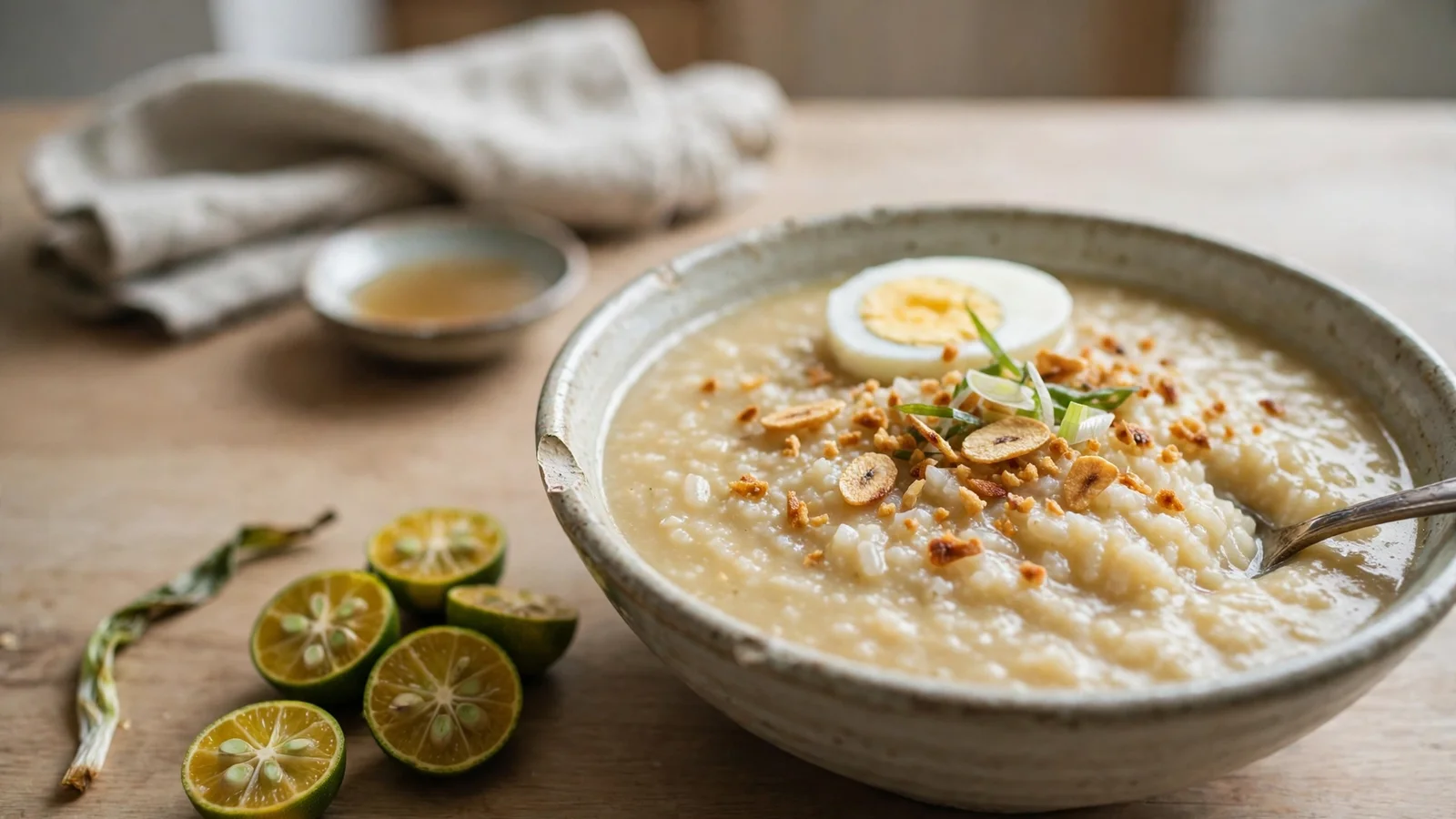
What is arroz caldo?
Arroz caldo means rice broth in Spanish, a name left over from the colonial era, but the dish itself is Filipino through and through. Glutinous rice, called malagkit, cooks down with chicken in a ginger and garlic broth until the grains split and the soup turns thick and creamy without any cream. Fish sauce gives it salt and depth, and kasubha, dried safflower, tints it a soft yellow the way saffron would, for a fraction of the price.
It differs from Chinese congee in the details. Congee stays mild and lets the toppings do the talking, while arroz caldo builds its flavor into the pot: the garlic and ginger go in early, the fish sauce seasons the broth, and the toasted garlic on top adds crunch and a nutty edge. Expect a warm, savory bowl with a clear ginger hum, salt from the fish sauce, and brightness from the calamansi you squeeze over it yourself. Serve it hot, with extra fish sauce and ground pepper passed at the table so each person seasons their own bowl.
Ingredients
For the porridge:
- 1 cup glutinous rice (malagkit), rinsed
- 1/2 cup jasmine rice, rinsed
- 8 cups low-sodium chicken broth
- 1 1/2 pounds bone-in, skin-on chicken thighs (about 4)
- 2 tablespoons vegetable oil
- 1 onion, diced
- 4 cloves garlic, minced
- 2-inch piece fresh ginger, peeled and cut into thin matchsticks
- 2 tablespoons fish sauce, plus more to taste
- 1 teaspoon ground black pepper
- 1/2 teaspoon kasubha (safflower), steeped in 2 tablespoons hot water, optional
For the toppings:
- 6 cloves garlic, thinly sliced
- 3 tablespoons vegetable oil
- 4 hard-boiled eggs, peeled and halved
- 4 scallions, thinly sliced
- 2 calamansi, halved, or 1 lime cut into wedges
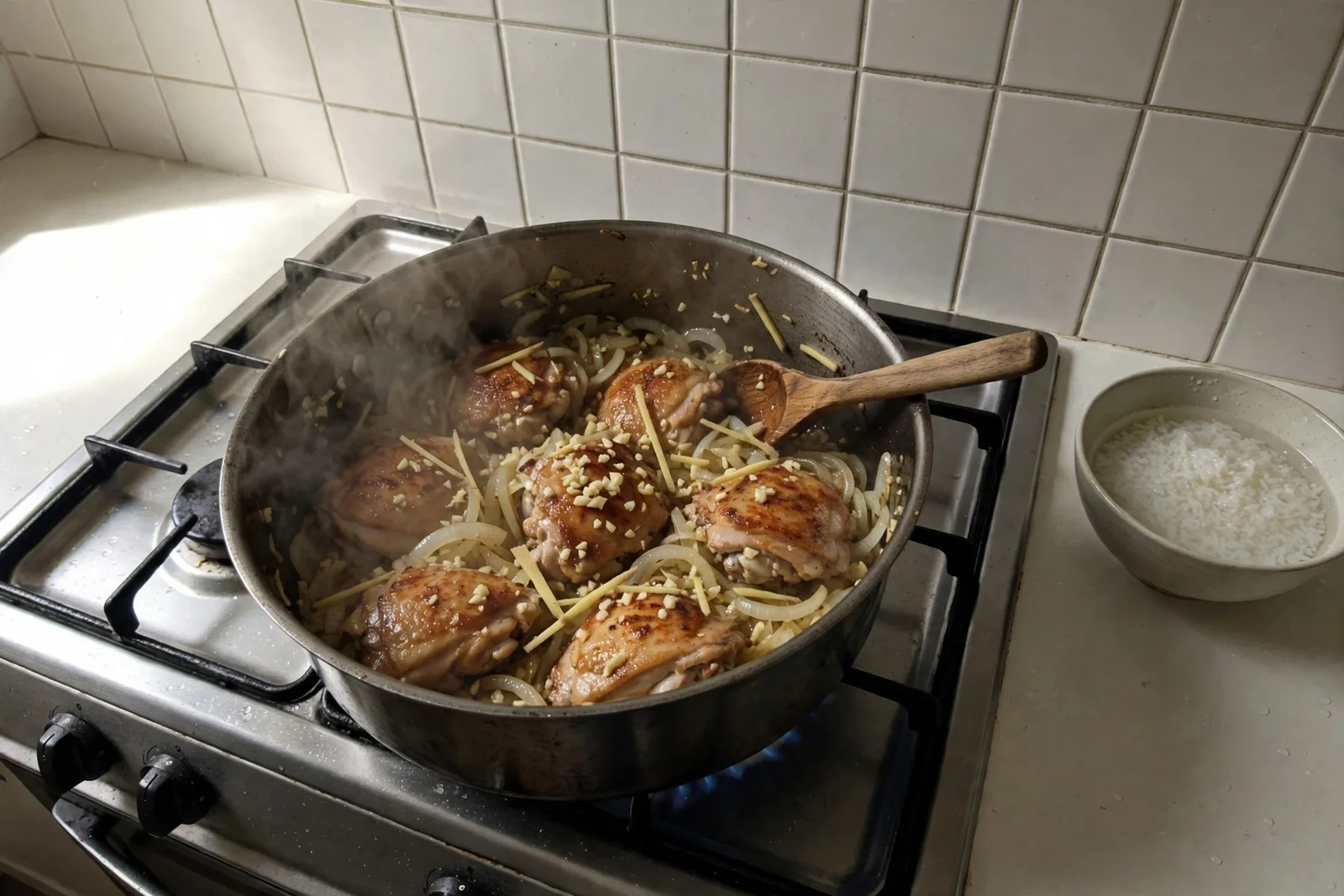
Steps
- Rinse the glutinous rice and jasmine rice in a fine strainer until the water runs mostly clear. Set aside.
- Heat 2 tablespoons of oil in a large heavy pot over medium-high heat. Add the chicken thighs skin-side down and cook until the skin turns light gold, about 4 minutes per side. Move the chicken to a plate.
- Lower the heat to medium. Add the onion, minced garlic, and ginger to the same pot and cook, stirring, until the onion softens and the garlic smells sweet, about 3 minutes.
- Add the rinsed rice and stir for 1 minute so the grains pick up the oil and aromatics. Pour in the broth and the kasubha water, if using, and scrape up the browned bits from the bottom of the pot.
- Return the chicken to the pot. Bring to a boil, then lower the heat to a gentle simmer, cover partway, and cook until the rice breaks down and the chicken is tender, 40 to 45 minutes. Stir every 10 minutes and scrape the bottom so the rice does not stick.
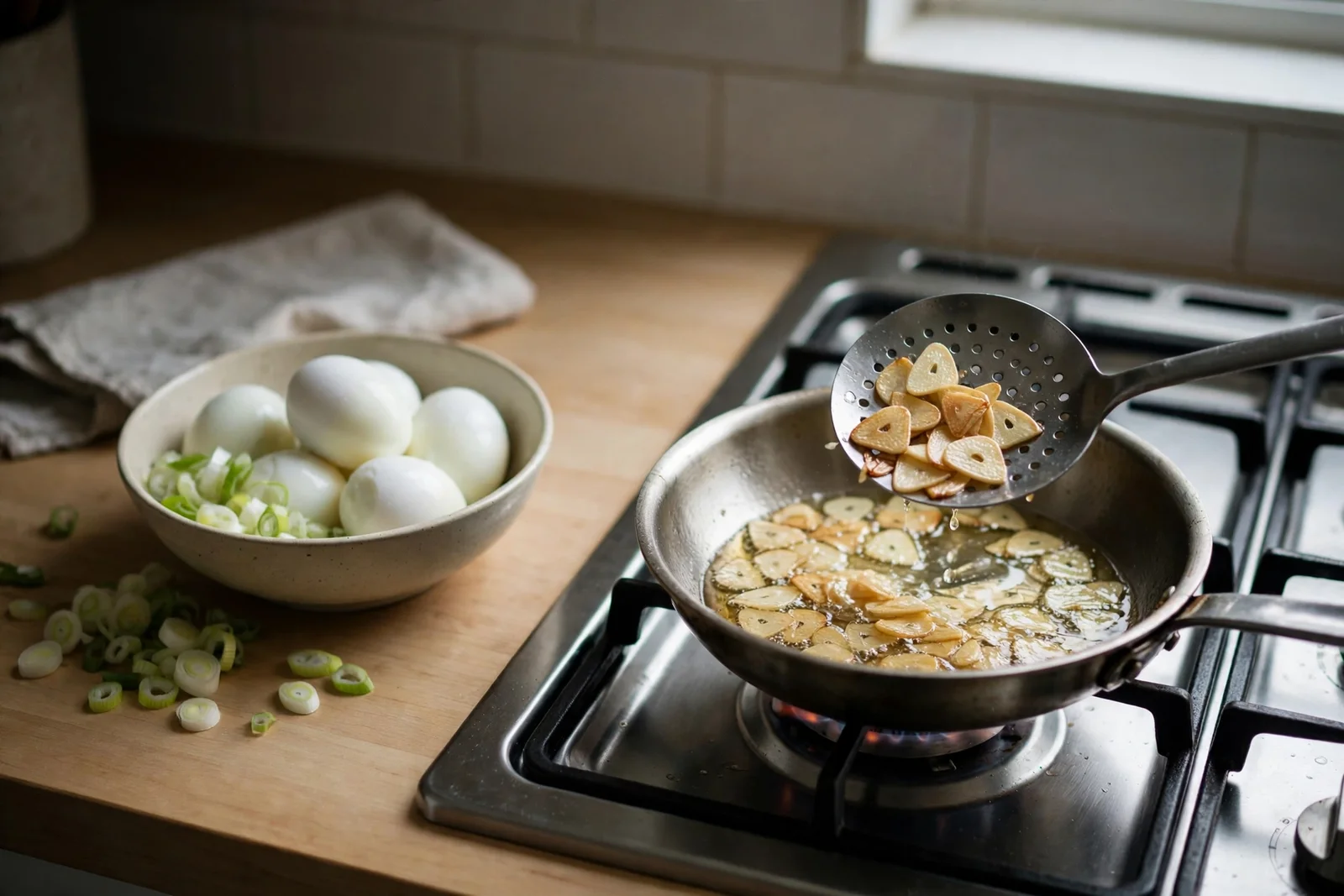
- While the porridge simmers, make the toasted garlic. Heat 3 tablespoons of oil in a small pan over medium-low heat, add the sliced garlic, and cook, stirring, until pale gold, about 2 minutes. Lift the garlic out with a slotted spoon and drain on paper towels. Save the garlic oil for drizzling.
- Lift the chicken from the pot, pull the meat off the bones, and shred it into bite-size pieces. Stir the meat back into the porridge.
- Stir in the fish sauce and black pepper. Taste and add more fish sauce a teaspoon at a time until the broth tastes seasoned but not salty. If the porridge is thicker than you like, stir in hot water a half cup at a time.
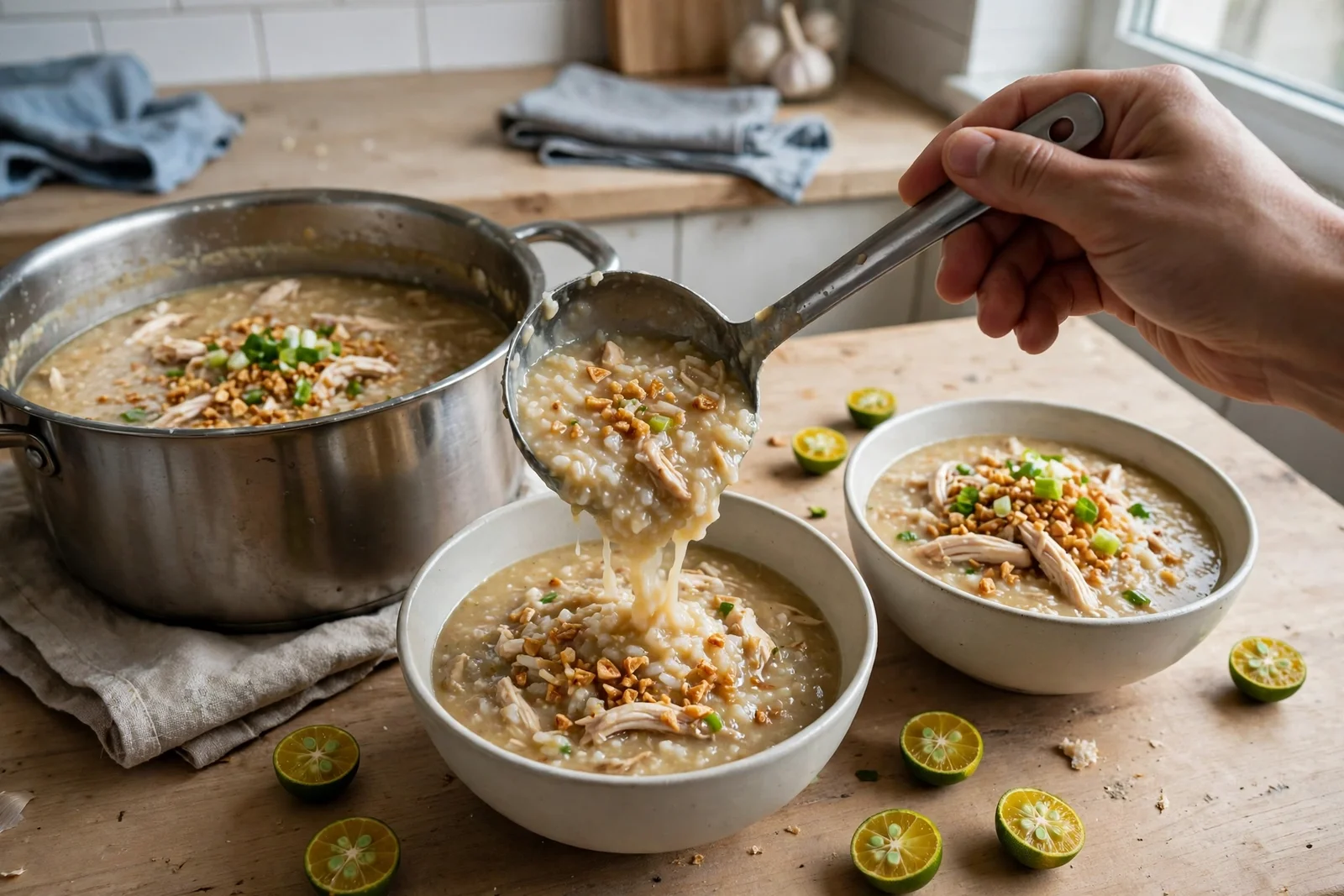
- Ladle into bowls and top each with toasted garlic, a drizzle of the garlic oil, an egg half, and scallions. Serve with calamansi halves and extra fish sauce and pepper at the table.
The rice ratio
The ratio is what makes arroz caldo thick instead of soupy: 1 cup of glutinous rice plus 1/2 cup of jasmine rice to 8 cups of broth. Glutinous rice does most of the thickening because its grains break down fast, while the jasmine rice keeps the porridge from turning into a solid paste. All glutinous rice works, but it sets up very firm as it cools. All jasmine rice stays too thin and never gets that spoon-coating body.
The simmer needs 40 to 45 minutes, and stirring every 10 minutes matters. Rice sinks and catches on the bottom of the pot, and a scorched patch will flavor the whole batch. A heavy pot helps, and a partway cover keeps the simmer steady without boiling over. The porridge is done when the grains have split open and a spoon dragged through the pot leaves a trail that closes slowly.
Toasted garlic
Toasted garlic is the topping that makes the bowl taste finished, so give it its own pan and two unhurried minutes. Slice the cloves thin and even, use medium-low heat, and pull the garlic when it turns pale gold, not deep brown. It keeps cooking on the paper towel, and garlic that goes dark in the pan turns bitter in the bowl. Paul fries 6 cloves in 3 tablespoons of oil and saves the oil: a drizzle over each bowl carries the garlic flavor through the whole serving.
If the garlic browns too fast, the heat is too high. Start over with fresh oil and lower heat rather than serving the bitter batch. The whole topping costs one head of garlic and five minutes, and it keeps in a small jar at room temperature for a week.
Tips and variations
For a quick version, use shredded rotisserie chicken. Cook the rice in broth with the aromatics for 40 minutes, then stir the shredded chicken in for the last 10 minutes and season as usual. The broth still needs the onion, garlic, and ginger, so do not skip that step.
Kasubha gives a soft yellow color and almost no flavor. If you cannot find it, a pinch of turmeric does the color job, but use just a pinch: more than that turns the porridge orange and adds a flavor the dish does not need. Saffron works too, but kasubha costs far less and is the usual choice in Filipino kitchens.
Leftovers thicken in the fridge into a solid mass. That is normal for glutinous rice. Loosen each serving with 1/2 to 1 cup of hot water or broth, reheat gently, and add a fresh squeeze of calamansi and a spoonful of toasted garlic. The porridge keeps 3 days in the fridge and freezes well for up to 2 months; freeze it without the egg and scallions and add them fresh.
Troubleshooting: Fix My Arroz Caldo
If your arroz caldo came out too thin, too thick, bland, or sticky on the pot, the section below walks through the common fixes. Pick what went wrong to see a practical next step.
HERB & LIME · KITCHEN HELP Choose what went wrong to see a practical next step. From Paul's kitchen. Results vary with chicken size, oil, and stove heat, adjust timing to your setup. Quick reference (also works without JavaScript) Cause: Long-grain rice on its own stays separate and releases too little starch, or the pot had too much liquid for the rice. Try: Keep simmering on low heat and stir every few minutes until the grains break down, or mash a spoonful of the cooked rice against the side of the pot to release more starch. Prevent: Use the 2 to 1 mix of glutinous rice to jasmine rice and start with 8 cups of broth for 1 and 1/2 cups of rice, then add hot water only a half cup at a time. Cause: Rice sinks as it cooks, and a still pot lets it catch and scorch on the bottom. Try: Do not scrape the scorched layer into the rest. Ladle the unburnt porridge into a clean pot and keep cooking from there. Prevent: Use a heavy pot, keep the heat at a gentle simmer, and stir and scrape the bottom every 10 minutes. Cause: Sliced garlic goes from pale gold to dark brown in under a minute, and dark garlic tastes bitter. Try: Throw the dark batch out and fry a fresh batch. Bitter garlic cannot be saved by rinsing or mixing it in. Prevent: Start the garlic in lukewarm oil over medium-low heat and pull it out when it turns pale gold, since it keeps cooking on the paper towel. Cause: Glutinous rice is almost all amylopectin, the starch that swells and then firms up as it cools, so leftovers turn solid in the fridge. Try: Reheat gently and stir in hot water or broth a half cup at a time until it loosens back to a spoon-coating porridge. Prevent: Serve it a little looser than you think it should be, and keep extra hot water on hand for the second bowl. Cause: Dried or ground ginger cannot replace fresh ginger, and fish sauce added too early or in too small an amount leaves the broth under-seasoned. Try: Stir in a few more fresh ginger matchsticks and add fish sauce a teaspoon at a time, tasting after each spoonful, then finish with calamansi at the table. Prevent: Use fresh ginger cut into matchsticks and season with fish sauce at the end, after the broth has concentrated.Fix My Arroz Caldo
Possible cause
What to try next
For next time
The porridge came out thin and watery
The bottom scorched and the porridge tastes burnt
The toasted garlic turned dark and bitter
The porridge set into a solid mass as it cooled
The flavor tastes flat, not gingery
Arroz Caldo: Filipino Chicken Rice Porridge
Ingredients
Method
- Rinse the glutinous rice and jasmine rice in a fine strainer until the water runs mostly clear. Set aside.
- Heat 2 tablespoons of oil in a large heavy pot over medium-high heat. Add the chicken thighs skin-side down and cook until the skin turns light gold, about 4 minutes per side. Move the chicken to a plate.
- Lower the heat to medium. Add the onion, minced garlic, and ginger to the same pot and cook, stirring, until the onion softens and the garlic smells sweet, about 3 minutes.
- Add the rinsed rice and stir for 1 minute so the grains pick up the oil and aromatics. Pour in the broth and the kasubha water, if using, and scrape up the browned bits from the bottom of the pot.
- Return the chicken to the pot. Bring to a boil, then lower the heat to a gentle simmer, cover partway, and cook until the rice breaks down and the chicken is tender, 40 to 45 minutes. Stir every 10 minutes and scrape the bottom so the rice does not stick.
- While the porridge simmers, make the toasted garlic. Heat 3 tablespoons of oil in a small pan over medium-low heat, add the sliced garlic, and cook, stirring, until pale gold, about 2 minutes. Lift the garlic out with a slotted spoon and drain on paper towels. Save the garlic oil for drizzling.
- Lift the chicken from the pot, pull the meat off the bones, and shred it into bite-size pieces. Stir the meat back into the porridge.
- Stir in the fish sauce and black pepper. Taste and add more fish sauce a teaspoon at a time until the broth tastes seasoned but not salty. If the porridge is thicker than you like, stir in hot water a half cup at a time.
- Ladle into bowls and top each with toasted garlic, a drizzle of the garlic oil, an egg half, and scallions. Serve with calamansi halves and extra fish sauce and pepper at the table.
Notes
More Filipino recipes
- Chicken Adobo
- Sinangag: Filipino Garlic Fried Rice
- Lumpia: Filipino Spring Rolls
- Pancit Bihon: Filipino Rice Noodles
From the garden
Two of the aromatics in this pot grow well in containers. Ginger grows from a piece of store-bought rhizome in a wide pot, and Paul harvests young ginger after about 4 months, when it is mild and thin-skinned. Green onions regrow from store-bought bases in a jar of water on the windowsill, and a snip of the green tops goes straight onto the finished bowl.
1 thought on “Arroz Caldo: Filipino Chicken Rice Porridge”