
Dan dan noodles are the reason I keep Chinese sesame paste in the pantry. Chewy wheat noodles, a sauce of sesame paste and chili oil that clings to every strand, browned pork on top, and the tingle of Sichuan peppercorns running through it all. It comes together in about 30 minutes, and most of that is waiting for the water to boil.

What are dan dan noodles?
Dan dan mian started as Sichuan street food, sold by vendors who carried their poles, the “dan”, of noodles and sauce through the streets of Chengdu. The classic bowl is a layering act: a punchy sauce at the bottom of the bowl, hot noodles on top, then a savory pork topping, blanched greens, and scallions. You toss everything at the table, and the sauce coats the noodles as you mix. The flavors are the Sichuan set: salty, sour, spicy, and numbing.
This is not a peanut-butter noodle bowl, though plenty of recipes drift that way. The base is Chinese sesame paste, made from toasted sesame seeds, which is darker and more savory than tahini. If the sauce is built on peanut butter, it is a different dish. A good one, maybe, but different.
The sauce ratio worth memorizing
For four bowls, the sauce is: 3 tablespoons Chinese sesame paste, 2 tablespoons soy sauce, 1 tablespoon Chinkiang black vinegar, 1 teaspoon sugar, 2 cloves grated garlic, 1 teaspoon ground toasted Sichuan peppercorns, and 2 tablespoons chili oil with its sediment. The hot noodle water goes in last, a spoonful at a time, until the sauce turns pourable. That 3-2-1 backbone of sesame paste, soy, and vinegar is the thing worth memorizing; the chili oil and peppercorns are tuned to taste.
Two notes on the bottles. Use Chinkiang black vinegar, not white vinegar. It is malty and round, and it cuts the richness of the sesame paste instead of just adding acid. My black vinegar substitutes guide covers the swaps if Chinkiang is not on your shelf. And taste your chili oil before you commit. Brands vary wildly in heat, so start with the 2 tablespoons, mix, taste, and add more only if you want it.
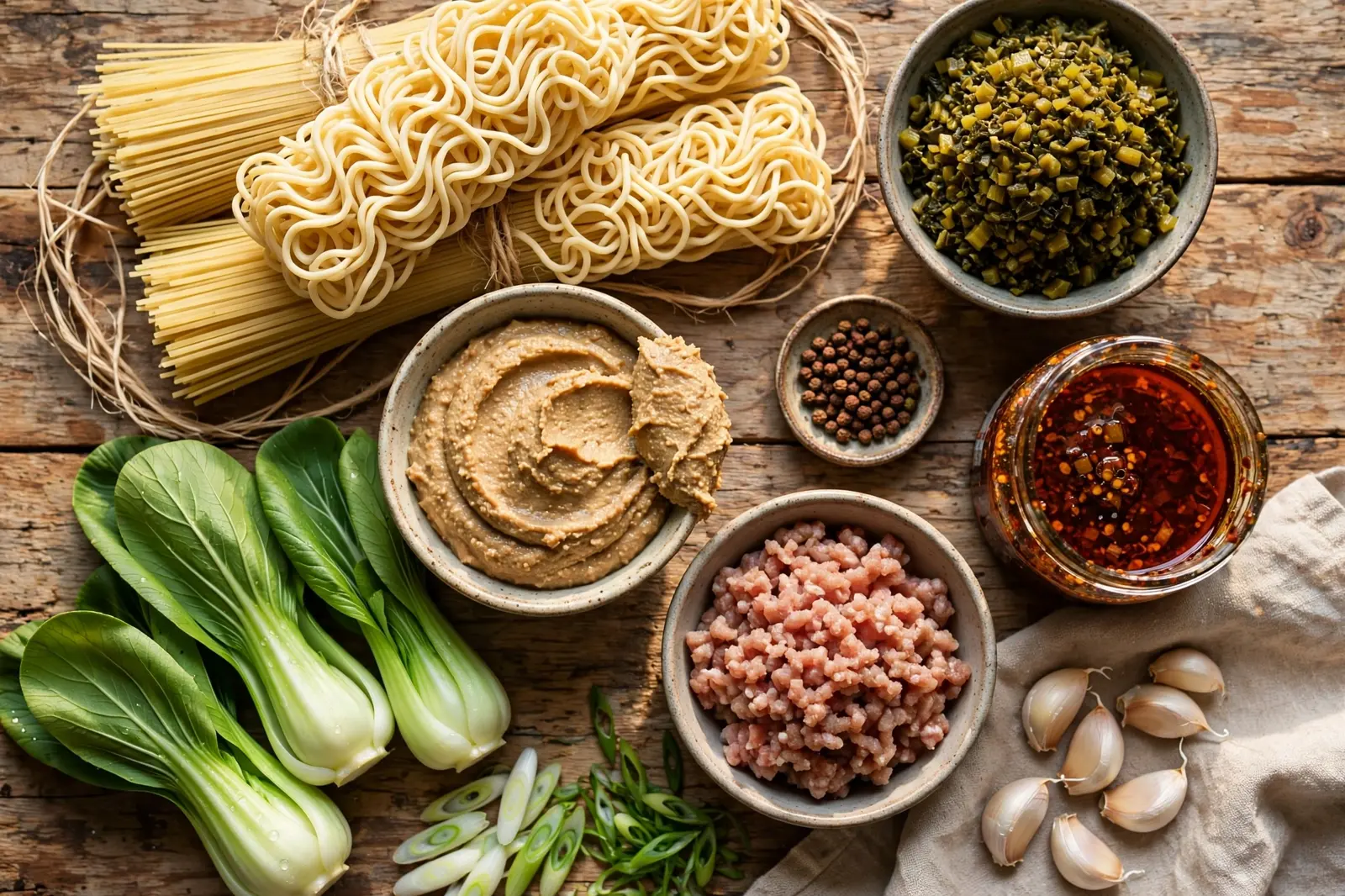
Brown the pork, do not steam it
The pork topping needs a hot pan and patience. Get the wok or skillet properly hot, add the oil and the pork, then leave it alone for 2 minutes. Stir right away and it steams in its own juices; let it sit and it browns. Break it up, add the doubanjiang, Shaoxing wine, and a splash of soy, and cook until it is browned and a little crisp at the edges. Doubanjiang is the fermented chili-bean paste behind the depth in mapo tofu. My doubanjiang substitutes guide has the options if you cannot find it.

Hot noodles, warm bowls, fast tossing
The assembly order matters more than the recipe does. The sauce goes into warmed bowls first. The noodles cook in well-salted boiling water, and the bok choy goes in for the last minute. Before you drain, scoop out half a cup of the noodle water. The starch in it is what turns the thick sauce base silky, which is the whole trick of this dish. Loosen each bowl of sauce with a spoonful or two of that hot water, add the noodles, and toss fast, like a stir-fry, so the sauce coats every strand instead of sitting in a lump at the bottom.
Cold bowls and cold noodles are the classic failure here. Sesame paste seizes when it hits cold food. If your bowls are room temperature, rinse them with hot water first. And toss the moment the noodles land. Fresh wheat noodles glue themselves together within a minute.

Troubleshooting: Fix My Dan Dan Noodles
Most dan dan problems are sauce texture or heat balance, and both are fixable on the next round. Pick what went wrong below for a concrete next step.
HERB & LIME · KITCHEN HELP
Fix My Dan Dan Noodles
Choose what went wrong to see a practical next step.
Possible cause
What to try next
For next time
From Paul's kitchen. Results vary with chili oil brand, noodle type, and stove heat, adjust seasoning to your setup.
Quick reference (also works without JavaScript)
The sauce turned thick and clumpy
Cause: The sesame paste seized when it hit cold noodles or a cold bowl, or the liquid was added too fast.
Try: Whisk in hot noodle cooking water one spoonful at a time until the sauce loosens into a pourable glaze.
Prevent: Assemble in warmed bowls over hot noodles, and add liquid to the sesame paste gradually, not all at once.
The noodles stuck together in a mass
Cause: Fresh wheat noodles glue themselves together within a minute of sitting undressed.
Try: Toss the noodles with a small drizzle of neutral oil, or dip them back in boiling water for 30 seconds to loosen.
Prevent: Toss the noodles with a little oil right after draining, and assemble the bowls immediately.
The numbing tingle is overwhelming
Cause: Too much ground Sichuan peppercorn, or the peppercorns were over-toasted and turned harsh.
Try: Stretch the batch over more plain noodles or rice to dilute it, and use less next time.
Prevent: Start with 1 teaspoon of ground toasted Sichuan peppercorn per 4 bowls, taste the sauce, and add more only if wanted.
The bowl tastes flat, not spicy or savory enough
Cause: Old, stale peppercorns lost their aroma, or the chili oil brand is mild.
Try: Add another spoon of chili oil, a splash of Chinkiang black vinegar, and a pinch of salt, then taste again.
Prevent: Toast and grind the Sichuan peppercorns fresh, and taste your chili oil before committing, since brands vary widely in heat.
The pork steamed instead of browning
Cause: The pan was not hot enough when the pork went in, or the meat was crowded and released its juices.
Try: Turn the heat up, spread the pork in a thin layer, and leave it untouched for 2 minutes to develop color.
Prevent: Get the pan properly hot before the meat goes in, work in a single layer, and do not stir for the first 2 minutes.
Dan Dan Noodles: Sichuan Noodles in Spicy Sesame Sauce
Ingredients
Method
- Toast the Sichuan peppercorns in a dry skillet over medium heat for about 30 seconds until fragrant, then grind to a powder. Warm 4 serving bowls with hot water and dump it out.
- Divide the sauce base among the bowls: sesame paste, soy sauce, black vinegar, sugar, garlic, ground Sichuan pepper, and chili oil. Stir each into a thick paste.
- Heat a wok or large skillet over medium-high until properly hot. Add the oil and the ground pork in a single layer. Leave it alone for 2 minutes, then break it up. Stir in the doubanjiang, Shaoxing wine, and soy sauce and cook until browned and a little crisp at the edges, 4 to 5 minutes total.
- Bring a large pot of well-salted water to a rolling boil. Cook the noodles until just tender, adding the bok choy for the last minute. Before draining, scoop out 1/2 cup of the noodle water.
- Loosen the sauce in each bowl with a spoonful or two of the hot noodle water until pourable. Add the noodles and toss fast so the sauce coats every strand. Top with the pork, bok choy, scallions, and peanuts. Serve immediately and toss at the table.
Notes
Note 2: The hot noodle water is the whole trick. Its starch emulsifies the sesame paste and oil into a silky glaze that clings instead of pooling.
Note 3: Chili oils vary wildly in heat by brand. Taste yours before you commit, and tune the amount in the bowl, not after the noodles go in.
Note 4: Assemble in warmed bowls over hot noodles and toss immediately. Sesame paste seizes on cold food, and fresh wheat noodles glue themselves together within a minute.
What to serve with it
Dan dan noodles are a full meal in a bowl, but something cold and sharp on the side keeps the heat in check. I put out sliced cucumbers with a pinch of salt, or a simple plate of steamed greens. Nothing sweet, nothing creamy; the bowl already has all the richness it needs.
More Chinese recipes
If this one worked for you, three more from the same shelf: Taiwanese Beef Noodle Soup is the other great Sichuan-adjacent noodle bowl, slow-braised instead of tossed; Wonton Soup is the gentle counterpoint for the nights you want noodles without the fire; and my guide to Asian vinegars sorts out which bottle goes where, including the black vinegar this dish leans on.