
Dried chilies sit in almost every Asian pantry, and they do work fresh chilies cannot. Drying drops the bright, sharp bite of a fresh chili and leaves a deeper, rounder heat with a faint smoky edge. A dried chili can go into hot oil, into a simmering broth, or into a paste, and each use asks for a different prep step. Toast them for oil, soak them for pastes, crush them for flakes, and the same chili gives three different results. This guide covers the five dried chilies worth keeping, how to toast and soak them, how much heat each one brings, and how to store them so they stay fragrant for months.
The five dried chilies worth keeping
Start with Thai bird’s eye chilies, the small, narrow red chilies sold in bags at Asian markets. They are very hot, with a clean heat that suits Thai curries, stir-fries, and dipping sauces, and two or three go a long way. Next are facing heaven chilies from Sichuan, medium-hot and fragrant, the chili for mapo tofu and Sichuan chili oil. Arbol chilies are thin, bright red, and hot with a neutral flavor, a good all-round chili when a recipe calls for heat without a strong chili taste. Kashmiri chilies are mild and valued for color: they turn oil and sauces a deep red without adding much burn, and they suit dishes where the color matters as much as the heat. Guajillo chilies are mild, wide, and slightly fruity, useful when a paste needs body and a gentle warmth rather than fire. One bag of each costs little and covers most Asian cooking, and a pantry that stocks all five never needs to swap in a chili that fights the dish.
Whole, flakes, or powder
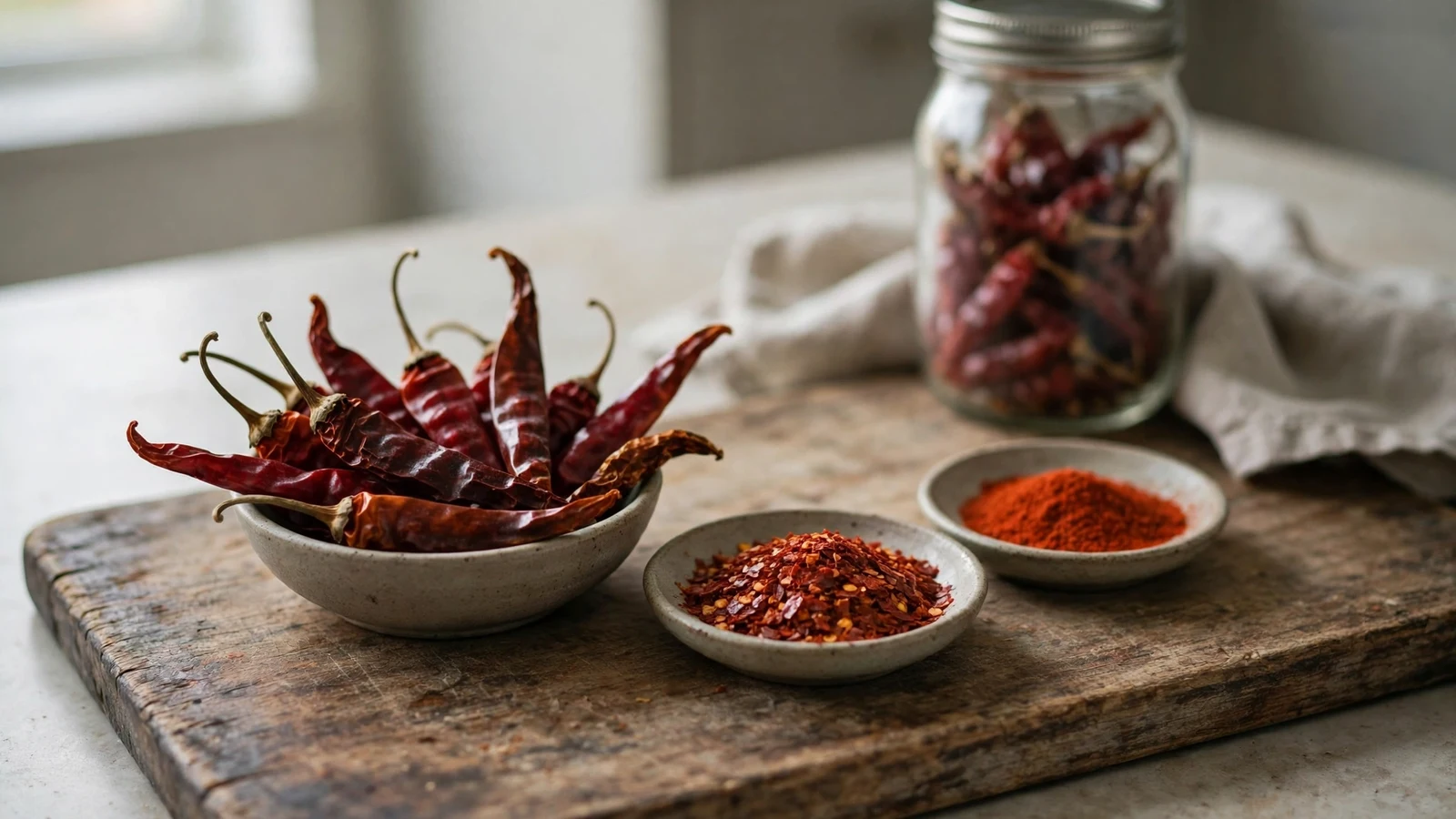
Whole dried chilies suit infusing: drop them into hot oil or a simmering broth and fish them out before serving, and the dish takes their heat without their texture. Flakes suit sprinkling and finishing, since they spread heat evenly and add a little crunch. Powder suits sauces and marinades, where even heat matters and no flakes should show. One whole dried chili gives about the same heat as 1 teaspoon of flakes or 1/2 teaspoon of powder, though the numbers shift with the chili type and the batch. Buy whole chilies and crush your own flakes when you can, since pre-ground chili loses its scent faster, and a small bag of whole chilies keeps its fragrance for months longer than a jar of powder.
How to toast dried chilies
Toasting wakes up the oils in a dried chili and adds a smoky note that raw chilies do not have. Put the chilies in a dry pan over medium heat, no oil, and shake the pan every few seconds. They are done in 30 to 60 seconds, when they smell fragrant and darken one shade. Pull them off the heat at once, since a toasted chili turns bitter in seconds once it passes that point. Let them cool for a minute before crushing or grinding, or the heat trapped inside keeps cooking them. Toasted chilies go straight into chili oil, into a mortar for a paste, or into a dry spice mix. If the pan smokes, the heat is too high: open a window, lower the heat, and start a fresh batch, since the bitter taste from a scorched chili cannot be fixed later. My guide to homemade chili oil starts with this same toast, then pours hot oil over the crushed chilies to carry the heat.

How to soak dried chilies
Soaking softens dried chilies for pastes and sauces, where a dry chili would stay tough in the blender. Cover the chilies with hot water, not boiling, and leave them for 15 to 20 minutes until they bend without snapping. Pull out the stems, slit each chili open, and shake out the seeds if you want a milder paste, since most of the heat sits in the seeds and the pale ribs inside. Drain the chilies and blend them with the other paste ingredients, adding a spoonful of the soaking water only if the blender needs liquid to turn. The soaking water itself tastes bitter, so pour it away rather than using it as stock. Soaked chilies blend into a smooth paste in under a minute, while unsoaked chilies leave hard flakes in the sauce. Mapo tofu and Sichuan chili crisp noodles both start from chilies prepped this way, one toasted and one soaked.

How much heat to use
Start small and taste as you go, since chili batches vary in heat from bag to bag. For a stir-fry for four, two or three whole dried chilies give a warm background heat, while five or six turn it properly hot. For chili oil, 1/4 cup of flakes to 1 cup of oil makes a medium jar, and doubling the flakes moves it into hot territory. For a curry paste, four soaked chilies give a mild paste, eight give a medium one, and the seeds decide the rest: keep them in for heat, shake them out for flavor without the burn. If a dish ends up too hot, a spoonful of sugar, a splash of coconut milk, or a squeeze of lime takes the edge off, and serving rice alongside spreads the heat across more bites. If a dish ends up too mild, a pinch of flakes stirred in at the end fixes it faster than another whole chili, since flakes give up their heat in minutes.
Seeding and handling
Seeds carry most of the heat, and the ribs carry the rest, so a chili with seeds removed tastes like the same chili at half strength. Slit the chili open with a small knife and shake the seeds out over a bowl, or scrape the ribs away with the knife tip for a still milder result. Wear gloves if you handle a large batch, and wash your hands with soap before touching your face, since chili oil lingers on skin long after cooking. Keep the kitchen ventilated when toasting a big batch: the smoke from hot chilies stings the eyes and throat, and a range hood or open window keeps it out of the room. Ground chili dust gets into the air the same way, so grind in short bursts with the lid on and let the dust settle before opening the grinder.
Storage
Keep dried chilies in a sealed jar or a tied bag in a dark cupboard, away from heat and damp. Whole chilies stay fragrant for about 6 months, flakes for about 3 months, and powder for about 2 months, and the fridge stretches each one by a few months more. Check the bag before buying: the chilies should bend slightly and smell sharp when snapped, not crumble to dust. Chilies that smell flat or look faded have sat too long, and no amount of toasting brings their scent back. Throw out any batch with mold or a damp, musty smell, since a moldy chili cannot be saved by washing. A small bag bought often beats a large bag bought once, and the chilies from a fresh bag toast better than ones that have sat in the cupboard for a year.

From the garden
The jar on my counter right now started with Thai chilies from a pot, dried on a tray for a week until they felt crisp and snapped cleanly. A pot plant gives a few chilies at a time over weeks, which suits a dried chili jar well, since one jar needs only a small handful. My guide to growing Thai chili peppers in pots covers the pot size and watering that keeps a plant fruiting through summer, and home-dried chilies toast just as well as store-bought ones.
More pantry guides
Try a home cook’s guide to Asian vinegars, chili oil 101: make it at home, and how to make chili vinegar for noodle soups next. The essential Asian pantry lists the rest of the shelf.
From Paul’s kitchen.