
Edamame is one of those crops that tastes completely different fresh. The frozen bags at the store are fine, but a pod picked an hour before dinner is sweeter, grassier, and more tender — and edamame doesn’t travel well, which is exactly why growing your own pays off. The good news is that you don’t need a garden bed. A few bush-type plants in pots will hand you a respectable harvest of pods through late summer.
Soybeans are forgiving plants, but they have a short fuse on timing. This guide covers variety choice, pot setup, sowing, and the one thing that matters most: recognizing the exact moment the pods are ready, because the window is shorter than you’d think.
Pick a Variety That Fits a Pot
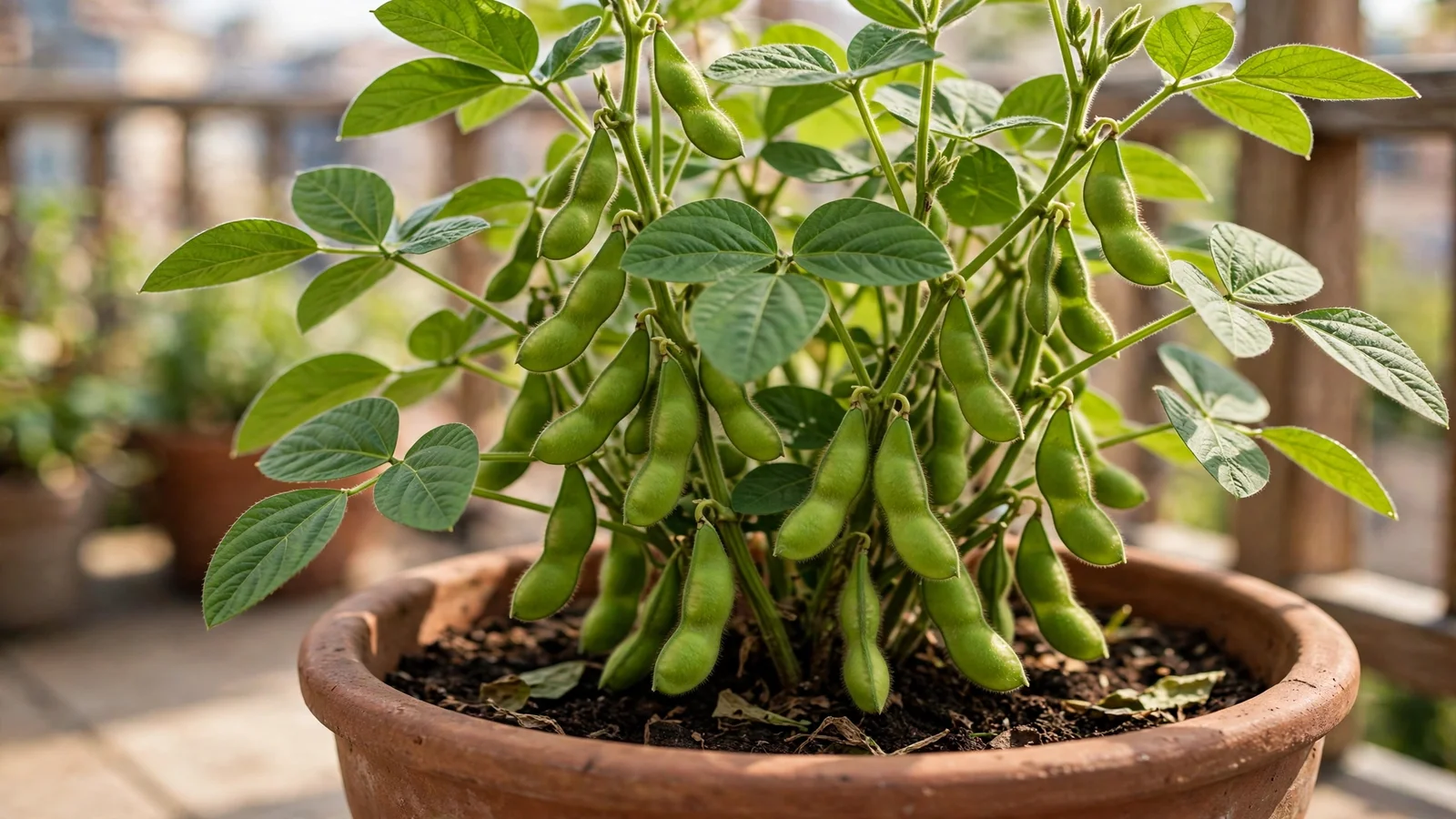
Edamame is simply young soybean (Glycine max), harvested while the pods are still green and the beans are plump. Seed packets sold for edamame use are sweeter, larger-seeded types than the field soybeans grown for oil and feed — always buy seed labeled for edamame.
Look for bush (determinate) types if you’re working with containers. Tall field types top out around 3 feet and sprawl, while compact varieties stay closer to 2 feet and set pods over a tighter window, which suits pots perfectly. Container-friendly favorites include:
- ‘Envy’ — a compact bush type around 2 feet, early at roughly 75 days, good for short seasons.
- ‘Sayamusume’ — a classic Japanese variety, about 2.5 feet, with sweet beans at roughly 85 days.
- ‘Beer Friend’ — an early bush type, around 2 feet and 75–80 days, popular with home growers.
- ‘Shironomai’ — a reliable midseason bush type with plump pods at about 90 days.
Most edamame needs 75–100 days from sowing to harvest, so count backward from your first expected fall frost and sow accordingly. In warm climates you can squeeze in two sowings; in short-season areas, pick an early variety like Envy and sow once the soil is truly warm.
The Pot, the Soil, and the Inoculant
Soybeans are legumes, which means they partner with soil bacteria to make their own nitrogen. That shapes everything about the setup.
Pot size: Go with at least a 5-gallon pot (about 12 inches deep and 12 inches wide) per cluster of 4–6 plants. Edamame roots run deeper than you’d guess for a bushy plant, and shallow pots dry out between waterings right when the pods are filling. If you only have 3-gallon pots, grow 2–3 plants per pot and water daily in heat.
Soil: Standard well-draining potting mix works. Legumes hate soggy feet — a mix that stays waterlogged rots seed and invites root disease. A light handful of compost mixed in is plenty; skip the heavy manure.
Inoculant: This is the one extra step most people skip, and it’s the cheapest yield boost in the garden. Edamame fixes nitrogen through a partnership with Bradyrhizobium japonicum bacteria, which may not exist in fresh potting mix. A packet of soybean inoculant costs a few dollars: moisten the seeds, roll them in the powder just before sowing, and plant. If you’ve grown beans or peas in that soil before, you can skip it — the bacteria are already home.
Drainage holes are non-negotiable, and a layer of mulch on top of the mix (straw or shredded bark) pays off later by keeping the soil evenly moist during pod fill.
Sowing: Warm Soil or Nothing
Edamame seed rots in cold soil. Wait until the soil in your pots is at least 60°F — 75–85°F is ideal. In most climates that means late spring, after nights stay reliably above 50°F. Push a thermometer into the mix before you sow; guessing here is how people re-sow twice.
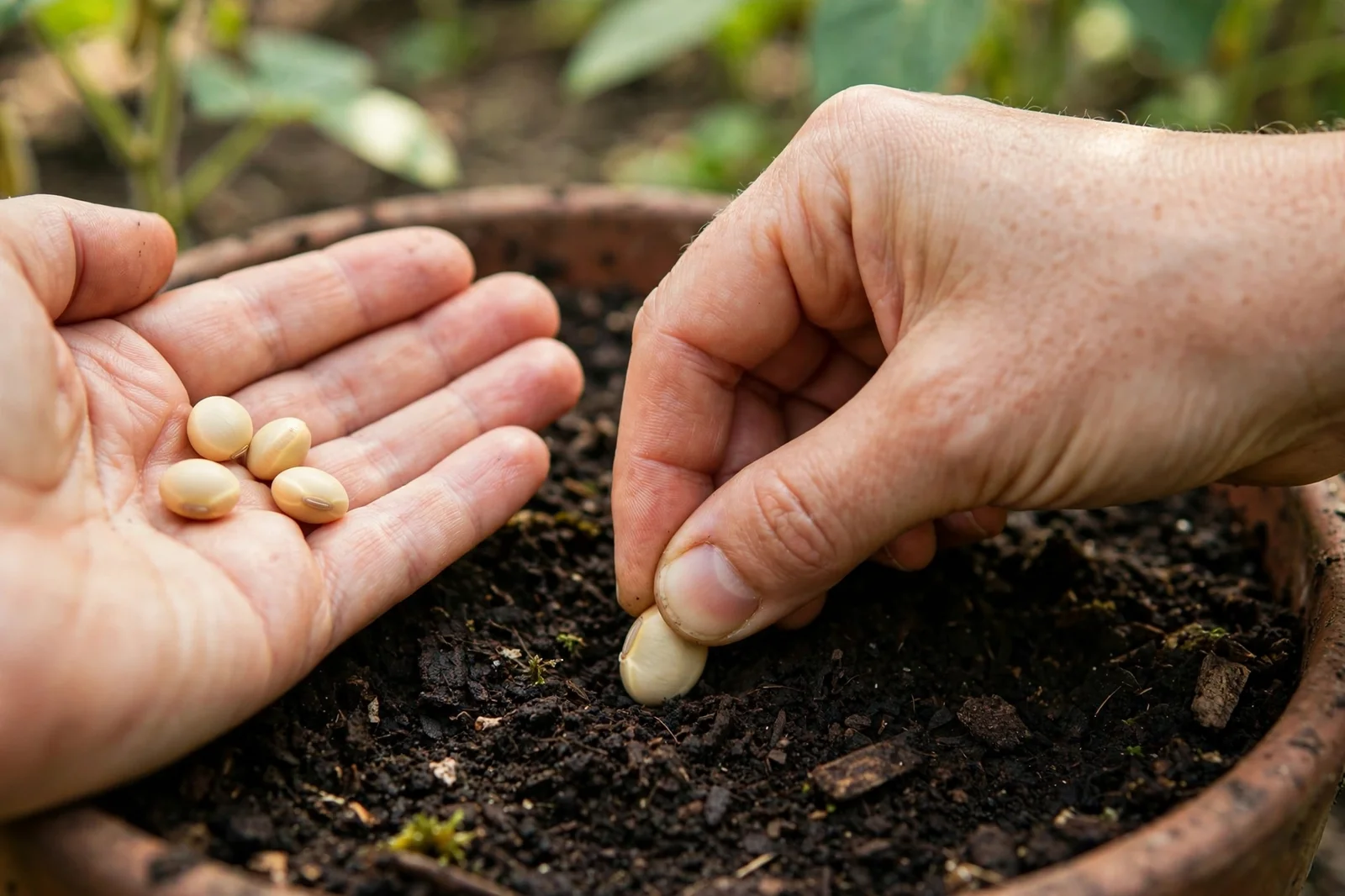
- Depth: Sow 1–1.5 inches deep. Shallow sowing leaves seeds exposed to birds; deeper sowing slows emergence.
- Spacing: Place seeds 2–3 inches apart, then thin to 4–6 inches once seedlings are a few inches tall. A 12-inch pot comfortably holds 4–6 mature plants.
- Succession: For a longer harvest, sow a second round 2–3 weeks after the first. Each planting produces in a concentrated burst, so staggered sowings are the only way to stretch the season.
- Water gently after sowing and keep the top inch of mix from drying out until sprouts appear, usually in 5–10 days in warm soil.
Sun, Water, and (Mostly) No Feeding
Sun: Full sun — six or more hours a day. Edamame in part shade grows leggy, flowers late, and sets fewer pods. The sunniest corner of your balcony or patio is the right spot.
Water: Keep the soil consistently moist, not soaked. Two moments matter most: germination and the pod-fill stage, when the pods are visibly swelling. Letting the mix dry out during pod fill gives you flat, underfilled pods. In midsummer heat, large pots in full sun can need water every day — the mulch layer helps a lot here.
Feeding: Here’s where legumes break the rules. Because inoculated plants make their own nitrogen, do not feed them high-nitrogen fertilizer — it grows impressive leaves and disappointing pods. If your potting mix had no fertilizer in it at all, one light application of a balanced organic fertilizer (or a low-nitrogen bloom formula) at flowering is enough. Most fresh potting mixes need nothing more.
Edamame flowers are small and self-pollinating, so don’t worry if you never see bees on them. A plant can set pods perfectly well on a high balcony with zero pollinator traffic.
Harvest: Catching the Exact Moment
This is the make-or-break skill. Edamame is harvested at the R6 stage: pods bright green, fully plump, with the beans clearly pushing against the pod skin. Pick too early and the beans are small and starchy; wait too long and the pods yellow, toughen, and taste beany in the wrong way.
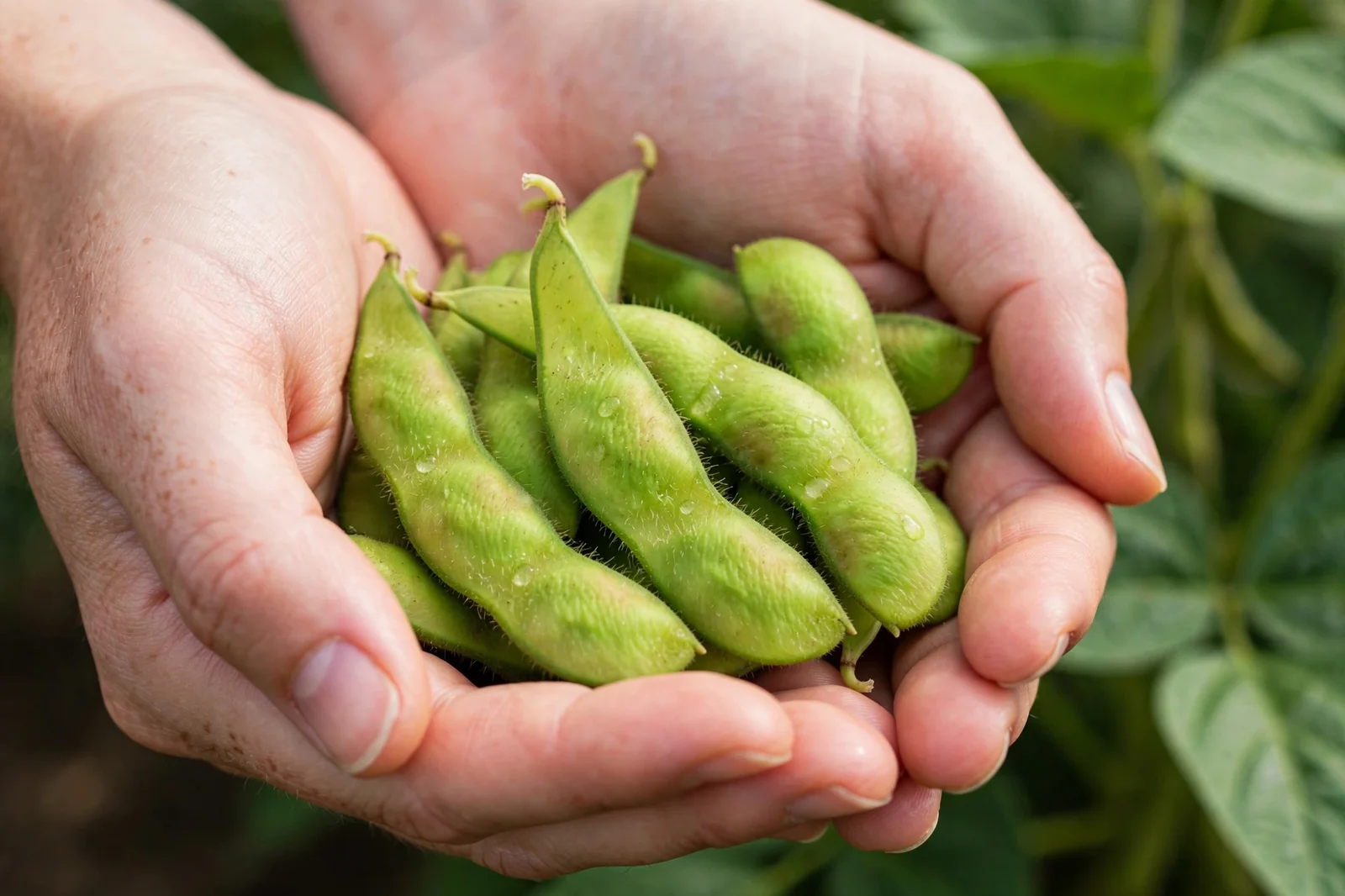
- The squeeze test: A ready pod feels firm and rounded, and you can see individual bean bumps through the pod wall. If the bumps are vague, give it a few more days. If the pod is yellowing anywhere, that pod is past its peak — eat it today or skip it.
- The window: A planting gives you about 1–2 weeks of prime picking. Check plants every two or three days once the first pods swell.
- How to pick: Hold the stem with one hand and pull pods off individually, or cut whole stems and strip pods at the table. Pods at the bottom of the plant mature first, so start low and work up.
- Freshness matters: Cook pods the same day you pick them if you can. Like sweet corn, the sugars in edamame start converting to starch quickly after picking. Unpicked plants don’t wait — the pods keep maturing whether you’re ready or not.
Freezing the surplus: If a planting gives you more than you can eat fresh, blanch the pods 2–3 minutes in boiling salted water, plunge into ice water, drain, and freeze in bags. Homegrown edamame frozen at peak beats store-bought easily, and it’s ready whenever you want a bowl.
In the Kitchen
The classic treatment is as simple as it gets: boil or steam the pods in well-salted water for 4–5 minutes, drain, sprinkle with flaky salt, and eat the beans straight from the pod (squeeze from the narrow end). A drizzle of good soy sauce turns them into proper izakaya-style snacking — if light versus dark still confuses you, our soy sauce guide sorts it out.
Like its fellow warm-season legume the yardlong bean, homegrown edamame rewards warmth and steady water far more than fussing, and the fresh-picked difference is the whole reason to grow either one.
Quick Troubleshooting
| Problem | Likely cause | Fix |
|---|---|---|
| Seeds rotted, nothing emerged | Soil below 60°F at sowing | Re-sow once the mix is genuinely warm; don’t soak cold soil |
| Tall plants, few pods | Too much nitrogen fertilizer | Stop feeding; legumes feed themselves once inoculated |
| Pods flat, beans tiny inside | Dry spell during pod fill | Water daily in heat; mulch the pot surface |
| Pods yellowing on the plant | Picked too late | Harvest at the plump-green stage; check every 2–3 days |
| Leaves chewed to lace | Japanese beetles or bean beetles | Hand-pick mornings; row cover on seedlings keeps the worst off |
| Seedlings vanished overnight | Slugs, cutworms, or rabbits | Slug traps or copper tape; elevate pots out of rabbit reach |
Count back from your first frost, pick an early bush variety, inoculate the seed, and keep the water steady through pod fill — that’s the whole recipe. One season of homegrown pods will tell you exactly why frozen was only ever the backup plan.