
What Yardlong Beans Actually Are
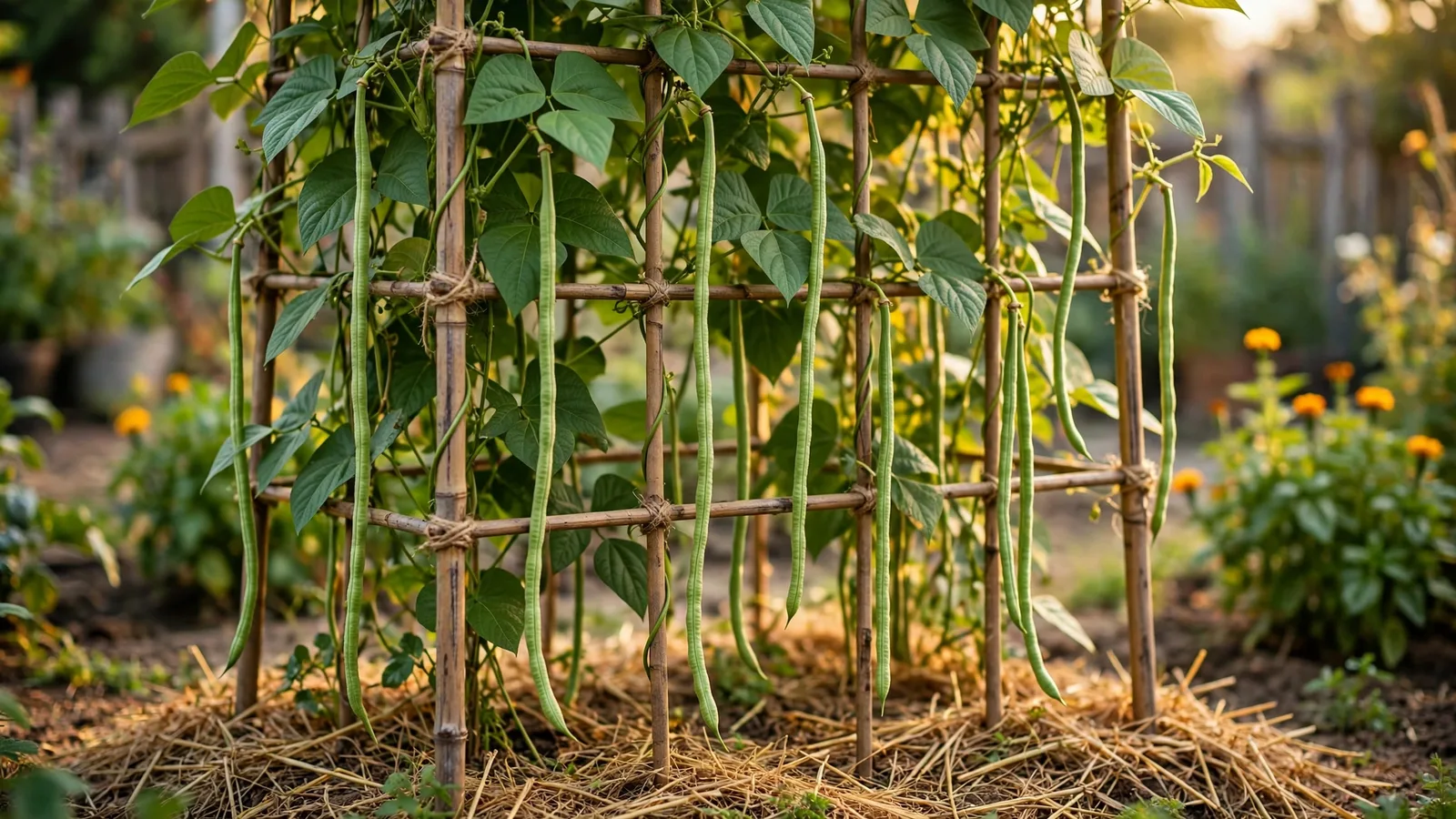
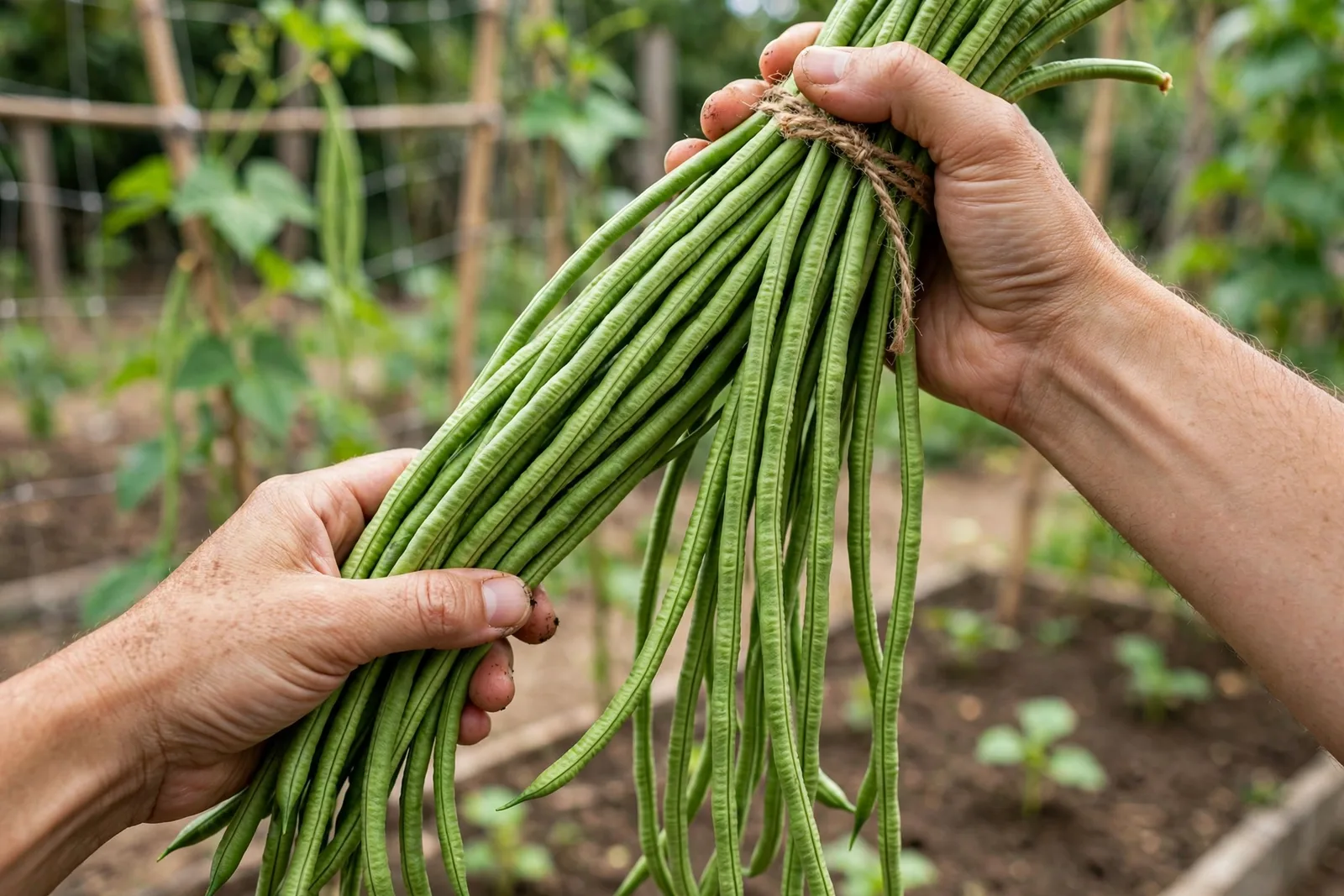
Yardlong beans (Vigna unguiculata subsp. sesquipedalis) are the dangling green ropes sold in bundles at Asian markets — also called asparagus beans, Chinese long beans, or dau dua in Vietnamese. Despite the name, nobody picks them a yard long. The eating sweet spot is 12–18 inches, while the pod is still smooth and the seeds inside are small. Wait until the seeds swell and the pod turns puffy, and you get the tough, spongy texture that gives this bean a bad name with first-time growers.
The plant is a vigorous warm-season vine, a close cousin of black-eyed peas, and it behaves like one: it sulks in cool weather, races once real heat arrives, and dies at the first touch of frost. One healthy vine on a good trellis can hand you a bundle of beans every couple of days through the hottest stretch of summer, which is exactly when bush beans quit and pole beans slow down.
If you plan your warm-season vegetables around a calendar, the seasonal picture in When to Plant Asian Greens: A Seasonal Calendar shows where yardlong beans fit: they go in after the last frost and carry the bean harvest through midsummer heat.
When to Sow
Heat is the whole story with this crop. Seeds rot in cold soil and seedlings just sit there in chilly nights.
- Soil temperature: Sow when the soil is at least 70°F, ideally 75–90°F. In most of the U.S. that lands one to two weeks after the last spring frost.
- Direct sow, don't transplant: Yardlong beans dislike root disturbance. Sow in place, 1 inch deep. Starting them in pots and moving them out usually costs you more time than it saves.
- Frost: There is no frost tolerance at all, on either end of the season. The first fall frost ends the vines overnight, so take your final picking the day before frost is forecast.
- Day length, the quiet gotcha: Many traditional varieties are short-day plants — they wait for late-summer days to shorten before flowering heavily. If your vines grow lush and green for weeks with no flowers in June, that is often the variety, not something you did wrong. Day-neutral varieties flower earlier and more steadily; check the seed packet if you want pods by early summer.
- Succession: In long, hot climates (zones 8 and warmer), a second sowing in early July keeps fresh pods coming into fall.
Give Them Something Tall to Climb
A yardlong vine wants 8–12 feet of vertical room and will use every inch of it. A short tomato cage is not enough — the vines pile over the top into a tangled mat where pods hide and get old before you find them.
- In beds: A cattle panel, a sturdy string trellis, or poles tepee-style, 8 feet tall or more. Sow along the north side of the bed so the wall of vines does not shade shorter crops.
- Spacing: Sow seeds 3–4 inches apart along the support and thin to the strongest plant every 6–8 inches. Thin ruthlessly — crowded vines shade each other and pod production drops.
- Guide the tips: Young shoots wander. Weave them into the support once a week for the first month and they will take it from there.
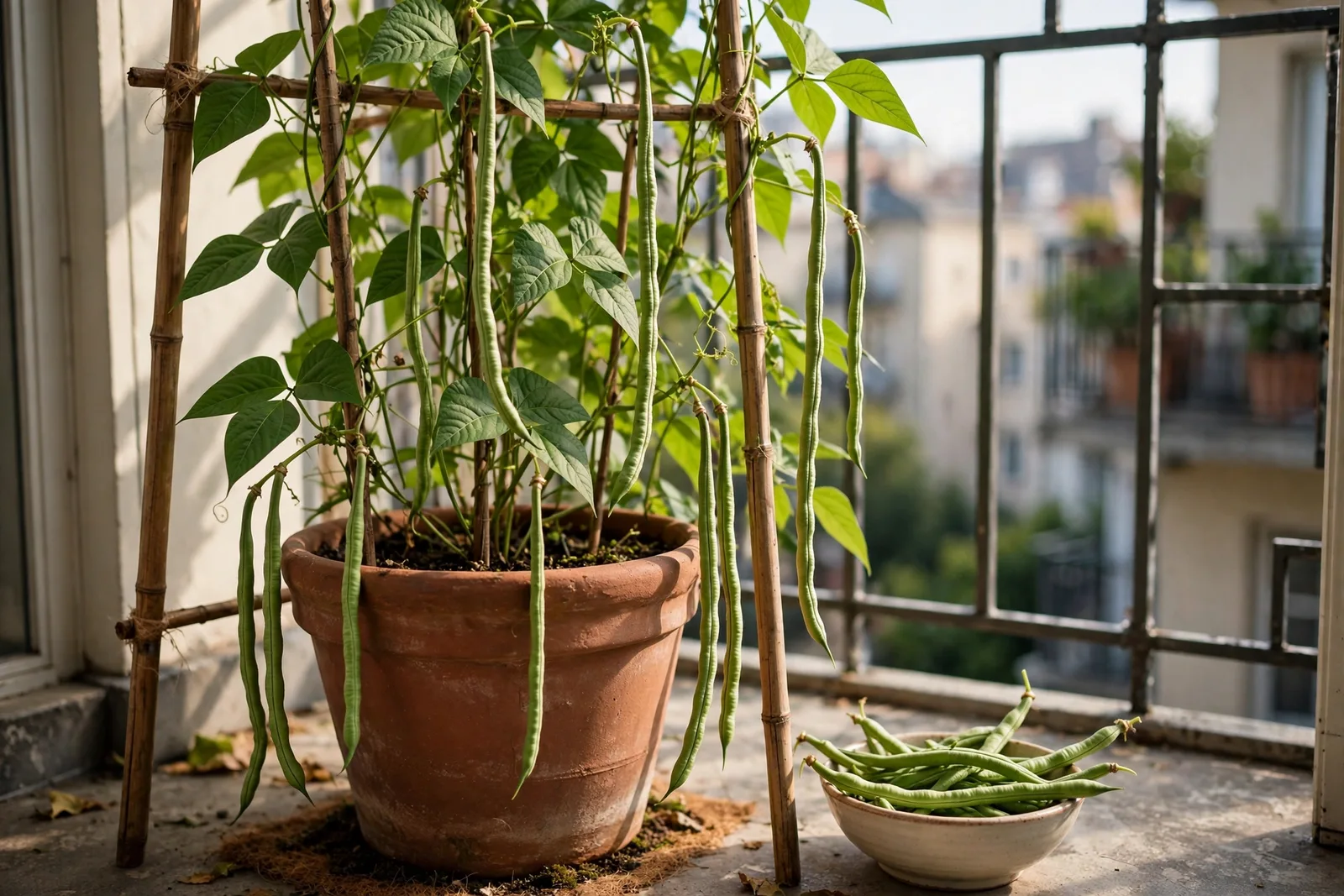
- In a small space: One vine up a balcony railing or a strong pole works fine. The layout logic in Balcony Wok Garden: 8 Plants for Small Spaces — tallest plants on their own support at the back — is exactly how to fit a vine like this into a few pots.
Pots, Soil, and Feeding
Yardlong beans grow well in containers as long as the pot is big enough to hold moisture through a hot day.
- Pot size: A 5-gallon pot per plant is the working minimum; 10 gallons grows a calmer, more productive vine. Anything smaller dries out by midafternoon in July, and drought-checked vines drop flowers.
- Soil: Rich, loose, and moisture-retentive. Use a good potting mix with a generous share of compost in pots, and work compost into the bed before sowing. A pH of 6.0–7.5 is fine.
- Go easy on nitrogen: This is a legume — it makes much of its own nitrogen with its root bacteria. Heavy nitrogen feeding gives you a gorgeous curtain of leaves and almost no beans. A compost base plus one light feeding of a balanced fertilizer when flowering starts is plenty.
- Mulch: Two to three inches of straw or shredded leaves once seedlings are up. It keeps soil moisture even and keeps pods that hang low out of the dirt.
Water and Day-to-Day Care
Once the vines are climbing, care is mostly about steady water and keeping an eye out for two or three regular pests.
- Water: Roughly 1–1.5 inches a week in beds; pots in full sun may need water every day in midsummer. Uneven watering shows up as curved, scarred, or hollow pods.
- Aphids: The tender growing tips draw aphids, and ants farm them. A hard spray of water every couple of days knocks colonies back. Letting aphid numbers ride usually brings ladybugs and lacewings that finish the job.
- Ants on the flowers: Some ant traffic around the blooms is normal and harmless. The flowers are self-pollinating, so a lack of bees is not a reason for missing pods.
- Leaves vs. pods check: If you have big vines, few flowers, and it is early in the season, re-read the day-length note above before you feed anything. Patience fixes that one; fertilizer makes it leafier.
- Like its heat-loving neighbor in Growing Water Spinach (Kangkong) at Home, this is a crop that rewards warmth, steady water, and a sturdy setup far more than fussing.
Harvest: Pick Every Day or Two
This is the one habit that decides whether your beans are tender or terrible. In peak heat, a pod can go from perfect to overgrown in about two days, and every pod left to mature tells the vine to slow down and make seed instead of more flowers.
- What to pick: Pods 12–18 inches long, still smooth and slim, before you can feel distinct seeds bulging inside. Color should be a fresh, even green (or deep red-purple on red varieties), and the pod should snap rather than bend.
- How to pick: Use scissors or pruners, or hold the stem with one hand and pull the pod with the other. Yanking pods off bare-handed tears the vine at the cluster point, and each cluster carries more flowers.
- How often: Every day in midsummer heat, every other day at the shoulders of the season. A missed weekend is how you end up with a handful of yard-long ropes nobody wants to eat.
- Keep them coming: The more consistently you pick, the longer the vine keeps flowering. Production usually runs until nights cool down or the first frost arrives.
- Saving seed: Leave a few of the best pods on the vine until they dry tan and papery, then shell them out. Yardlong seed stores well in a cool, dry jar for next year.
Using the Harvest in the Kitchen
Yardlong beans cook like a firmer, earthier green bean, and they hold up to bold seasoning instead of going soft.
- The classic treatment: Cut into 2-inch pieces and blister them in a hot wok, the way Sichuan Dry-Fried Green Beans handles them — that recipe is written for exactly this bean, wrinkles, chili heat, and all.
- Stir-fries: Cut into short lengths and give them a minute more than you would give thin green beans. They pair naturally with garlic, fermented black beans, and minced pork.
- Sour soups and salads: Short pieces stand up well in a tangy broth like Sinigang: Filipino Sour Soup, and blanched pieces take a chili-lime dressing without collapsing.
- Storing: Unwashed pods in a bag in the crisper keep about 4–5 days — noticeably shorter than supermarket green beans, so cook the big pickings first. The general habits in How to Store Fresh Herbs So They Last Longer — dry surfaces, air out of the bag, cold but not freezing — apply to pods too.
Quick Troubleshooting
| Problem | Likely cause | Fix |
|---|---|---|
| Seeds rotted, nothing sprouted | Soil below 70°F at sowing | Re-sow once the soil is genuinely warm; do not water cold soil heavily |
| Big leafy vines, no flowers by midsummer | Short-day variety, or too much nitrogen | Wait for late summer, or stop nitrogen feeding and let it flower |
| Pods tough and puffy | Picked too late | Harvest at 12–18 inches, before seeds bulge; pick daily in heat |
| Curved, scarred pods | Uneven watering during pod fill | Mulch and water on a steadier schedule |
| Aphid clusters on the tips | Tender growth plus ant farming | Hard water spray every 2 days; let ladybugs arrive |
| Vines stopped after a few big pods | Mature pods signaling seed production | Pick every pod young for a week; production usually resumes |
| Plants dead overnight in fall | First frost | Expected — this crop has zero frost tolerance |
Give yardlong beans warm soil, a tall trellis, steady water, and a picking habit you actually keep up, and one short row will hand you armfuls of beans through the weeks when the rest of the summer garden is slowing down.