
Kaya toast is the breakfast Paul reaches for on a slow weekend morning: two slices of white bread toasted until they snap, spread with warm coconut kaya jam, a thick slab of cold butter on top, and two soft-boiled eggs on the side with dark soy sauce and white pepper. The numbers are measured: 4 eggs, 200 ml of coconut milk, and 150 g of sugar make about 1 1/2 cups of kaya, enough for 4 servings with jam left over for the next morning. The kaya takes about an hour of gentle stirring over a double boiler, the eggs take 6 minutes, and the toast comes together in the last few minutes.

What is kaya toast?
Kaya toast is Singapore’s kopitiam breakfast: crisp white toast filled with kaya, a coconut and egg jam, and a slab of cold butter, served with soft-boiled eggs and a cup of kopi, the strong local coffee. Hainanese immigrants working in British households in the Straits Settlements adapted the jam-and-toast breakfast they saw there, swapping in coconut milk, eggs, sugar, and pandan, and the result became the morning set at kopitiams, the old coffee shops, across Singapore and Malaysia. The draw is the contrast in each bite: warm jam and toast against cold butter, sweet coconut against salty soy sauce and pepper in the eggs. Our Nasi Lemak: Coconut Rice with Sambal and Anchovies is the other Singapore breakfast plate worth knowing, a coconut rice set with sambal, anchovies, and a boiled egg, and it sits on the same kopitiam menu as this toast.
Ingredients
For the kaya (makes about 1 1/2 cups)
- 4 large eggs
- 3/4 cup sugar (150 g)
- 3/4 cup plus 2 tablespoons full-fat coconut milk (200 ml)
- 3 pandan leaves, tied into knots
- 1 pinch sea salt
- 1 tablespoon cornstarch mixed with 1 tablespoon cold water (optional, for a silkier set)
For the toast and eggs (serves 4)
- 8 slices white sandwich bread
- 4 tablespoons cold unsalted butter, cut into thick slabs
- 8 large eggs
- Dark soy sauce, to taste
- Ground white pepper, to taste
How to make it
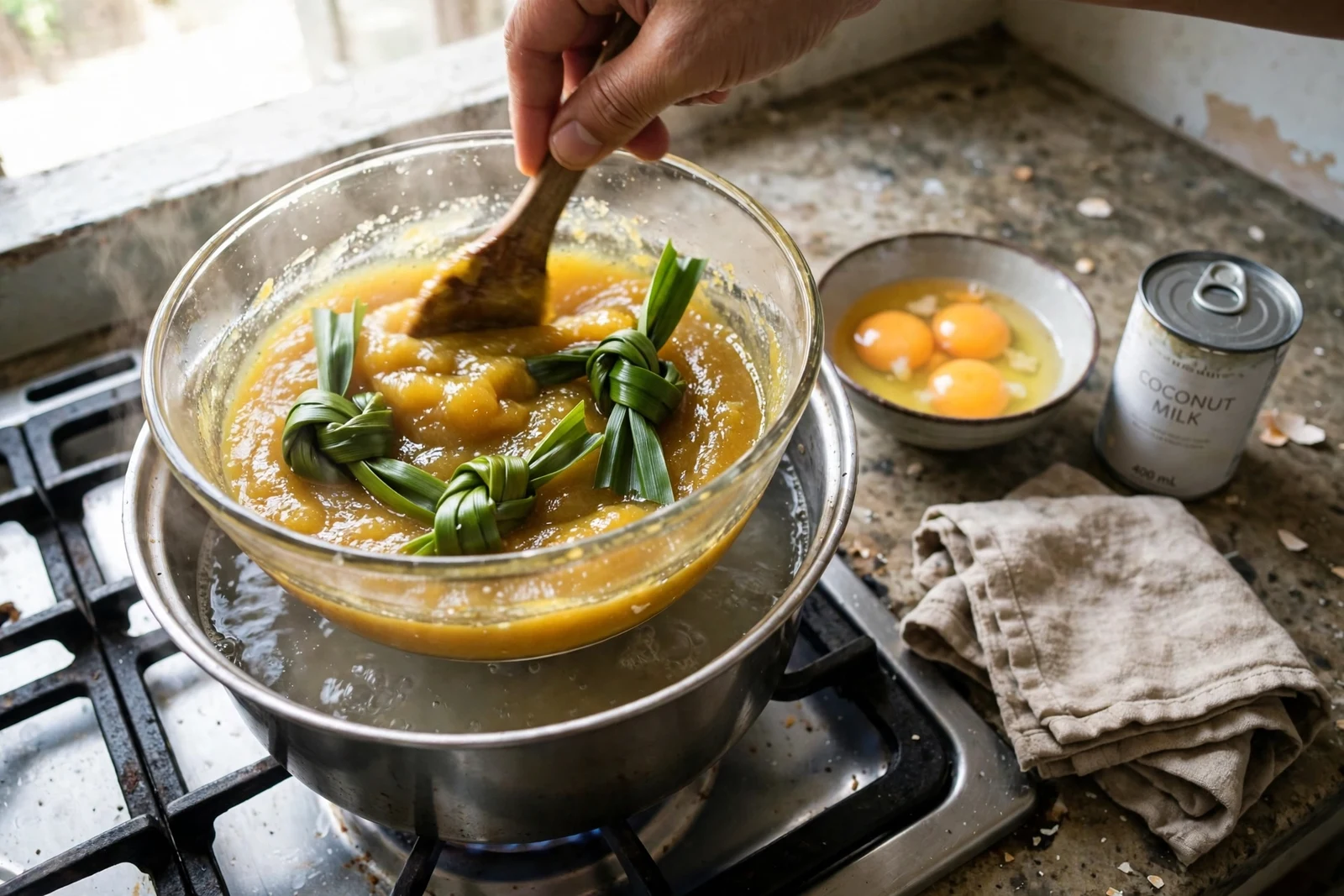
Make the kaya first. Whisk the eggs and sugar in a bowl until the sugar dissolves, then strain the mixture into a heatproof bowl to catch any bits of shell or chalazae. Stir in the coconut milk and salt, add the knotted pandan leaves, and set the bowl over a pot of simmering water. Cook on low heat, stirring the whole time with a spatula and scraping the bottom, for 45 to 60 minutes, until the mixture thickens and coats the back of a spoon. Eggs start to set around 62 to 70°C, so the water under the bowl should stay at a gentle simmer, never a rolling boil, or the jam turns grainy. If you use the cornstarch slurry, pour it in slowly at the end and stir for 1 to 2 minutes more. Lift out the pandan leaves and let the kaya cool: it firms as it cools, so take it off the heat while it still looks a little loose. A jar keeps in the fridge for 2 weeks.
Soft-boil the eggs while the kaya cools. Bring a pot of water to a boil, turn off the heat, and lower the eggs in gently with a spoon. Cover the pot and leave the eggs for exactly 6 minutes, then lift them straight into a bowl of cold water to stop the cooking. Crack two eggs into each small bowl and season with a dash of dark soy sauce and a pinch of white pepper. At 6 minutes the whites are just set and the yolks run like warm custard; past 7 minutes the yolk starts to firm up and the dip loses its soft center.

Toast the bread until it is golden and dry all the way through, then spread each slice with a thick layer of warm kaya. Lay a slab of cold butter on top of the kaya, close with a second slice, and cut each sandwich into strips. The butter goes on cold and cut about 2 to 3 mm thick, so it keeps its shape for a moment against the warm toast instead of melting straight into the bread, and that warm-cold contrast is the whole point of the dish. Serve at once, with the eggs on the side for dipping or eating with a spoon. The toast starts to soften within minutes, so nothing waits: kaya on, butter on, cut, and eat. The same kopitiam counter that serves this set also serves our Roti Canai: Malaysian Flaky Flatbread, another breakfast built on the same idea of hot bread and a cool, salty counterpoint.

Troubleshooting: Fix My Kaya Toast
Most kaya toast problems come from the heat under the jam, the timing on the eggs, or waiting too long to eat the toast. Pick the problem that matches your batch below for a practical next step.
HERB & LIME · KITCHEN HELP
Fix My Kaya Toast
Choose what went wrong to see a practical next step.
Possible cause
What to try next
For next time
From Paul's kitchen. Results vary with egg size, coconut milk brand, and stove heat, adjust timing to your setup.
Quick reference (also works without JavaScript)
The kaya turned grainy or curdled
Cause: The heat was too high, so the eggs set into grains instead of staying suspended in a smooth custard.
Try: Pull the bowl off the heat at once, blend the jam until smooth, then strain it through a fine mesh sieve.
Prevent: Cook over a double boiler at a gentle simmer, never a rolling boil, and stir constantly without stopping.
The kaya is too thin and runny
Cause: It has not cooked long enough to thicken, or it was taken off the heat before it coated a spoon.
Try: Return it to low heat and keep stirring until it coats the back of a spoon, or whisk in a small pinch of cornstarch mixed with water.
Prevent: Give it the full 45 to 60 minutes over low heat and use the spoon test, a finger line across the back of the spoon should stay clear.
The kaya set too firm
Cause: It cooked too long, and kaya firms further as it cools, so a jam that looked right in the pot sets hard in the jar.
Try: Warm it gently and whisk in a spoonful of coconut milk at a time until it spreads easily.
Prevent: Take it off the heat while it still looks a little loose, it will firm up on its own as it cools.
The toast went soggy
Cause: Kaya spread while too hot melted the butter into the bread, or the bread was too thin to hold the filling.
Try: Eat it right away, next time toast thicker slices until dry and crisp, let the kaya cool a little, and keep the butter cold.
Prevent: Toast until the surface is dry and crisp, spread warm kaya, then add butter cut 2 to 3 mm thick straight from the fridge.
The soft-boiled eggs came out firm or rubbery
Cause: They cooked too long or sat in hot water after the timer, so the yolks set and the whites toughened.
Try: Next batch, cook for exactly 6 minutes in water just off the boil, then move the eggs straight into cold water.
Prevent: Set a timer and have the cold water ready before the eggs go in, so they stop cooking the moment time is up.
Kaya Toast: Singapore Breakfast with Coconut Jam
Ingredients
Method
- Make the kaya first. Whisk the eggs and sugar in a bowl until the sugar dissolves, then strain the mixture into a heatproof bowl to catch any bits of shell or chalazae. Stir in the coconut milk and salt, add the knotted pandan leaves, and set the bowl over a pot of simmering water. Cook on low heat, stirring the whole time with a spatula and scraping the bottom, for 45 to 60 minutes, until the mixture thickens and coats the back of a spoon. Eggs start to set around 62 to 70 degrees C, so the water under the bowl should stay at a gentle simmer, never a rolling boil, or the jam turns grainy. If you use the cornstarch slurry, pour it in slowly at the end and stir for 1 to 2 minutes more. Lift out the pandan leaves and let the kaya cool: it firms as it cools, so take it off the heat while it still looks a little loose. A jar keeps in the fridge for 2 weeks.
- Soft-boil the eggs while the kaya cools. Bring a pot of water to a boil, turn off the heat, and lower the eggs in gently with a spoon. Cover the pot and leave the eggs for exactly 6 minutes, then lift them straight into a bowl of cold water to stop the cooking. Crack two eggs into each small bowl and season with a dash of dark soy sauce and a pinch of white pepper. At 6 minutes the whites are just set and the yolks run like warm custard; past 7 minutes the yolk starts to firm up and the dip loses its soft center.
- Toast the bread until it is golden and dry all the way through, then spread each slice with a thick layer of warm kaya. Lay a slab of cold butter on top of the kaya, close with a second slice, and cut each sandwich into strips. The butter goes on cold and cut about 2 to 3 mm thick, so it keeps its shape for a moment against the warm toast instead of melting straight into the bread, and that warm-cold contrast is the whole point of the dish. Serve at once, with the eggs on the side for dipping or eating with a spoon. The toast starts to soften within minutes, so nothing waits: kaya on, butter on, cut, and eat.
Notes
More Singapore recipes
Four more from the same shelf: Nasi Lemak: Coconut Rice with Sambal and Anchovies is the coconut rice set to make when you want a fuller breakfast with sambal and a boiled egg; Hainanese Chicken Rice is the poached chicken and fragrant rice plate to make when you want Singapore’s other famous dish; Roti Canai: Malaysian Flaky Flatbread is the flaky flatbread to make when you want something to tear and dip; and Tau Fu Fah: Malaysian Soy Beancurd Dessert is the soft beancurd in ginger syrup to make when you want a light, sweet finish.
From the garden
The pandan in this kaya comes from a pot by the back door, cut fresh the morning the jam is made, and that matters more than it sounds: a leaf cut an hour before cooking is still supple and fragrant, while one that has sat in the fridge for a week goes dry and gives up little scent in the pot. Our guide to growing pandan in pots covers how to keep a plant going so there is always a leaf to knot into the bowl.
From Paul’s kitchen.