
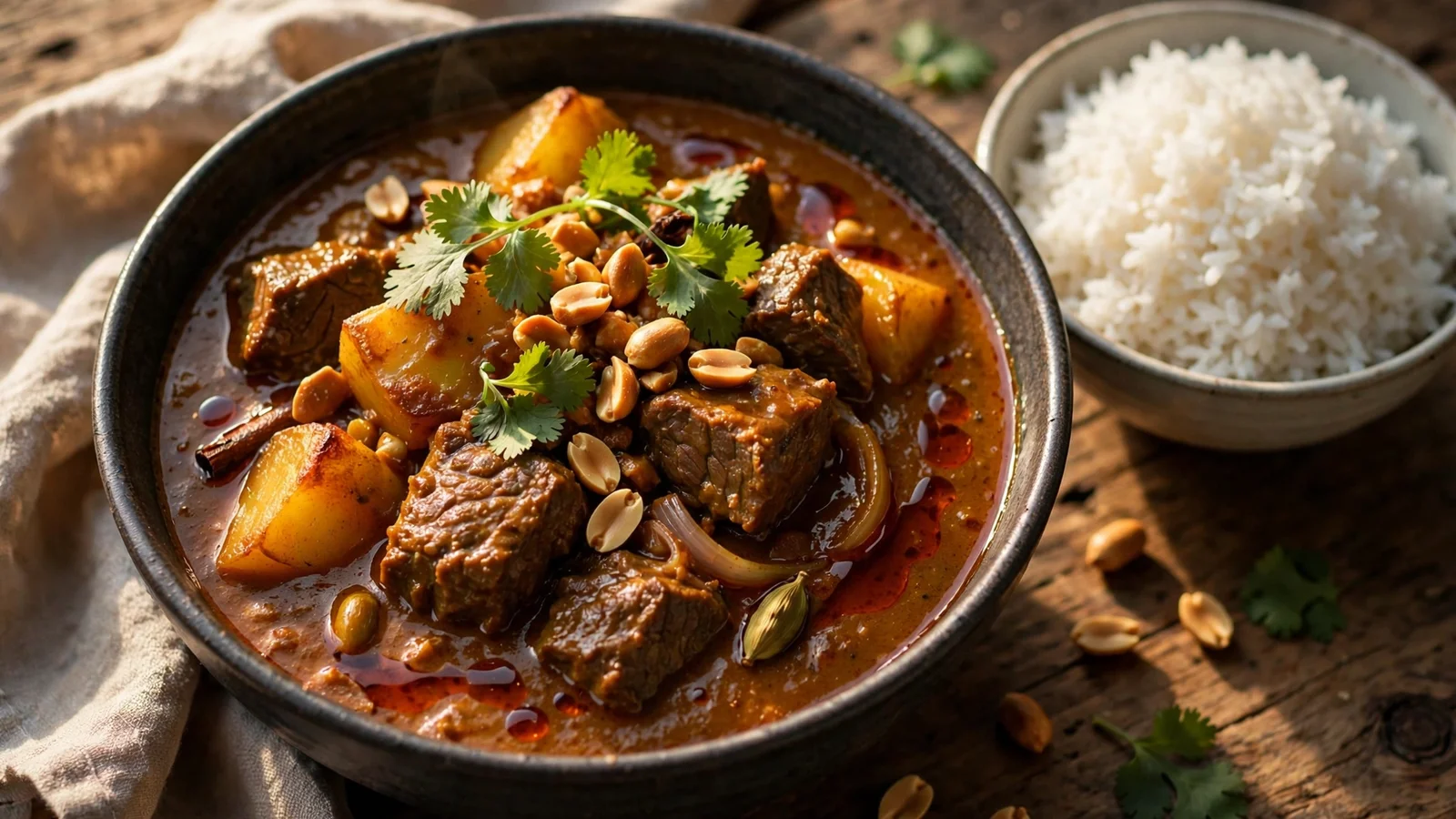
If Thai curries were a family, massaman would be the calm, dependable one. No searing heat, no sharp edges — just a deep, warm, gently spiced coconut gravy with cinnamon, cardamom, and roasted peanuts, poured over beef that's been braised until it yields to a spoon. It is the curry I make when the weather turns cool or when friends come over who swear they "can't handle spicy food" — nobody has ever complained about the bowl being too mild. The flavors are full and rounded, the kind that make you mop up the last of the sauce with rice.
Massaman curry paste is different from its Thai cousins. It leans on dried spices — cinnamon, cardamom, cloves, cumin — rather than fresh herbs and green chiles, which gives it a warm, almost aromatic quality that some people compare to Indian-style curries. The name itself hints at the dish's history: it traveled to Thailand centuries ago through trade with the Malay peninsula and beyond, picking up those spices along the way. What lands in your bowl today is unmistakably Thai, though — sweet, salty, sour, and rich, balanced the way a good curry should be.
The beef does most of the work here. Chuck roast, cut into generous chunks, spends a little over an hour in the sauce until it turns silky-tender. Potatoes go in for the second half so they soak up the gravy without falling apart, and peanuts add a buttery crunch that makes every spoonful interesting. It is a one-pot dish, it reheats beautifully, and the leftovers might be even better the next day.
Ingredients
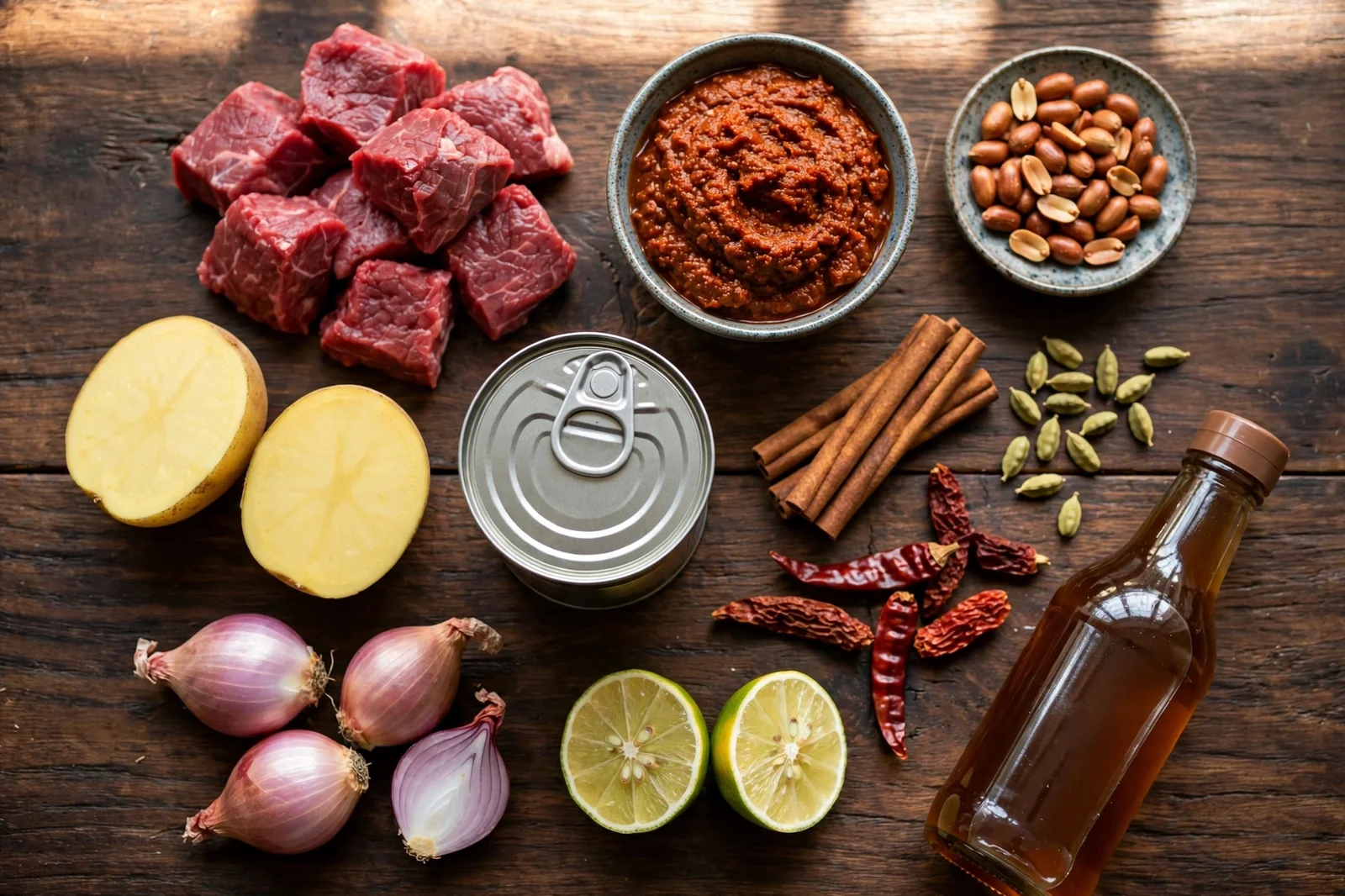
For the Curry
- 2 tablespoons massaman curry paste (see tips below for choosing one)
- 2 tablespoons coconut oil or neutral oil
- 1 can (13.5–14 oz) full-fat coconut milk, divided
- 1 1/2 pounds beef chuck roast, cut into 1 1/2-inch chunks
- 1 cup low-sodium beef or chicken broth
- 2 tablespoons tamarind paste, or 2 tablespoons tamarind concentrate diluted in 2 tablespoons water
- 2 tablespoons palm sugar or brown sugar, plus more to taste
- 2 tablespoons fish sauce, plus more to taste
- 1/2 cup roasted unsalted peanuts
- 1 medium yellow onion, cut into wedges
- 1 1/2 pounds Yukon Gold potatoes (about 4 medium), cut into large chunks
- 1 cinnamon stick (about 3 inches)
- 4 green cardamom pods, lightly cracked
- 2 bay leaves
To Serve
- Cooked jasmine rice
- Fresh cilantro sprigs
- Extra roasted peanuts, crushed
Instructions
1. Wake up the paste. Scoop the thick cream from the top of the coconut milk can into a large Dutch oven or heavy pot and heat it over medium-high heat. Add the massaman curry paste and the coconut oil, then stir and fry for 2 to 3 minutes, pressing the paste against the hot surface, until it smells deeply fragrant and turns a shade darker. This step blooms the dried spices in the paste — skip it and the curry tastes flat.
2. Start the beef. Add the beef chunks and stir to coat them in the paste. Pour in the remaining coconut milk, the broth, tamarind, palm sugar, fish sauce, peanuts, cinnamon stick, cardamom pods, and bay leaves. Stir to combine, bring to a gentle simmer, then lower the heat, cover, and let it bubble softly for 45 minutes. Stir once or twice so nothing sticks.
3. Add the potatoes and onion. Stir in the potato chunks and onion wedges, making sure they are mostly submerged in the gravy. Cover and simmer for 25 to 30 minutes more, until the potatoes are fork-tender and the beef is silky and tender when prodded. If the sauce reduces too much, add a splash of broth or water.
4. Rest and balance. Take the pot off the heat and let it sit, covered, for 10 minutes — this settles the sauce and lets the beef relax. Fish out the cinnamon stick and any large pieces of cardamom you spot. Taste and adjust: more fish sauce for saltiness, more sugar for sweetness, more tamarind for that gentle sour edge. The flavors should be rich and rounded, with the sour note whispering in the background.
5. Serve. Ladle over hot jasmine rice and scatter with cilantro and crushed peanuts.
Prep time: 15 minutes · Cook time: 1 hour 15 minutes · Servings: 4 to 6.
Tips for a Great Massaman Curry
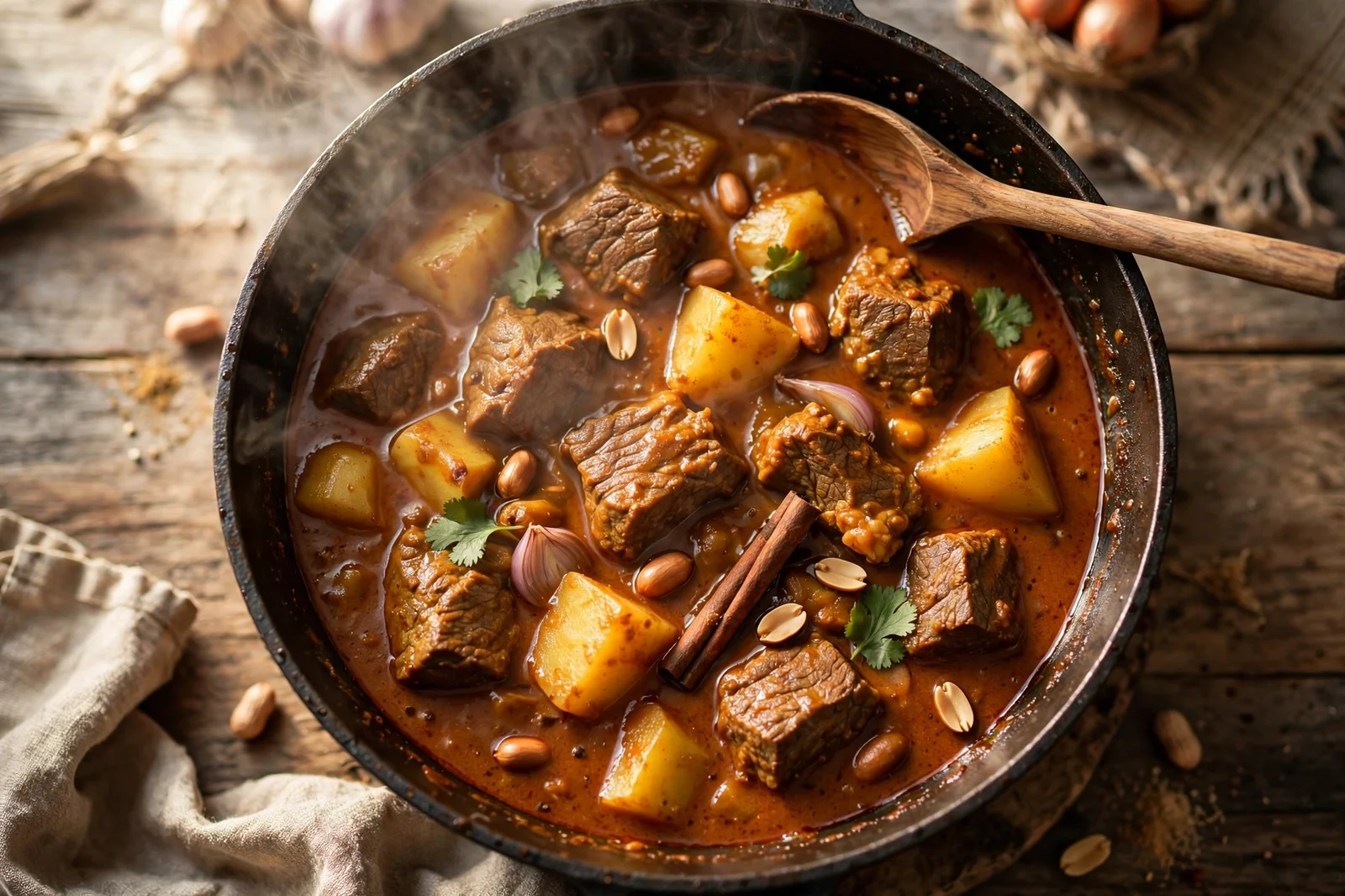
Chuck roast is the right cut. Massaman needs a cut that braises well, and chuck has the connective tissue that melts into gelatin during a slow simmer, giving the sauce its body. Leaner cuts like sirloin will turn dry and stringy over an hour. Cut the chunks generously — they shrink, and small pieces dry out faster.
Choose a paste you like. Massaman paste varies a lot between brands: some lean sweet, some lean spicy, and heat levels swing widely. Taste a tiny bit from the jar or can first. If it is fiery, start with 1 1/2 tablespoons; if it is mild and sweet, use the full 2 or even a little more. You can always stir in more paste mid-braise, but you cannot take heat back out.
Toast your whole spices. If you want an extra layer of fragrance, warm the cinnamon stick, cardamom pods, and bay leaves in a dry skillet over medium heat for about a minute until they smell aromatic, then add them to the pot in step 2. It is a small step with an outsized payoff.
Tamarind is the quiet hero. It provides the sour note that keeps this rich curry from feeling heavy. Tamarind paste from a jar is easy to find and works well; if you only have concentrate, dilute it a bit first or it can turn the sauce sharp. Add it early with the braising liquid, and fine-tune the sourness at the end.
Let it rest. Massaman curry tastes better after a short rest — and honestly, even better the next day. The potatoes absorb more sauce overnight and the spices meld. Store leftovers in the fridge for up to 4 days and reheat gently on the stove with a splash of water or broth to loosen the gravy.
Full-fat coconut milk only. Light coconut milk makes a thin, watery sauce that never develops that silky, spoon-coating body. The thick cream on top of the can is also your cooking fat in step 1 — do not shake the can before you open it.
Pairing note: if you prefer your curries fresher and greener, our Thai green curry with chicken scratches that itch — it is the bright, herbal counterpart to massaman's warm depth. And for the table, a tall glass of Thai iced tea cuts through the richness perfectly.
Variations
- With chicken: Swap the beef for 1 1/2 pounds of boneless chicken thighs. They only need about 30 minutes of braising, so add the potatoes 20 minutes after the chicken starts and you are done in under an hour.
- Vegetarian massaman: Skip the beef, use vegetable broth and soy sauce instead of fish sauce, and add 2 cups of cubed extra-firm tofu plus extra vegetables like kabocha squash and baby corn. The potatoes, peanuts, and spices carry the dish.
- Short-rib version: Substitute bone-in short ribs for the chuck and add 15 to 20 minutes to the braising time in step 2. The bones enrich the sauce even more — just plan on picking the meat off the bone before serving.
- Extra vegetables: Sweet potato cubes, baby carrots, and pearl onions all work well. Add dense ones with the potatoes; tender ones like snap peas can go in during the last 5 minutes.
- Make it spicier: Massaman is mild by nature, but you can stir in a chopped Thai chile or two with the potatoes, or serve sliced fresh chiles on the side for anyone who wants more heat.
Leftovers keep in the fridge for up to 4 days and reheat gently on the stove — the sauce thickens overnight, so loosen it with a splash of broth as it warms up. The curry also freezes well for up to 3 months; thaw overnight in the fridge and simmer gently to bring it back together.
Ingredients
Method
- Wake up the paste: heat the thick coconut cream from the top of the can in a large Dutch oven or heavy pot over medium-high heat. Add the massaman curry paste and coconut oil; fry 2-3 minutes, pressing the paste against the hot surface, until deeply fragrant and a shade darker.
- Start the beef: add the beef chunks and stir to coat in the paste. Pour in the remaining coconut milk, broth, tamarind, palm sugar, fish sauce, peanuts, cinnamon stick, cardamom pods, and bay leaves. Bring to a gentle simmer, cover, and bubble softly for 45 minutes, stirring once or twice.
- Add the potatoes and onion: stir in the potato chunks and onion wedges, keeping them mostly submerged. Cover and simmer 25-30 minutes more, until the potatoes are fork-tender and the beef is silky and tender. Add a splash of broth or water if the sauce reduces too much.
- Rest and balance: take off the heat and rest, covered, for 10 minutes. Fish out the cinnamon stick and large cardamom pieces. Taste and adjust fish sauce, sugar, and tamarind until rich and rounded with a gentle sour note in the background.
- Serve: ladle over hot jasmine rice and scatter with fresh cilantro and crushed peanuts.
1 thought on “Massaman Curry with Beef”