
Miso ramen with corn and butter is the bowl Sapporo is known for, and it is the fastest ramen I make at home. The broth comes together in one pot in about 25 minutes: ground pork browned with garlic, ginger, and shallot, then a blend of red and white miso whisked into low-sodium chicken stock. Sweet corn, browned briefly in butter, goes on top with a cold pat of butter that melts into the hot broth at the table. The corn gives sweetness against the salty miso, and the butter gives the broth a silky finish. Nothing here needs an all-day stock pot, and every topping can be ready before the noodles go into the water.
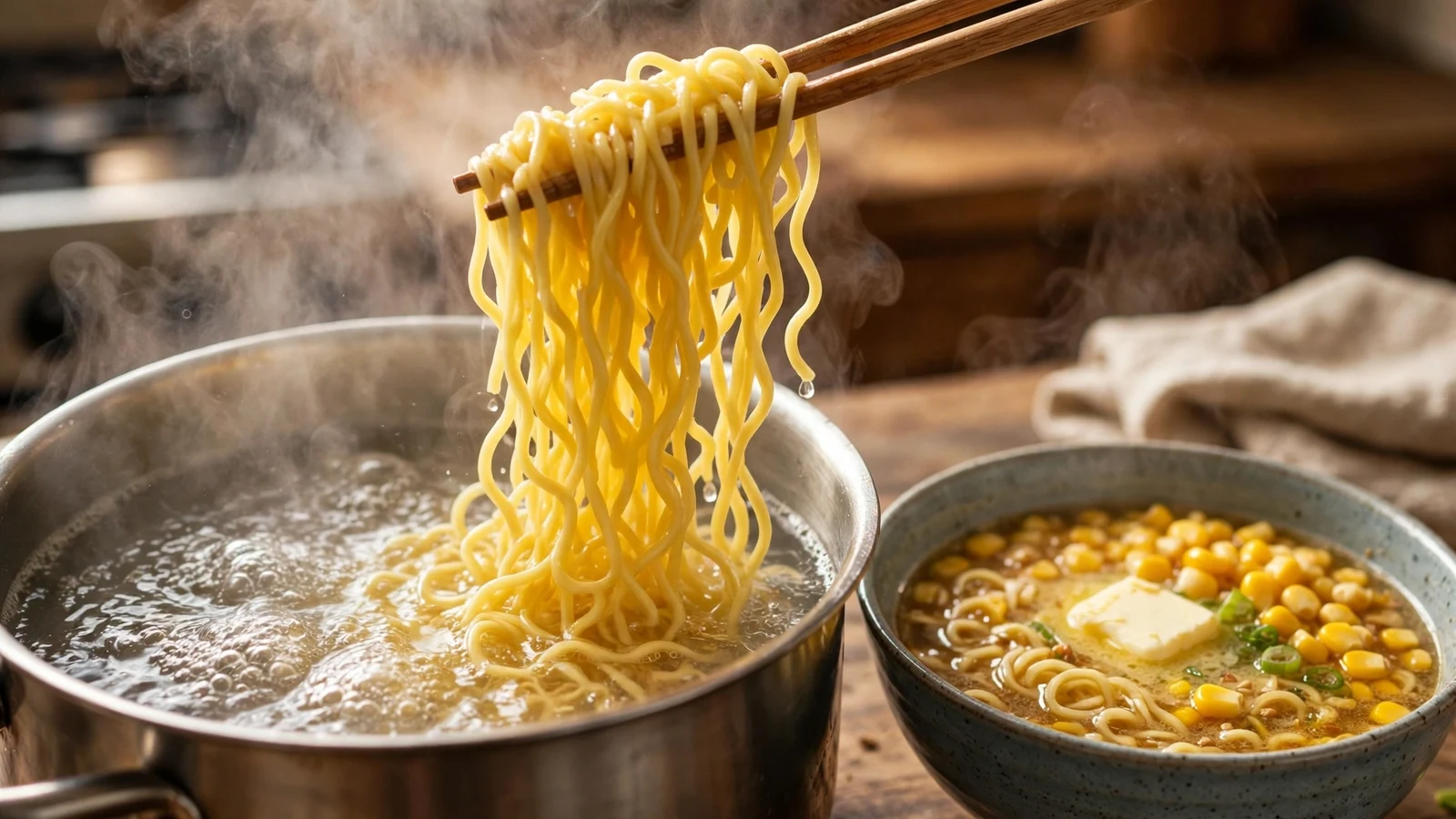
What is miso ramen?
Miso ramen seasons its broth with miso, the fermented soybean paste, instead of salt or soy sauce alone. The style started in Sapporo, on the northern island of Hokkaido, in the 1950s, and it grew out of cold weather cooking: a thicker, fuller soup that holds its heat, with toppings that add sweetness and fat. The Sapporo set is corn, butter, bean sprouts, and minced pork, and that set is what this recipe follows.
Two things set miso ramen apart from the other main styles. First, the broth is cloudy and full-bodied by design, since miso paste stays suspended in the soup instead of dissolving clear. Second, miso is a seasoning with its own salt, so the broth gets seasoned by tasting, not by a fixed salt amount. That is why this recipe calls for low-sodium stock and adds salt only at the end, after the miso is in. If you want the wider comparison, the site’s guide to ramen versus udon covers how noodle soups differ, and the Japanese shio ramen recipe shows the clear-broth end of the same family.
The 2:1 miso blend
I use two misos: 4 tablespoons of red miso and 2 tablespoons of white miso, a 2:1 ratio by volume. Red miso brings salt and deep fermented flavor, white miso brings sweetness and a softer edge, and together they taste fuller than either one alone. If you only have one type, use 6 tablespoons of it and add a pinch of sugar, but the blend is worth buying both tubs for, since an open tub of miso keeps in the fridge for months.
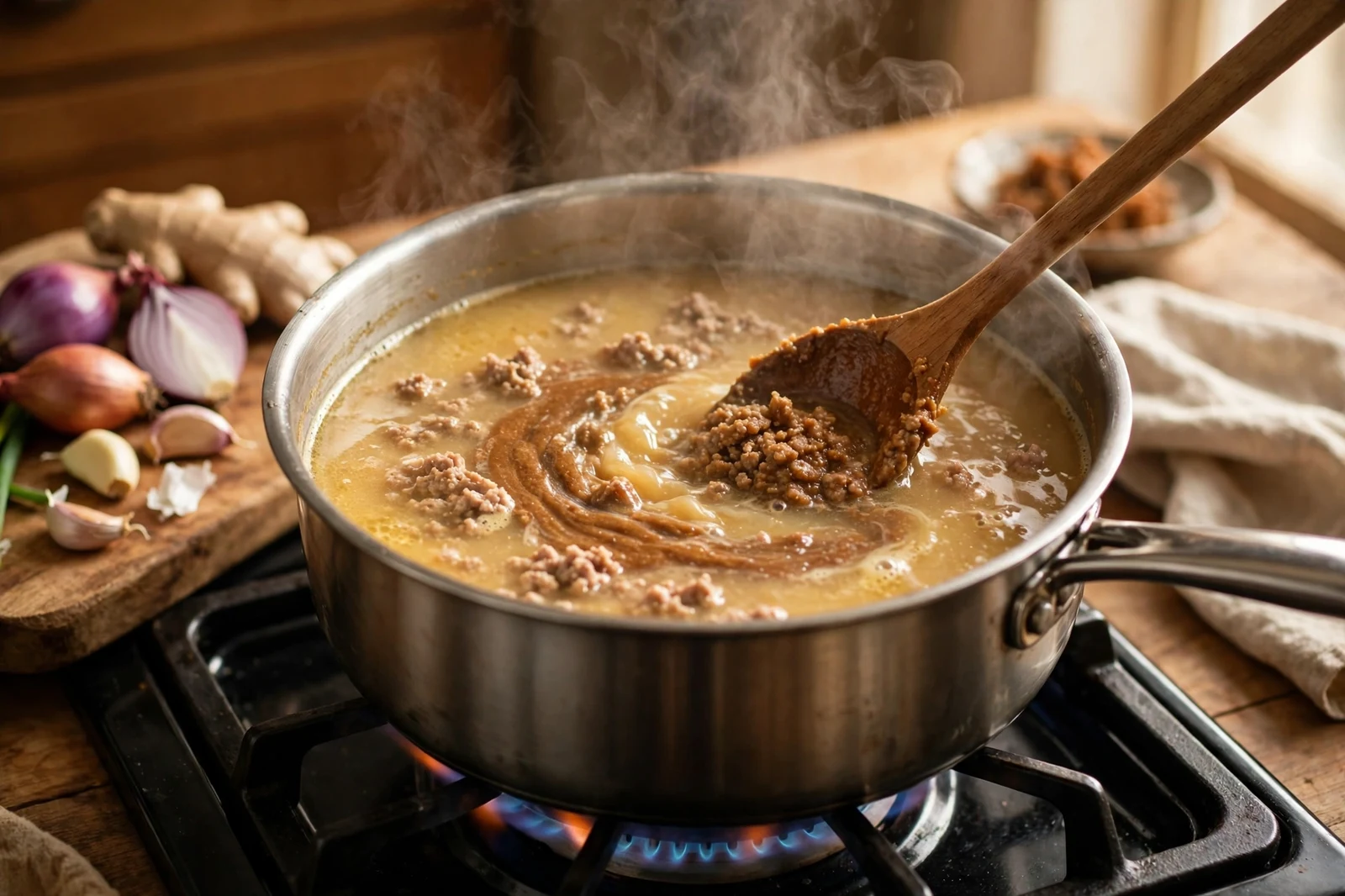
Whisk the miso into the pork and aromatics off high heat, then pour in the stock and bring the pot to a gentle simmer. Never let the broth boil hard after the miso goes in. A rolling boil dulls the miso flavor and can turn the broth grainy. Keep the surface barely moving, with small bubbles breaking now and then, and hold it there while the noodles cook.
Buttered corn and the butter pat
Corn and butter do two different jobs in this bowl, so they go in two ways. First, 1 and 1/2 cups of corn kernels get browned for 3 minutes in a tablespoon of butter in a hot pan, until some kernels pick up golden spots. Browning gives the corn a toasted edge that plain boiled corn does not have. Second, each bowl gets a cold pat of butter, 1 tablespoon, set on top right before serving. Butter added last melts slowly into the hot broth at the table instead of disappearing into the pot, so the first spoonfuls taste silky and the last ones still carry butter.

Use unsalted butter for both steps. Salted butter plus miso plus stock can push the bowl over into too salty, and with unsalted butter you control the salt in one place only: the final tasting.
Eggs, sprouts, and noodles
The eggs boil for 6 and a half minutes, then go straight into an ice bath. Peel them under running water and cut them with a thin, wet knife for a clean line through the yolk. The yolk should stay jammy and orange, soft enough to stir into the broth in the last spoonfuls.
Bean sprouts blanch for 30 seconds in the noodle water, no longer. Thirty seconds takes the raw edge off while the sprouts stay crisp, and crisp sprouts are the contrast this full-bodied bowl needs. Pull them out with a strainer before the noodles go in, so the same pot of water does both jobs.
Noodles cook in a separate large pot of unsalted boiling water, never in the broth. Loosen fresh noodles with your hands before they go in, so they cook evenly instead of clumping. Pull them 15 seconds before the package time, since they keep cooking in the hot broth. Drain them well, shake off the water, and move fast: bowls should already hold noodles and toppings, with broth ready to ladle over, so the bowl reaches the table right away.
Assembly
Warm the bowls with hot water first, then empty them. Divide the drained noodles among the bowls, spoon the browned pork and broth over, then arrange the toppings: buttered corn, blanched bean sprouts, half an egg, and sliced scallions. Set a cold pat of butter on top of each bowl last, and serve at once with chili oil on the side for anyone who wants heat.
Troubleshooting: Fix My Miso Ramen with Corn and Butter
Miso ramen goes wrong in a few repeatable ways, and most of them trace back to heat, salt, or timing. The notes below cover the five I hear about most.
HERB & LIME · KITCHEN HELP
Fix My Miso Ramen with Corn and Butter
Choose what went wrong to see a practical next step.
Possible cause
What to try next
For next time
From Paul's kitchen. Results vary with miso brand, stock salt, and stove heat, adjust timing to your setup.
Quick reference (also works without JavaScript)
The broth tastes too salty
Cause: Miso is already salty, and regular chicken stock adds more salt on top of it.
Try: Ladle out some broth and replace it with hot unsalted water or unsalted stock, then taste again before adding any salt.
Prevent: Use low-sodium stock and season only after the miso is in, tasting as you go, since every stock brand differs in saltiness.
The miso tastes flat or grainy
Cause: The broth boiled hard after the miso went in, which dulls miso flavor and can turn it grainy.
Try: Take the pot off the heat and whisk a fresh spoonful of miso smooth in a ladle of warm broth, then stir it back in.
Prevent: Hold the broth at a gentle simmer with small bubbles only, and never let it come to a rolling boil once the miso is added.
The noodles turned mushy
Cause: The noodles cooked too long or sat in hot broth before serving.
Try: Serve the bowl at once, and cook a fresh batch for the next bowl, pulling it 15 seconds before the package time.
Prevent: Cook noodles in a separate large pot of unsalted water, pull them early, drain well, and ladle the broth over last.
The corn never browns
Cause: Wet kernels steam in the pan instead of browning.
Try: Pat the corn dry, get the pan hot, spread the kernels in one layer, and leave them undisturbed for 3 minutes.
Prevent: Thaw frozen corn fully and pat it dry before it goes in the pan, and do not crowd the pan.
The butter melts away before serving
Cause: The butter went into the pot or onto the bowl too early, so it fully melted before the bowl reached the table.
Try: Set a fresh cold pat on each bowl right before serving, so it melts slowly at the table.
Prevent: Keep the butter cold until the last moment, and add it after the broth, never while the soup is still cooking.
Miso Ramen with Corn and Butter (Sapporo Style)
Ingredients
Method
- Cook the eggs: boil the eggs for 6 and a half minutes, move them straight to an ice bath, peel under running water, and set aside. Cut them with a thin, wet knife just before serving.
- Start the broth: warm the toasted sesame oil in a pot over medium heat and saute the garlic, ginger, and shallot until fragrant, about 1 minute. Add the ground pork and cook, breaking it up, until no longer pink.
- Add the miso: lower the heat and whisk in the doubanjiang, red miso, and white miso until the paste blends with the pork. Add the sake and sugar, pour in the chicken stock, and bring to a gentle simmer with small bubbles only. Never let the broth boil hard once the miso is in. Taste and add salt only if needed, then a pinch of white pepper.
- Brown the corn: while the broth simmers, melt 1 tablespoon of butter in a hot pan, add the patted-dry corn in one layer, and cook for 3 minutes without stirring much, until some kernels pick up golden spots. Set aside.
- Blanch the sprouts and cook the noodles: bring a separate large pot of unsalted water to a boil. Blanch the bean sprouts for 30 seconds and lift them out with a strainer. Loosen the noodles with your hands, cook them 15 seconds less than the package time, and drain well.
- Assemble: warm the bowls with hot water and empty them. Divide the noodles among the bowls, ladle the hot broth and pork over, then arrange the buttered corn, blanched sprouts, half an egg, and sliced scallions. Set a cold tablespoon of butter on top of each bowl last and serve at once, with chili oil on the side.
Notes
Tips and swaps
- If you cannot find fresh ramen noodles, dried ramen noodles work. Cook them by the package time minus 15 seconds, and drain them well.
- Sliced pork chashu also works on top in place of some of the ground pork. Warm the slices in the hot broth for a few seconds before arranging them.
- For a meatless bowl, swap the ground pork for chopped mushrooms browned the same way, and use vegetable stock instead of chicken stock.
- Frozen corn works fine for the buttered corn. Thaw it and pat it dry first, since wet kernels steam instead of browning.
- Leftover broth keeps in the fridge for 3 days. Store noodles apart from broth, since noodles left in soup turn soft overnight.
- To make the bowl ahead for guests, cook the broth, pork, corn, and eggs the day before. On serving day, only the noodles and sprouts need cooking, and the bowls come together in minutes.

More Japanese recipes
- Japanese Shio Ramen: Clear Salt Broth with Chicken Chashu
- Ramen vs Udon: What’s the Difference?
- Hiyashi Chuka: Japanese Cold Ramen Noodles
- Chicken Karaage (Japanese Fried Chicken)
From the garden
If you grow green onions in a pot, this bowl is a good use for a fresh handful. Slice the green tops thin just before serving, since a scallion cut minutes before serving tastes sharper than one cut hours ahead. The green onion growing guide covers pot size and watering for a plant that keeps producing tops to cut.