
Hiyashi chuka is the bowl I reach for when the kitchen is already warm and nobody wants a pot of hot soup. Chilled ramen noodles sit under neat rows of cucumber, egg, ham, and tomato, and a soy-vinegar dressing poured over the top at the table ties it all together. Everything except the noodles can wait in the fridge, so the whole meal comes together in about half an hour, and it eats like a salad that still feels filling.

What is hiyashi chuka?
Hiyashi chuka means chilled Chinese-style noodles, and it is a Japanese summer dish built on ramen noodles served cold. The noodles are boiled, rinsed under cold water until the starch washes off, and chilled in ice water, then topped with julienned vegetables, egg, and a sliced protein, and dressed with a soy-vinegar sauce or a sesame sauce. It came out of Chinese cold noodle dishes and settled into Japanese home cooking as a hot-weather staple.
Expect a cool, tangy bowl with a lot of crunch. The dressing is sharp from rice vinegar, rounded out by sugar and sesame oil, and light enough that the toppings still taste like themselves. Unlike our hot yakisoba, where the sauce coats everything in the pan, hiyashi chuka keeps its parts separate until you toss it at the table, so each bite can lean cucumber-crisp, egg-soft, or tomato-sweet depending on what your chopsticks pick up.
Prep the toppings first
Start the toppings before the noodles, since the noodles have to be boiled and chilled at the last minute and everything else can wait cold in the fridge. Beat 2 eggs with a pinch of sugar and a pinch of salt, then pour them into a lightly oiled nonstick pan over low heat and swirl to a thin sheet. Cook just until set, about 1 to 2 minutes, slide it onto a plate, and let it cool before rolling it up and slicing it into thin ribbons. A thin omelet cools fast and slices cleanly; a thick one tears and turns rubbery as it cools.
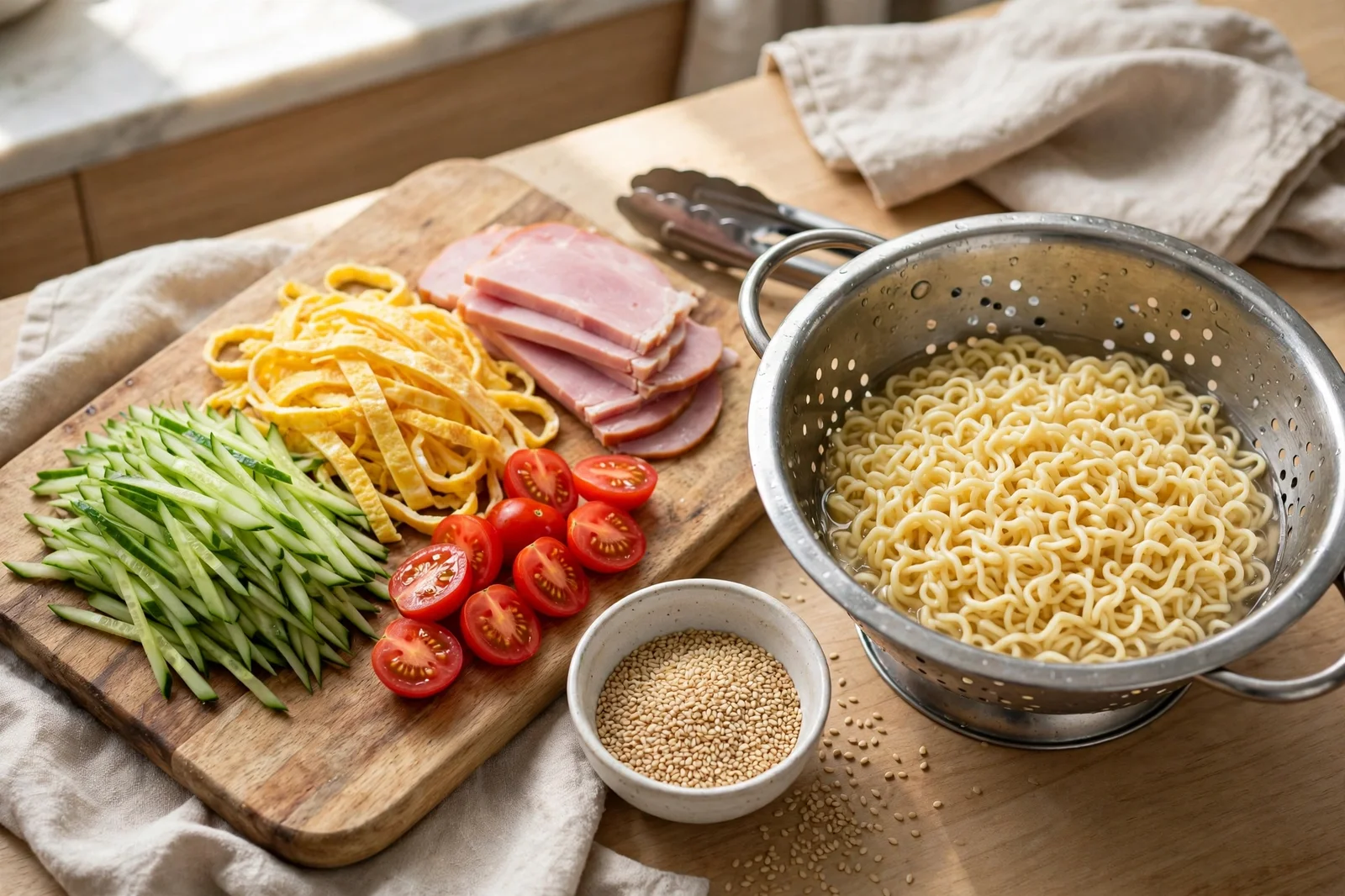
Cut 1 cucumber into julienne strips about 1/8 inch wide, slice 4 ounces of ham into thin strips, and cut 1 tomato into wedges. Keep the strips close to noodle width so they ride with the noodles in one bite instead of fighting them. Soak a small handful of wakame in cold water for 5 minutes and drain it well if you want a seaweed row on top. Whisk the dressing now too: 1/4 cup soy sauce, 1/4 cup rice vinegar, 3 tablespoons sugar, 2 tablespoons water, 1 tablespoon toasted sesame oil, 1 teaspoon grated ginger, and 1 teaspoon karashi mustard if you like heat. Stir until the sugar dissolves, then chill the dressing with the toppings.
Cook, rinse, and chill the noodles
Boil 12 ounces of fresh or dried ramen noodles in a large pot of unsalted water. Fresh noodles usually need 2 to 3 minutes and dried ones 3 to 4, but go by taste, not the clock alone: pull one strand at 2 minutes and keep testing every 30 seconds until it is firm but not hard in the middle. Overcooked noodles are the one mistake that ruins this dish, because cold noodles cannot hide a mushy texture the way hot broth can.

Drain the noodles and rinse them under cold running water, rubbing the strands gently with your hands until the surface stops feeling slick. That rub-wash matters: the starchy film left on unrinsed noodles glues the strands into a solid clump as they cool. Drop the rinsed noodles into a bowl of ice water for 2 minutes, then drain them hard, pressing with a spoon or squeezing in a clean towel to push the water out. Noodles that carry ice water onto the plate thin the dressing and leave a puddle at the bottom of the bowl. Toss the drained noodles with 1 teaspoon of toasted sesame oil, which keeps them loose until plating.
Assemble and dress at the table
Divide the chilled noodles among 4 shallow bowls or plates. A shallow bowl works better than a deep one here, since it gives you room to toss without toppings sliding off. Arrange the cucumber, egg ribbons, ham, tomato, and drained wakame in separate rows across the top, and sprinkle with 1 tablespoon of toasted sesame seeds. Chill the assembled bowls for 10 minutes if the kitchen is warm.

Pour the dressing over each bowl at the table, not ahead of time, and toss before eating. Dressing that sits on the noodles softens the cucumber and turns the egg ribbons soggy within minutes. Serve right away with pickled ginger on the side and extra karashi mustard for anyone who wants more heat. A cold side like our Japanese potato salad rounds out the meal without turning on the stove again. Leftovers keep for a day in the fridge, but store the noodles, toppings, and dressing in separate containers, since a dressed bowl goes soft overnight.
Tips and variations
- For a sesame dressing instead of soy-vinegar, whisk 3 tablespoons tahini or ground sesame paste with 2 tablespoons soy sauce, 1 tablespoon rice vinegar, 1 tablespoon sugar, and water a spoonful at a time until it pours.
- Swap the ham for shredded cooked chicken, canned tuna, or fried firm tofu, and the dish still works, since the dressing and the cold-noodle method carry it.
- Add blanched bean sprouts, canned corn, or shredded carrot for extra rows, but blanch sprouts for 30 seconds and chill them before they go on the bowl.
- If you use dried ramen, skip the seasoning packet that comes with instant noodles. It is far too salty for a cold dressing that already has soy sauce.
- Make the dressing up to 3 days ahead and keep it chilled. Cold dressing on cold noodles is part of what makes the dish taste right on a hot day.
Troubleshooting: Fix My Hiyashi Chuka
Most hiyashi chuka problems come down to noodle handling: cooked too long, rinsed too lightly, drained too little, or dressed too soon. The section below covers the most common ones, with a practical fix for each.
HERB & LIME · KITCHEN HELP
Fix My Hiyashi Chuka
Choose what went wrong to see a practical next step.
Possible cause
What to try next
For next time
From Paul's kitchen. Results vary with noodle brand, water, and fridge temperature, adjust timing to your setup.
Quick reference (also works without JavaScript)
The noodles turned gummy
Cause: The noodles cooked past firm, and cold noodles cannot hide a mushy texture the way hot broth can.
Try: For the next batch, pull one strand at 2 minutes and keep testing every 30 seconds until it is firm but not hard in the middle.
Prevent: Set a timer for 2 minutes on the first cook, and rinse the noodles under cold water the moment they reach the texture you want.
The noodles clumped into a sticky ball
Cause: The starchy film stayed on the strands, so they glued together as they cooled.
Try: Rub-wash the drained noodles under cold running water, working them with your hands until the surface stops feeling slick, then toss with a little sesame oil.
Prevent: Rinse hard every time, then chill in ice water and toss with 1 teaspoon of sesame oil before plating.
The bowl turned watery and the dressing tasted thin
Cause: The noodles went onto the plate still holding ice water, and that water bled out and diluted the dressing.
Try: Press the chilled noodles firmly after the ice bath to push the water out, then plate and dress right away.
Prevent: Drain hard after chilling, and keep a clean towel handy for a final squeeze before the noodles go into the bowl.
The toppings went soggy
Cause: The dressing sat on the bowl ahead of time, softening the cucumber and the egg ribbons.
Try: Serve the dressing on the side and pour it over each bowl at the table, tossing just before eating.
Prevent: Keep noodles, toppings, and dressing in separate containers until serving, especially for leftovers.
The toppings felt chunky and the bowl ate lukewarm
Cause: Thick pieces fight the noodles instead of riding with them, and warm toppings take the chill out of the bowl.
Try: Cut the toppings into noodle-thin strips, about 1/8 inch wide, and chill the toppings, noodles, and dressing before assembling.
Prevent: Prep the toppings first and keep them chilled in the fridge while the noodles boil, since the noodles must be boiled and chilled last.
Hiyashi Chuka: Japanese Cold Ramen Noodles
Ingredients
Method
- Make the omelet: beat the eggs with a pinch of sugar and a pinch of salt. Pour into a lightly oiled nonstick pan over low heat and swirl to a thin sheet. Cook just until set, about 1 to 2 minutes, slide onto a plate, and let cool. Roll up and slice into thin ribbons.
- Prep the toppings: cut the cucumber into 1/8-inch julienne strips, slice the ham into thin strips, and cut the tomato into wedges. Soak the wakame in cold water for 5 minutes and drain well. Whisk the soy sauce, rice vinegar, sugar, water, sesame oil, grated ginger, and karashi mustard until the sugar dissolves, then chill the dressing with the toppings.
- Cook the noodles: boil the noodles in a large pot of unsalted water. Fresh noodles usually need 2 to 3 minutes and dried ones 3 to 4, but pull one strand at 2 minutes and keep testing every 30 seconds until firm but not hard in the middle.
- Rinse and chill: drain the noodles and rinse under cold running water, rubbing the strands gently until the surface stops feeling slick. Drop into a bowl of ice water for 2 minutes, then drain hard, pressing with a spoon or squeezing in a clean towel. Toss the drained noodles with 1 teaspoon of toasted sesame oil.
- Assemble: divide the chilled noodles among 4 shallow bowls. Arrange the cucumber, egg ribbons, ham, tomato, and wakame in separate rows across the top and sprinkle with the sesame seeds. Chill the bowls for 10 minutes if the kitchen is warm.
- Dress and serve: pour the dressing over each bowl at the table and toss before eating. Serve right away with pickled ginger and extra karashi mustard on the side.
Notes
More Japanese recipes
Tonkatsu, Katsudon, Onigiri Three Ways, and Classic Miso Soup.