
Rawon is the black beef soup from East Java, and its color stops people at the table: a broth so dark it looks almost black, with tender chunks of beef under the surface. The color comes from keluak, a fermented black nut ground into the spice paste, and the flavor follows the color, nutty and earthy with a slight bitter edge, steadied by lemongrass, galangal, and a spoonful of tamarind. The numbers that carry this soup are small ones: 6 keluak nuts for 2 pounds of beef, and a 2-hour simmer that turns tough chuck tender. Serve it the way East Java does, with steamed rice, bean sprouts, salted egg, and sambal on the side.

What is rawon?
Rawon is a traditional beef soup from East Java, Indonesia, and keluak is what makes it rawon. Keluak, also spelled kluwek, is the fermented seed of the pangium tree, sold as a hard-shelled nut with black flesh inside. Soaked, cracked open, and ground into the spice paste, it gives the broth its black color and a nutty, slightly bitter taste that no amount of soy sauce can copy. Without keluak, the soup is a fine beef soup, but it is not rawon. The rest of the pot is a familiar Indonesian bumbu: shallots, garlic, candlenuts, turmeric, galangal, coriander, chillies, and white pepper, fried in oil until fragrant, then simmered with beef, lemongrass, kaffir lime leaves, and bay leaves. Our soto ayam post is the clear-broth cousin from the same family of Indonesian soups, and the two show how much one spice paste can change a bowl.
Ingredients
For the beef and broth
- 2 pounds beef chuck or brisket, cut into 1 1/2-inch cubes
- 8 cups water
- 2 lemongrass stalks, bruised
- 3 kaffir lime leaves
- 2 bay leaves
- 1 tablespoon tamarind paste
- 2 teaspoons palm sugar
- 2 teaspoons salt, plus more to taste
For the spice paste (bumbu)
- 6 keluak nuts, soaked overnight
- 6 shallots, peeled
- 5 garlic cloves, peeled
- 4 candlenuts, or macadamia nuts
- 1 teaspoon coriander seeds
- 1 teaspoon ground turmeric
- 1 inch galangal, sliced
- 2 red chillies, deseeded for less heat
- 1 teaspoon white pepper
- 1 teaspoon shrimp paste, optional
- 2 tablespoons vegetable oil, for frying the paste
To serve
- Steamed jasmine rice
- Bean sprouts
- Salted eggs, halved
- Sambal, to taste
- Fried shallots
- Krupuk, or prawn crackers
How to make it
Start the keluak the night before. Put the nuts in a bowl of water and leave them to soak overnight, then crack each shell open and scoop out the black flesh with a small spoon. Discard the shells completely. Good keluak flesh is dark and oily; if the paste inside is dry or smells off, the nut has spoiled, so throw it out and use another one. Mash the flesh into a smooth paste and set it aside. Our beef rendang post uses the same low-and-slow patience with a different spice paste, and the lesson is the same: the paste does the work, the pot does the waiting.
Put the keluak paste, shallots, garlic, candlenuts, coriander seeds, turmeric, galangal, chillies, white pepper, and shrimp paste, if using, in a blender or food processor with a splash of water. Blend until smooth, stopping to scrape the bowl once or twice. The paste will be very dark, almost black, and that is the color you want in the finished broth.
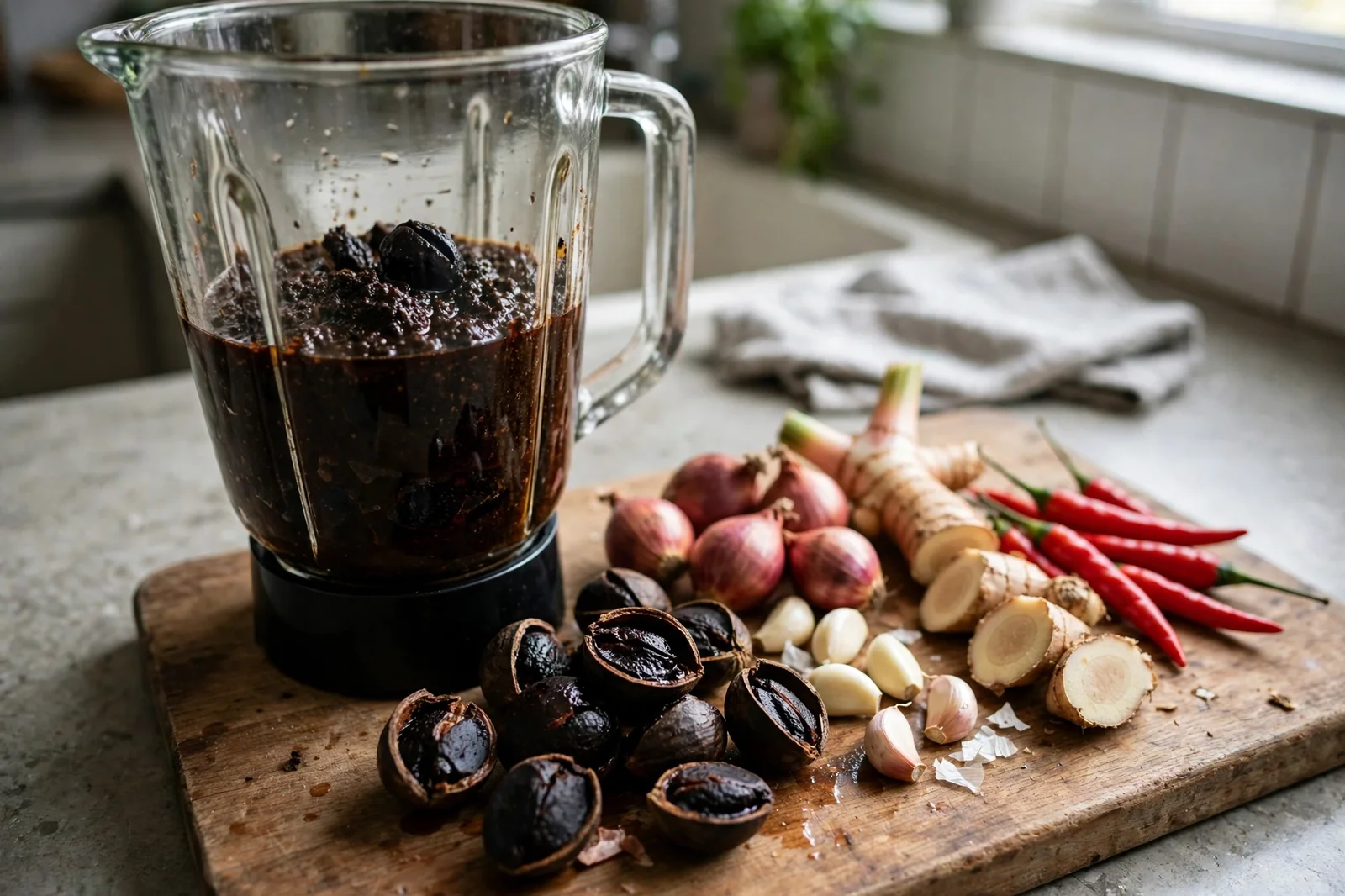
Put the beef and water in a large pot and bring to a boil over high heat. Skim off the foam that rises to the surface, then lower the heat to a gentle simmer. While the beef starts cooking, heat the oil in a wide pan over medium heat and fry the spice paste, stirring often, for about 8 minutes, until it smells fragrant and turns a shade darker. Add the fried paste to the pot with the lemongrass, kaffir lime leaves, bay leaves, tamarind paste, palm sugar, and salt.
Simmer uncovered for 1 1/2 to 2 hours, stirring now and then, until the beef is tender enough to cut with a spoon and the broth has turned a deep brown-black. The broth darkens as it cooks, so do not judge the color in the first 30 minutes. Taste near the end and adjust the salt; the tamarind should give a faint tang at the back, not a sour bite. If the broth tastes flat, it usually needs salt, not more keluak.

Ladle the beef and broth into bowls and set out the accompaniments in small dishes: steamed rice, a pile of bean sprouts, salted egg halves, sambal, fried shallots, and krupuk. Each person builds their own bowl, spooning rice and sprouts into the broth and breaking the salted egg over the top. Rawon keeps 3 days in the fridge and tastes better the next day, after the broth has had a night to settle. Reheat it gently on the stove, and add fresh sprouts and shallots only when serving, since they go soft in stored soup.

Troubleshooting: Fix My Rawon
Most rawon problems come from the keluak or the simmer: too little keluak for the color, beef that was rushed, or a paste that was never fried long enough. Pick the problem that matches your pot below for a practical next step.
HERB & LIME · KITCHEN HELP
Fix My Rawon
Choose what went wrong to see a practical next step.
Possible cause
What to try next
For next time
From Paul's kitchen. Results vary with keluak quality, beef cut, and stove heat, adjust timing to your setup.
Quick reference (also works without JavaScript)
The broth is brown, not black
Cause: There was too little keluak in the paste for the amount of beef and water.
Try: Mash 2 more soaked keluak nuts into a paste, fry it briefly in oil, stir it into the pot, and simmer 20 minutes more.
Prevent: Use 6 keluak nuts for 2 pounds of beef, and blend the flesh fully into the bumbu before it goes into the pot.
The beef is still tough
Cause: The simmer was too short, or the heat was too high and the meat tightened instead of turning tender.
Try: Keep the pot at a gentle simmer and cook 30 to 60 minutes more, then test a cube with a spoon.
Prevent: Plan on 1.5 to 2 hours at a low simmer, and use chuck or brisket, not a lean cut.
The broth tastes bitter or harsh
Cause: Too much keluak went in, or the spice paste went into the pot raw and never fried.
Try: Stir in a pinch more palm sugar and a little salt, and simmer 15 minutes to let the flavors settle.
Prevent: Fry the bumbu in oil for about 8 minutes until fragrant and a shade darker, and measure the keluak, 6 nuts for 2 pounds of beef.
The broth is greasy or cloudy
Cause: The foam at the first boil was left in, and fat from the beef stayed in the broth.
Try: Skim the surface with a spoon, then chill the pot overnight and lift off the solid fat before reheating.
Prevent: Skim the foam when the beef first boils, and simmer gently instead of at a rolling boil.
The keluak flesh was dry or smelled off
Cause: The nut had spoiled in storage, and spoiled keluak cannot be saved by cooking.
Try: Throw that nut out and use another one, the soup needs good keluak to taste right.
Prevent: Buy keluak from a shop with turnover, soak overnight, and check each nut, the flesh should be dark and oily inside.
Rawon: Indonesian Black Beef Soup
Ingredients
Method
- Soak the keluak nuts in water overnight, then crack each shell open and scoop out the black flesh. Discard the shells. Good keluak flesh is dark and oily; dry flesh or an off smell means the nut has spoiled, so throw it out. Mash the flesh into a smooth paste.
- Put the keluak paste, shallots, garlic, candlenuts, coriander seeds, turmeric, galangal, chillies, white pepper, and shrimp paste, if using, in a blender or food processor with a splash of water. Blend until smooth, stopping to scrape the bowl once or twice.
- Put the beef and water in a large pot and bring to a boil over high heat. Skim off the foam that rises to the surface, then lower the heat to a gentle simmer. Heat the oil in a wide pan over medium heat and fry the spice paste, stirring often, for about 8 minutes, until fragrant and a shade darker. Add the fried paste to the pot with the lemongrass, kaffir lime leaves, bay leaves, tamarind paste, palm sugar, and salt.
- Simmer uncovered for 1 1/2 to 2 hours, stirring now and then, until the beef is tender enough to cut with a spoon and the broth has turned a deep brown-black. Taste near the end and adjust the salt.
- Ladle the beef and broth into bowls and set out the accompaniments in small dishes: steamed rice, bean sprouts, salted egg halves, sambal, fried shallots, and krupuk. Serve right away.
Notes
More Indonesian recipes
Four more from the same shelf: Soto Ayam: Indonesian Chicken Soup is the clear-broth soup from the same family; Beef Rendang is the slow-cooked beef in a different, coconut-based paste; Nasi Lemak with Coconut Rice and Sambal is the coconut-rice plate that shares rawon’s sambal habit; and Laksa: Coconut Curry Noodle Soup is the noodle soup for nights when rice is not on the menu.
From the garden
The lemongrass in the bumbu is the easiest part to grow yourself. A pot of lemongrass by a sunny door gives fresh stalks most of the year, and our guide to growing lemongrass in pots covers the container start and the cold-weather move indoors.
From Paul’s kitchen.