
Siu yuk is the roast pork belly Paul buys by weight at Cantonese roast-meat shops and finally learned to make at home: a slab of skin-on belly roasted until the skin blisters into a sheet of crackling that shatters under the cleaver, with juicy, five-spice meat underneath. The method takes a day, but most of that is the pork sitting uncovered in the fridge while the skin dries out. The active work is about 20 minutes, then a two-stage roast, 60 minutes at 325°F and 20 to 30 minutes at 450°F, and the numbers that matter are small ones: 1 tablespoon of coarse salt on the skin, 1 teaspoon of vinegar, and hundreds of tiny holes pricked 5 mm deep, skin only.
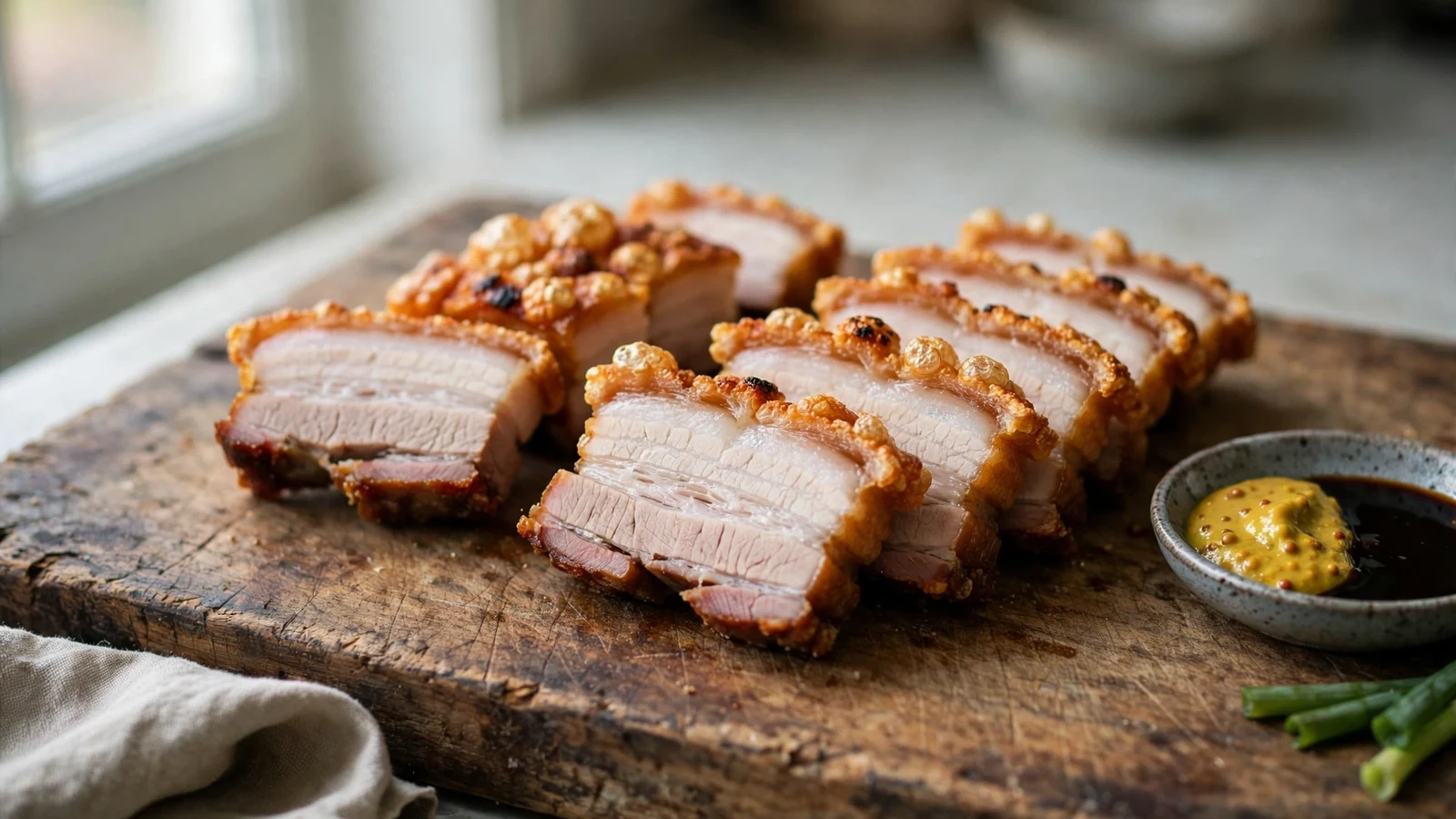
What is siu yuk?
Siu yuk (燒肉) is Cantonese roast pork belly, one of the roast meats hanging in the windows of Hong Kong and Guangzhou barbecue shops next to char siu and roast duck. The belly is seasoned on the meat side with salt, sugar, five-spice, and white pepper, sometimes with ground bean sauce, while the skin gets nothing but salt and vinegar. Roasting runs in two stages: a long, moderate roast that cooks the meat through and renders the fat, then a short blast of high heat that puffs the dried skin into blisters. The finish to aim for is sesame skin, an even cover of small blisters about the size of sesame seeds, and a cut face that shows three clean layers, crackling, fat, and meat. Our char siu post is the sweet-glazed cousin from the same roast-meat window, and the two make a good pair on one plate, one glossy and sweet, one salty with a shattering crust.
Ingredients
For the pork
- 2 pounds skin-on pork belly, in one even slab about 1 1/2 inches thick
- 1 tablespoon fine salt
- 1 teaspoon sugar
- 1 teaspoon five-spice powder
- 1 teaspoon ground white pepper
- 2 teaspoons ground bean sauce, optional
For the skin
- 1 tablespoon coarse salt
- 1 teaspoon white rice vinegar, or white vinegar
For roasting and serving
- 1/2 cup water, for the pan
- Steamed jasmine rice, to serve
- Chinese mustard or hoisin sauce, to serve
How to make it
Start with the skin. Set the belly skin-side up in a roasting pan and pour boiling water over the skin until it turns pale and tight, about 5 minutes, then pat it completely dry with paper towels. Scrape the skin with the back of a knife to take off any stray hairs. Prick the skin all over with a toothpick, fork, or pointed metal skewer, hundreds of tiny holes, pushing through the skin but stopping before the meat. Holes that reach the fat let juices bubble up while roasting and wet the skin from below, so keep them shallow, about 5 mm deep.
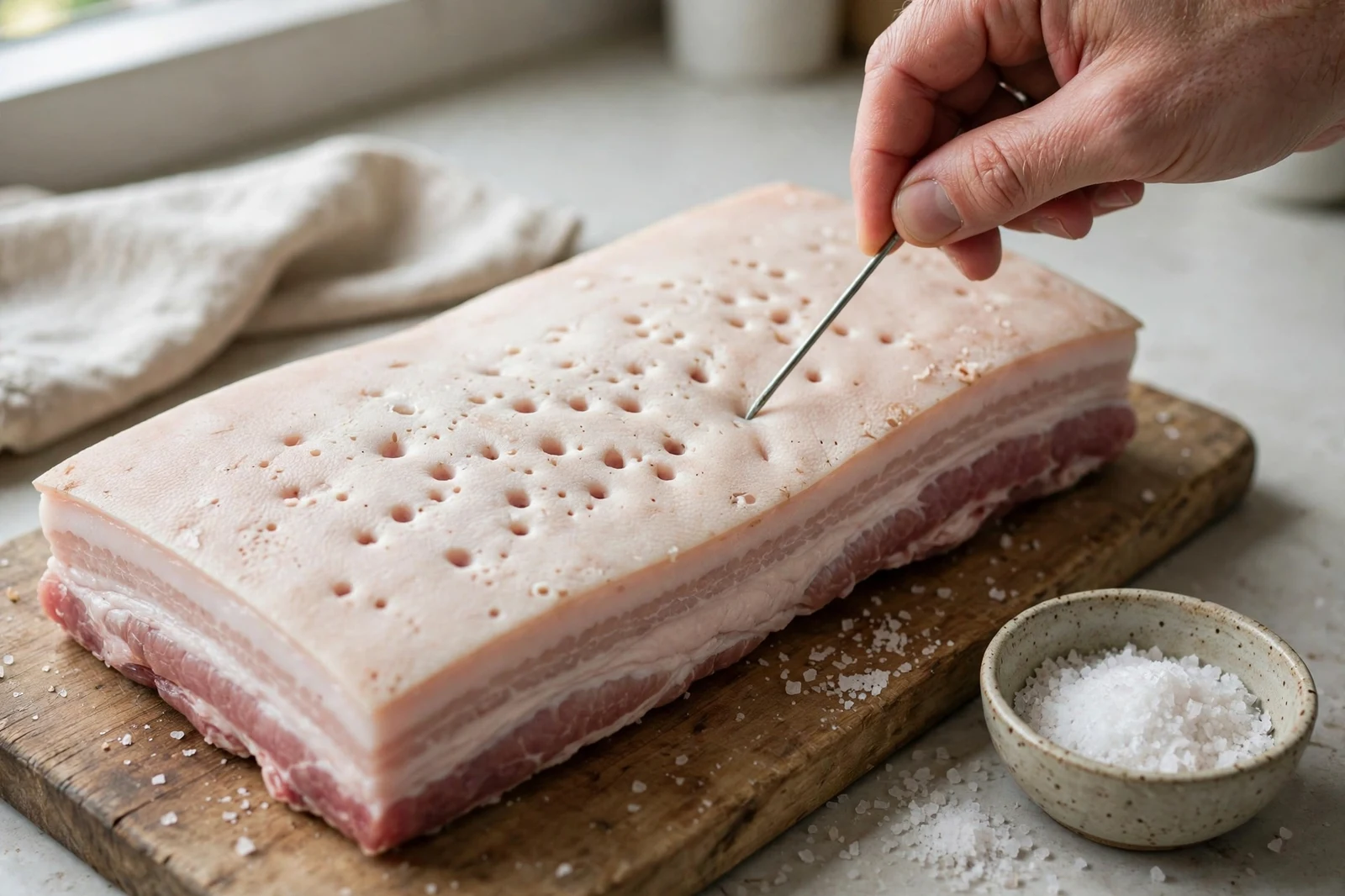
Rub the 1 tablespoon of coarse salt over the skin and leave it for 5 minutes. The skin turns damp and glossy as the salt draws water out. Wipe away all the salt and moisture with paper towels and scrape off any grains that cling with the back of the knife. Brush the 1 teaspoon of vinegar over the whole skin so it leaves a thin sheen and no salt grains remain. Turn the belly over and score the meat side in a shallow crosshatch. Mix the fine salt, sugar, five-spice, white pepper, and ground bean sauce, if using, and rub it over the meat side only. Seasoning on the skin burns black before the skin puffs, and sugar on the skin is the fastest way to a bitter crust.
Wrap the sides and bottom of the belly in foil, leaving only the skin exposed, and set it skin-side up on a wire rack over a tray. Put it in the fridge uncovered for 12 to 24 hours. The cold, moving air is what dries the skin, so do not cover or wrap it. By morning the skin feels hard, dry, and leathery to the touch. A slab that goes into the oven with damp skin steams instead of frying in its own fat, and the crackling never comes.
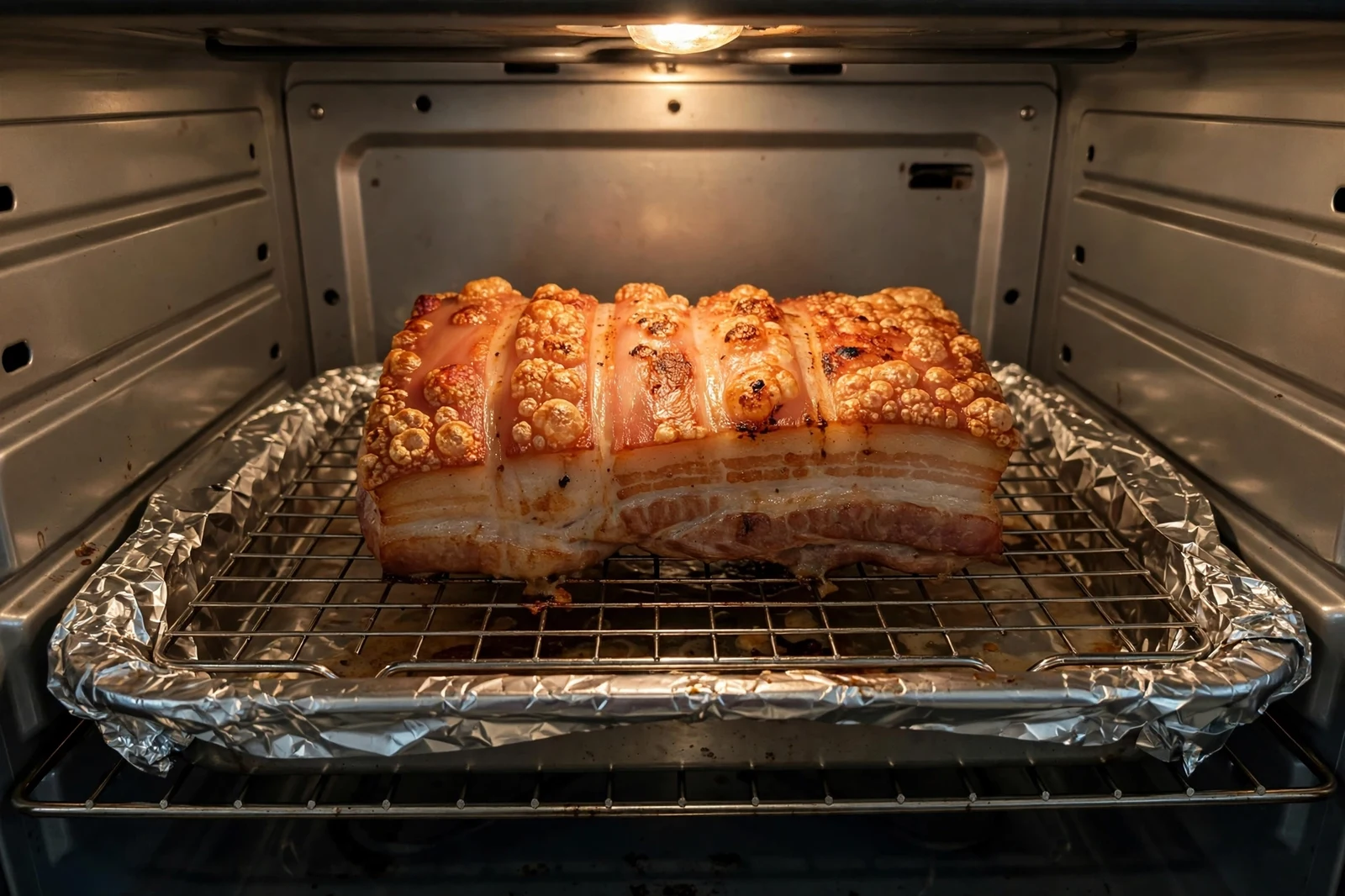
Heat the oven to 325°F. Pour the 1/2 cup of water into the pan under the rack to stop the drippings from scorching, and roast for 60 minutes. The meat cooks through and the fat starts to render in this stage. Then raise the heat to 450°F and roast 20 to 30 minutes more, watching the whole time. The skin goes from flat to bubbled to blistered, and it can turn from deep golden to burnt in a few minutes, so keep foil handy and tent any spot that darkens early. The pork is done when the skin is deep golden and covered in small blisters from edge to edge. If a patch stays flat, prick it with a toothpick and give it a few more minutes at high heat.
Let the pork rest on the rack for 30 minutes before cutting. Cutting straight from the oven lets the juices run out onto the board, and the crackling sets as it cools. Turn the belly skin-side down and cut through the meat toward the skin, so the crackling stays in one piece instead of shattering across the board. Serve in thick slices with steamed jasmine rice and mustard or hoisin for dipping. Our sticky rice guide covers the other rice option if you want something chewier on the plate, and our sweet and sour pork post uses the same cut in a completely different way, battered and sauced instead of roasted. Leftover siu yuk keeps 2 days in the fridge, and the skin goes soft there, so reheat slices in a hot oven, never the microwave, to bring the crackle back.

Troubleshooting: Fix My Siu Yuk
Most siu yuk problems come from the skin: too wet, too few holes, or heat that was wrong at the wrong stage. Pick the problem that matches your pork below for a practical next step.
HERB & LIME · KITCHEN HELP
Fix My Siu Yuk
Choose what went wrong to see a practical next step.
Possible cause
What to try next
For next time
From Paul's kitchen. Results vary with pork thickness, oven heat, and fridge humidity, adjust timing to your setup.
Quick reference (also works without JavaScript)
The skin stayed chewy instead of crackling
Cause: The skin was still damp when it went into the oven, so it steamed instead of frying in its own fat.
Try: Put the pork back in a hot oven at 450°F for 5 to 10 minutes, skin side up, and watch it until it blisters.
Prevent: Dry the belly uncovered in the fridge for 12 to 24 hours, and prick hundreds of holes in the skin so steam and fat can escape.
The skin burned before it puffed
Cause: The high-heat stage was too hot, or the skin went into high heat while still carrying sugar or marinade.
Try: Scrape the charred bits off with a knife, the crackling underneath is usually still good, and finish at a lower heat.
Prevent: Keep all seasoning off the skin, salt and vinegar only, and start the roast low at 325°F before the 450°F finish.
The meat came out dry
Cause: The belly was too lean to start with, or the meat side lost its moisture during the long roast.
Try: Slice the meat thin and serve it with rice and a spoonful of pan juices or hoisin so each bite has moisture.
Prevent: Pick a belly with even layers of fat and meat, and wrap the sides and bottom tightly in foil so the meat steams in its own juices.
The crackling went soft after cutting
Cause: Steam from the hot meat and the humidity in the fridge soften the skin within hours of roasting.
Try: Reheat slices in a hot oven at 400°F for 5 to 8 minutes, skin side up, and serve right away.
Prevent: Rest the pork 30 minutes before cutting, and eat it the same day, the crackling holds for about 3 hours at room temperature.
The skin tastes salty or bitter
Cause: Salt or seasoning sat on the skin too long, or marinade and sugar reached the skin and burned during roasting.
Try: Scrape the bitter top layer off the skin with a knife and season the slices lightly at the table instead.
Prevent: Wipe all the coarse salt off the skin after 5 minutes, and rub the five-spice mix on the meat side only.
Siu Yuk: Chinese Crispy Pork Belly
Ingredients
Method
- Set the belly skin-side up in a roasting pan and pour boiling water over the skin until it turns pale and tight, about 5 minutes, then pat it completely dry with paper towels. Scrape the skin with the back of a knife to take off any stray hairs.
- Prick the skin all over with a toothpick, fork, or pointed metal skewer, hundreds of tiny holes about 5 mm deep, pushing through the skin but stopping before the meat. Rub 1 tablespoon of coarse salt over the skin, leave it for 5 minutes, then wipe away all the salt and moisture with paper towels and scrape off any grains that cling. Brush 1 teaspoon of vinegar over the whole skin.
- Turn the belly over and score the meat side in a shallow crosshatch. Mix the fine salt, sugar, five-spice, white pepper, and ground bean sauce, if using, and rub it over the meat side only. Wrap the sides and bottom of the belly in foil, leaving only the skin exposed, set it skin-side up on a wire rack over a tray, and put it in the fridge uncovered for 12 to 24 hours.
- Heat the oven to 325°F. Pour 1/2 cup of water into the pan under the rack and roast for 60 minutes. Then raise the heat to 450°F and roast 20 to 30 minutes more, watching the whole time and tenting any spot that darkens early with foil, until the skin is deep golden and covered in small blisters from edge to edge.
- Let the pork rest on the rack for 30 minutes before cutting. Turn the belly skin-side down and cut through the meat toward the skin so the crackling stays in one piece. Serve in thick slices with steamed jasmine rice and mustard or hoisin for dipping.
Notes
More Chinese recipes
Four more from the same shelf: Char Siu: Chinese BBQ Pork is the sweet-glazed roast from the same shop window; Cantonese Sweet and Sour Pork is the battered, sauced way to use the same cut; Mapo Tofu is the numbing, saucy dish for nights when pork belly is not on the menu; and Twice-Cooked Pork (Hui Guo Rou) is the Sichuan answer to leftover belly, sliced thin and fried with peppers.
From Paul’s kitchen.