
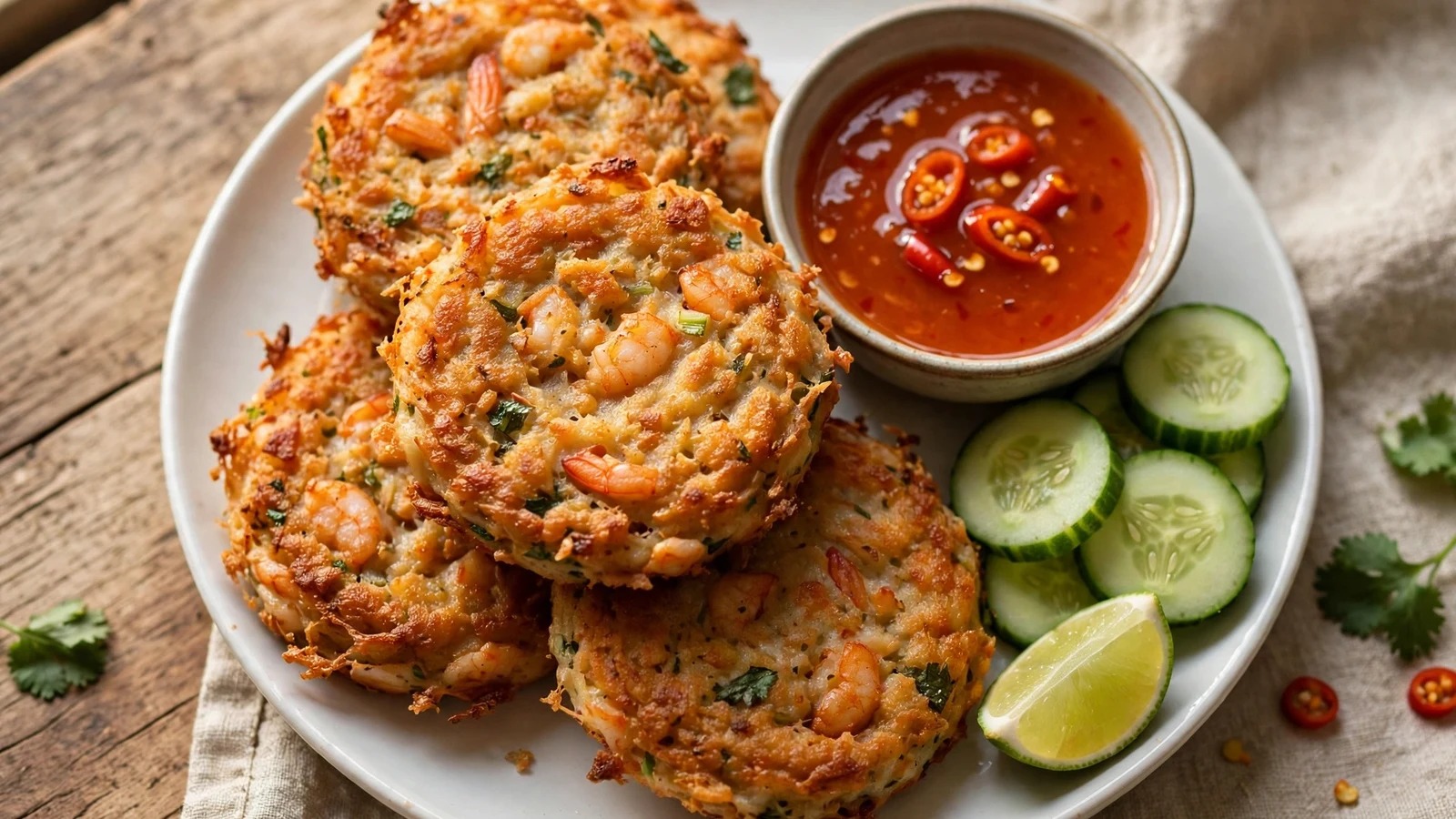
Tod mun goong are the shrimp cakes I make when I want a Thai starter that cooks fast and disappears faster. They are small, round, and fried until the outside turns crisp, with pieces of shrimp, long beans, and lime leaf all through the middle. A bowl of sweet chili sauce and a plate of sliced cucumber go with them, and that is usually all they need.
What is tod mun goong?
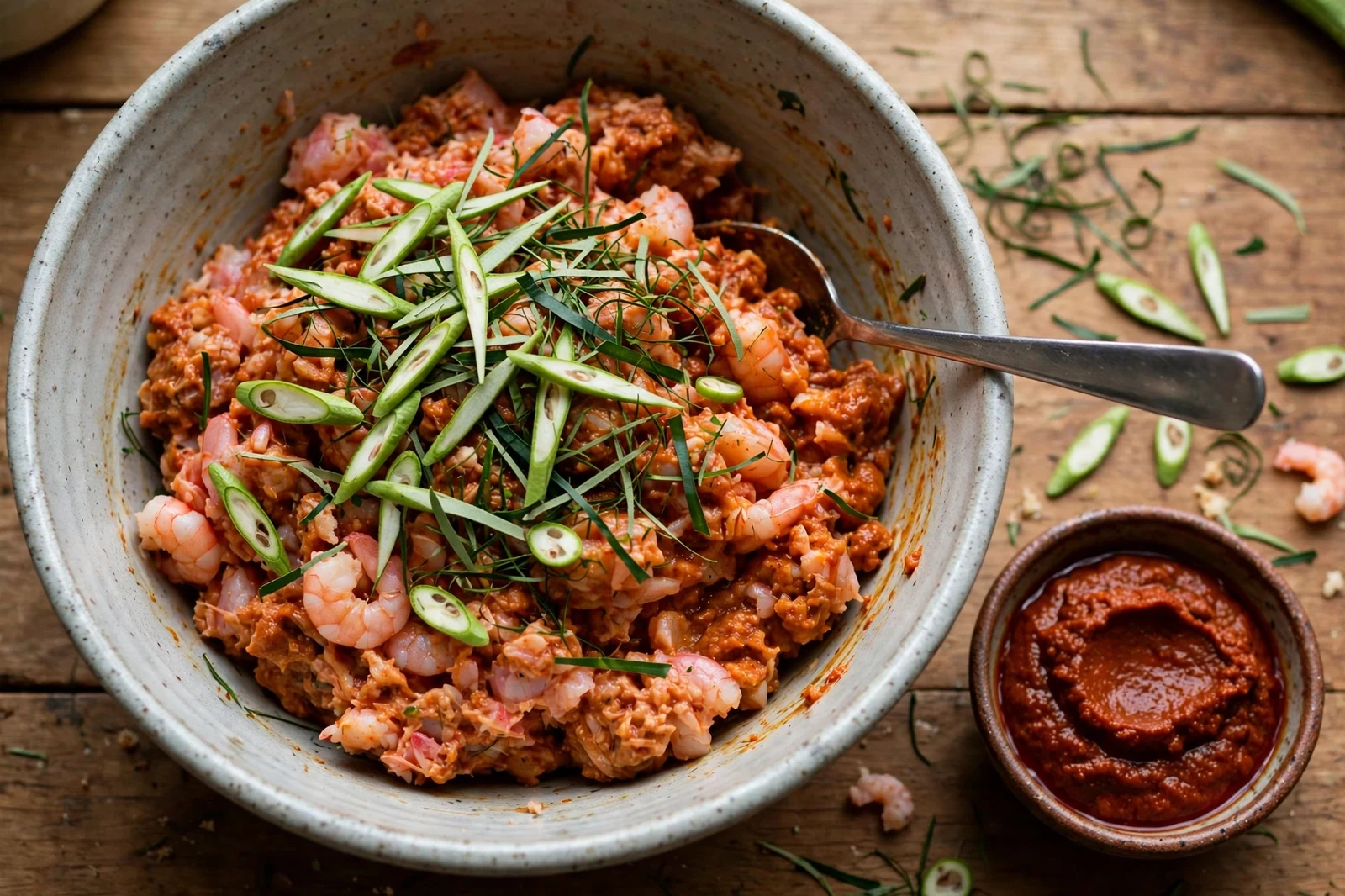
Tod mun goong is a Thai fried shrimp cake. The name breaks down simply: tod mun means fried cake, and goong means shrimp. The base is raw shrimp worked into a sticky paste with red curry paste, then mixed with sliced long beans and shredded kaffir lime leaf and fried in shallow oil until golden.
It sits close to Tod Mun Pla, Thai fish cakes, which use the same red curry paste and lime leaf base with fish instead of shrimp. The shrimp version cooks a little faster and stays a little juicier inside, because shrimp gives up its moisture more slowly than white fish does in hot oil. Expect heat from the curry paste, a salty edge from fish sauce, a fresh green bite from the beans, and a citrus scent from the lime leaf that stays in the air after the pan leaves the stove.
The shrimp paste, and the half-and-half chop
The one step that decides the texture is how you chop the shrimp. I pulse half the shrimp fine, until it turns into a sticky paste, and pulse the other half coarse, so clear pieces of shrimp stay in the mix. The fine half binds the cakes. The coarse half gives you something to bite into. A batch made from one smooth puree turns dense and rubbery, and a batch made from rough chopped shrimp alone falls apart in the pan. The half-and-half split is the fix for both problems at once.
Seasoning needs a test before you shape all 16 cakes. Red curry paste brands vary a lot in salt, so fish sauce added blind can overshoot. Fry one small patty, taste it, and adjust with a teaspoon of fish sauce at a time. The ratio that works for 1 pound of shrimp is 2 tablespoons of red curry paste to 1 tablespoon of fish sauce and 1 teaspoon of sugar. That balance keeps the cakes savory without turning salty, and the sugar rounds the heat instead of sweetening the cake.
Chill the shaped cakes for 15 minutes before frying. Cold paste firms up, and firm cakes hold their shape when they hit the oil. Wet your hands before shaping so the paste does not stick to your fingers, and keep the cakes no thicker than 1/2 inch so the centers cook through at the same pace as the crusts brown.
Shaping and frying
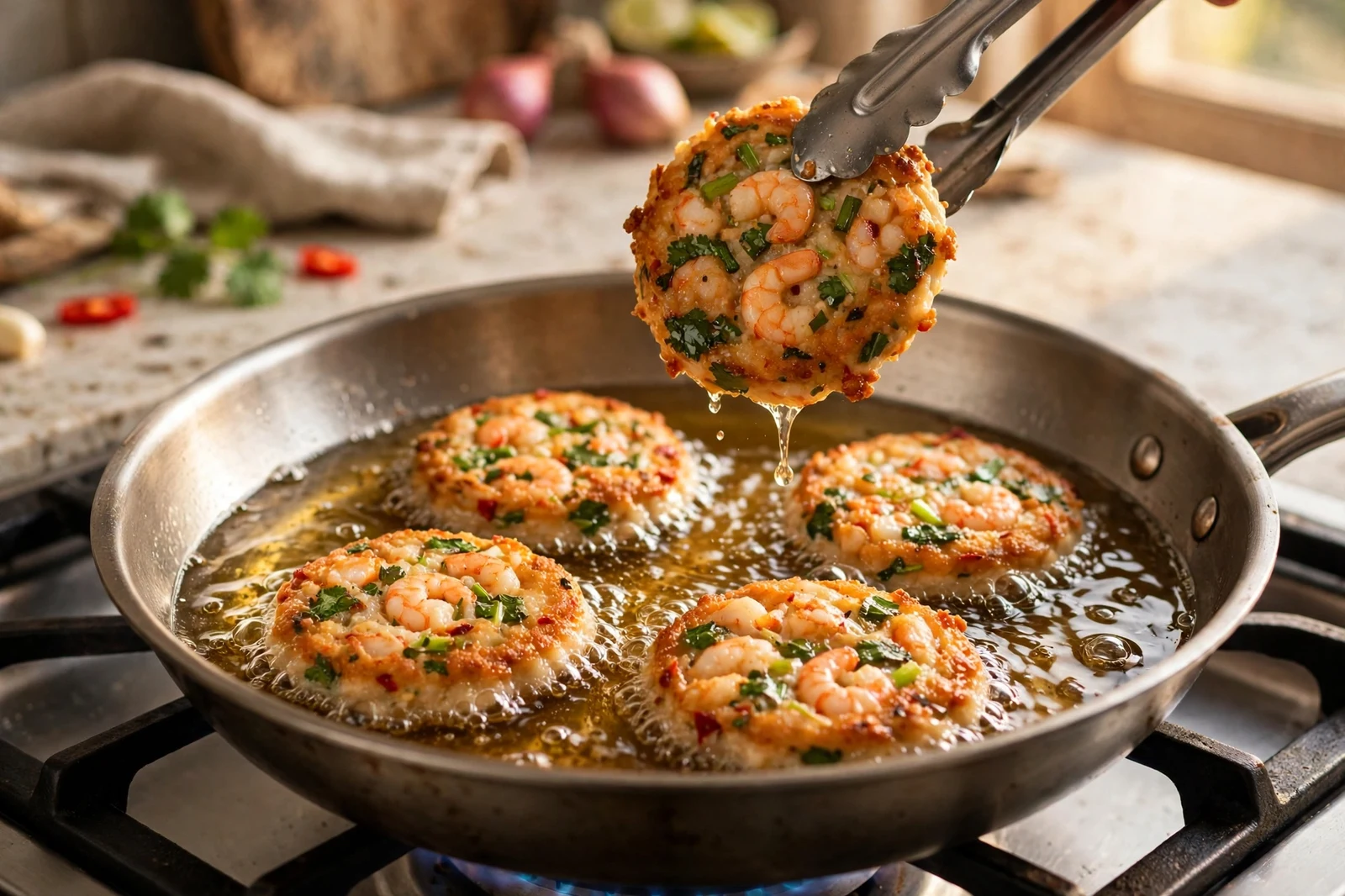
Heat 1/2 inch of neutral oil in a wide pan until it reaches 350 degrees Fahrenheit. That temperature matters more than any other detail in this recipe. Oil cooler than 350 soaks into the cakes and leaves them greasy. Oil much hotter browns the outside while the middle stays raw. A small cube of bread dropped in the oil should sizzle and turn golden in about 30 seconds when the temperature is right.
Fry in small batches, 4 or 5 cakes at a time, for 3 to 4 minutes per side. Do not crowd the pan. A crowded pan drops the oil temperature, and the cakes then soak instead of frying. Turn each cake once, when the first side is deep golden, and lift the finished cakes onto a wire rack instead of flat paper so the bottoms stay crisp. They keep cooking a little after they leave the oil, so pull them when they look golden rather than dark.
If a cake breaks in the pan, the fix is usually in the next batch, not the one in front of you. Chill the remaining cakes longer, check that the oil is back at 350 degrees, and shape the next cakes a touch thinner. Most breakage traces back to warm paste, cool oil, or both.
What to serve with it
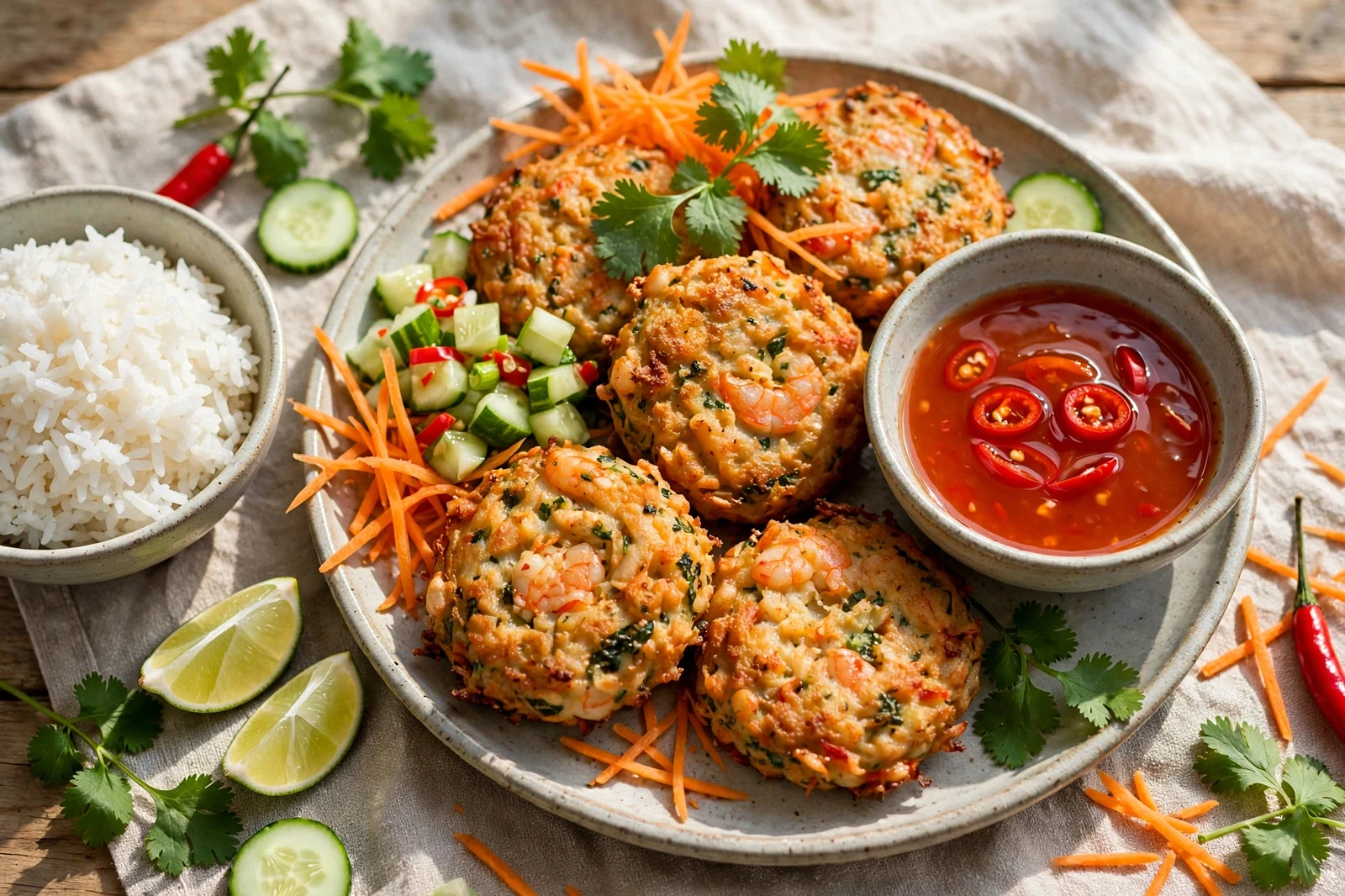
Sweet chili sauce is the classic partner, and I stir a squeeze of lime juice, a spoonful of chopped roasted peanuts, and a little chopped cilantro into it just before serving. The lime cuts the sweetness, and the peanuts give the sauce some body. Sliced cucumber goes on the side, cool and plain, which is what a hot fried cake needs next to it.
For a light meal, serve the cakes with steamed rice. My guide to how to cook jasmine rice covers the pot method I use. Leftover cakes reheat in a 350 degree oven for 8 to 10 minutes. A microwave turns them soft, so it is worth the oven time.
Troubleshooting: Fix My Tod Mun Goong
Shrimp cakes have a short list of ways to go wrong, and most of them trace back to the chop, the chill, or the oil temperature. Pick the problem that matches your plate and the fix that fits it.
HERB & LIME · KITCHEN HELP
Fix My Tod Mun Goong
Choose what went wrong to see a practical next step.
Possible cause
What to try next
For next time
From Paul's kitchen. Results vary with shrimp size, oil, and stove heat, adjust timing to your setup.
Quick reference (also works without JavaScript)
The cakes fell apart in the oil
Cause: A loose paste that never turned sticky, cakes that went straight from shaping into the pan, and oil below temperature all let cakes break up.
Try: Chill the formed cakes for 15 to 20 minutes, then fry one test cake in oil at 350 degrees Fahrenheit before cooking the rest.
Prevent: Process the shrimp until the paste turns sticky and holds together, and chill the shaped cakes before frying so they firm up.
The cakes came out tough instead of springy
Cause: Shrimp worked into a completely smooth puree, or cakes left in the oil too long, turn dense and rubbery.
Try: Serve the batch as it is with plenty of dipping sauce, and start the next batch with a coarser chop so the cakes keep some bite.
Prevent: Pulse half the shrimp fine and half coarse, and stop frying once the cakes turn golden, about 3 to 4 minutes per side.
The cakes turned out soggy and greasy
Cause: Oil that is too cool soaks into the cakes instead of sealing the outside, and a crowded pan drops the oil temperature fast.
Try: Lift the cakes onto a wire rack at once so oil drains off, and give them 2 minutes in a hot oven to crisp again before serving.
Prevent: Keep the oil at 350 degrees Fahrenheit, fry in small batches so the pan stays hot, and drain on a rack, not on flat paper.
The outside browned but the inside stayed raw
Cause: Thick cakes, or oil run hotter than 350 degrees Fahrenheit, brown the crust while the middle is still undercooked.
Try: Move the browned cakes to a 350 degree Fahrenheit oven for 3 to 5 minutes until the centers are firm and opaque.
Prevent: Shape the cakes no thicker than 1/2 inch, and keep the oil near 350 degrees Fahrenheit so the heat reaches the center before the outside darkens.
The seasoning came out bland, or too salty
Cause: Fish sauce added blind on top of a salty curry paste overshoots, while a mild paste with no tasting step leaves the cakes flat.
Try: Fry one small test patty first, taste it, then add fish sauce a teaspoon at a time or hold back until the next batch.
Prevent: Taste a test patty before shaping the whole batch, since red curry paste brands vary a lot in salt.
Tod Mun Goong: Thai Shrimp Cakes
Ingredients
Method
- Make the paste: pulse half the shrimp in a food processor until it turns into a sticky paste, then pulse the other half coarse so clear pieces remain. Mix in the red curry paste, fish sauce, sugar, egg, and cornstarch until sticky, then fold in the long beans, kaffir lime leaf, and cilantro. Fry one small test patty, taste it, and adjust the fish sauce a teaspoon at a time.
- Shape and chill: with wet hands, shape the mixture into about 16 patties no thicker than 1/2 inch. Chill the shaped cakes for 15 minutes.
- Heat the oil: pour 1/2 inch of neutral oil into a wide pan and heat to 350 degrees Fahrenheit.
- Fry in batches: fry 4 or 5 cakes at a time for 3 to 4 minutes per side, turning once, until deep golden. Lift the finished cakes onto a wire rack to drain.
- Mix the sauce: stir the sweet chili sauce with the lime juice, peanuts, and cilantro just before serving.
- Serve hot with the dipping sauce, cucumber slices, and steamed rice if you want a light meal.
Notes
More Thai recipes
If this plate worked for you, Tod Mun Pla, Thai fish cakes, use the same curry paste base with fish. Tom Yum Goong, Thai hot and sour shrimp soup, keeps the shrimp theme in a broth. Thai mango salad with shrimp, is the cool, sour counterpoint for a hot day, and Thai cashew chicken, is the weeknight stir-fry version of the same pantry.
From the garden
The chilies behind the curry paste are the garden link here. A pot or two of Thai chilies covers the fresh chili for the dipping sauce all summer, and the plants ask for little more than sun and steady water. My guide to growing Thai chili peppers in pots covers the pot size and feeding that keep one plant productive.